
Trump Scales Back Major US-South Korea Military Exercise, Citing Cost and Hostility to North
President Trump has ordered the Pentagon to substantially reduce the annual Ulchi Freedom Shield exercises, citing financial costs, diplomatic relations with Pyongyang, and Seoul's reluctance to support U.S. operations in Iran.
By Aarav Khanna

The fundamental tension between maintaining regional deterrence and managing bilateral alliance costs surfaced abruptly this week as the United States significantly altered its military posture in East Asia. Hours before the annual Ulchi Freedom Shield exercises were scheduled to commence, President Donald Trump ordered the Pentagon to substantially reduce American participation in the joint drills with South Korea.
The sudden directive forces an immediate recalibration of a cornerstone security arrangement that has defined the region for decades, requiring military planners to balance the operational readiness of allied forces against the administration's diplomatic messaging directed at Pyongyang.[1][2][3]
In a social media statement issued on Sunday, Trump instructed Defense Secretary Pete Hegseth to aggressively scale back the operations, describing the joint exercises as financially burdensome and diplomatically counterproductive.
The president characterized the drills as sending a "totally inappropriate and hostile" signal to North Korea, explicitly contrasting the military maneuvers with what he described as an "unthreatening and respectful" posture from North Korean leader Kim Jong Un during his administration. Because the 11-day exercises were already slated to begin, the administration opted for a substantial reduction in force deployment rather than a complete cancellation of the event.[1][2][3]
The decision introduces a starkly transactional dynamic into the U.S.-South Korea alliance by explicitly linking Indo-Pacific security guarantees to Middle Eastern military operations. Trump tied the exercise reduction directly to Seoul's refusal to participate in the ongoing U.S. and Israeli military campaign against Iran. According to the president's public statements, he recently asked the South Korean government to join coalition efforts aimed at the denuclearization of the Islamic Republic, a request that Seoul firmly declined, prompting the retaliatory drawdown in joint training.[1][2][3]
The Ulchi Freedom Shield exercises traditionally serve as a critical mechanism for integrating U.S. and South Korean forces across multiple domains. The drills, involving approximately 18,000 South Korean personnel alongside thousands of American units, typically feature highly complex scenarios including live-fire targeting, close air support, wet gap crossings, and the rapid distribution of prepositioned military equipment. A sudden reduction in these activities inherently limits the practical interoperability training that military planners consider essential for responding to potential crises or sudden escalations on the peninsula.[1][2]
The administration's focus on the financial cost of the exercises aligns with severe budgetary pressures currently facing the Department of Defense. The Pentagon is actively managing the fiscal fallout of the Iran conflict, with the administration recently requesting $87.6 billion in supplemental funding from Congress. Approximately $67 billion of that specific request is designated to replenish military stockpiles depleted during the Middle Eastern operations. Shifting resources away from the Korean Peninsula reflects a clear prioritization of immediate operational replenishment over scheduled theater security cooperation.[3]
The reduction in allied drills follows a familiar pattern of escalation and diplomatic maneuvering from Pyongyang, which routinely uses the exercises as leverage. North Korea has consistently objected to the joint maneuvers, labeling them a rehearsal for an aggressive invasion. In the days leading up to the scheduled drills, North Korea launched a ballistic missile into the sea—its first such test since June—and issued warnings of unspecified retaliatory steps, utilizing the planned exercises to justify the continued expansion of its own strategic weapons programs.[2][3]
In Seoul, the sudden policy shift has been met with a measured, albeit firm, institutional response. Despite the directive from Washington, South Korea's Ministry of Defense indicated that their portion of the exercises would proceed as previously scheduled, highlighting a potential operational divergence in how the two militaries will execute the remaining timeline. The Pentagon has largely deferred public comment on the specific mechanical reductions, with defense officials stating only that they are actively working to implement the commander-in-chief's orders on the ground.[1][3]
Ultimately, the scaling back of the Ulchi military exercises represents a significant node in a rapidly changing global defense architecture. By conditioning traditional treaty commitments on allied participation in out-of-area conflicts, the administration is fundamentally restructuring the expectations governing U.S. alliances. This approach not only alters the immediate tactical readiness on the Korean Peninsula but also signals to other regional partners that American security cooperation is increasingly contingent on broader geopolitical alignment and a willingness to share the burden of global military campaigns.[1][3]
Viewpoints in depth
U.S. Administration's View
The exercises are an unnecessary financial burden and an impediment to diplomatic progress with North Korea.
From the perspective of the White House, large-scale military drills on the Korean Peninsula are a relic of outdated alliance structures that fail to account for current diplomatic realities. The administration argues that the exercises provoke unnecessary hostility from Pyongyang, undermining the personal diplomatic relationship established with Kim Jong Un. Furthermore, the administration views the alliance through a transactional lens, suggesting that partners who decline to support U.S. military objectives in other theaters, such as Iran, should not expect unconditional and costly American military subsidies in their own region.
South Korean Defense Establishment
Joint exercises are non-negotiable requirements for maintaining deterrence and operational readiness.
For South Korean military planners, the Ulchi Freedom Shield exercises are not political messaging tools but essential mechanical requirements for national survival. The defense establishment maintains that interoperability between U.S. and South Korean forces cannot be theorized; it must be practiced in complex, large-scale scenarios to ensure readiness against a direct and clear threat from the North. Consequently, Seoul views the sudden reduction as a degradation of the combined defense posture, prompting the Ministry of Defense to assert that their own scheduled operations will proceed regardless of the U.S. drawdown.
Regional Security Analysts
The linkage of Indo-Pacific security to Middle Eastern conflicts creates dangerous alliance instability.
Independent security analysts and regional observers express concern over the systemic implications of the U.S. decision. By explicitly tying participation in the Korean theater to South Korea's refusal to join the war against Iran, the U.S. is introducing a high degree of unpredictability into its treaty alliances. Analysts argue this approach risks fracturing the unified deterrence architecture in East Asia, potentially emboldening North Korea to exploit perceived divisions between Washington and Seoul while forcing other regional allies to question the reliability of American security guarantees.
Key points
- President Trump ordered the Pentagon to substantially reduce the annual Ulchi Freedom Shield joint military exercises with South Korea.
- The president cited the financial cost of the drills and stated they send an inappropriate and hostile signal to North Korea.
- Trump explicitly linked the reduction to South Korea's refusal to join U.S. and Israeli military operations against Iran.
- South Korea's Ministry of Defense stated that their portion of the exercises would proceed as previously scheduled.
How we got here
Late February 2026
The U.S. and Israel launch joint military operations against Iran, which South Korea declines to join.
June 2026
North Korea conducts its last major ballistic missile test before a brief summer pause.
August 14, 2026
North Korea fires a ballistic missile into the sea in protest of the upcoming U.S.-South Korea drills.
August 16, 2026
President Trump orders Defense Secretary Pete Hegseth to substantially reduce the joint military exercises.
August 17, 2026
The Ulchi Freedom Shield exercises officially commence under the new reduced U.S. participation directive.
- U.S. Administration
- The exercises are an unnecessary financial burden and an impediment to diplomatic progress with North Korea.
- South Korean Defense Establishment
- Joint exercises are non-negotiable requirements for maintaining deterrence and operational readiness.
- Regional Security Analysts
- The linkage of Indo-Pacific security to Middle Eastern conflicts creates dangerous alliance instability.
Perspectives this story doesn't cover
- North Korean state media
- U.S. Indo-Pacific Command operational planners
Sources
Source coverage
3 outlets
3 viewpoints surfaced



- [1]Breaking DefenseU.S. Administration
Trump scales back military exercise with S Korea, calling it 'costly' and 'hostile' to the North
Read on Breaking Defense → - [2]PBSU.S. Administration
Trump orders Pentagon to scale back joint exercises with South Korea
Read on PBS → - [3]Military.comU.S. Administration
President Donald Trump's order to dramatically minimize military exercises in Asia with a longtime ally has drawn mixed reactions
Read on Military.com →
More in Defense & Security
See all →Arms Sales
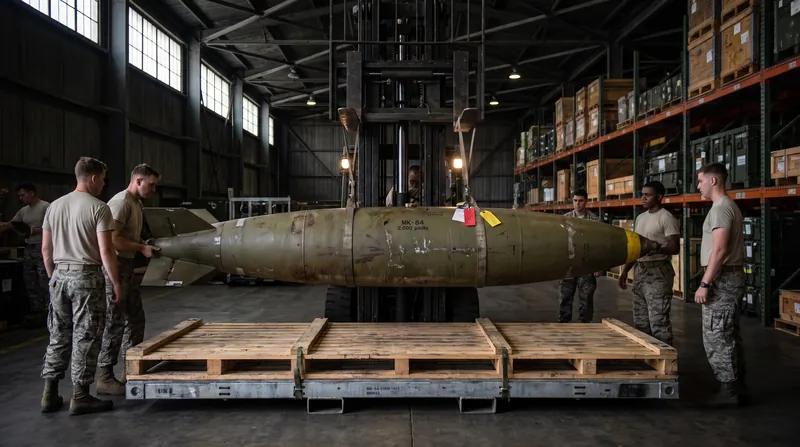
U.S. Advances $2.8 Billion Sale of 2,000-Pound Bombs to Israel
4 sources
Arctic Infrastructure
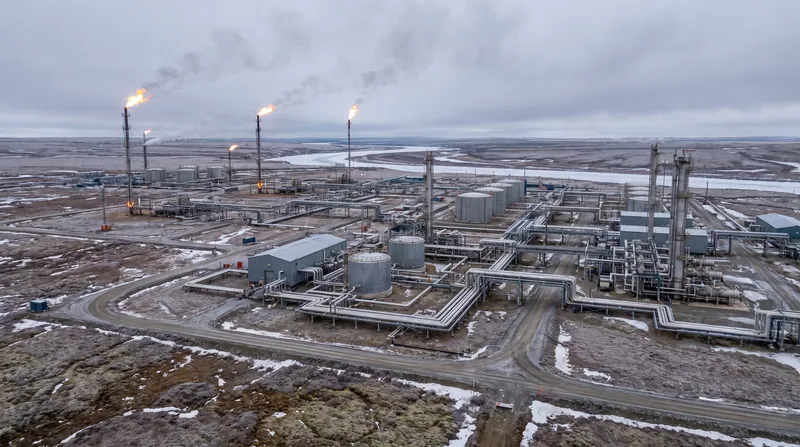
Ukraine Executes Deepest Strike of the War on Russian Arctic Gas Infrastructure
5 sources
Iran Airspace
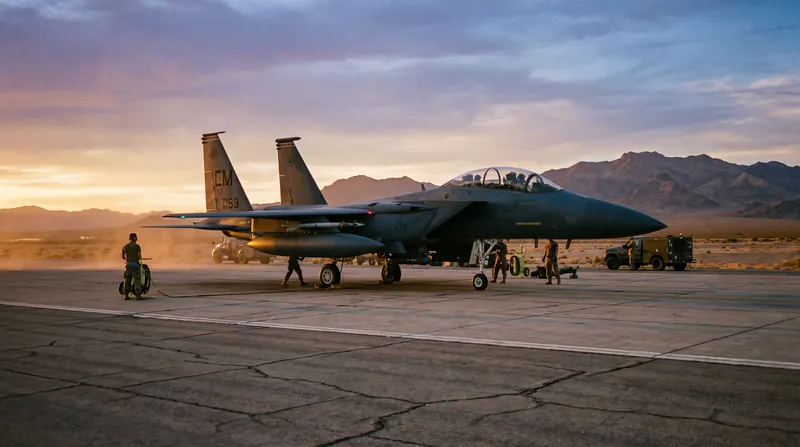
Declassified Footage Reveals Iranian MANPADS Downed U.S. F-15E in April
6 sources
Air Defense Economics
The Asymmetric Cost of Air Defense: Comparing Interceptor Prices to Loitering Munition Threats
7 sources

Comments
Every angle. Every day.
Get Defense & Security stories with full source coverage and perspective breakdowns, free every day.