
The Transition Revolution: How the Counter-Attack Replaced Possession as the World Cup's Deadliest Weapon
As international football moves away from the tiki-taka era, the ability to exploit defensive transitions with devastating speed has become the defining tactical hallmark of modern World Cup contenders.
By Meera Iyer

Share this story
For over a decade, international football was mesmerized by the allure of the ball. Following Spain’s triumph at the 2010 World Cup, "tiki-taka"—a philosophy built on relentless possession, intricate passing triangles, and suffocating territorial control—became the gold standard. Coaches around the globe sought to replicate the Spanish blueprint, operating under the assumption that a team cannot concede if the opponent never touches the ball.
But as the sport evolved, the antidote to possession was quietly being perfected. Today, the era of possession for possession’s sake is over. The modern World Cup is no longer defined by who holds the ball, but by who controls the empty space on the pitch. The paradigm has shifted from the slow suffocation of positional play to the lightning-fast execution of transition football.
The defining moments of modern World Cup matches now occur in the transition—the chaotic, unstructured seconds immediately following a turnover in possession. When a team loses the ball, their defensive shape is inherently compromised, with fullbacks caught high up the pitch and central midfielders out of position.
Elite teams have realized that attacking against a disorganized defense for five seconds is vastly more effective than attacking against a set defense for five minutes. This realization has turned the counter-attack from a weapon of desperation used by outmatched underdogs into the primary offensive engine for the world’s most sophisticated footballing nations.[1]
The foundation of this transitional dominance actually begins without the ball. Top World Cup contenders frequently deploy a tactical "mid-block" or "low block," deliberately conceding possession in the opponent's half of the pitch. By setting up in a compact, narrow defensive shape deep in their own territory, they invite the opposition to advance.
This is not a surrender; it is a carefully laid trap. The defending team protects the central channels, forcing the opponent to circulate the ball harmlessly out wide while waiting for a misplaced pass or a heavy touch to trigger the trap.
This defensive posture serves a dual purpose. First, it frustrates possession-heavy teams, denying them the tight central spaces they need to execute intricate passing combinations. Second, and more importantly, it draws the opposition’s defensive line higher up the pitch.
By coaxing the opponent's fullbacks and center-backs toward the halfway line, the defending team manufactures acres of empty grass behind them. That vacated space becomes the runway for the counter-attack. The moment the trap is sprung and the ball is won, the defending team instantly shifts from a passive blockade into a high-speed offensive swarm.
When the transition is triggered, speed and efficiency are paramount. There is no time to settle the ball, look around, or establish a structured passing network. According to data from the FIFA Technical Study Group, the most devastating counter-attacks at the World Cup require remarkably little buildup.
In recent tournaments, the average number of passes per counter-attack leading to a shot on goal is just 1.3. This metric underscores a ruthless verticality; the objective is to move the ball from the defensive third to the opponent's penalty area in a matter of seconds, entirely bypassing the midfield battleground.
Bypassing the midfield is a deliberate calculation to prevent the opposition from executing tactical fouls or reorganizing their defensive lines. A deep-lying playmaker or a central defender will often immediately hit a vertical outlet pass the moment possession changes hands.
By launching the ball over the top or driving a low, hard pass through the lines, the counter-attacking team ensures that the ensuing battle is a pure footrace. Top teams engineer these situations specifically to isolate their fastest wingers or forwards in one-on-one sprints against the opponent's remaining, often back-pedaling, center-backs.[1]
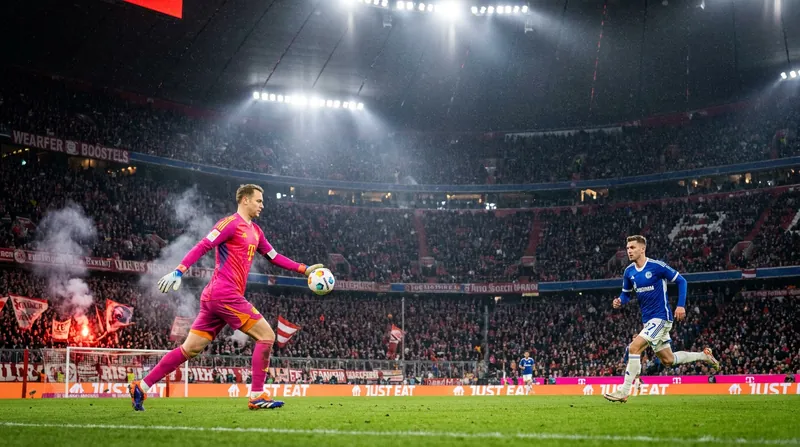
The evolution of transition football has fundamentally altered the personnel required to win a World Cup, beginning at the very back of the pitch. The traditional image of a goalkeeper launching long, hopeful clearances has largely disappeared. Today, the goalkeeper acts as a deep-lying quarterback, essential for initiating the counter-attack.
When a team regains possession deep in their own half, the goalkeeper is frequently used as an extra outfield player to safely circulate the ball away from immediate danger and find the precise angle for a vertical outlet pass, breaking the opponent's first line of pressure.
The statistical shift in goalkeeper behavior highlights this transformation. During the 2018 World Cup, goalkeepers took nearly 100 percent of their team's goal kicks. By the 2026 tournament cycle, that figure had plummeted to just 52 percent. Instead, central defenders increasingly restart the play before immediately returning the ball to the goalkeeper. This subtle rotation draws the opposition's forwards higher up the pitch, artificially creating a transition-like scenario even from a dead ball. The goalkeeper then dissects the pressing forwards with a crisp pass, instantly launching a fast break.
At the other end of the pitch, the transition strategy relies on two distinct profiles of attackers. The first is the explosive winger, afforded the tactical freedom to cheat slightly on their defensive responsibilities. By lingering high and wide while their teammates defend the penalty area, these forwards act as a constant threat.
The second they see their team win the ball, they explode into the open channels. This approach defined France's 2018 World Cup victory and remains a staple for teams boasting generational pace on the flanks, turning every defensive clearance into a potential scoring opportunity.
When a clean pass along the ground is impossible due to intense pressure, teams rely on the second profile: the physical target man. When defenders are forced to hack high, looping clearances out of their own box, the target man’s job is to receive the ball out of the air, hold off aggressive center-backs, and shield possession.
By absorbing the physical impact and maintaining the ball for just two or three seconds, the target man buys critical time for the wingers and overlapping midfielders to sprint 40 yards up the pitch and join the rush, transforming a desperate clearance into a structured attack.
The transition revolution is not solely about attacking; it has also birthed a radical shift in how teams defend immediately after losing the ball. Enter the "counter-press," or Gegenpressing. Rather than retreating into a defensive shape when an attack breaks down, elite World Cup teams now view the moment of losing possession as the best opportunity to win it back. Because the opponent is instantly expanding their shape to launch their own counter-attack, they are temporarily vulnerable and disorganized.
The transition revolution is not solely about attacking; it has also birthed a radical shift in how teams defend immediately after losing the ball.
The counter-press requires the team that just lost the ball to immediately swarm the new ball carrier with two or three players, suffocating their passing options before they can look up. This aggressive, high-risk strategy aims to force a turnover high up the pitch, instantly creating a secondary scoring chance closer to the opponent's goal.
If the initial press fails, the team will then execute a rapid tactical foul or sprint back into their mid-block. The window for this action is incredibly brief, demanding intense coordination and immediate recognition of pressing triggers.
The data surrounding this defensive transition is stark and separates the contenders from the early exits. Analysis of recent World Cup matches reveals that winning teams recover possession roughly four seconds faster than losing sides. This four-second metric suggests that the immediate, collective reaction to losing the ball is now just as decisive as what a team does when they have it. Teams with a clearly defined counter-pressing identity build their entire tournament strategy around these chaotic windows, turning the opponent's moment of triumph into their most dangerous vulnerability.
Executing this high-intensity, reaction-based football demands immense physical conditioning. The tactical evolution has caused a spike in high-speed running metrics across the tournament. Players are no longer simply jogging into positional structure; they are required to sprint aggressively into space to join a counter-attack, and sprint just as aggressively to counter-press when the ball is lost. The modern World Cup is a grueling test of repeated sprint ability, where the physical capacity to execute a 40-yard dash in the 85th minute often determines who advances to the next round.
The success of transition football has even forced traditional possession-heavy nations to adapt their philosophies. Teams that previously relied on slow, methodical build-up play now use rapid ball circulation not just to retain control, but to actively provoke defensive shifts. By moving the ball quickly from side to side, they force the opponent's low block to slide and adjust, eventually opening up vertical passing lanes. Once that lane appears, the possession team strikes with the same speed and directness as a counter-attacking side, blurring the lines between the two styles.
Ultimately, the modern World Cup is demonstrating that possession alone is no longer a measure of attacking intent. The most successful nations are those that use possession as a platform to accelerate attacks rather than prolong them. They are less concerned with maximizing passing frequency and more focused on identifying the precise moment to strike vertically. As the tournament unfolds, the teams that can seamlessly navigate the chaos of the transition—defending with discipline and attacking with geometric precision—will be the ones lifting the trophy.[1]
The essentials
- Modern World Cup contenders are prioritizing high-speed counter-attacks over slow, methodical possession.
- Teams use a 'mid-block' defense to invite pressure and create open space behind the opponent's defense.
- Winning teams recover possession roughly four seconds faster than losing sides through aggressive counter-pressing.
- The average counter-attack leading to a shot requires only 1.3 passes to execute.
- Goalkeepers now act as deep-lying playmakers, bypassing the midfield to launch fast breaks.
Timeline
2010
Spain wins the World Cup using 'tiki-taka,' establishing possession as the dominant global tactic.
2014
The Netherlands and others deploy 5-3-2 low blocks to successfully counter-attack and dismantle possession-heavy systems.
2018
France wins the World Cup by perfecting the transitional fast-break, relying on extreme pace and defensive solidity.
2022
Argentina and Morocco showcase the power of the mid-block and immediate counter-pressing to control games without the ball.
2026
FIFA Technical Study Group data reveals that possession is becoming increasingly vertical, with rapid transitions defining the tournament's top contenders.
- Transition Pragmatists
- Argue that controlling the space without the ball and striking with devastating speed is the most efficient way to win knockout football.
- Positional Purists
- Maintain that dictating the game through structured ball retention and precise passing networks remains the highest form of the sport.
- Data Analysts
- Emphasize that physical metrics, such as high-speed running and rapid possession recovery times, are the true indicators of modern tactical success.
Perspectives this story doesn't cover
- Grassroots Coaches
- Attacking Midfielders
Sources
Source coverage
1 outlets
3 viewpoints surfaced

- [1]Factlen Editorial TeamData Analysts
Synthesis by Factlen editorial team
Read on Factlen Editorial Team →

More in Sports
See all →Storyline
The 11th Outfield Player: How the Sweeper-Keeper Redefined World Cup Tactics
6 sources
Storyline
The Pragmatic Shift: How Thomas Tuchel is Rewiring England’s Golden Generation for the 2026 World Cup
8 sources

Storyline
The Maplepress: How Jesse Marsch Engineered Canada's High-Octane Tactical Identity for the 2026 World Cup
7 sources

Tactics
The Possession Metamorphosis: How Walid Regragui Rewrote Morocco's Tactical DNA for the 2026 World Cup
2 sources
Comments
Every angle. Every day.
Get Sports stories with full source coverage and perspective breakdowns, free every day.