
Global Volleyball Injury Report: Jordyn Poulter's Masterclass in Recovery and Micha Hancock's Resilient Return
Mid-2026 sees several of volleyball's biggest stars thriving after severe injuries, with Jordyn Poulter and Micha Hancock leading the US National Team while Zhu Ting and Ran Takahashi showcase the power of smart rehabilitation.
By Meera Iyer

Share this story
The modern volleyball calendar is notoriously unforgiving, demanding that elite athletes transition seamlessly from grueling European and domestic club seasons straight into the high-stakes international summer slate. With the addition of new professional leagues and expanded global tournaments, players are logging more matches than ever before, pushing their bodies to the absolute limit.
Yet, as the 2026 season unfolds across the globe, the sport's biggest storylines are defined not by career-ending setbacks, but by inspiring masterclasses in rehabilitation and resilience. Across the United States, Europe, and Asia, a wave of top-tier talent is proving that severe physical trauma no longer dictates the end of a prime, showcasing how patience and sports science are rewriting the rules of recovery.
No player embodies this modern approach to recovery more thoroughly than United States setter Jordyn Poulter. In December 2022, while competing for her club team in Italy, Poulter suffered a catastrophic knee injury that sent shockwaves through the American program. In a single awkward landing, she tore her anterior cruciate ligament (ACL), medial collateral ligament (MCL), posterior cruciate ligament (PCL), and meniscus.
The sheer severity of the structural damage meant her recovery timeline would be measured not in weeks or months, but in years. Poulter was forced to endure 19 months of quiet, isolated rehabilitation, a grueling process that she later admitted challenged her deeply as both an athlete and a person, forcing her to rebuild her body from the ground up.[1]
Her extraordinary patience and dedication to the rehabilitation process paid off spectacularly on the world stage. Poulter returned to the court just in time to lead Team USA to a hard-fought silver medal at the Paris 2024 Olympics, and by mid-2026, she has fully re-established herself as the premier setter in the international game.
Now anchoring the high-powered offense for LOVB Salt Lake in the United States and guiding the US National Team through the 2026 Volleyball Nations League (VNL), Poulter's surgically repaired knee has flawlessly held up to the rigors of the sport. Her journey now serves as the ultimate blueprint for athletes facing daunting multi-ligament reconstructions, proving that a complete return to world-class form is entirely possible.
Joining Poulter on the US National Team roster is veteran setter Micha Hancock, whose own path back to the court required overcoming a terrifying off-court ordeal that nearly ended her career.
Following the conclusion of the Paris Olympics in August 2024, Hancock and her teammate Jordan Larson were involved in a severe Uber crash when their vehicle violently struck a pole in the early hours of the morning. Hancock absorbed the brunt of the impact, suffering a broken nose, significant neck contusions, and severe eye swelling that initially left her fearing for her long-term vision.
While Hancock successfully recovered from the acute trauma of the collision, the lingering physical toll significantly impacted her subsequent domestic club campaigns. She spent the majority of the 2026 League One Volleyball (LOVB) season diligently managing a series of nagging injuries, appearing only occasionally as a strategic substitute for LOVB Houston rather than taking on her usual starting workload.
However, her trademark resilience has brought her back to the international stage right when her country needs her most; Hancock was officially named to the 2026 VNL roster, providing crucial veteran experience and leadership to a transitioning American squad.
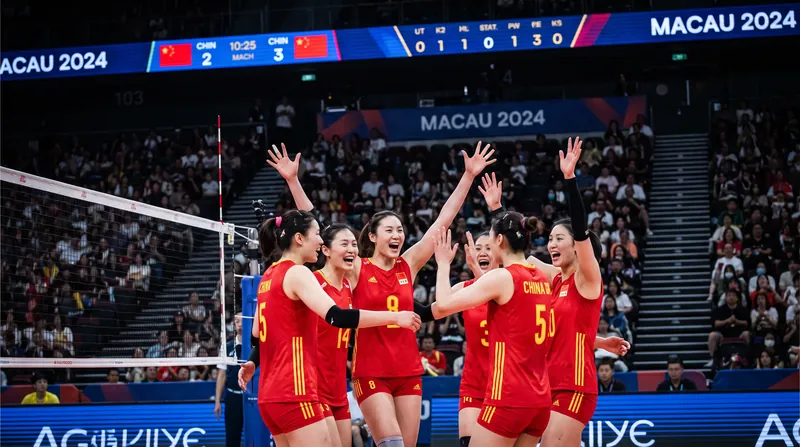
On the international front, Chinese superstar Zhu Ting has successfully completed one of the most highly anticipated comebacks in the sport's history. Plagued by a severe and lingering wrist injury that severely hampered her performance at the Tokyo Olympics, Zhu made the difficult decision to undergo complex surgery in 2022, resulting in a multi-year hiatus from the Chinese National Team.
Rather than rushing her return to international duty, she focused entirely on her club career in Italy, using the structured environment of the European leagues to methodically rebuild her strength and timing.[2]
That methodical, patient approach has yielded immense dividends for the legendary outside hitter. Zhu thoroughly dominated the recent European season with Imoco Conegliano, securing the Champions League, Italian League, and Club World Championship titles while attacking at an elite 48 percent efficiency against the world's best blockers.
Fully healthy and playing with renewed confidence, the 31-year-old has now officially rejoined the Chinese National Team, aiming to lead her country back to the Olympic podium in Los Angeles and cementing her legacy as one of the most resilient attackers in volleyball history.[2]
While Poulter, Hancock, and Zhu navigated complex surgical recoveries, Japanese outside hitter Ran Takahashi is proving that proactive injury management is equally vital for career longevity. Competing in Japan's newly revamped SV League, Takahashi endured a punishing 58-match season with the Suntory Sunbirds, a workload that far exceeded his previous campaigns in Europe. Early in the season, he experienced recurring, sharp pain in his left ankle—a lingering issue from his time playing in Italy's Serie A that threatened to derail his year.
Instead of succumbing to the traditional sports culture of pushing through the pain, Takahashi made the calculated decision to sit out several matches in November to allow the inflamed joint to fully calm down.
He credits his survival through the grueling championship season to a strict daily regimen: prioritizing deep sleep, refusing to play when physically compromised, and completing a mandatory 30-minute stretching routine every single night to maintain the flexibility required for elite defense. His disciplined, body-first approach allowed him to return at full strength and ultimately lead Suntory to the league title.
As the global volleyball schedule continues to expand with new tournaments and longer club seasons, these elite athletes are fundamentally reshaping the narrative around injuries and recovery. The outdated era of playing through severe structural damage is rapidly fading, replaced by a modern culture that values comprehensive surgical repair, extended rehabilitation timelines, and meticulous daily preventative care.
For the next generation of aspiring players watching from the stands, the message is abundantly clear: a devastating injury no longer has to be a career endpoint, provided the recovery is treated with the same intensity as the game itself.
The essentials
- US setter Jordyn Poulter has fully returned to elite form 19 months after tearing four knee ligaments.
- Micha Hancock is back with the US National Team after recovering from a severe car crash and club season injuries.
- Zhu Ting led Imoco Conegliano to multiple titles following a multi-year recovery from wrist surgery.
- Japan's Ran Takahashi survived a 58-match season by prioritizing strict rest and daily flexibility routines.
Timeline
April 2022
Zhu Ting undergoes complex surgery to repair a lingering wrist injury.
December 2022
Jordyn Poulter suffers a devastating multi-ligament knee injury while playing in Italy.
August 2024
Micha Hancock sustains facial and neck injuries in a severe car crash following the Paris Olympics.
May 2025
Ran Takahashi leads Suntory Sunbirds to the SV League title after carefully managing an ankle injury.
May 2026
Zhu Ting officially returns to the Chinese National Team after leading her Italian club to European glory.
July 2026
Poulter and Hancock anchor the US National Team roster for the Volleyball Nations League.
- Sports Medicine Professionals
- Advocates for extended, conservative rehabilitation timelines over rushing athletes back to the court.
- National Team Management
- Values the veteran leadership and stability that fully recovered stars bring to high-stakes international tournaments.
- Player Longevity Advocates
- Emphasizes daily preventative care, flexibility, and the right to rest rather than playing through pain.
Perspectives this story doesn't cover
- Club Owners
- FIVB Schedulers
Sources
Source coverage
2 outlets
3 viewpoints surfaced


- [1]OlympicsSports Medicine Professionals
Jordyn Poulter: 'One step at a time'
Read on Olympics → - [2]CEVPlayer Longevity Advocates
Chinese Superstar Zhu Ting confirmed to stay at Imoco
Read on CEV →
More in Sports
See all →Standings
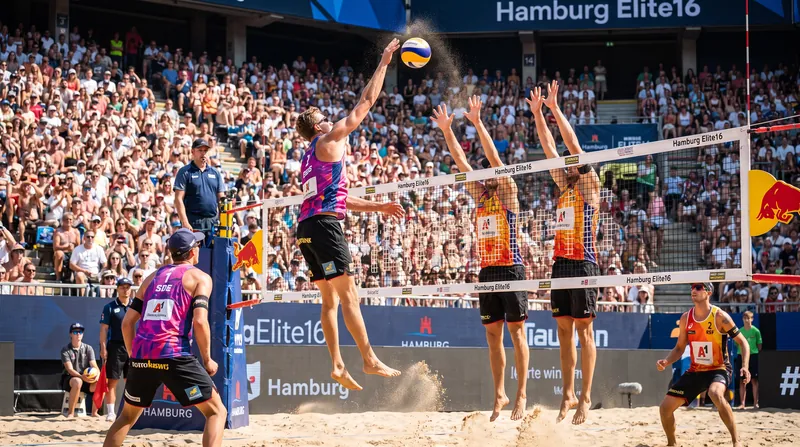
The Race to LA28 Begins: Beach Volleyball Continental Championships Open Olympic Qualification
4 sources
Standings
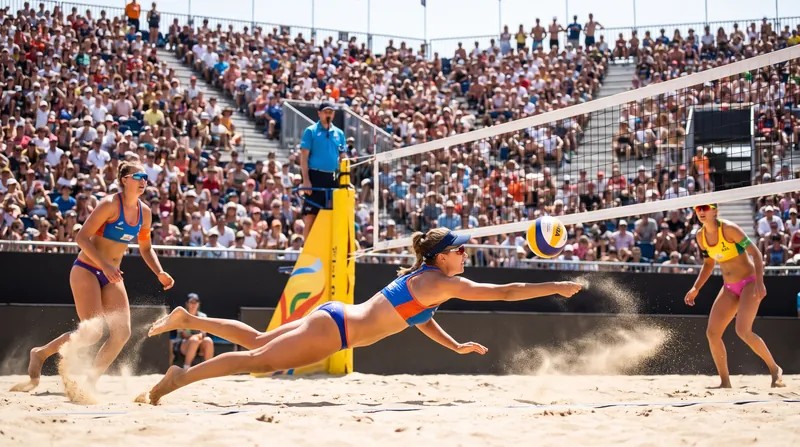
New World Order: Slovenia and Japan Disrupt Traditional Hierarchy in Latest FIVB Men's Rankings
5 sources
Standings
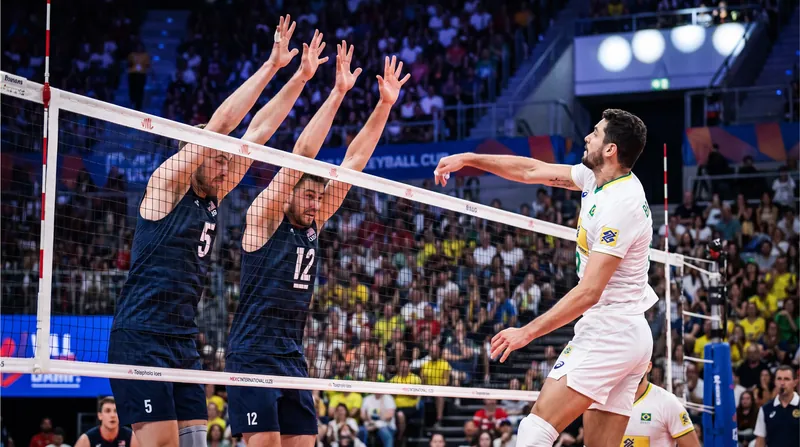
USA and China Dominate Early as Philippines Secures Historic Win at Expanded U17 World Championship
6 sources
Standings
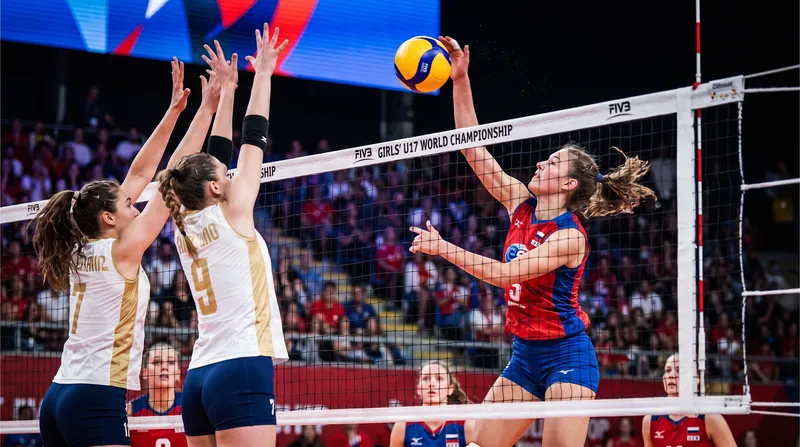
China Stuns Top-Seeded USA in Five-Set Thriller to Shake Up 2026 VNL Finals
7 sources
Comments
Every angle. Every day.
Get Sports stories with full source coverage and perspective breakdowns, free every day.