
Why a Record 6.0% Private Credit Default Rate Threatens Banks and Insurers
The U.S. private credit default rate has hit a record 6.0%, exposing the hidden vulnerabilities within the $1.7 trillion shadow lending market. As corporate borrowers increasingly rely on 'shadow defaults' to survive, regulators warn the stress could spill over into traditional banks and life insurers.

Share this story
In short
- The U.S. private credit default rate hit a record 6.0% in May 2026, signaling stress in the shadow banking sector.
- Roughly 65% of defaults are 'distressed restructurings,' where lenders extend deadlines to avoid formal bankruptcies.
- Companies are increasingly using Payment-in-Kind (PIK) provisions to pay interest with more debt rather than cash.
For the past decade, a quiet revolution has rewired the plumbing of global finance. As traditional banks retreated from risky corporate lending in the wake of the 2008 financial crisis, a new ecosystem emerged to fill the void: private credit. Today, this $1.7 trillion to $3.0 trillion "shadow banking" market finances everything from software startups to healthcare rollups and massive commercial real estate projects.
It operates outside the public bond markets, relying on bilateral agreements between investment funds and corporate borrowers. But the era of ultra-low interest rates that fueled this explosive growth has ended, and the system is now facing its first true stress test.[3]
The cracks in the foundation are becoming visible in the data. In May 2026, Fitch Ratings reported that the U.S. private credit default rate hit a record 6.0% for the trailing twelve months, the highest level since the sector's post-2008 expansion.
For private-credit-backed corporate borrowers specifically, the default rate reached an even more alarming 9.2% in 2025. These figures represent a stark departure from the sub-2% default rates that managers touted during the boom years, signaling that the aggressive leverage models underwritten during the zero-interest-rate era are buckling under the weight of sustained higher borrowing costs.[1]
To understand why this matters, one must understand the mechanics of how private credit operates. Unlike traditional bank syndication, where a loan is sliced up and sold to dozens of institutions, or public bond markets, which require rigorous SEC disclosures, private credit involves a single fund—or a small club of funds—lending directly to a company.
The capital comes from limited partners, primarily pension funds, sovereign wealth funds, and life insurance companies seeking a "yield premium" over traditional fixed-income assets. Because these loans are not publicly traded, they are not subject to daily mark-to-market pricing, allowing funds to value their portfolios using internal models that can smooth out volatility.[3]
However, this opacity is increasingly masking a phenomenon that industry analysts call "shadow defaults." A shadow default occurs when a borrower experiences severe economic distress but avoids a technical breach of its credit agreement through aggressive sponsor intervention. Instead of declaring bankruptcy, the company and its private lender quietly renegotiate the terms behind closed doors. They might agree to a "covenant holiday," temporarily waiving financial performance requirements, or execute a maturity extension that pushes the repayment deadline out by several years.
The most common tool for masking distress is the Payment-in-Kind (PIK) toggle. When a company can no longer afford its cash interest payments, a PIK provision allows it to pay its interest by adding the owed amount to the principal balance of the loan.
While this conserves the borrower's immediate liquidity and prevents an outright default, it aggressively compounds the total debt burden. For the private credit fund, PIK allows them to continue recognizing "interest income" on paper, keeping their returns looking healthy to investors, even though no actual cash has changed hands.
These quiet renegotiations are skewing the true health of the market. According to Moody's estimates, distressed restructurings—which include debt exchanges and maturity extensions executed under duress—accounted for roughly 65% of all private credit defaults in 2025.
If these shadow defaults were excluded, the headline default rate would appear to be a manageable 1.6% to 4.7%. But by including them, the data reveals a systemic reliance on "extend and pretend" strategies, where lenders delay recognizing losses in the hope that interest rates will eventually fall or the borrower's fortunes will miraculously reverse.
The systemic risk lies in the interconnectedness of this shadow market with the traditional financial system. Private credit was originally championed as a way to de-risk banks by moving highly leveraged loans off their balance sheets. But the banks never truly left the ecosystem; they simply moved upstream.
Today, major banks provide hundreds of billions of dollars in financing directly to private credit funds through subscription lines, NAV (Net Asset Value) loans, and warehousing facilities. The Financial Stability Board (FSB) recently warned that global banks hold at least $300 billion in direct and indirect exposure to these funds.
If a wave of corporate defaults forces private credit funds to aggressively mark down the value of their loan portfolios, the banks that lend to those funds could face severe collateral shortfalls. This dynamic has prompted the Federal Reserve and the Bank of England to issue stark warnings about contagion.
Bank of England officials have even likened parts of the sector to a "market for lemons," warning that as the strongest borrowers successfully refinance back into the public markets, private credit funds are being left holding a concentrated pool of the riskiest, most distressed debt.[2]
The threat extends equally to the insurance sector. Over the past decade, U.S. life insurers have aggressively increased their allocations to private credit, with some private-equity-affiliated insurers holding more than 15% of their total assets in these illiquid loans. Insurers rely on steady cash flows to meet their obligations to policyholders.
If private credit funds increasingly rely on PIK interest—paying insurers in paper debt rather than actual cash—it creates a dangerous duration mismatch. The U.S. Treasury Department and the International Monetary Fund have both flagged this as a critical vulnerability, noting that insurers could face severe capital pressure if these shadow loans suffer sudden downgrades.
Despite these mounting alarms, private credit managers argue that their bilateral model is working exactly as designed. From their perspective, the ability to execute a shadow default or a maturity extension is a feature, not a bug. In the public markets, a distressed company is often forced into a chaotic, value-destroying bankruptcy process. In private credit, a single lender can work constructively with the borrower to weather a temporary economic storm, preserving the company's operations and ultimately recovering more value for investors.[3]
This structural flexibility means that the current cycle is unlikely to trigger a sudden, 2008-style collapse. Instead, financial mechanics point toward a slow-motion shakeout. The record 6.0% default rate is acting as a brutal sorting mechanism, separating disciplined underwriters who priced risk correctly from those who built their portfolios on the optimistic assumptions of the zero-interest-rate era.
As the true cost of leverage is finally realized, the shadow banking system is being forced out of the shadows, proving that while risk can be moved off a bank's balance sheet, it can never be entirely erased.[3]
Key terms
- Private Credit
- Non-bank lending provided by investment funds directly to companies, bypassing traditional bank syndication or public bond markets.
- Payment-in-Kind (PIK)
- A loan feature allowing borrowers to pay their interest by adding it to the principal balance rather than paying in cash.
- Shadow Default
- Financial stress where a company avoids formal default through sponsor intervention, such as maturity extensions or covenant waivers, masking underlying weakness.
- Distressed Restructuring
- An agreement to change loan terms under duress to avoid an outright default, often involving debt exchanges or extended deadlines.
- NAV Loan
- A loan made to an investment fund that is secured by the net asset value of the fund's underlying portfolio.
Frequently asked
Why do companies use private credit instead of traditional banks?
Private credit offers faster execution, more flexible terms, and financing for highly leveraged deals that traditional banks avoid due to strict post-2008 regulations.
What is a 'shadow default'?
A shadow default occurs when a company is in severe financial distress but avoids a formal bankruptcy by quietly renegotiating its loan terms, such as extending the repayment date or paying interest with more debt.
If private funds take the losses, why are banks at risk?
Major banks provide hundreds of billions of dollars in funding directly to private credit funds. If the funds suffer massive losses, they may default on those bank credit lines.
How does this impact life insurance companies?
Life insurers have invested heavily in private credit to generate higher yields. If these loans stop paying cash interest, insurers could face a mismatch between their income and their obligations to policyholders.
Viewpoints in depth
Systemic Risk Watchdogs
Regulators warn that shadow banking is deeply intertwined with traditional finance.
Organizations like the Financial Stability Board and the Federal Reserve emphasize that private credit does not exist in a vacuum. Because traditional banks provide hundreds of billions in leverage facilities to private credit funds, a wave of corporate defaults could quickly transmit stress back to the regulated banking sector. They argue that the lack of transparent, mark-to-market pricing allows risks to build up unseen until a liquidity crisis forces a sudden reckoning.
Credit Analysts
Rating agencies point to the data showing a severe deterioration in underlying loan quality.
Analysts at Fitch Ratings and other institutions highlight that the headline 6.0% default rate only tells part of the story. When accounting for 'shadow defaults'—where companies use payment-in-kind toggles or maturity extensions to avoid technical bankruptcy—the true distress level is significantly higher. They warn that these 'extend and pretend' strategies merely delay the inevitable, compounding debt burdens on companies that are fundamentally unable to service their obligations in a high-rate environment.
Private Credit Managers
Industry defenders argue that private credit's flexibility prevents chaotic bankruptcies.
Sponsors and legal advisors in the private credit space view the ability to execute a 'shadow default' as the system's greatest strength. Unlike the public bond market, where a missed payment triggers a messy, value-destroying public bankruptcy, private credit allows a single lender to work constructively with a struggling borrower. By offering covenant holidays or maturity extensions, they argue they can help fundamentally sound companies survive temporary macroeconomic shocks, ultimately recovering more value for their investors.
- Systemic Risk Watchdogs
- Argues that the opacity and interconnectedness of private credit pose a contagion risk to the broader financial system.
- Credit Analysts
- Focuses on the quantitative deterioration of loan quality and the masking effect of distressed restructurings.
- Private Credit Managers
- Maintains that bilateral renegotiations are a feature that preserves value, rather than a systemic vulnerability.
Perspectives this story doesn't cover
- Retail investors indirectly exposed through pension funds
- Mid-market corporate employees facing restructuring
Sources
Source coverage
3 outlets
3 viewpoints surfaced



- [1]Fitch RatingsCredit Analysts
Fitch Ratings' U.S. Private Credit Default Rate Remains at Record High 6.0% in May 2026
Read on Fitch Ratings → - [2]Federal ReserveSystemic Risk Watchdogs
Financial Stability Report, May 2026
Read on Federal Reserve → - [3]Factlen Editorial TeamPrivate Credit Managers
Synthesis by Factlen editorial team
Read on Factlen Editorial Team →

More in Finance
See all →Bank Regulation
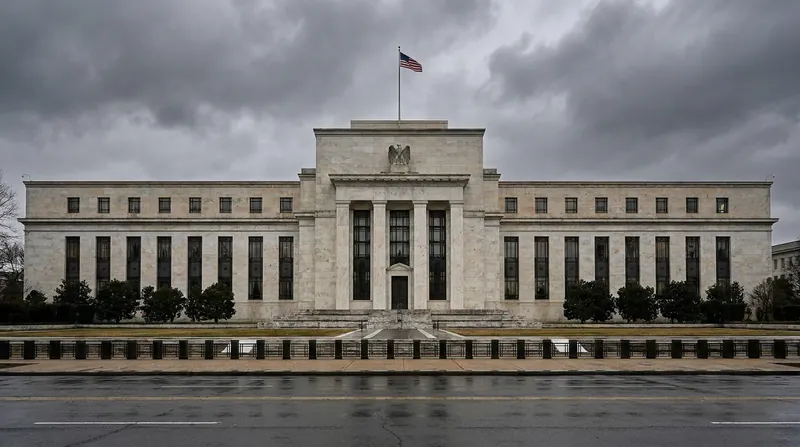
Fed Stress Test: Banks Pass Severe Scenario, Clearing Way for Billions in Capital Payouts
6 sources
Cross-Border Restructuring
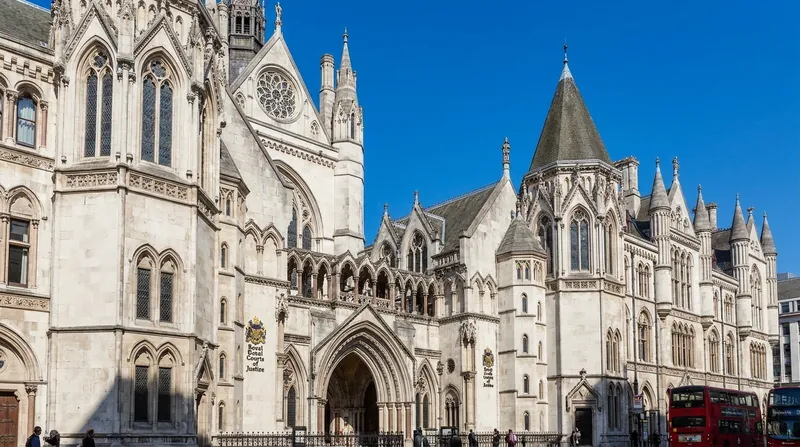
New Fortress Energy Bypassed Chapter 11 to Restructure $9.6 Billion Under UK Law
3 sources
Federal Budget
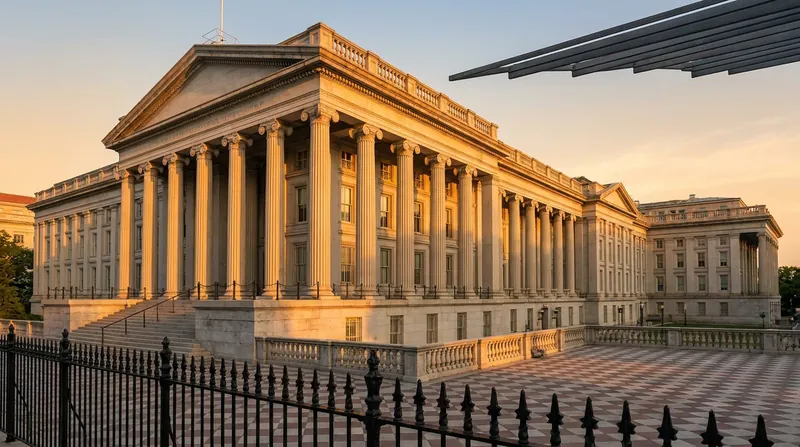
Why Treasury Debt Rollover Pushed Annual US Interest Costs Past $1.2 Trillion
4 sources
Treasury Overhaul
Domestic Funds Replace Primary Dealers as the Dominant Buyers of U.S. Debt
2 sources

Comments
Every angle. Every day.
Get Finance stories with full source coverage and perspective breakdowns, free every day.