
CIA Director Says Russian Recruits Survive Just 20 to 30 Minutes on Ukraine Front Lines
CIA Director John Ratcliffe stated that newly deployed Russian soldiers have an average life expectancy of 20 to 30 minutes on the battlefield, attributing the staggering casualty rate to Ukraine's advanced AI-powered drones.
By Adel Khoury

Share this story
CIA Director John Ratcliffe delivered a stark assessment of the war in Ukraine on Wednesday, revealing that newly deployed Russian soldiers survive for an average of just 20 to 30 minutes after arriving on the front lines. Speaking at the Defense and Innovation Summit in Pennsylvania, Ratcliffe marked the first time a senior U.S. intelligence official has publicly quantified the extreme lethality of the modern battlefield.[1][5]
The staggering casualty rate is driven almost entirely by Ukraine's deployment of artificial intelligence-powered drones. Ratcliffe described the autonomous weapons as "highly specialized, low-cost killing machines" that have fundamentally neutralized Russia's traditional advantages in manpower and artillery.[1][3]
"Our intelligence is consistent with some of the open-source reporting you may have seen in Ukraine," Ratcliffe told attendees. "The average life expectancy of a Russian recruit right now, arriving on the battlefield in Ukraine, is estimated to be between 20 and 30 minutes."[3][4]
The technological shift has resulted in unprecedented losses for Moscow. According to data from the Center for Strategic and International Studies, the Russia-to-Ukraine casualty ratio reached nearly 8-to-1 in the first half of 2026. Researchers estimate that Russia has suffered 1.4 million casualties—including up to 450,000 dead—since the full-scale invasion began in February 2022.[1][7]
Ukraine's drone ecosystem has scaled to industrial proportions. Ukrainian President Volodymyr Zelenskyy recently announced that the country is producing 10 million drones annually, with plans to double that capacity to 20 million. In 2026 alone, Ukrainian forces reported striking over 800,000 verified Russian targets, ranging from infantry and air defense systems to command posts.[2]
The introduction of AI has solved one of the primary vulnerabilities of early drone warfare: electronic jamming. While traditional first-person view (FPV) drones can be disabled by severing the connection between the operator and the aircraft, AI-enabled drones lock onto their targets visually. Once a target is acquired, the drone completes its terminal attack run autonomously, rendering Russian electronic warfare systems largely ineffective.[1][6]
The reality on the ground reflects this technological overmatch. In heavily contested sectors like Pokrovsk and Kostiantynivka, Russian commanders continue to rely on "meat assaults"—sending waves of infantry forward to overwhelm Ukrainian positions. These recruits are immediately detected by persistent aerial surveillance and systematically hunted by drone swarms before they can establish defensive positions.[4][5]
However, some open-source military analysts caution against interpreting the 20-minute figure as a blanket average across the entire 1,300-kilometer front. Skeptics note that such a rapid turnover would mathematically obliterate the entire Russian armed forces within weeks. Instead, the 20 to 30-minute lifespan likely applies specifically to infantry units actively crossing the "grey zone" during these intense, localized assault waves.[8]
Recognizing the strategic shift, Western allies are rushing to bolster Ukraine's autonomous capabilities. The European Union and Ukraine recently signed a $6 billion "Drone Deal" in Kyiv, aimed at integrating European defense manufacturing with Ukrainian battlefield innovation. Meanwhile, U.S. officials are actively discussing expanding funding for Ukrainian AI development programs.[1][2]
For global military planners, Ratcliffe's confirmation serves as a stark warning. The war in Ukraine has demonstrated that massed infantry and heavy armor are highly vulnerable to cheap, autonomous technology. As AI continues to reshape the battlefield, the traditional calculus of warfare has been permanently altered, leaving militaries around the world scrambling to adapt to an era where survival is measured in minutes.[1][6]
Where opinion splits
U.S. and Allied Intelligence
Western defense officials view the casualty rates as proof that autonomous technology is the new decisive factor in modern warfare.
For U.S. and NATO planners, the 20-minute survival rate is a wake-up call. CIA Director John Ratcliffe and other intelligence officials argue that traditional military advantages—such as Russia's vast reserves of manpower and artillery—are being effectively neutralized by cheap, AI-driven drones. This perspective advocates for massive, immediate investments in autonomous weapons systems to ensure Western militaries do not fall behind in a rapidly evolving technological arms race.
Ukrainian Defense Command
Kyiv emphasizes its success in asymmetric warfare and the need to rapidly scale drone production.
Ukrainian officials, including President Zelenskyy and Defense Minister Mykhailo Fedorov, point to the staggering Russian casualty figures as validation of their drone-centric strategy. By producing 10 million drones annually and securing billions in European investment, Ukraine aims to maintain a technological overmatch that compensates for its smaller population. For Kyiv, the focus is on securing uninterrupted supply chains and advanced AI software to keep the "kill ratio" heavily skewed in their favor.
Open-Source Military Analysts
Independent observers caution that the 20-minute figure is likely a localized metric rather than a theater-wide average.
While acknowledging the devastating impact of Ukrainian drones, skeptical OSINT analysts argue that a literal 20-minute average lifespan across the entire Russian military is logistically impossible. They suggest that this extreme mortality rate applies specifically to "meat assaults"—waves of poorly trained infantry sent across open ground in highly contested sectors like Pokrovsk. In quieter sectors of the 1,300-kilometer front, survival rates are undoubtedly higher, making the CIA's figure a reflection of peak combat intensity rather than a universal baseline.
Key points
- CIA Director John Ratcliffe estimates newly deployed Russian soldiers survive just 20 to 30 minutes on the front lines.
- The high casualty rate is attributed to Ukraine's massive deployment of AI-powered attack drones.
- Ukraine currently produces 10 million drones annually and recently signed a $6 billion production deal with the EU.
- The Russia-to-Ukraine casualty ratio reached nearly 8-to-1 in the first half of 2026.
Unanswered questions
- How exactly the 20-minute average is calculated across different sectors of the 1,300-kilometer front.
- Whether Russia is close to developing effective countermeasures or its own equivalent AI drone swarms.
How we got here
Feb 2022
Russia launches its full-scale invasion of Ukraine.
2024-2025
First-person view (FPV) drones become ubiquitous on the battlefield, transforming infantry tactics.
June 2026
Ukraine reports striking over 800,000 verified Russian targets with drones in the first half of the year.
July 15, 2026
The European Union and Ukraine sign a $6 billion drone production deal in Kyiv.
July 16, 2026
CIA Director John Ratcliffe reveals the 20-30 minute survival estimate at a defense summit in Pennsylvania.
- Western Defense Establishment
- Emphasizes the need to adapt to AI warfare and fund Ukraine's autonomous drone programs.
- Ukrainian Military
- Focuses on the success of their asymmetric warfare strategy and the need for more production capacity.
- Skeptical Analysts
- Questions the literal interpretation of the 20-minute average, pointing out the logistical impossibility of such a rapid turnover across the entire front.
Perspectives this story doesn't cover
- Russian Ministry of Defense
- Families of deployed Russian soldiers
Sources
Source coverage
8 outlets
3 viewpoints surfaced








- [1]Defense NewsWestern Defense Establishment
Russian troops survive just 20-30 minutes on Ukraine's front lines, CIA director says
Read on Defense News → - [2]NVUkrainian Military
CIA Chief says AI drones cut Russian recruits' survival to minutes
- [3]Interfax-UkraineUkrainian Military
Russian soldiers survive average of 20-30 minutes on battlefield in Ukraine due to AI drones – CIA Director
- [4]UA.NEWSUkrainian Military
The CIA stated that Russian recruits on the front lines survive for only 20–30 minutes
- [5]112.uaUkrainian Military
CIA Director: A Russian Recruit's Lifespan on the Frontline Is Just 20 to 30 Minutes
- [6]London Business NewsWestern Defense Establishment
CIA reveals Putin's troops survive just '20 minutes' on Ukraine's front line
- [7]Center for Strategic and International Studies
Russian Casualties in Ukraine
- [8]Reddit OSINT CommunitiesSkeptical Analysts
Discussions on CIA Director's 20-minute survival claim
Read on Reddit OSINT Communities →

More in News & Politics
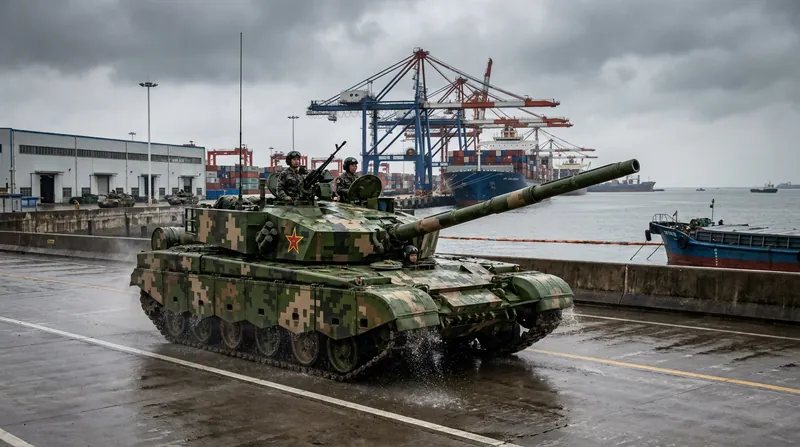
See all →PLA Armor
China Deploys Premier Type 99 Heavy Tanks to Coastal Units Facing Taiwan and Japan
4 sources
Pacific Defense
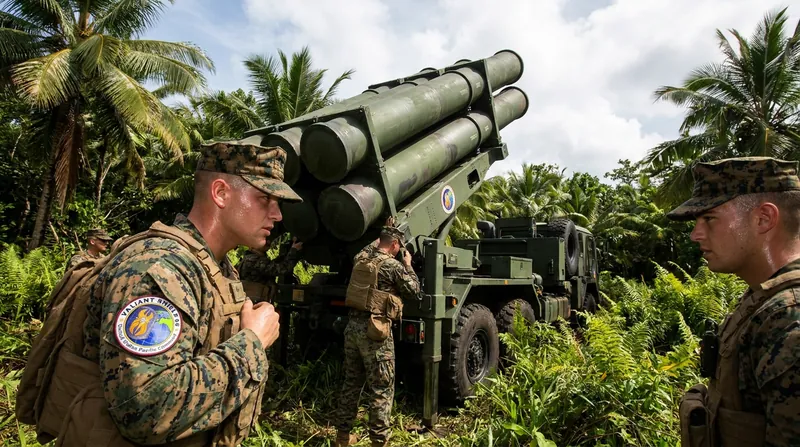
US Marines Deploy Iron Dome-Based Missile Defense System to Japan Amid Taiwan Tensions
3 sources
Pacific Defense
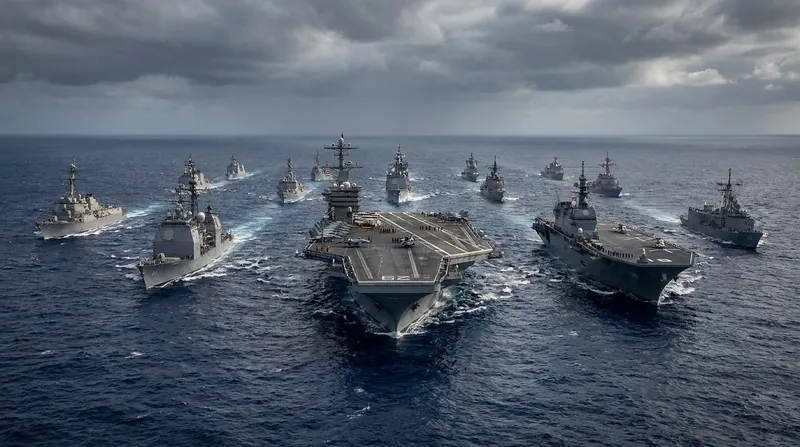
Japanese Torpedo Sinks US Navy Vessel in Friendly Fire Incident During Valiant Shield Exercise
2 sources
Military Space
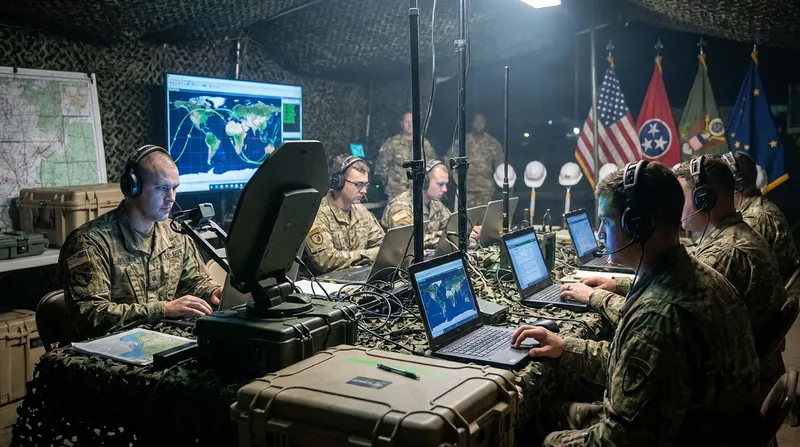
US Army Establishes Dedicated Space Operations Branch in Major Strategic Shift
3 sources
Comments
Every angle. Every day.
Get News & Politics stories with full source coverage and perspective breakdowns, free every day.