
The CLARITY Act's 20 Percent Rule for Shifting Tokens from SEC to CFTC Oversight
A landmark bipartisan bill awaiting a full Senate vote promises to end years of regulatory ambiguity by establishing a clear framework for when a digital asset transitions from a security to a commodity.

Share this story
The United States Senate is preparing to vote on the CLARITY Act, a sweeping bipartisan framework designed to permanently resolve the jurisdictional turf war between the Securities and Exchange Commission (SEC) and the Commodity Futures Trading Commission (CFTC) over digital assets.
After years of inter-agency friction and industry lobbying, the legislation has cleared committee review and is expected to reach the Senate floor next week. The bill represents the most significant maturation point for the digital asset economy to date, offering a statutory roadmap that replaces ad-hoc lawsuits with clear, upfront rules of the road.[1]
At the heart of the legislation is a solution to the industry's most persistent grievance: 'regulation by enforcement.' For the better part of a decade, blockchain developers have operated without a clear definition of when a digital token ceases to be an investment contract and becomes a functional commodity. This ambiguity triggered a wave of capital flight, pushing innovative startups to offshore jurisdictions. The CLARITY Act directly addresses this by introducing a quantifiable 'decentralization threshold' that dictates exactly which federal agency has oversight.[3]
Under the new framework, if a blockchain network can mathematically prove that no single entity or affiliated group controls more than 20 percent of the network's voting power or token supply, its native asset is eligible to be reclassified from a security to a digital commodity. This reclassification is not automatic, but it provides a definitive off-ramp from the SEC's strict disclosure regimes, which were originally designed for centralized corporate equities rather than open-source software protocols.
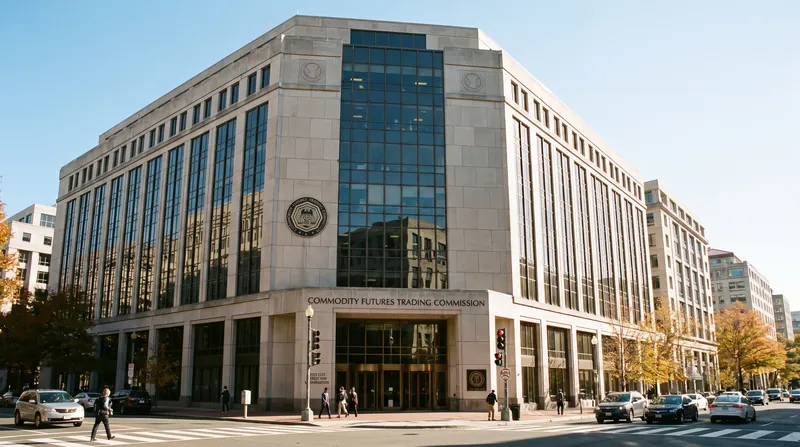
Once a network meets this decentralization threshold, primary spot-market oversight shifts to the CFTC. The commodities regulator is widely viewed by the industry as having a more principles-based approach to market supervision, better suited to the nuances of global, 24/7 digital asset trading. The CFTC will be tasked with policing these spot markets for fraud and manipulation, while overseeing the exchanges and clearinghouses that facilitate the trading of digital commodities.[1][3]
However, the legislation does not strip the SEC of its authority entirely. The securities regulator will retain strict, unquestioned jurisdiction over initial coin offerings (ICOs) and token generation events where a centralized development team is actively raising capital from the public to build a project. The bill codifies that the initial capital formation phase of any digital asset project remains an investment contract, ensuring that early-stage investors receive the full suite of traditional disclosures and protections.[3]
To bridge the gap between these two phases, the CLARITY Act creates a formal safe harbor and a 60-day review window. Once a project matures, launches its mainnet, and achieves the required distribution of tokens, developers can file a certification of decentralization with the SEC. If the agency does not formally object with specific evidence of centralization within 60 days, the asset officially graduates to CFTC jurisdiction, granting the network the legal certainty required for mainstream integration.[2]
The market reaction to the bill's advancement has been overwhelmingly positive. Digital asset markets rallied broadly over the weekend, driven by institutional optimism. Venture capital firms, which have been sitting on record amounts of 'dry powder' due to regulatory fears, are signaling a readiness to deploy billions of dollars into U.S.-based infrastructure projects now that the legal parameters are finally coming into focus.[2]
Beyond jurisdictional boundaries, the bill introduces stringent consumer protection mandates designed to prevent a repeat of the 2022 market collapses. The legislation strictly outlaws the commingling of customer funds with corporate assets—a practice that led to catastrophic losses at several offshore exchanges. Furthermore, any platform facilitating the trade of digital commodities must undergo mandatory, standardized proof-of-reserve audits to cryptographically verify their solvency on a continuous basis.
Decentralized finance (DeFi) protocols also receive a tailored framework under the new bill. Rather than attempting to regulate autonomous, open-source smart contracts directly, the legislation focuses compliance obligations on the front-end interface operators and institutional liquidity providers. This distinction protects individual software developers from liability while ensuring that the access points utilized by retail consumers adhere to anti-money laundering and consumer protection standards.
With strong bipartisan co-sponsorship and backing from major traditional financial institutions eager to enter the space safely, analysts expect the CLARITY Act to pass the Senate and move swiftly to the President's desk. By providing a transparent, predictable regulatory environment, the United States is positioning itself to reclaim its leadership role in the development of the next generation of global financial infrastructure.[1][2]
Viewpoints in depth
Blockchain Developers & Venture Capital
The industry views the legislation as a vital unlock for domestic innovation.
For builders and investors, the CLARITY Act represents the end of a hostile regulatory era. Industry advocates argue that 'regulation by enforcement' forced legitimate projects overseas while failing to stop bad actors. By providing a clear, mathematical threshold for decentralization, venture capital firms argue they can finally deploy billions of dollars into U.S.-based infrastructure projects without the looming threat of retroactive SEC lawsuits classifying their open-source software as unregistered securities.
Traditional Financial Institutions
Wall Street sees the framework as the necessary green light to fully enter the digital asset space.
Major banks and asset managers have long expressed interest in offering digital asset custody, trading, and tokenization services, but have been sidelined by compliance fears. Traditional financial institutions view the shift of spot-market oversight to the CFTC—an agency they already work with extensively for derivatives trading—as a familiar and predictable regulatory environment. They argue this clarity will allow them to safely integrate blockchain technology into mainstream portfolios.
Investor Protection Advocates
Consumer watchdogs emphasize that the bill's strict operational mandates are its most crucial feature.
While the industry focuses on the jurisdictional shift, regulatory analysts and consumer protection groups highlight the bill's structural safeguards. They argue that explicitly banning the commingling of customer funds and mandating continuous proof-of-reserve audits addresses the exact vulnerabilities that harmed retail investors in previous market cycles. For these advocates, the success of the bill lies not in which agency regulates the assets, but in the strict operational transparency forced upon the exchanges that trade them.
Key points
- The CLARITY Act establishes a clear statutory boundary between SEC and CFTC jurisdiction over digital assets.
- Assets can graduate to commodities if their networks meet a 20% decentralization threshold.
- The SEC retains strict authority over initial token sales and centralized fundraising events.
- The bill mandates strict proof-of-reserve audits and bans the commingling of customer funds.
What we don’t know
- How the SEC will interpret the specific technical metrics of the 'decentralization threshold' in practice during the 60-day review windows.
- Whether the CFTC will receive the substantial budget increase required to handle its vastly expanded oversight mandate.
How we got here
2022-2023
Major offshore exchange collapses prompt urgent calls from lawmakers for comprehensive U.S. market structure legislation.
2024-2025
Early drafts of digital commodity bills stall in committee amid inter-agency disagreements over jurisdictional boundaries.
Early 2026
A bipartisan coalition introduces the refined CLARITY Act, bridging the gap between consumer protection and industry growth.
July 2026
The legislation clears committee review and awaits a full Senate floor vote.
- Blockchain Developers & VCs
- Views the legislation as a vital unlock for innovation, ending the era of legal ambiguity and allowing capital to flow freely into U.S. projects.
- Traditional Financial Sector
- Sees the framework as the necessary green light to safely offer digital asset custody and trading services to institutional clients without compliance fears.
- Regulatory Analysts
- Focuses on the mechanics of the inter-agency transition and emphasizes that the strict anti-commingling rules are the bill's most crucial consumer protections.
Perspectives this story doesn't cover
- International regulators who must harmonize their local frameworks with the new U.S. standard.
Sources
Source coverage
3 outlets
3 viewpoints surfaced



- [1]ReutersRegulatory Analysts
U.S. Senate advances CLARITY Act, aiming to settle SEC and CFTC crypto turf war
Read on Reuters → - [2]BloombergTraditional Financial Sector
Crypto Markets Rally as Senate Prepares to Vote on Landmark Jurisdiction Bill
Read on Bloomberg → - [3]Wall Street JournalTraditional Financial Sector
The SEC's Shrinking Crypto Footprint Under the New Senate Framework
Read on Wall Street Journal →

More in Finance
See all →Crypto Regulation
The SEC's Plan to Preempt the CLARITY Act Through Rules on Crypto Offerings and Custody
8 sources

Crypto Regulation
South Korea's Proposed Rules for Seizing and Liquidating Crypto in Civil Disputes
2 sources

Crypto Regulation
European Banking Authority Designates Circle's USDC as First Significant Stablecoin Under MiCA
5 sources

Tokenized Assets
CFTC Updates Guidance to Allow Tokenized Customer Funds and Blockchain Recordkeeping for Derivatives Firms
5 sources
Comments
Every angle. Every day.
Get Finance stories with full source coverage and perspective breakdowns, free every day.