
The Liquidation Explainer: What the Closure of American Signature and Value City Furniture Means for Consumers
Following the bankruptcy of the 78-year-old furniture retailer, all 89 remaining stores are liquidating. Here is what the closure means for consumer deposits, warranties, and the broader home goods market.
By Paige Carter

- Retail Analysts
- Focus on the macroeconomic pressures that made reorganization impossible.
- Consumer Advocates
- Emphasize the risks and lack of recourse for everyday shoppers during corporate liquidations.
- Local News Outlets
- Focus on the local store closures and immediate sales.
Why this matters
When a major retailer liquidates, consumers are often left holding worthless gift cards or unfulfilled orders. Understanding the bankruptcy claims process and liquidation mechanics can help you protect your money and make informed decisions during going-out-of-business sales.
Key points
- American Signature Inc. is permanently closing all 89 of its remaining Value City and American Signature Furniture stores.
- The company failed to find a buyer during its Chapter 11 bankruptcy process, triggering a full liquidation.
- Customers with unfulfilled cash deposits are now unsecured creditors and must file formal claims with the bankruptcy court.
- All liquidation sales are strictly final, and the company is no longer honoring gift cards or extended warranties.
The end of an era has arrived for one of the nation's most recognizable home goods chains. After nearly 78 years in business, American Signature Inc. (ASI)—the parent company of Value City Furniture and American Signature Furniture—is permanently closing its doors. The Ohio-based retailer, which built its brand on offering accessible price points to middle-class households, has officially transitioned from a restructuring effort into a full-scale liquidation. For consumers, the closure represents more than just the loss of a familiar showroom; it triggers a complex legal and financial process that immediately alters the rules for deposits, gift cards, and warranties.[1][4]
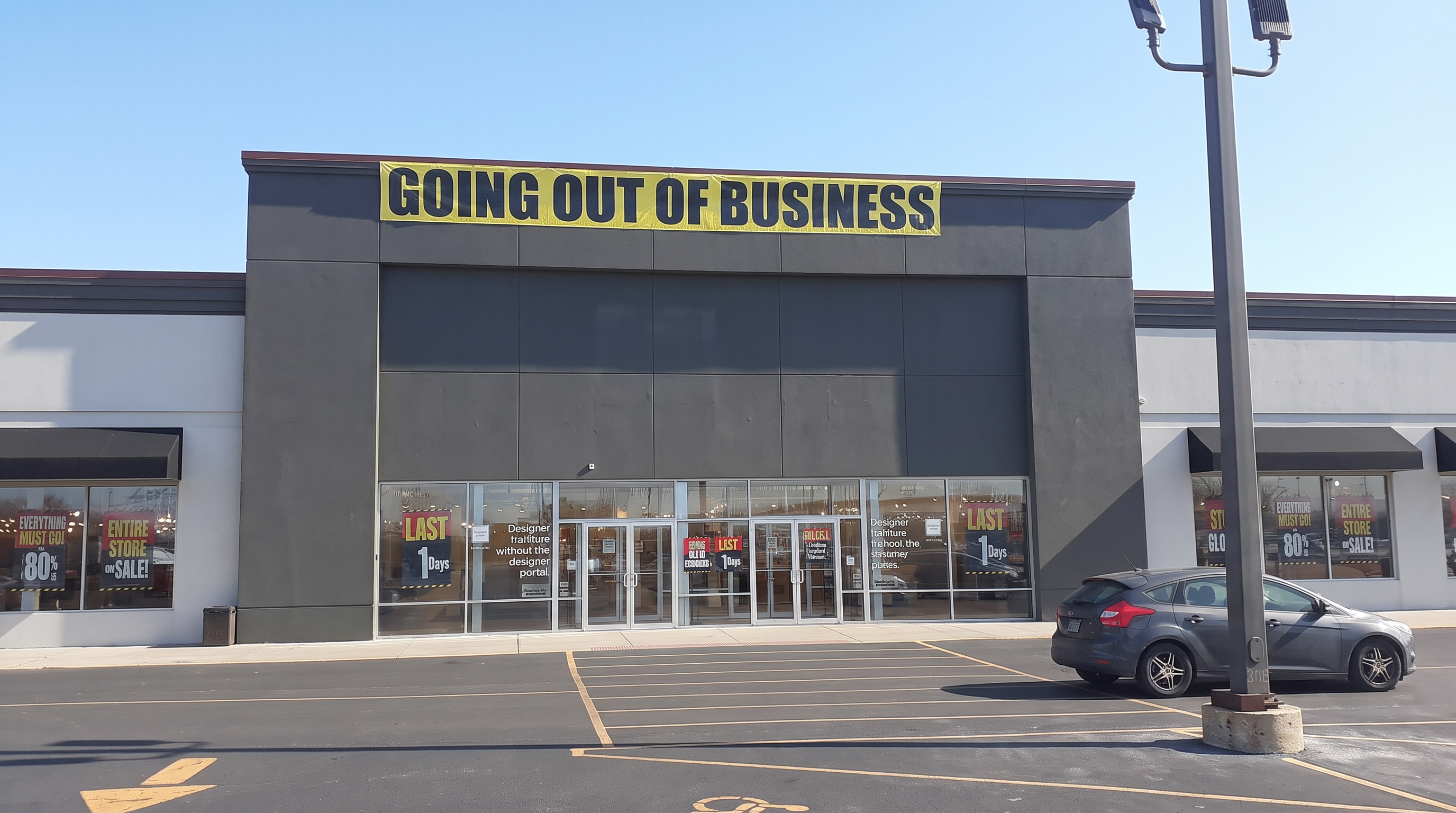
The sheer scale of the liquidation makes it one of the most significant retail events of the year. The closure affects all 89 remaining locations across 13 states, primarily concentrated in the eastern United States. Going-out-of-business sales are currently underway at 79 Value City Furniture stores and 10 American Signature Furniture locations. The sudden shift from standard retail operations to a liquidation environment means that shoppers must navigate a fundamentally different purchasing landscape, where traditional consumer protections are suspended and the primary goal of the store is to liquidate assets as quickly as possible to satisfy creditors.[1][2]
Understanding how ASI reached this point requires looking at the mechanics of corporate bankruptcy. The company initially filed for Chapter 11 bankruptcy protection in November 2025. At the time, the objective was to shed 33 underperforming stores, restructure the company's massive debt load, and emerge as a leaner, more competitive entity. Chapter 11 is designed to give distressed companies breathing room from creditors while they attempt to reorganize. However, a successful reorganization typically requires securing a "stalking horse" bidder—a chosen buyer that sets a minimum baseline price to purchase the company's assets and keep the operations running.[1][5]
Despite a court-supervised auction process, ASI was unable to attract a viable buyer willing to take on the retail operations. Without an influx of capital or a willing acquirer, the restructuring plan collapsed. Consequently, the U.S. Bankruptcy Court for the District of Delaware approved a full liquidation of the company's assets. Control of the remaining inventory was handed over to a specialized joint venture comprising SB360 Capital Partners, Hilco Global, and Gordon Brothers—firms that specialize in extracting maximum value from distressed retail assets.[5][6]
The economic drivers behind the collapse highlight broader vulnerabilities in the home goods sector. In its bankruptcy filings, ASI cited a "severe housing market decline" as the primary catalyst for its financial distress. This decline is largely driven by the "housing lock-in effect." With mortgage rates remaining elevated compared to pandemic-era lows, homeowners are highly reluctant to sell their properties and take on new, more expensive mortgages. Because furniture purchases are heavily correlated with moving into new homes, this stagnation in the housing market led to a steep and sudden drop in consumer demand for large furnishings.[3][5]
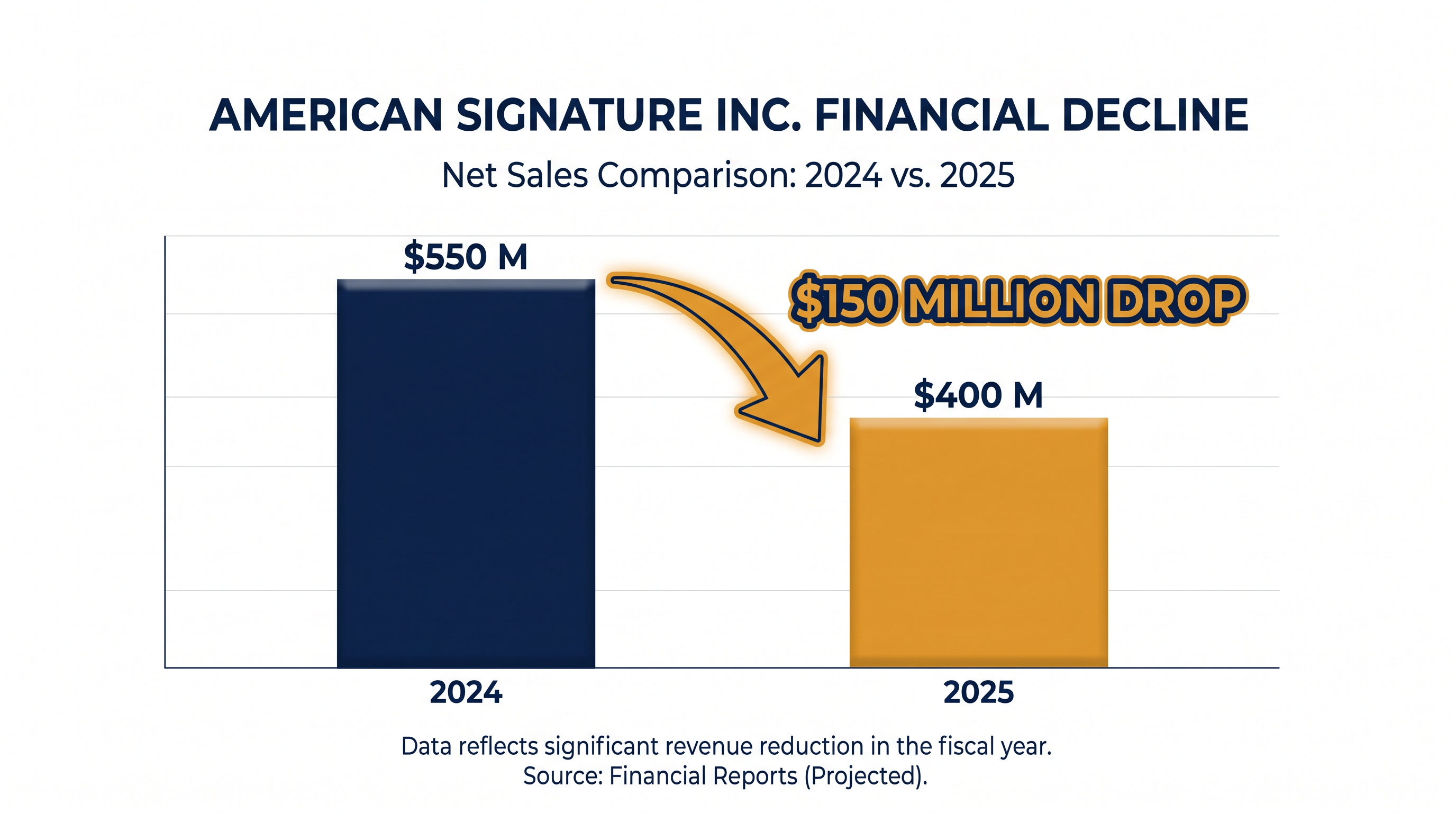
Compounding the housing market freeze were severe operational headwinds. ASI reported that persistent inflation eroded the purchasing power of its core demographic, while newly established tariffs on imported furniture significantly increased the cost of goods sold. These combined pressures squeezed the company's profit margins to an unsustainable degree. According to court documents, ASI's net sales plummeted by nearly $150 million between 2024 and 2025, while its net operating losses widened by $52 million, leaving the company with roughly $117 million in funded debt and $236 million in unsecured claims.[1][5]
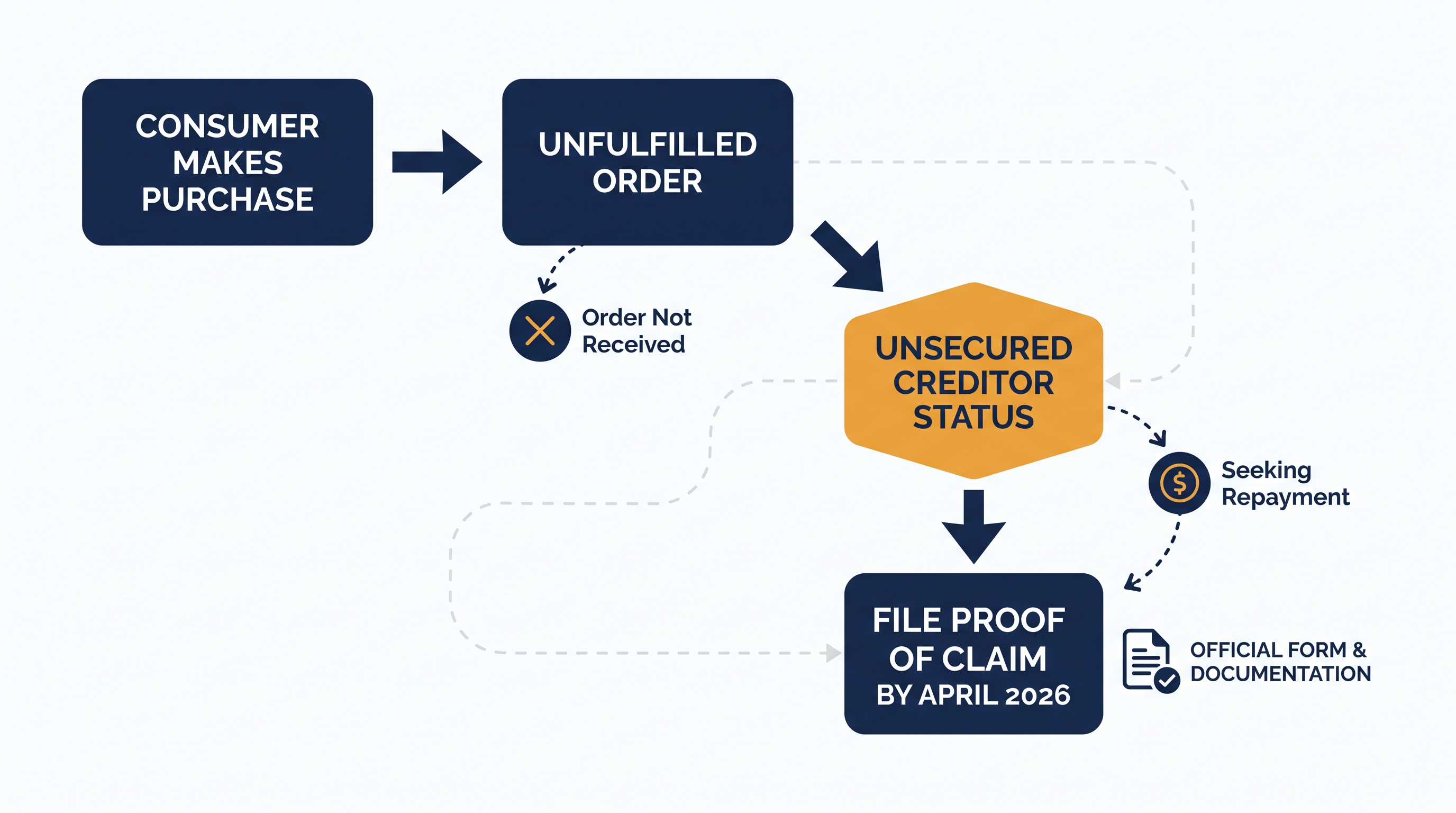
For consumers, the transition from Chapter 11 reorganization to Chapter 7-style liquidation brings immediate and often frustrating consequences. When a retailer liquidates, the standard rules of customer service evaporate. One of the most pressing issues involves customers who placed cash deposits for furniture that was never delivered. Under bankruptcy law, these customers are automatically classified as unsecured creditors. This means they are placed near the back of the line for repayment, behind secured lenders, administrative costs, and the liquidation firms themselves.[2][4]
For consumers, the transition from Chapter 11 reorganization to Chapter 7-style liquidation brings immediate and often frustrating consequences.
To recover their unfulfilled deposits, these customers must navigate the formal bankruptcy process. They are required to file a "proof of claim" with the bankruptcy court before the established bar date, which is set for April 2026. However, consumer protection experts warn that unsecured creditors rarely receive a full refund in retail liquidations. Instead, they may receive only pennies on the dollar, and the payout process can take months or even years to resolve as the court reconciles hundreds of millions of dollars in competing claims.[4][6]
Because of these risks, financial experts strongly advise consumers to use credit cards rather than cash or debit cards for large retail purchases. Shoppers who used a credit card for an unfulfilled Value City or American Signature order have a much stronger avenue for recourse. Under the Fair Credit Billing Act, they can initiate a chargeback with their credit card issuer for goods not received. This process shifts the financial burden away from the consumer and onto the credit card company, which then deals directly with the bankruptcy estate.[4]
The reality of the liquidation sales currently taking place in the stores is also widely misunderstood by the general public. The "Going Out of Business" sales are not managed by ASI employees trying to clear out the backroom; they are orchestrated by the liquidation joint venture. These firms purchase the inventory and then systematically manage the markdowns to maximize their own recovery. While initial discounts are advertised at 25% to 50% off, these percentages are typically calculated based on the manufacturer's suggested retail price (MSRP), which is often significantly higher than the store's previous everyday selling price.[1][7]
Furthermore, the terms of sale during a liquidation are absolute and unforgiving. As explicitly stated on the company's website and store signage, gift cards are no longer being honored. All purchases made during the liquidation phase are strictly final, meaning no returns, exchanges, or refunds are permitted under any circumstances. Shoppers must carefully inspect all merchandise for damage or defects before leaving the store, as they will have no recourse once the transaction is completed and the receipt is printed.[2][4]
Warranties present another layer of uncertainty for shoppers looking to capitalize on liquidation discounts. While manufacturer warranties on specific name-brand items—such as a Sealy or Serta mattress—may still be valid and serviceable directly through the manufacturer, any extended protection plans sold directly by ASI or Value City Furniture are effectively void. Unless those extended warranties were backed and administered by a solvent third-party insurance provider, consumers should assume that any furniture purchased during the liquidation is bought entirely as-is.[4]
The demise of American Signature Inc. is not an isolated incident, but rather part of a larger contraction reshaping the retail landscape. The company joins a growing list of home-furnishing chains that have sought bankruptcy protection in recent years, including Bed Bath & Beyond, Big Lots, and The Container Store. This trend underscores the extreme volatility of the home goods market, which experienced unprecedented, unsustainable growth during the pandemic lockdowns, only to face a severe hangover as consumer spending shifted back toward travel and experiential services.[5]
Beyond the consumer impact, the liquidation leaves a massive real estate footprint that will test local commercial markets. A&G Real Estate Partners is currently marketing the leases and fee-owned properties for the 89 stores and associated distribution centers. Because these are large-format retail spaces—often exceeding 40,000 square feet—finding new tenants in a challenging commercial real estate environment will be difficult. The outcome of these property sales will have lasting implications for the shopping centers and local tax bases in the 13 affected states.[3]
Ultimately, the closure of American Signature and Value City Furniture serves as a stark case study in retail economics and corporate restructuring. It highlights how rapidly macroeconomic shifts—from stagnant mortgage rates to international trade tariffs—can dismantle a legacy business that survived for nearly eight decades. More importantly, the liquidation provides a crucial, real-world reminder for consumers to understand their legal rights, utilize credit card protections for large purchases, and approach highly advertised going-out-of-business sales with a clear, objective understanding of the financial mechanics at play.[1][4]
How we got here
November 2025
American Signature Inc. files for Chapter 11 bankruptcy, initially planning to close 33 underperforming stores.
December 2025
The company attempts to secure a buyer through a court-supervised auction process.
January 2026
Failing to find a buyer, the bankruptcy court approves the full liquidation of all 89 remaining stores.
February 2026
The court approves the sale of the company's real estate leases and fee-owned properties.
April 2026
The deadline (bar date) for consumers and unsecured creditors to file formal claims against the estate.
Viewpoints in depth
Retail Analysts
Focus on the macroeconomic pressures that made reorganization impossible.
Industry analysts view the collapse of American Signature Inc. as a textbook casualty of the post-pandemic economic environment. They point out that the 'housing lock-in effect'—where homeowners hold onto low mortgage rates rather than moving—severely depressed demand for new home furnishings. Combined with rising tariffs and inflation, analysts argue that the company's brick-and-mortar footprint was simply too large to sustain without a massive influx of capital, making liquidation the only mathematically viable outcome.
Consumer Protection Advocates
Emphasize the risks and lack of recourse for everyday shoppers during corporate liquidations.
Consumer advocates are highly critical of how retail bankruptcies leave shoppers vulnerable. They highlight that customers who placed cash deposits for furniture are automatically downgraded to unsecured creditors, meaning they are unlikely to see full refunds. Advocates stress that the sudden invalidation of gift cards and the strict 'all sales final' policies disproportionately harm lower-income shoppers who relied on the chain's accessible price points, urging consumers to always use credit cards for large retail purchases to preserve chargeback rights.
Liquidation Firms
View the closure as an orderly mechanism to maximize remaining asset value.
For the joint venture managing the closure—SB360 Capital Partners, Hilco Global, and Gordon Brothers—the liquidation is a highly structured financial operation. Their primary objective is to efficiently convert the remaining inventory into cash to satisfy secured creditors. They argue that the tiered discount strategy, starting at 25% to 50% off, is designed to clear out millions of dollars of merchandise rapidly while still capturing the highest possible return for the bankruptcy estate before the store leases expire.
What we don't know
- How much, if any, of their original deposits unsecured creditors will ultimately recover from the bankruptcy estate.
- Which retailers or businesses will take over the 89 large-format commercial real estate leases being auctioned.
Key terms
- Chapter 11 Bankruptcy
- A legal process that allows a company to reorganize its debts and assets while continuing to operate, though it can pivot to liquidation if reorganization fails.
- Stalking Horse Bidder
- An initial buyer chosen by a bankrupt company to set a minimum baseline bid for its assets, preventing lowball offers at auction.
- Unsecured Creditor
- An individual or entity owed money by a bankrupt company that does not have a lien on specific assets, placing them lower in priority for repayment.
- Proof of Claim
- A formal legal document filed by a creditor in a bankruptcy case to assert a right to receive payment from the debtor's estate.
- Housing Lock-In Effect
- An economic phenomenon where homeowners refuse to sell their properties to avoid losing low mortgage rates, thereby depressing home sales and related retail purchases.
Frequently asked
Can I still use my Value City Furniture gift card?
No. As part of the court-approved liquidation, the company is no longer honoring gift cards, and all purchases are final.
What happens if I paid a deposit for furniture I haven't received?
Customers with unfulfilled orders are considered unsecured creditors. You must file a formal proof of claim with the bankruptcy court, though using a credit card chargeback may offer a faster resolution.
Are the liquidation discounts actually a good deal?
Liquidation discounts of 25% to 50% are typically based on the manufacturer's suggested retail price (MSRP), not the previous in-store price, so consumers should compare prices carefully.
Will my furniture warranty still be valid?
Manufacturer warranties on specific brands may remain valid, but extended protection plans sold directly by the retailer are likely void unless backed by a third-party insurer.
Sources
Source coverage
8 outlets
3 viewpoints surfaced








[1]Retail DiveRetail Analysts
Value City, American Signature Furniture to shutter remaining stores
Read on Retail Dive →[2]Fast CompanyConsumer Advocates
Value City and American Signature Furniture are closing all stores in 2026
Read on Fast Company →[3]CoStarRetail Analysts
Furniture seller American Signature looks to sell dozens of stores in bankruptcy case
Read on CoStar →[4]TheStreetConsumer Advocates
Court-Approved Bankruptcy Liquidation Marks End of Era for Iconic Furniture Retailer
Read on TheStreet →[5]Financier WorldwideRetail Analysts
American Signature files for Chapter 11
Read on Financier Worldwide →[6]ElevenFloRetail Analysts
American Signature: No Competing Bids as Schottenstein Insider Takes Furniture Chain
Read on ElevenFlo →[7]13News NowLocal News Outlets
Value City Furniture closing all remaining stores, months after filing for bankruptcy
Read on 13News Now →[8]WFTVLocal News Outlets
Value City Furniture, American Signature Furniture to close all remaining stores
Read on WFTV →

Every angle. Every day.
Get shopping stories with full source coverage and perspective breakdowns delivered to your inbox.