
World Snooker Tour Injury Report: Craigie's Comeback and Williams' Eye Surgery Decision
As the 2026/27 snooker season begins, several top players are navigating significant health hurdles, highlighted by Sam Craigie's ongoing return from spinal surgery and Mark Williams delaying vital eye treatment.
By Xia Wu
- Player Resilience Focus
- Emphasizes the determination of players to overcome severe physical setbacks and return to elite competition.
- Sports Medicine & Rehabilitation
- Highlights the medical procedures and specialized physiotherapy required to extend snooker careers.
- Competitive Continuity
- Focuses on players who delay or manage medical treatments to avoid missing major tournaments.
Perspectives this story doesn't cover
- Orthopedic surgeons specializing in cue sports
- WST medical exemption board members
- C5/6
- Cervical discs replaced in Sam Craigie's neck
- 6 months
- Time Craigie spent unable to bend over a table post-surgery
- 80%
- Amount of stomach removed in Shaun Murphy's surgery
- 51
- Mark Williams' age as he delays eye surgery
As the 2026/27 World Snooker Tour season gets underway, the physical toll of professional cue sports is taking center stage. While snooker lacks the high-impact collisions of field sports, the repetitive strain of bending low over the baize for up to ten hours a day places immense pressure on the human body.
Chronic neck pain, lower-back fatigue, and deteriorating eyesight are occupational hazards that can quietly derail a promising career. This season, however, the narrative is defined by resilience, as several top players return to the table after overcoming severe medical hurdles.
The most remarkable comeback belongs to former world under-21 champion Sam Craigie, who is fully re-establishing himself on the tour after a harrowing battle with a spinal injury. Craigie spent over a year suffering from debilitating shoulder and neck pain that left him unable to practice.[1][2]
An MRI eventually revealed a slipped disc in his neck, forcing him to make a critical decision about his future in the sport. In July 2024, Craigie underwent a C5/6 anterior cervical disc replacement to alleviate the unbearable nerve pressure.[2]
The initial recovery was far more grueling than anticipated. For the first six months following the operation, Craigie found himself entirely unable to bend over a snooker table to play a shot. The prolonged rehabilitation forced him to miss the entirety of the 2024/25 season, resulting in his drop out of the world's top 64 rankings.[2]
Rather than letting the injury end his career, Craigie fought his way back. Recognizing the severity of his medical absence, the World Snooker Tour granted him a two-year medical exemption card in June 2025. He steadily rebuilt his form, topping his group in the Championship League Snooker upon his return.[1]
By early 2026, Craigie had reached the last 16 of the Welsh Open, and he enters the current 2026/27 campaign actively competing in qualifiers and aiming to reclaim his top-32 status. While Craigie opted for immediate surgical intervention, three-time world champion Mark Williams is dealing with a different kind of physical decline: failing eyesight.[1][3]
While Craigie opted for immediate surgical intervention, three-time world champion Mark Williams is dealing with a different kind of physical decline: failing eyesight.
The 51-year-old Welshman has been suffering from increasingly poor vision in recent years, a massive detriment in a sport that relies on millimeter-perfect sighting. Medical professionals have advised Williams to undergo lens replacement or laser eye surgery to correct the issue.[3]
Unwilling to disrupt his late-career renaissance, Williams has repeatedly chosen to delay the vital procedure. Driven by his dream of capturing a fourth World Snooker Championship title at the Crucible, he postponed the surgery until after the 2026 tournament and continues to manage his vision on the table.[3]
His decision highlights the difficult balance veteran players strike between necessary medical care and maintaining their competitive momentum. Meanwhile, Hossein Vafaei, the Iranian trailblazer, faced his own severe physical crisis when a debilitating spinal injury surfaced in early 2024.[4]
Given the immense strain snooker places on the lower back, spinal issues can easily force early retirement. However, Vafaei opted against going under the knife, choosing instead to pursue a highly conservative rehabilitation route.[4]
Vafaei returned to Iran for an extended period of rest paired with specialized, intensive physiotherapy. The non-surgical approach proved to be a massive success. The injury healed completely, allowing Vafaei to return to the baize with renewed vigor.[4]
His physical recovery culminated in a historic run to the quarter-finals of the 2026 World Snooker Championship, proving that targeted physical therapy can successfully salvage a player's back. Medical interventions in snooker are not limited to the spine and eyes, however.[4]
Former world champion Shaun Murphy took a radically different medical route to extend his career, undergoing gastric sleeve surgery to remove 80 percent of his stomach. While the primary goals were weight loss and improving his mental health, Murphy quickly realized the profound mechanical benefits on the table.[5]
Shedding the excess weight allowed him to bend over the baize far more comfortably and get significantly lower to the shot without physical obstruction. As the qualifiers for the Shenzhen Open and British Open signal the start of the 2026/27 calendar, the tour's injury report serves as a testament to the players' endurance.[5]
Whether through complex disc replacements, intensive physiotherapy, or sheer stubbornness to delay the surgeon's knife, snooker's elite are proving that overcoming the physical demands of the table is just as crucial as potting the final black.
Key points
- Sam Craigie is making a full return to the 2026/27 tour after recovering from a C5/6 anterior cervical disc replacement.
- Craigie missed the entire 2024/25 season due to the neck injury but was granted a medical exemption card by the WST.
- Three-time world champion Mark Williams is delaying vital eye surgery to maintain his pursuit of a fourth Crucible title.
- Hossein Vafaei successfully rehabilitated a debilitating spinal injury using conservative physiotherapy rather than surgery.
How we got here
Early 2024
Hossein Vafaei suffers a debilitating spinal injury but opts for intensive physiotherapy in Iran rather than surgery.
July 2024
Sam Craigie undergoes a C5/6 anterior cervical disc replacement to fix a slipped disc, beginning a grueling recovery.
June 2025
After missing the entire season, Craigie is granted a two-year medical exemption tour card by the World Snooker Tour.
April 2026
Mark Williams delays his planned eye surgery to compete in the World Snooker Championship, where Vafaei reaches the quarter-finals.
August 2026
Craigie and the rest of the tour return to full competitive action for the start of the 2026/27 season.
Sources
Source coverage
5 outlets
3 viewpoints surfaced




- [1]WSTCompetitive Continuity
Sam Craigie: Player Profile and Injury Return
Read on WST → - [2]Daily ExpressPlayer Resilience Focus
Snooker star Sam Craigie has opened up about a horror neck injury
Read on Daily Express → - [3]Daily ExpressPlayer Resilience Focus
World Snooker Championship star delaying vital surgery because of his Crucible dream
Read on Daily Express → - [4]WikipediaSports Medicine & Rehabilitation
Hossein Vafaei: Career and Injury History
Read on Wikipedia → - [5]Daily MirrorCompetitive Continuity
Former snooker world champion Shaun Murphy reflects on 'life-changing' stomach surgery
Read on Daily Mirror →
Comments
More in Sports
See all →Standings
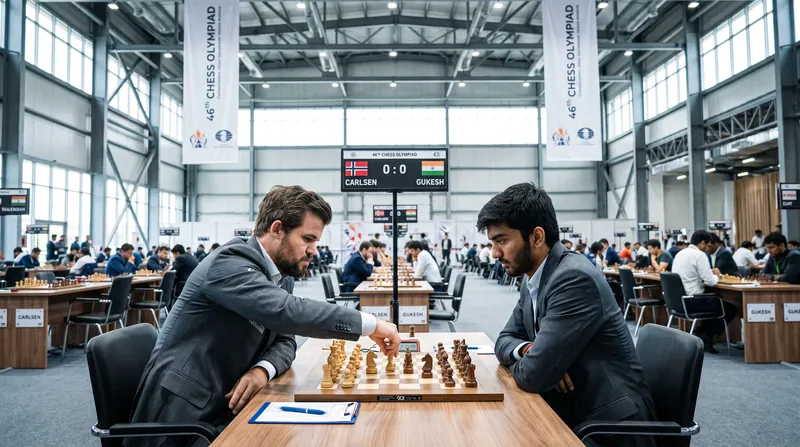
Race to Gold Narrows at 46th Chess Olympiad as US, India, and Uzbekistan Remain Perfect
7 sources
Recap
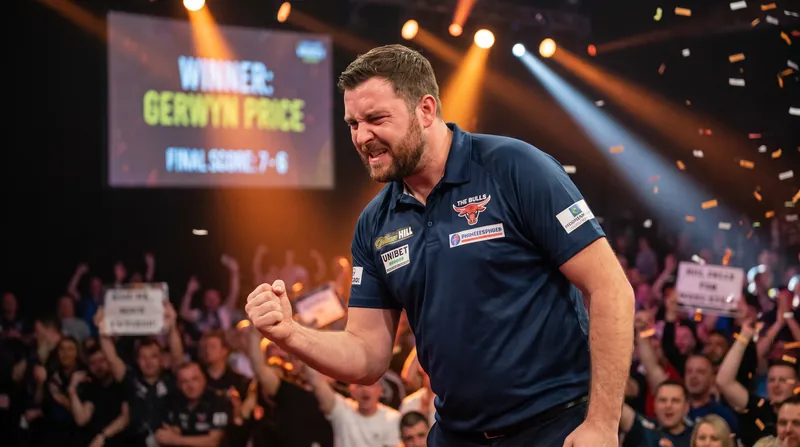
Gerwyn Price Survives Brody Klinge's Stunning Fightback at World Series of Darts Finals
4 sources
Storyline
Hockey Australia Launches 'Talent Accelerator 2032' to Fast-Track Next Generation
4 sources
Storyline
Italy Completes Flawless EuroVolley Group Stage as Knockout Phase Arrives in Turin and Sofia
6 sources
Every angle. Every day.
Get Sports stories with full source coverage and perspective breakdowns delivered to your inbox.