
Global Netball Injury Report: Ward and Teague-Neeld Headline Inspiring Returns as Super Netball Stars Conquer Rehab
Giants defender Jodi-Ann Ward and West Coast Fever vice-captain Alice Teague-Neeld have successfully navigated grueling rehabilitation programs to return to the court. Their milestones highlight a broader wave of resilience across global netball, as players increasingly overcome severe setbacks to reclaim their elite status.
By Jackson Reed

- Rehabilitating Athletes
- Players emphasize the immense mental fortitude required to survive long-term rehab and view the process as a crucible for building resilience.
- Medical & Sports Science Experts
- Medical professionals focus on biomechanics and the necessity of conservative, progressive loading to prevent secondary ruptures.
- League & Club Management
- Administrators prioritize player welfare, conservative injury management, and finding temporary replacement players to maintain competitive balance.
Perspectives this story doesn't cover
- Grassroots players facing similar injuries without elite medical funding
- Surgeons and physical therapists specializing in female-specific biomechanics
The short answer
- Giants defender Jodi-Ann Ward has returned to competitive play in the Netball NSW Heart Kids Cup following an ACL tear.
- West Coast Fever's Alice Teague-Neeld successfully returned from a severe back injury to help push her team toward the finals.
- Data shows 80% of netball ACL injuries are non-contact, driven by the immense vertical forces of single-leg landings.
- Leeds Rhinos star Jaz Brown will miss the Commonwealth Games after suffering an Achilles injury that requires surgery.
The physical demands of elite netball exact a heavy toll on the human body, but the 2026 season is being defined as much by inspiring comebacks as it is by the injuries themselves. Across the globe, players are turning devastating physical setbacks into triumphs of modern sports science and profound personal resilience. From the high-stakes courts of Australia's Suncorp Super Netball to the UK's Netball Super League, athletes are proving that a major rupture or fracture is no longer a definitive career death sentence, but rather a grueling detour that often leads to a stronger, more mentally fortified return to the game.[1][2]
Leading the charge in Suncorp Super Netball is Giants Netball defensive stalwart Jodi-Ann Ward. After suffering a devastating torn anterior cruciate ligament (ACL) in round seven of the previous season, Ward has finally crossed a major threshold in her long recovery journey. In a significant milestone, she returned to competitive play by taking the court for the Manly Warringah Sapphires in the Netball NSW Heart Kids Cup. This localized competition provides the perfect controlled environment for a player needing to test their reconstructed knee against live, unpredictable opposition without the immediate cutthroat pressure of a national broadcast.[1]
This milestone represents a crucial step in rebuilding her match fitness, spatial awareness, and physical confidence before she officially rejoins the elite Super Netball ranks. Giants Head of Performance Tom Reddin publicly praised Ward’s elite discipline throughout the lonely months of rehab, noting that the opportunity to play quality minutes in a well-managed, supportive environment is an invaluable step for her progression. While the club has not set a definitive timeline for her Super Netball return, her successful outing with the Sapphires proves her comeback is firmly on track.[1]
Across the country, West Coast Fever vice-captain Alice Teague-Neeld has mounted her own highly successful return to the court. The 30-year-old star was sidelined from rounds six through eight with a severe back injury—the first major physical setback of her otherwise durable and consistent career. Missing crucial mid-season fixtures forced the Fever to reshuffle their attacking combinations, and Teague-Neeld’s absence was sorely felt as the team navigated a grueling stretch of the fixture list without their veteran leader orchestrating the front third.[2]
Teague-Neeld admitted that the injury took a significant mental toll, particularly with Australian Diamonds national team selection for the Commonwealth Games looming heavily on her mind. However, by shifting her focus entirely to controlling the minutiae of her rehabilitation and helping the Fever secure a home semi-final, she managed to block out the external noise. Her recent return to the court has been vital in pushing the Fever toward a top-two finish, proving that her meticulous approach to recovery paid immediate dividends for her club.[2]
The psychological hurdle of returning from a long-term injury is often described by players as being just as daunting as the physical rehabilitation. Melbourne Vixens and Australian Diamonds star Kiera Austin recently reflected on her own grueling 10-month ACL recovery from the 2021 season, describing the agonizing layoff as a pivotal career moment. Rather than viewing the injury as a tragedy, Austin explained that the isolation and repetitive nature of the rehab process forced her to confront her own vulnerabilities and rebuild her confidence from the ground up.[3]
The psychological hurdle of returning from a long-term injury is often described by players as being just as daunting as the physical rehabilitation.
Austin noted that the grueling rehab process taught her profound lessons about her body’s mechanics and her own mental fortitude. She now views the lengthy layoff as something she is "weirdly grateful" for, as it instilled a deep, unshakable resilience that she carries into her 2026 Commonwealth Games campaign. By learning to trust her knee again and accepting that failure is part of the process, Austin believes she is a vastly superior athlete today than she was before the ligament snapped.[3]
The science behind these successful returns has evolved rapidly, driven by a deeper understanding of how the sport uniquely stresses the lower body. According to data published by the British Orthopaedic Association, approximately 80 percent of ACL injuries in netball are classified as non-contact. These catastrophic structural failures frequently occur when a player lands awkwardly on a single leg, experiencing a sudden knee abduction collapse while attempting to decelerate and pass the ball simultaneously. The strict footwork rules of netball, which prohibit taking steps after catching the ball, force players to absorb immense kinetic energy in a fraction of a second, making the knee joint highly vulnerable to rotational forces.[4]
Because a standard one-step landing in elite netball can generate a vertical ground reaction force of up to 5.7 times a player's body weight, modern clubs now utilize highly structured, evidence-based progressive loading programs. These protocols ensure that athletes like Ward and Austin rebuild the necessary biomechanical strength and neuromuscular control before facing the chaotic demands of match play. Physical therapists focus heavily on plyometric drills, landing mechanics, and core stability to guarantee that the repaired ligament can withstand the sheer violence of a top-tier netball fixture.[4]
Of course, the sport's injury landscape remains a harsh and unpredictable reality for many rising stars and established veterans alike. Giants Netball shooting recruit Lucy Austin recently fractured her right foot during a routine training session, a devastating blow that required immediate surgery. Following consultations with both club and national team medical staff, it was determined that the fracture will sideline her for at least 12 weeks, forcing the Giants to scramble for a replacement player to fill the void in their attacking circle for the remainder of the season.[1]
In the United Kingdom’s Netball Super League, the heartbreak is equally palpable. Leeds Rhinos and Vitality Roses international Jaz Brown suffered a devastating Achilles injury during a round three clash against Nottingham Forest. Scans confirmed the worst, ruling the talented athlete out of the 2026 Commonwealth Games in Glasgow and requiring a lengthy, grueling rehabilitation of her own. Despite the crushing disappointment, Brown echoed the resilience of her peers, vowing to use the time away from the court to grow mentally and return stronger for the 2027 season.[5][7]
For some players, a severe injury ultimately signals the end of the road, forcing them to transition into the next phase of their lives. Loughborough Lightning veteran Beth Durant announced her retirement this summer after a final injury sustained in South Africa closed the book on her career. Durant leaves behind a glittering legacy that includes five Netball Super League titles and the astonishing feat of recovering from three separate ACL tears, serving as the ultimate testament to the physical sacrifices required to stay at the top of the sport.[6]
Yet, as Durant’s incredible legacy of resilience shows, the modern netballer is defined by how they respond to profound adversity. With continuous advancements in sports medicine, biomechanical tracking, and a growing emphasis on psychological support during rehab, players facing the operating table today have a clearer, more supported pathway back to the court than ever before. For stars like Jodi-Ann Ward and Alice Teague-Neeld, the scars of their injuries are simply proof of their endurance, setting the stage for the next thrilling chapter of their careers.[1][3][6]
The sequence
2021
Kiera Austin suffers a torn ACL, beginning a 10-month recovery that she credits for building her mental resilience.
2025 Season
Giants defender Jodi-Ann Ward suffers a severe ACL injury in round seven, sidelining her for the remainder of the year.
January 2026
Loughborough Lightning veteran Beth Durant suffers an injury in South Africa, prompting her decision to retire.
March 2026
Jodi-Ann Ward makes her competitive return with the Manly Warringah Sapphires to build match fitness.
May 2026
Alice Teague-Neeld returns to the court for West Coast Fever after missing three rounds with a back injury.
Sources
Source coverage
7 outlets
3 viewpoints surfaced







- [1]Giants NetballRehabilitating Athletes
Ward takes GIANT step in return
Read on Giants Netball → - [2]The West AustralianRehabilitating Athletes
Super Netball 2026: West Coast Fever star Alice Teague-Neeld on injury battle
Read on The West Australian → - [3]Fox SportsRehabilitating Athletes
Kiera Austin returns from ACL injury, Australia's gold medal defence
Read on Fox Sports → - [4]British Orthopaedic AssociationMedical & Sports Science Experts
ACL injuries in netball: A biomechanical overview
Read on British Orthopaedic Association → - [5]Sky SportsLeague & Club Management
England's Jaz Brown ruled out of Commonwealth Games and rest of Netball Super League season through injury
Read on Sky Sports → - [6]Netball Super LeagueLeague & Club Management
Beth Durant announces retirement following injury setback
Read on Netball Super League → - [7]England NetballLeague & Club Management
Jaz Brown injury update
Read on England Netball →
Comments

More in Sports
See all →Standings
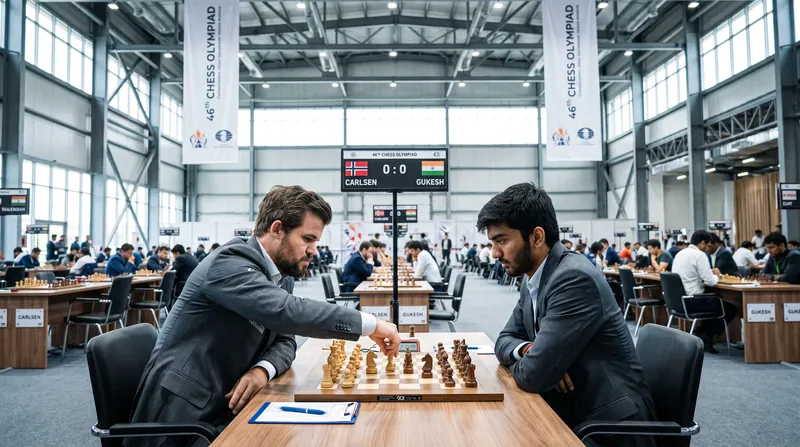
Race to Gold Narrows at 46th Chess Olympiad as US, India, and Uzbekistan Remain Perfect
7 sources
Recap
Gerwyn Price Survives Brody Klinge's Stunning Fightback at World Series of Darts Finals
4 sources

Storyline
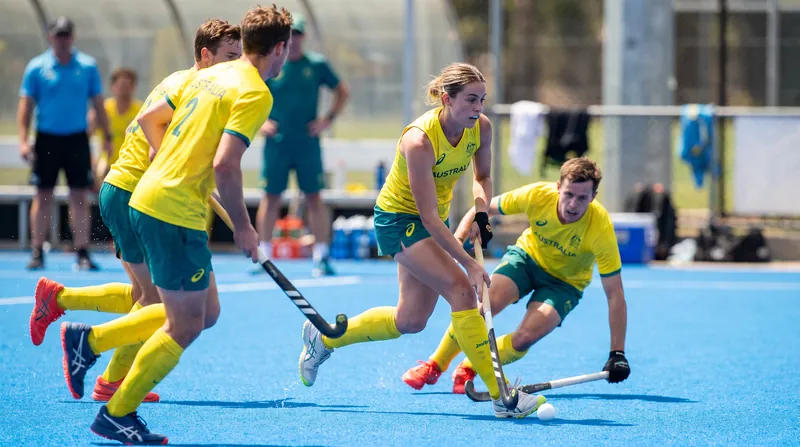
Hockey Australia Launches 'Talent Accelerator 2032' to Fast-Track Next Generation
4 sources
Storyline
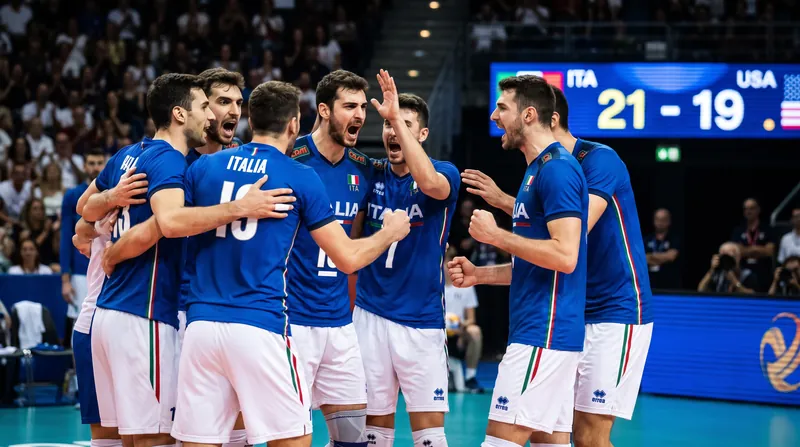
Italy Completes Flawless EuroVolley Group Stage as Knockout Phase Arrives in Turin and Sofia
6 sources
Every angle. Every day.
Get Sports stories with full source coverage and perspective breakdowns delivered to your inbox.