
The Evidence Pack: Do 'Right to Repair' Mandates Actually Reduce E-Waste and Save Money?
As sweeping Right to Repair laws take effect globally in 2026, we examine the data behind the claims of consumer savings, environmental impact, and manufacturer safety concerns.
By Wei Zhang

In short
- Global Right to Repair laws are breaking manufacturer monopolies on parts and diagnostic software.
- Advocates estimate households could save $330 annually, though economic skeptics argue the true savings are much lower.
- Extending device lifespans by just one year could prevent millions of tons of carbon emissions.
For decades, the consumer electronics industry operated on a simple, highly profitable loop: buy, break, replace. But in 2026, a wave of global legislation is fundamentally rewiring that circuit. The "Right to Repair" movement—once a fringe campaign led by DIY tinkerers and independent fixers—has matured into binding law across the European Union and multiple U.S. states.
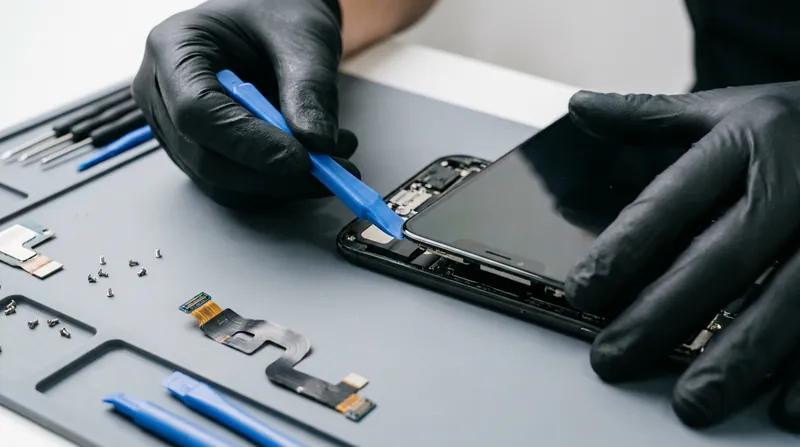
At its heart, Right to Repair legislation mandates that manufacturers must provide consumers and independent repair shops with the same diagnostic software, specialized tools, and original spare parts that they provide to their own authorized service centers. The goal is to break the monopoly that original equipment manufacturers hold over the lifecycle of their products.
The European Union's sweeping Right to Repair Directive, which member states are transposing into national law by mid-2026, establishes a legal guarantee prioritizing repair over replacement. It requires manufacturers of appliances and electronics to supply spare parts for up to a decade after a product's release, and mandates the creation of national online platforms to connect consumers with local repairers.[3]
In the United States, the approach has been a state-by-state patchwork. Following early victories in New York, California, and Oregon, the federal government has increasingly stepped in. The Federal Trade Commission has aggressively targeted restrictive warranties, backed by executive orders aimed at promoting competition in the repair market.
The primary consumer pitch for Right to Repair is financial. Advocacy groups argue that manufacturer monopolies artificially inflate the cost of fixing a device, nudging consumers toward buying a new one. Research published by the U.S. Public Interest Research Group estimates that a competitive repair market could save the average American household $330 annually.[1]
Scaled across the country, this model calculates that repair access would leave $40 billion in the pockets of consumers each year. By allowing independent shops to compete for service contracts, the cost of labor drops, and consumers are no longer forced to pay the premium prices dictated by authorized dealerships.[1]
However, free-market economists argue these figures are drastically inflated. The Competitive Enterprise Institute published an analysis suggesting the actual savings are closer to $55 per household. Skeptics argue that advocacy models assume every broken device would be successfully repaired and ignore the fact that many repairs are already covered by manufacturer warranties or insurance.
Furthermore, economists warn of unintended consequences. Forcing manufacturers to produce, store, and distribute spare parts for up to ten years introduces massive overhead costs. Analysts caution that companies may simply pass these supply-chain costs onto the consumer by raising the upfront retail price of the device, effectively neutralizing the downstream repair savings.
Beyond the wallet, the most urgent driver of repair legislation is the global e-waste crisis. Discarded electrical and electronic equipment is the fastest-growing waste stream on the planet, surpassing 52 million metric tons annually. Much of this waste ends up in landfills, leaching toxic heavy metals into the soil and water.
The environmental toll of electronics is heavily front-loaded; the vast majority of a smartphone's lifetime carbon emissions are generated during the mining of rare earth metals and the manufacturing process, not during its daily use. Therefore, keeping a device in circulation longer is the most effective way to amortize its environmental cost.
The evidence supporting this is robust. A study highlighted by the Sierra Club found that extending the lifespan of all smartphones in the EU by just one single year would prevent the release of 2.1 million metric tons of carbon dioxide by 2030. That is the emissions equivalent of taking more than a million cars off the road.
While manufacturers often tout their recycling programs as a solution to e-waste, the data shows that recycling simply cannot keep pace with consumption. In the EU, less than half of the electronic equipment placed on the market is successfully collected for recycling. Repair, which keeps the highly engineered components intact, is vastly more energy-efficient than melting them down to recover raw materials.
In response to these mandates, manufacturers have mounted fierce opposition, primarily citing safety and cybersecurity. Automakers, tech giants, and agricultural equipment manufacturers argue that modern devices are highly complex, interconnected systems. They warn that allowing untrained individuals to access core software or replace lithium-ion batteries could result in catastrophic failures or fires.
Ford's CEO has publicly argued that while fixing a classic 1973 Bronco in a home garage is a celebrated pastime, attempting to bypass the software of a modern, sensor-laden vehicle puts the driver and the public at physical risk. Manufacturers insist that authorized repair networks exist precisely to guarantee quality control and consumer safety.
Regulators, however, have largely dismissed these safety claims. In its landmark "Nixing the Fix" report, the Federal Trade Commission conducted a comprehensive review of the repair market and concluded there was "scant evidence" to support the manufacturers' justifications for repair restrictions. The agency found that independent repair shops are perfectly capable of safely servicing complex electronics when provided with the proper manuals.[2]
The final frontier of the repair debate is intellectual property. Companies argue that forcing them to share diagnostic software and schematics essentially mandates the surrender of trade secrets. The World Intellectual Property Organization notes concerns that unauthorized access could facilitate counterfeiting and make devices more vulnerable to hacking and data breaches.[4]
To maintain control in a regulated environment, many manufacturers have pivoted to "parts pairing"—a practice where a replacement part must be digitally authenticated by the device's motherboard. If the software does not recognize the serial number of the new part, the device disables certain features, even if the part is a genuine original.
If the software does not recognize the serial number of the new part, the device disables certain features, even if the part is a genuine original.
Lawmakers are already adapting to this tactic. Recent iterations of Right to Repair bills explicitly ban the practice of parts pairing, forcing companies to allow independent parts to function fully. This represents a significant escalation, moving the law from simply requiring physical parts to actively regulating device software architecture.
As the 2026 mandates take root, the tech industry is being forced to adapt its fundamental design philosophy. Companies that once glued batteries into laptops are returning to modular designs with standardized screws. The era of the disposable black-box device is closing, replaced by a legal and economic framework that treats consumer technology not as a consumable, but as a durable asset.[5]
Key terms
- Planned Obsolescence
- The practice of designing products with an artificially limited useful life so they will become obsolete and require replacement.
- Circular Economy
- An economic model focused on minimizing waste and making the most of resources by repairing, reusing, and recycling products.
- Parts Pairing
- A software lock used by manufacturers that ties a specific component (like a screen or battery) to a specific device, preventing independent replacements.
- E-waste
- Discarded electrical or electronic devices, which often contain hazardous materials and represent a rapidly growing global waste stream.
Frequently asked
What exactly does 'Right to Repair' mean?
It is a legal framework requiring manufacturers to provide consumers and independent shops with the parts, tools, and manuals needed to fix their own devices.
Does this apply to all products?
Not yet. Current laws often target consumer electronics and appliances, with frequent carve-outs for medical devices, gaming consoles, and agricultural equipment.
Are independent repairs safe?
A 2021 FTC report found 'scant evidence' that independent repairs pose safety risks, though manufacturers argue that complex devices like modern cars require certified technicians.
Viewpoints in depth
Consumer & Environmental Advocates
Repair mandates are essential to break corporate monopolies and curb the e-waste crisis.
Groups like PIRG and the Sierra Club argue that manufacturers intentionally design products to fail or be unfixable to drive new sales. They point to the massive carbon footprint of manufacturing new electronics and argue that extending device lifespans is the single most effective way to reduce tech's environmental impact.
Manufacturers & Industry Groups
Forced repair access compromises device security, user safety, and intellectual property.
Tech giants and automakers argue that modern devices are highly complex and dangerous to repair without specialized training. They warn that opening up software diagnostics could expose proprietary trade secrets and create cybersecurity vulnerabilities, while also exposing consumers to the risk of counterfeit or subpar replacement parts.
Economic Skeptics
The financial benefits to consumers are vastly overstated.
Think tanks like the Competitive Enterprise Institute argue that advocacy groups inflate the savings of repair laws. They note that many broken items are covered by warranties, and that forcing manufacturers to maintain massive inventories of spare parts for a decade could actually increase the upfront retail cost of new devices, wiping out any downstream savings.
- Consumer & Environmental Advocates
- Argue that repair mandates are essential to break corporate monopolies, save consumers money, and curb the e-waste crisis.
- Manufacturers & Industry Groups
- Argue that forced repair access compromises device security, user safety, and intellectual property.
- Regulators & Policymakers
- Focus on market competition, circular economy goals, and standardizing repair access.
- Economic Skeptics
- Argue that the financial benefits to consumers are vastly overstated and ignore compliance costs.
- Independent Analysts
- Synthesize the evidence to evaluate the true impact of repair policies.
Perspectives this story doesn't cover
- Independent repair shop owners
- Informal e-waste recycling workers in developing nations
Sources
Source coverage
5 outlets
5 viewpoints surfaced





- [1]U.S. PIRGConsumer & Environmental Advocates
Repair Saves People Big
Read on U.S. PIRG → - [2]Federal Trade CommissionRegulators & Policymakers
Nixing the Fix: An FTC Report to Congress on Repair Restrictions
Read on Federal Trade Commission → - [3]European CommissionRegulators & Policymakers
Rules promoting the repair of goods
Read on European Commission → - [4]WIPOManufacturers & Industry Groups
The right to repair: a complex legal landscape
Read on WIPO → - [5]Factlen Editorial TeamIndependent Analysts
Synthesis by Factlen editorial team
Read on Factlen Editorial Team →
More in Technology
See all →Right to Repair
Right to Repair Laws Take Effect Across the US, Saving Consumers Billions and Slashing E-Waste
5 sources
AI Provenance
The Evidence on AI Watermarking: Does It Actually Prevent Disinformation?
5 sources

Nuclear Tech
US Overhauls Nuclear Regulations to Power the AI Boom
6 sources

Nuclear Policy
US Nuclear Regulatory Commission Overhauls Licensing to Meet AI Energy Demand
6 sources

Comments
Every angle. Every day.
Get Technology stories with full source coverage and perspective breakdowns, free every day.