
The Evidence Pack: China Conducts First Submarine-Launched Ballistic Missile Test Into International Waters
China's military successfully fired a submarine-launched ballistic missile into the South Pacific, demonstrating a maturing sea-based deterrent while sparking regional debate over launch notification standards.
By Factlen Editorial Team
- Strategic Defense Analysts
- Analyzing the test as a technical validation of China's continuous at-sea deterrence.
- Regional Allied Governments
- Viewing the test as a destabilizing provocation that undermines regional security.
- Chinese Defense Officials
- Framing the launch as a routine, transparent, and legal military exercise.
Why this matters
This test marks a significant milestone in China's military capabilities, proving its submarines can execute a coordinated, long-range retaliatory strike. The launch into international waters sets a new precedent that heightens geopolitical tensions and underscores the lack of formal notification agreements between major nuclear powers.
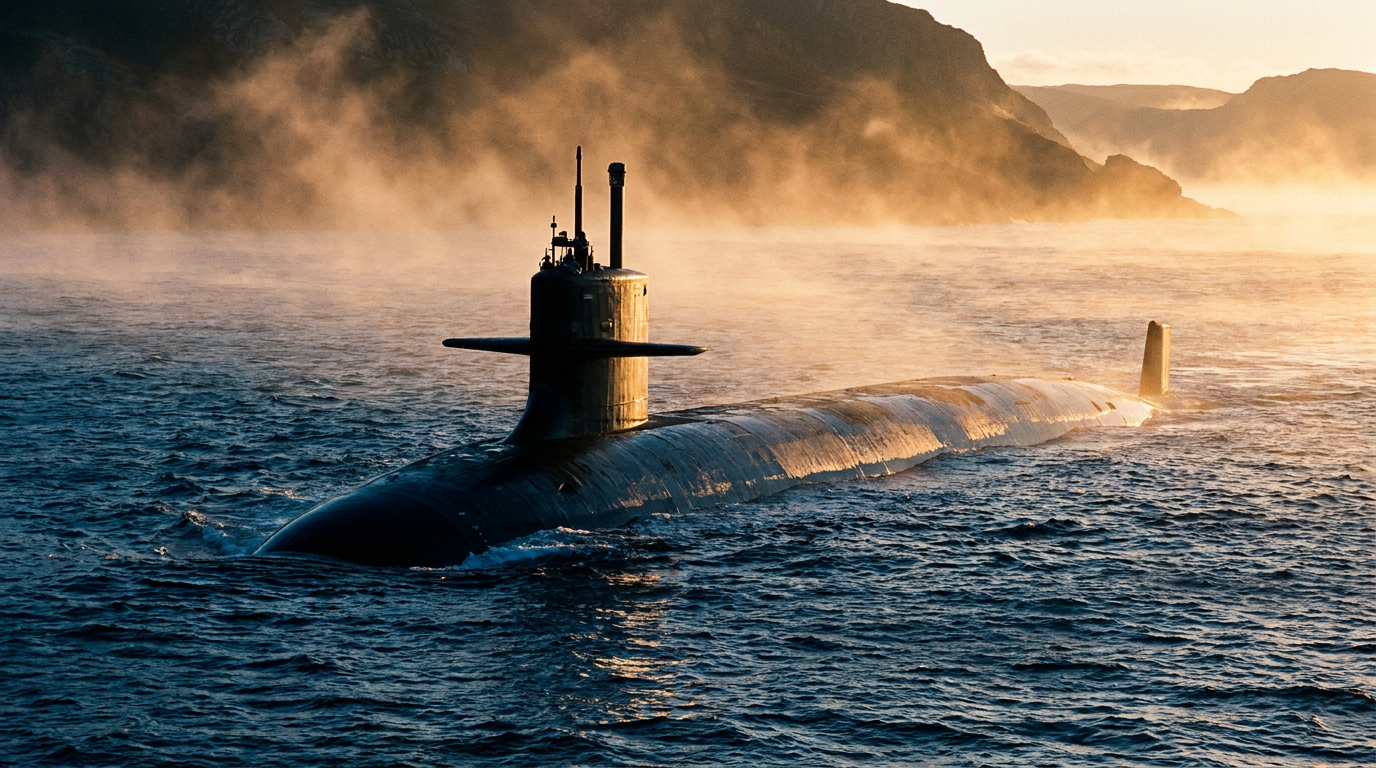
On July 6, 2026, the Chinese People's Liberation Army Navy conducted a submarine-launched ballistic missile test into the Pacific Ocean, marking the first time Beijing has publicly fired an SLBM into international waters. The missile, equipped with a dummy warhead, was launched from a submerged nuclear-powered submarine and splashed down in the South Pacific. The event represents a significant shift in China's testing protocols, which have historically been confined to domestic airspace and inland impact zones.[1][2]
The primary claim from Beijing frames the launch as a standard military exercise. The Chinese Ministry of National Defense stated that the test was a "routine arrangement of annual military training" that complied with international law and was not directed at any specific nation. Chinese officials emphasized that the successful delivery of the dummy warhead to its designated target demonstrates the operational readiness of their naval forces while maintaining a defensive nuclear posture.[3]
Evidence regarding the technical specifics of the launch points to a maturing sea-based deterrent. Defense analysts and tracking data indicate the missile traveled approximately 7,300 to 7,500 kilometers from a launch point likely in the South China Sea. The launch platform is widely assessed to be a Type 094, or Jin-class, nuclear-powered ballistic missile submarine, which forms the current backbone of China's maritime nuclear triad.[1][2]

Uncertainty remains regarding the exact model of the missile tested. Military experts are divided on whether the projectile was a JL-2 or the more advanced JL-3. The distinction carries significant strategic weight; the JL-3 boasts an estimated range of 10,000 to 12,000 kilometers. If the JL-3 was utilized, it confirms that Chinese submarines can hold the continental United States at risk from heavily defended littoral waters near the Chinese mainland, without needing to navigate vulnerable open-ocean transit routes.[1][2][6]
The strategic consensus among international defense researchers is that the test was designed to validate an end-to-end second-strike capability. By executing a full-range overwater flight, the Chinese military proved that its submarines, crews, and command-and-control communication networks can function as a cohesive retaliatory chain. Analysts note that testing over the Pacific allows Beijing to collect reentry and accuracy data that cannot be obtained from shorter, high-loft inland trajectories.[1][2]
The strategic consensus among international defense researchers is that the test was designed to validate an end-to-end second-strike capability.
A central point of contention surrounds the notification protocols preceding the launch. Chinese state media and diplomatic spokespersons claimed that "relevant countries" were notified in advance, presenting the communication as evidence of openness and transparency. Beijing has increasingly pointed to these ad hoc notifications as proof of its commitment to strategic risk reduction.[3]
However, the evidence from allied governments contradicts the assertion of adequate transparency. Diplomatic records show that China provided mere hours of advance notice to the United States, Japan, Australia, and New Zealand. This timeline falls significantly short of the 48-hour standard established by the Hague Code of Conduct against Ballistic Missile Proliferation. Because China is not a signatory to the code, it is not legally bound by its terms, but critics argue the abbreviated warning increases the risk of miscalculation.[1][4][7]

Further diplomatic friction stems from the missile's impact zone. Tracking data confirms the dummy warhead splashed down within the South Pacific Nuclear Free Zone, an area governed by the 1986 Treaty of Rarotonga. While the treaty strictly prohibits the testing of nuclear explosive devices, it does not explicitly ban the transit or impact of unarmed ballistic missiles.[4][7]
Despite the technical legality of the unarmed test, regional leaders argued the action violated the spirit of the non-proliferation agreement. New Zealand's foreign minister stated the launch went against the object and intent of the treaty, while Australian officials characterized the test as a destabilizing provocation. Pacific Island nations, which share a fraught history with mid-century nuclear testing, expressed deep unease over the use of their regional waters for strategic military demonstrations.[4][7]
The geopolitical timing of the launch provides additional context for the event. The test occurred during a period of dense allied military activity in the Pacific, coinciding with the multinational RIMPAC naval exercises and the signing of a defense pact between Australia and Fiji. Security analysts interpret the launch as a deliberate signal to Washington and its regional partners, demonstrating Beijing's capacity to project force and respond to perceived encirclement.[5]

Historical data underscores the rarity of this event. Prior to a land-based intercontinental ballistic missile test in September 2024, China had not launched a strategic missile into the open Pacific since 1980. The combination of the 2024 land-based test and the 2026 submarine-launched test suggests a coordinated effort to publicly validate both legs of China's long-range nuclear deterrent.[1][2]
Looking forward, the evidence suggests that open-ocean testing may become a new normal for the People's Liberation Army Navy. As China continues to expand its nuclear arsenal and transition toward a posture of continuous at-sea deterrence, defense analysts warn that overwater strategic launches will likely become more frequent. This shift is expected to drive ongoing international demands for Beijing to formalize its notification procedures and engage in broader arms control dialogues.[1][2]
Viewpoints in depth
Chinese Defense Officials
Framing the launch as a routine, transparent, and legal military exercise.
Chinese military and diplomatic representatives maintain that the SLBM test was a standard component of their annual training schedule, entirely consistent with international law. They emphasize that the advance notifications provided to relevant countries demonstrate Beijing's commitment to transparency and strategic risk reduction. From this perspective, the modernization of China's sea-based nuclear forces is a defensive necessity aimed at safeguarding national security and maintaining global strategic stability, rather than an offensive provocation.
Regional Allied Governments
Viewing the test as a destabilizing provocation that undermines regional security.
Governments in the Indo-Pacific, including Australia, New Zealand, and Japan, view the launch as a coercive display of military power that heightens regional tensions. They argue that firing a strategic missile into the South Pacific Nuclear Free Zone, even without a nuclear payload, violates the spirit of the Treaty of Rarotonga. Furthermore, these nations criticize the abbreviated advance notice, arguing that such ad hoc communication protocols increase the risk of miscalculation and demonstrate a disregard for established international norms like the Hague Code of Conduct.
Strategic Defense Analysts
Analyzing the test as a technical validation of China's continuous at-sea deterrence.
Military researchers and defense analysts focus on the operational significance of the test, viewing it as proof that China's sea-based nuclear deterrent is maturing. By successfully executing a full-range overwater launch, the People's Liberation Army Navy demonstrated that its submarines, communication networks, and missile systems can function cohesively under realistic conditions. Analysts suggest this signals a shift from merely possessing ballistic missile submarines to maintaining a credible, continuous second-strike capability capable of targeting the continental United States from protected littoral waters.
What we don't know
- The exact model of the missile tested, specifically whether it was the older JL-2 or the intercontinental-range JL-3.
- Whether China intends to make open-ocean SLBM testing a regular, recurring component of its annual military training.
- The specific telemetry and reentry accuracy data collected by the Chinese military during the dummy warhead's flight.
Sources
Source coverage
7 outlets
3 viewpoints surfaced







[1]Center for Strategic and International StudiesStrategic Defense Analysts
China Conducts First-Ever Submarine-Launched Ballistic Missile Test into International Waters
Read on Center for Strategic and International Studies →[2]Naval NewsStrategic Defense Analysts
Analysis: China's Pacific SLBM Test Signals Shift Toward Continuous At-Sea Deterrence
Read on Naval News →[3]Global TimesChinese Defense Officials
China's advance notification of submarine missile launch test shows openness, transparency: spokesperson
Read on Global Times →[4]Agencia EFERegional Allied Governments
China's conduct over its launch of a ballistic missile into the South Pacific was not consistent with international law
Read on Agencia EFE →[5]Radio Free AsiaStrategic Defense Analysts
China's test of a submarine-launched ballistic missile into the Pacific aimed at signaling military reach
Read on Radio Free Asia →[6]The Yomiuri ShimbunRegional Allied Governments
China has launched a submarine-launched ballistic missile (SLBM) into international waters
Read on The Yomiuri Shimbun →[7]Defense NewsRegional Allied Governments
China's SLBM test strains South Pacific nuclear-free zone
Read on Defense News →
Every angle. Every day.
Get defense security stories with full source coverage and perspective breakdowns delivered to your inbox.