
The Canvas Breach: Exploiting Free-for-Teacher Flaws to Access 275 Million Records
Following a major ransomware attack on the Canvas learning management system, millions of students and educators are navigating the fallout. This explainer breaks down how the vulnerability was exploited, what data was exposed, and how the education sector is responding.
By Paige Carter

Share this story
The Canvas Learning Management System serves as the digital backbone for modern education, utilized by thousands of institutions to manage coursework, grades, and student-teacher communications. In May 2026, that critical infrastructure faced a severe stress test when a massive data breach disrupted operations globally, forcing schools to delay assignments and alter final exam schedules.[1]
The incident began in late April when unauthorized actors breached Instructure, the parent company of Canvas. The notorious extortion group ShinyHunters quickly claimed responsibility, asserting on their dark web leak site that they had stolen 3.65 terabytes of uncompressed data. This massive haul reportedly encompassed 275 million user records across nearly 9,000 schools and universities worldwide.
The mechanism of the breach centered on a specific vulnerability within Instructure's "Free-for-Teacher" environment. Attackers weaponized an unspecified flaw related to support tickets, allowing them to gain initial access to the broader system and bypass standard enterprise security perimeters that typically protect institutional data.[1]
Once inside the network, the hackers exfiltrated a massive trove of user information. Instructure confirmed that the exposed data included names, email addresses, student identification numbers, course enrollments, and a vast quantity of private messages exchanged between students and faculty within the Canvas platform.
Crucially, the breach did not compromise the most sensitive tiers of personal data. Forensic investigations conducted by Instructure and third-party experts found no evidence that passwords, dates of birth, government identifiers like Social Security numbers, or financial information were accessed. This distinction significantly mitigates the immediate risk of severe identity theft for affected students.
The attack escalated dramatically on May 7 when ShinyHunters launched a second wave of unauthorized activity. The group managed to deface Canvas login portals at roughly 330 institutions, replacing standard login screens with public extortion messages that demanded a ransom be paid by May 12, threatening a full data leak if their demands were ignored.
This aggressive public pressure tactic forced many institutions to temporarily take their Canvas platforms offline to assess the damage, causing widespread disruption. Universities across the United States and Australia were forced to grant emergency assignment extensions and, in some cases, postpone or completely cancel final exams during one of the most critical weeks of the academic year.[1]
Facing a hard deadline and the catastrophic threat of billions of private student messages being published online, Instructure made the controversial decision to negotiate. On May 11, the company announced it had reached an "agreement" with the unauthorized actors, a move widely interpreted by cybersecurity experts and industry analysts as a substantial ransom payment.
In exchange for the undisclosed payment, Instructure stated that the pilfered data was returned to their control. The company also reported receiving "digital confirmation of data destruction" in the form of shred logs—technical reports generated by programs that process data to make it permanently unrecoverable. The hackers also reportedly provided assurances that no individual customers would be separately extorted.[1]
The decision to pay the ransom highlights a persistent dilemma in modern cybersecurity. While federal agencies like the FBI and international governments strongly advise against paying ransoms—arguing that it funds future criminal enterprises and offers no absolute guarantee of data destruction—companies often feel compelled to pay to prevent catastrophic privacy violations and restore operational continuity.[1]
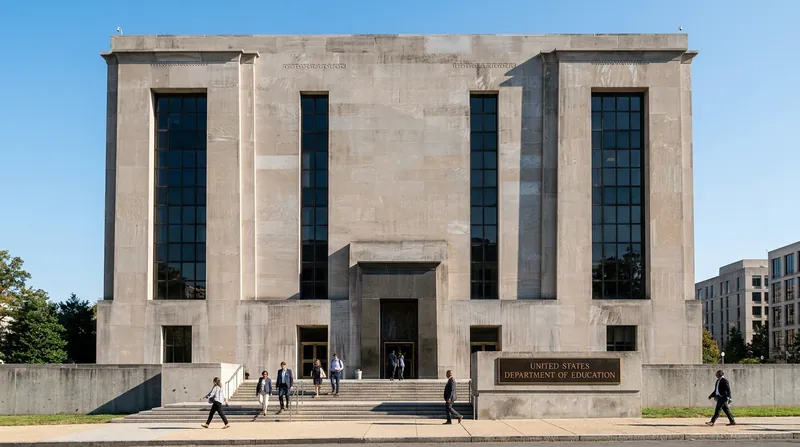
In the wake of the breach, the U.S. Department of Education intervened, issuing urgent guidance to the entire education sector. The Department strongly urged all K-12 schools and higher education institutions to implement Multi-Factor Authentication (MFA) uniformly across all accounts, noting that the compromised "Free-for-Teacher" accounts lacked this critical layer of protection.
The incident has triggered a complex legal and regulatory fallout that will likely take months to resolve. Affected institutions are currently working closely with legal counsel to navigate their independent notification obligations under state data breach laws and the federal Family Educational Rights and Privacy Act (FERPA), assessing whether the exposed messages constitute protected educational records.
Beyond the immediate legal concerns, the Canvas breach serves as a stark reminder of the systemic risks inherent in centralized Software-as-a-Service (SaaS) platforms. As educational ecosystems become increasingly interconnected and reliant on a handful of major vendors, a single vulnerability can amplify operational disruption and privacy exposure on a massive global scale.
For students and educators, cybersecurity experts advise heightened vigilance in the coming months. While passwords were not exposed in this specific breach, the theft of email addresses and institutional affiliations significantly increases the risk of targeted phishing campaigns designed to harvest further credentials or distribute malware.
Key points
- Hackers breached Instructure's Canvas platform, exposing data from up to 275 million users.
- Exposed data includes names, emails, and private messages, but not passwords or financial information.
- Instructure paid a ransom to the ShinyHunters group to secure the deletion of the stolen data.
- The U.S. Department of Education is urging all institutions to mandate multi-factor authentication.
What we don’t know
- Whether the ShinyHunters group retained copies of the stolen data despite providing 'shred logs'.
- The exact number of individual students whose private messages were exposed in the breach.
- How many affected institutions will face regulatory penalties for failing to secure their Canvas environments.
How we got here
Late April 2026
Unauthorized actors exploit a vulnerability in the Free-for-Teacher environment to access Canvas systems.
May 3, 2026
The ShinyHunters extortion group claims responsibility, listing Instructure on its dark web leak site.
May 7, 2026
Attackers deface Canvas login portals at roughly 330 institutions with public ransom demands.
May 11, 2026
Instructure announces it has reached an agreement with the attackers and received confirmation of data destruction.
May 12, 2026
The U.S. Department of Education issues guidance urging all institutions to implement MFA.
- Institutional Pragmatists
- Believe that paying the ransom was a necessary evil to prevent the mass publication of sensitive student communications and restore critical systems.
- Cybersecurity Purists
- Argue that paying ransoms funds future criminal enterprises and offers no absolute guarantee that stolen data is actually destroyed.
- Privacy Advocates
- Focus on the systemic risks of centralized EdTech platforms, arguing for stricter data minimization policies and stronger regulatory oversight.
Perspectives this story doesn't cover
- Individual students whose private communications were exposed
- K-12 school district IT administrators managing the fallout
Sources
Source coverage
1 outlets
3 viewpoints surfaced

- [1]The GuardianInstitutional Pragmatists
Man charged with DV murder after allegedly shooting Gold Coast mother who could ‘light up any room’
Read on The Guardian →

More in Education
See all →Digital Accessibility
How the DOJ's New ADA Mandate is Forcing Public Colleges to Overhaul Online Learning
2 sources

AI in Education
As Majority of Students and Faculty Use AI, Higher Ed Shifts from Bans to Integration
3 sources

Digital Accessibility
New WCAG 2.1 Accessibility Mandates Threaten EdTech Vendors With K-12 Procurement Bans and Legal Liability
8 sources

Title IV Policy
How the New Federal Rule Ties Online College Financial Aid to State Licensure
3 sources
Comments
Every angle. Every day.
Get Education stories with full source coverage and perspective breakdowns, free every day.