
The Economics of Pro Cycling: WorldTour Tradition vs. the 'One Cycling' Franchise Model
A financial analysis of the UCI's rejection of the One Cycling super league reveals that the proposed franchise model would have covered less than three percent of modern team budgets, failing to solve the sport's reliance on title sponsors.
By Aylin Aksoy

In short
- Fans often assume cycling teams are profitable franchises, but they own virtually no structural assets and rely entirely on title sponsors.
- The proposed 'One Cycling' league aimed to centralize TV rights and distribute guaranteed dividends to teams to end sponsor dependency.
- The UCI rejected the closed-league proposal, citing incompatibility with the sport's historic regulatory framework.
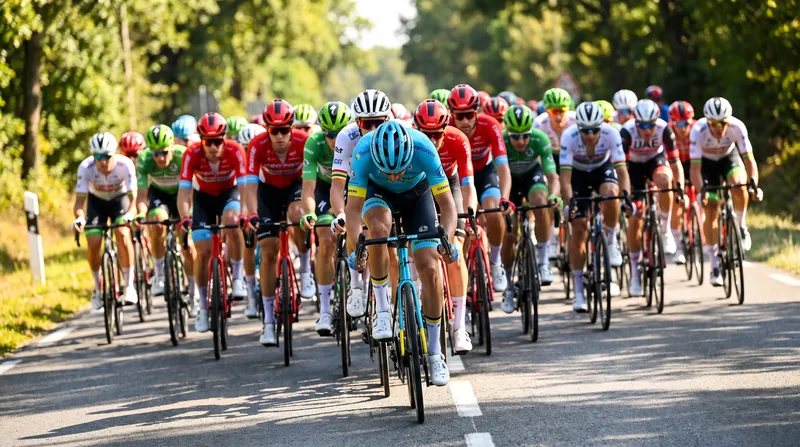
What everyone gets wrong about professional cycling is the assumption that the teams themselves are highly profitable franchises. Fans watch millions of spectators line the roads of the Tour de France and assume the squads are enriched by a massive global television audience, operating much like NFL or Premier League clubs.[4]
The reality of the sport's economic structure is far more precarious. In truth, cycling teams own virtually no structural assets. They do not own stadiums, they do not receive a centralized share of television broadcast rights, and they cannot sell tickets to a public mountain pass.[4]
The traditional WorldTour model relies almost entirely on a volatile system of title sponsorship. A professional cycling team is essentially a high-speed rolling billboard, and its very existence is tied directly to the annual marketing budget of a corporation or the goodwill of a wealthy benefactor.[4]
When a title sponsor decides to pivot its marketing strategy or faces a financial downturn, a team with decades of history can vanish in a matter of months. This inherent instability has driven team managers to seek a structural revolution to protect their organizations.[4]
Enter the "One Cycling" proposal, a highly publicized attempt to drag the sport into a modern franchise era. Spearheaded by prominent team managers, the project sought to create a centralized, Formula 1-style league that would fundamentally alter how the sport generates revenue.[1][2]
The core premise of the breakaway project was ambitious but straightforward: pool the commercial rights, package the races into a cohesive season-long narrative, and distribute the resulting broadcast and ticketing revenue directly to the participating teams.[1][6]
Backed by a proposed €250 million injection from SURJ Sports Investment—the sporting wing of Saudi Arabia's Public Investment Fund—the league promised to end the peloton's existential reliance on title sponsors and provide long-term financial security.[1]
However, the Union Cycliste Internationale (UCI) firmly rejected the proposal, officially excluding it from the 2026–2028 WorldTour calendars. The governing body deemed the closed-league concept incompatible with the sport's historic regulatory framework and lacking in sporting coherence.[2][3]
While the rejection was publicly framed as a defense of the traditional promotion-and-relegation system, a closer look at the underlying financial data reveals that the One Cycling model may not have been the panacea its backers claimed.[6]
In 2026, the combined budgets of the eighteen men's WorldTour teams reached a staggering €663 million. This unprecedented level of investment pushed the average operating budget for a top-tier men's squad to roughly €36.8 million annually.
Under the proposed One Cycling structure, the €250 million sovereign wealth investment was projected to provide an annual dividend of approximately €1 million to each participating men's team over a three-year period.[1]
When normalized against the reality of modern operating costs, that €1 million dividend represents just 2.7 percent of an average team's required annual budget.[6]
This stark mathematical reality highlights the central flaw in the breakaway proposal: even with a centralized league and sovereign wealth backing, teams would still remain fundamentally dependent on title sponsors to cover the remaining 97 percent of their costs.[6]
Acknowledging the ongoing financial strain, the UCI has since launched its own internal consultations to explore alternative economic safeguards, including the potential implementation of a strict budget cap to prevent the wealthiest teams from monopolizing top talent.[5]
Yet, enforcing a budget cap in a truly global sport—where rider salaries are paid across multiple international tax jurisdictions and employment laws—presents a monumental regulatory challenge that has already faced significant pushback from team owners.[5]
Ultimately, the debate between the traditional open calendar and a closed franchise model is not just about governance; it is a battle over who captures the value of a sport that is inherently free to consume.[4]
How we did this
- Method
- A comparative financial normalisation of the traditional UCI WorldTour sponsorship model against the proposed 'One Cycling' centralised franchise model, calculating the structural deficit remaining under the proposed sovereign wealth investment.
- What we found
- Normalising the proposed €1 million annual franchise payout against the €36.8 million average operating budget reveals that the 'One Cycling' model would only cover 2.7% of a team's baseline costs. This demonstrates that despite the promise of a centralised TV rights structure, teams would remain fundamentally dependent on volatile title sponsorships, undermining the primary financial argument for the breakaway.
- What we worked from
- Average current WorldTour team budget: €36.8 million
- Proposed annual payout per men's team under One Cycling: €1 million — Cyclingnews
- Limits of this analysis
- This analysis relies on reported average budgets and leaked investment proposals; individual team budgets vary significantly, and the franchise model may have generated additional unquantified revenue through future broadcast negotiations.
Competing readings
The Traditional WorldTour Model
An open, sponsor-dependent ecosystem governed by the UCI, prioritizing historic races and merit-based promotion.
The case for the traditional model rests on accessibility and historic prestige. Because teams rely entirely on title sponsors rather than shared TV revenue or ticket sales, the sport remains free for fans at the roadside, maintaining a massive, decentralized global audience. The evidence supporting this model is its resilience: despite constant sponsor turnover, the WorldTour continues to attract massive investment, with 2026 budgets totaling €663 million. The case against it is extreme financial volatility. When a sponsor departs, a team can collapse overnight, leaving riders and staff unemployed. This model fits well when a team secures a long-term, deep-pocketed backer willing to fund a passion project, but it does not fit when attempting to build a self-sustaining, profitable sports franchise.
The 'One Cycling' Franchise Model
A proposed centralized league aiming to pool TV rights, introduce ticketed events, and distribute guaranteed dividends to member teams.
The case for the franchise model is financial sovereignty. By centralizing broadcast rights and introducing VIP ticketing, teams would theoretically receive guaranteed annual dividends, reducing their existential reliance on title sponsors. The evidence for this approach points to Formula 1, where centralized commercial packaging transformed team valuations. The case against it, however, is the scale of the proposed solution versus the actual operating costs. The €250 million investment from SURJ Sports Investment was projected to yield roughly €1 million annually per men's team—covering less than 3 percent of a modern €36.8 million WorldTour budget. This model fits well for investors seeking to package and monetize a fragmented sport, but it does not fit when the proposed dividends are too small to actually replace the title-sponsor dependency it claims to solve.
- Traditionalists & Governing Body
- Argues that cycling's open promotion/relegation system and historic monuments are the sport's true value, and that closed leagues risk alienating core fans.
- Franchise Reformers
- Believes the sport must centralize TV rights and guarantee revenue to teams to end the volatile reliance on title sponsors.
Perspectives this story doesn't cover
- Independent Race Organizers
- Roadside Fans
Sources
Source coverage
6 outlets
2 viewpoints surfaced






- [1]CyclingnewsFranchise Reformers
UCI rejects One Cycling project inclusion in WorldTour
Read on Cyclingnews → - [2]Cycling WeeklyFranchise Reformers
UCI rejects One Cycling project as 'incompatible' and 'lacking sporting coherence'
Read on Cycling Weekly → - [3]Union Cycliste InternationaleTraditionalists & Governing Body
The UCI approves the 2026 calendars for the UCI Women's WorldTour and UCI WorldTour
Read on Union Cycliste Internationale → - [4]ProCyclingUKFranchise Reformers
How cycling's outdated business model risks breaking the men's peloton
Read on ProCyclingUK → - [5]Escape CollectiveFranchise Reformers
Exclusive: The UCI is exploring a budget cap
Read on Escape Collective → - [6]Factlen Editorial Team
Synthesis by Factlen editorial team
Read on Factlen Editorial Team →

More in Fitness
See all →Aerobic Base
Sweet Spot vs. Polarized Training: How Weekly Volume Dictates the Optimal Cycling Base
6 sources

Aerodynamic Drag
The 30-Watt Penalty: How Drafting Reduces Aerodynamic Drag and Saves Energy in a Peloton
6 sources
Cycling Physics
The 5% Grade Threshold: How Slope Angle Dictates Whether Weight or Aerodynamics Dominates Cycling Speed
7 sources
Cycling Biomechanics
The Biomechanics of Bike Fit: How Saddle Height, Reach, and Cleat Position Affect Power Output and Injury Risk
8 sources

Comments
Every angle. Every day.
Get Fitness stories with full source coverage and perspective breakdowns, free every day.