
The Economics of an Esports Career: Comparing Player Salary, Prize Money Split, and Streaming Revenue Models
While flashy tournament winnings dominate headlines, the reality of an esports career relies on a complex web of base salaries, revenue sharing, and personal brand monetization. Understanding this economic triad reveals how professional gamers actually sustain themselves in a volatile industry.
By Xia Wu

Share this story
In short
- Base salaries provide the essential financial stability needed for full-time practice.
- Prize money is highly volatile and often subject to complex organizational splits and international taxes.
- Personal streaming and content creation serve as a critical, high-upside financial safety net.
Everyone thinks the path to esports wealth is paved entirely with oversized novelty checks and confetti drops. The prevailing myth is that a player's financial survival depends on winning the World Championship or The International, living paycheck-to-paycheck on tournament brackets. But the reality of a modern professional gaming career is far more corporate and significantly less reliant on the podium. The actual financial engine keeping players afloat is a three-pillar system: guaranteed base salaries, structured prize pool splits, and the highly lucrative, yet exhausting, grind of personal content creation.[1][8]
The stakes for understanding this model have never been higher. As the industry matures past its venture-capital boom, organizations are tightening their belts, and the ongoing market correction is forcing players to become sophisticated financial entities. A single contract negotiation or a poorly structured streaming deal can mean the difference between a sustainable five-year career and burning out with nothing to show for it. Players are no longer just competitors; they are independent businesses managing diverse revenue streams.[1][3]
The foundation of the modern esports economy is the base salary, a concept that barely existed a decade ago. Today, top-tier franchised leagues mandate minimum compensation, transforming competitive gaming from a speculative hustle into a salaried profession. According to recent data leaks and industry analyses, average salaries in major leagues can range wildly depending on the game and the player's market value, providing the essential safety net that allows players to dedicate 12 to 14 hours a day to practice without the looming threat of eviction.[6][7]
However, these salaries are heavily stratified. A star player might command a massive premium, while a rookie earns the league minimum. Furthermore, the shift toward franchise models has stabilized these payouts, but it has also introduced salary caps and luxury taxes in some ecosystems, capping the absolute ceiling for base pay. This guaranteed income is the baseline, but it is rarely the whole story for a top-tier competitor looking to maximize their short career window.[6]
If the salary pays the rent, the prize money is the high-variance bonus structure. When a team wins a major tournament, the players do not simply divide the cash five ways. The distribution is governed by complex contractual splits between the organization, the coaching staff, and the active roster. Industry standards typically see players taking home a significant majority of the prize pool, but this is heavily contingent on the organization's leverage and the specific game's ecosystem.[2][5]
In earlier eras, predatory contracts sometimes saw organizations pocketing the lion's share of winnings. Today, player associations and standardized contracts have largely protected the players' cut. However, the tax implications of winning international events—often subject to heavy withholding taxes in the host country—can significantly reduce the actual take-home pay. A massive headline number often shrinks dramatically once accountants and foreign governments take their respective cuts.[4][7]
The fundamental flaw of relying on prize money is its extreme volatility. A single bad patch, a roster mismatch, or an unlucky bracket draw can wipe out a year's worth of projected income. This is why financial advisors and CPAs specializing in esports consistently warn players against factoring potential winnings into their baseline financial planning. It is a windfall, not a wage.[1][4]
Because of this volatility, the third—and increasingly most vital—pillar of an esports career is personal brand monetization, primarily through platforms like Twitch and YouTube. For many professionals, their competitive career is essentially a loss-leader: a high-visibility marketing campaign designed to funnel viewers toward their personal streams. A player with a modest competitive record but a highly engaging personality can easily out-earn a world champion who refuses to turn on their camera.[3][5]
Streaming revenue is a composite of subscription cuts, direct donations, ad revenue, and personal sponsorships. This dynamic creates a grueling dual-career requirement. Players must grind scrimmages all day to maintain their competitive edge, then stream for hours at night to secure their financial future. The burnout rate is notoriously high, but the financial upside of a successful stream is virtually uncapped, providing a crucial safety net for life after competition.[3]
Beyond direct streaming income, players monetize their likeness through digital items and revenue sharing. In ecosystems like Counter-Strike, the sale of in-game team stickers or player autographs can generate millions of dollars, often dwarfing the actual tournament prize pools. This revenue is typically split between the publisher, the organization, and the players, creating a massive financial incentive to qualify for major events regardless of the final placement.[5][7]
Navigating this triad requires sophisticated financial management. Esports athletes are often classified as independent contractors rather than traditional employees, meaning they are responsible for their own healthcare, retirement planning, and a labyrinth of international tax liabilities. A player might earn a salary in euros, win prize money in dollars, and receive streaming payouts in cryptocurrency, creating a logistical nightmare that requires specialized accounting.[4][8]
As the industry continues to correct from the era of inflated venture capital, the balance between these three pillars is shifting. Organizations are pushing for lower base salaries heavily incentivized by performance bonuses, forcing players to rely more on their personal brands. The players who survive the next decade of esports will not just be the ones with the fastest reaction times, but those who master the mechanics of their own monetization.[1][8]
Terms to know
- Base Salary
- The guaranteed recurring income paid by an esports organization to a player, regardless of tournament performance.
- Prize Pool Split
- The contractual percentage of tournament winnings divided between the players, the coach, and the organization.
- Revenue Sharing
- A model where game publishers distribute a portion of the profits from in-game digital items directly to the teams and players.
- Esports Winter
- A period of market correction in the competitive gaming industry characterized by reduced venture capital funding and organizational downsizing.
Questions readers ask
Do esports players get paid a regular salary?
Yes, most top-tier professional players receive a guaranteed monthly or annual salary from their organizations, which forms the most stable part of their income.
How much of the prize money do players actually keep?
While it varies by contract, industry standards typically allow players to keep between 70% and 90% of the prize money, before taxes and agent fees.
Why do professional players stream so much?
Streaming provides a lucrative secondary income stream through subscriptions and sponsorships, and serves as a financial safety net for when their competitive careers eventually end.
Different angles
Player Advocates
Argue for higher guaranteed base salaries and stronger unionization to protect players from volatility.
Advocates for player rights point out that the extreme hours required to remain competitive at the highest level leave little room for secondary employment. They argue that relying on prize money is inherently exploitative, as it shifts the financial risk of the industry entirely onto the competitors. By pushing for higher base salaries and standardized contracts, this camp aims to turn esports into a sustainable long-term career rather than a high-risk gamble.
Team Organizations
Emphasize the need for sustainable salary caps to offset the massive operational costs of running a franchise.
From the perspective of the organizations writing the checks, the venture-capital-fueled salary boom of the late 2010s was fundamentally unsustainable. Teams argue that they bear the brunt of the operational costs—housing, coaching, travel, and league buy-ins—while players reap the benefits. They advocate for salary caps, performance-heavy bonus structures, and a larger organizational cut of digital item sales to ensure the long-term survival of the teams themselves.
Financial Advisors
Focus on the necessity of treating an esports career as a short-term windfall.
Financial professionals working with esports athletes view the industry through the lens of risk management. Because the average career lifespan of a professional gamer is notoriously short, advisors stress aggressive saving and tax efficiency over lifestyle inflation. They view streaming not just as extra income, but as the essential bridge to a post-competitive career, urging players to build their personal brands while they still have the spotlight.
- Player Advocates
- Argue for higher guaranteed base salaries and stronger unionization to protect players from the volatility of prize pools and the burnout of mandatory streaming.
- Team Organizations
- Emphasize the need for sustainable salary caps and higher organizational cuts of digital items to offset the massive operational costs of running a franchise.
- Financial Advisors
- Focus on the necessity of treating an esports career as a short-term windfall, prioritizing tax efficiency, aggressive saving, and building a post-retirement brand.
Perspectives this story doesn't cover
- Game Publishers
- Tournament Organizers
Sources
Source coverage
8 outlets
3 viewpoints surfaced








- [1]IDEAS/RePEcFinancial Advisors
Demographic and Economic Analysis of Esports - Trends, Career Longevity, and Earnings Dynamics
Read on IDEAS/RePEc → - [2]ResearchGate
Histograms of Esports annual player earnings over time.
Read on ResearchGate → - [3]Scholar CommonsPlayer Advocates
Platform of Growth: An Analysis of Earnings and Social Media Engagement Among Esports Athletes
Read on Scholar Commons → - [4]Monaco CPAFinancial Advisors
Tax & Accounting for Esports Players and Gaming Professionals
Read on Monaco CPA → - [5]Digital Gaming NewsPlayer Advocates
How Esports Players Make Money Beyond Their Base Salary
Read on Digital Gaming News → - [6]Sheep EsportsTeam Organizations
Exclusive: Everything about LEC salaries unveiled
Read on Sheep Esports → - [7]Esports.netTeam Organizations
How much do esports players make? 2025 earnings breakdown
Read on Esports.net → - [8]Factlen Editorial Team
Synthesis by Factlen editorial team
Read on Factlen Editorial Team →

More in Gaming & Esports
See all →VCT Champions
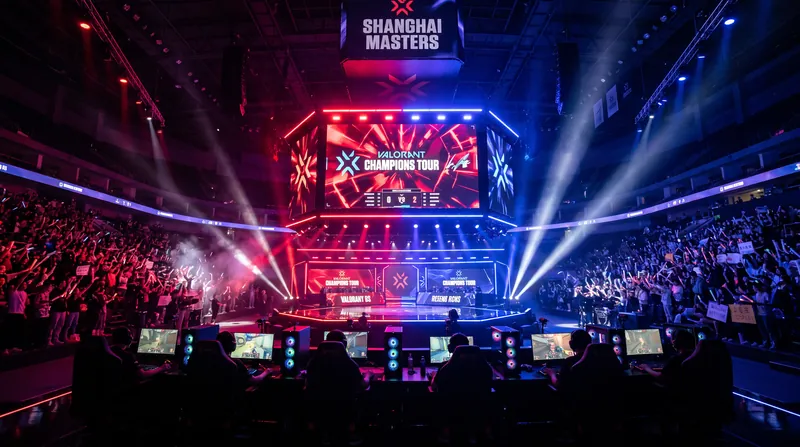
VALORANT Champions 2026 Kicks Off in Shanghai as Final Tournament of Franchised VCT Era
6 sources
Esports Business
Complexity Gaming Ceases Operations After 23 Years as Founder Jason Lake Cites Financial Strain
3 sources

Franchise Quarterbacks
Caleb Williams and Jayden Daniels Suffer Week 2 Injuries, Shaking Up NFL Landscape
3 sources

Tournament Format
The Upper and Lower Bracket: How the Double Elimination Format Guarantees a True Finalist
4 sources

Comments
Every angle. Every day.
Get Gaming & Esports stories with full source coverage and perspective breakdowns, free every day.