
The Anti-Perfection Aesthetic: Why Photographers Are Embracing Blur, Grain, and 'Messy' Reality as a Rejection of AI
As generative AI makes flawless, hyper-realistic images ubiquitous, a growing movement of photographers and brands is deliberately embracing blurry, grainy, and 'messy' visuals to signal authentic human experience.

In short
- A growing 'anti-perfection' movement in photography is intentionally utilizing blur, grain, and messy backgrounds.
- The trend serves as a direct cultural rebellion against the flawless, hyper-realistic imagery generated by AI.
- Gen Z is driving the shift through the popularity of analog film, unposed photo dumps, and the distorted '0.5 photo trend'.
For over a decade, the trajectory of digital photography was defined by a relentless pursuit of technical perfection. Camera manufacturers boasted about 100-megapixel sensors, edge-to-edge sharpness, and autofocus systems that never missed an eyelash. Social media platforms rewarded hyper-curated, flawlessly retouched aesthetics. But in 2026, the visual landscape has reached a breaking point. Generative artificial intelligence can now produce a perfectly lit, tack-sharp, glass-skinned portrait in seconds. Perfection is no longer an achievement; it is a commodity.[1][3]
In response, a powerful counter-movement has taken hold across the creative industry. Photographers, art directors, and everyday creators are deliberately embracing the "anti-perfection" aesthetic. They are intentionally producing images that are soft, blurry, grainy, and off-kilter. What was once considered a technical failure—a missed focus, a harsh flash, a crooked horizon—is now being celebrated as a vital signature of human authorship.[1][6]
This shift is fundamentally a rebellion against the synthetic. When AI tools mastered the art of the flawless image, they inadvertently stripped perfection of its soul. A pristine, ultra-HD photograph now often triggers a subconscious alarm in the viewer, signaling that the image might be "fake" or computer-generated. To prove that a moment was actually lived, photographers are leaving the rough edges intact, pushing back against anything that feels overly automated or frictionless.[3][7]
The visual language of anti-perfection is distinct and intentional. It relies on motion blur to convey frantic energy, heavy high-ISO grain to evoke the warmth of vintage film, and unstyled, messy backgrounds to anchor a subject in reality.
It is the "trash photo" aesthetic elevated to high art. As legendary photographer Henri Cartier-Bresson once noted, "sharpness is a bourgeois concept"—a sentiment that has become the rallying cry for a new generation of visual storytellers who believe a bad photo fails due to lack of control, while an anti-perfect photo breaks the rules for an emotional reason.[1][6]
Gen Z has been the primary catalyst for this aesthetic evolution. Having grown up in an era of ubiquitous digital filters and algorithmic curation, younger demographics are actively rejecting the polished "Instagram aesthetic" of the 2010s. This is evident in the rise of the "0.5 photo trend"—distorted, ultra-wide-angle smartphone selfies that prioritize humor and spontaneity over symmetry and traditional beauty standards. For this generation, raw honesty is the new polished.[4][8]
The desire for tangibility is also driving a massive analog revival. According to recent industry data, Gen Z users are printing physical photographs at twice the rate of older generations, with 43% regularly converting digital photos to physical prints. The unpredictability of film—the light leaks, the chemical imperfections, the inability to check a screen—offers a tactile authenticity that digital sensors simply cannot replicate, satisfying a deep cultural craving for the real.[8]
But the anti-perfection movement is not confined to indie artists and teenagers; it has fundamentally reshaped commercial photography. Fashion agencies in major markets like Melbourne and New York are explicitly changing their casting and portfolio requirements. A heavily retouched portfolio is now a liability. Agencies are looking for "engineered rawness"—visible skin texture, slight facial asymmetry, and unconventional features that a beauty filter would normally erase.[3]
The commercial logic is straightforward: character is the competitive advantage that AI cannot replicate. Brands have realized that real people with real faces create emotional connections that synthetic models structurally cannot. When a feed is flooded with flawlessly symmetrical, AI-generated faces, a photograph that documents actual human texture becomes a premium asset. The gap in a model's teeth or the unevenness of their jawline proves they have a life behind the face.[3]
This dynamic extends deep into e-commerce and product marketing. Shoppers have developed an acute radar for synthetic imagery; research from the Edelman Trust Barometer indicates that 71% of online shoppers can spot an AI-generated image within three seconds. Furthermore, 64% of consumers report distrusting brands that rely on AI for their primary product shots, viewing hyper-polished renders as a sign of potential deception.[5]
To combat this fatigue, sellers are adopting a "messy" lifestyle context. A smartphone snapshot of a t-shirt with a natural daylight shadow, or a coffee mug sitting on a cluttered desk, is pulling higher click-through rates than a pristine 3D render. The slight imperfections—a coffee ring, a crooked fold, a natural reflection—subconsciously reassure the buyer that the product physically exists in the real world and looks exactly as advertised.[5]
Ironically, while the final aesthetic is vehemently anti-AI, the modern photographer's workflow remains deeply intertwined with artificial intelligence. Professionals are not abandoning technology; they are using AI-powered culling tools to sort through thousands of burst-mode shots to find the single frame with the perfect emotional spark. They use AI background removers to clean up messy product shots while preserving the natural lighting and texture of the original photograph, blending high-tech efficiency with lo-fi aesthetics.[5][10]
Meanwhile, the generative AI community is acutely aware of the anti-perfection trend and is actively trying to co-opt it. Prompt engineers have developed sophisticated "negative prompts" to force AI models away from their default plastic sheen. By instructing the AI to avoid terms like "synthetic," "smooth," and "perfect," and explicitly asking for "lens flare," "missed focus," and "bad anatomy," technologists are attempting to engineer the very flaws that make human photography resonate.[9]
This creates a fascinating cat-and-mouse game between human creators and algorithms. As AI becomes better at simulating the "lo-fi" aesthetic, photographers are pushed to find new ways to document the friction and unpredictability of real life. Industry organizations are even launching award categories specifically challenging creators to use AI to embrace imperfection, treating the technology as a collaborator in capturing human contradiction rather than a tool for erasure.[10]
Historically, photography has always experienced these pendulum swings. In the early 20th century, Pictorialist photographers used soft focus to rebel against the clinical sharpness of early lenses. In the 1990s, the Lomography movement embraced cheap plastic cameras as a reaction against the sterility of early digital sensors. Today's "tech-nostalgia" is simply the latest iteration of a medium constantly negotiating its relationship with reality and technological advancement.[1][2]
Ultimately, the anti-perfection trend is a profound reminder of what photography is actually for. It is not merely a technical exercise in capturing light; it is a tool for emotional resonance. By embracing the blur, the grain, and the messy reality of the world, photographers are reclaiming the human touch, proving that our flaws are precisely what make our stories worth telling.[10]
Key terms
- Anti-Perfection Aesthetic
- A visual style that intentionally incorporates technical flaws like blur, grain, and poor lighting to emphasize emotion and authenticity over polish.
- Tech-Nostalgia
- A cultural longing for older, analog technologies (like film cameras or Polaroids) as a reaction against the sterility of modern digital perfection.
- Negative Prompting
- The practice of telling an AI image generator what not to include (e.g., 'plastic, flawless, smooth') to force a more realistic, textured output.
- Engineered Rawness
- A commercial strategy where brands deliberately style photos to look casual, unpolished, or captured on a smartphone to build consumer trust.
Frequently asked
Why are blurry and grainy photos becoming popular?
They serve as a visual rebellion against the flawless, synthetic look of AI-generated images, signaling that a real human captured a genuine moment.
Are professional brands actually using 'messy' photos?
Yes. E-commerce and fashion brands are increasingly using unretouched, smartphone-style photos because consumers trust them more than pristine studio shots.
Does this mean technical photography skills no longer matter?
No. Professional photographers are still highly skilled, but they are choosing to use techniques like motion blur and direct flash intentionally to evoke emotion rather than chasing technical perfection.
Viewpoints in depth
Authenticity Advocates
Creators who believe photography's primary purpose is emotional resonance, not technical perfection.
For this camp, the camera is a tool for documenting the human experience, which is inherently messy and unpredictable. They argue that a perfectly sharp, flawlessly lit image often feels sterile and fails to evoke a response. By intentionally introducing motion blur, heavy grain, or crooked framing, these photographers aim to capture the feeling of a fleeting moment rather than a clinical record of it. To them, the 'flaws' are the art.
Commercial Strategists
Brands and agencies leveraging unpolished imagery to build consumer trust and drive sales.
Marketers view the anti-perfection trend through the lens of consumer psychology. In an internet flooded with AI-generated slop, a pristine image now triggers skepticism rather than admiration. Agencies are explicitly seeking out models with natural skin texture and asymmetry, while e-commerce brands are replacing 3D renders with smartphone snapshots of products in lived-in environments. For this group, 'engineered rawness' is a calculated metric: messy photos simply convert better because they prove the product actually exists.
AI Technologists
Generative AI users attempting to bridge the uncanny valley by simulating human flaws.
Rather than abandoning AI, this camp is studying the anti-perfection movement to make their synthetic outputs more convincing. Prompt engineers now routinely use 'negative prompts'—instructing the AI to avoid terms like 'plastic,' 'smooth,' or 'perfect'—while explicitly asking for 'high ISO noise,' 'missed focus,' and 'bad anatomy.' They argue that as AI models learn to perfectly mimic the texture and unpredictability of analog photography, the visual distinction between a real 'messy' photo and a generated one will eventually disappear.
- Authenticity Advocates
- Creators who believe photography's primary purpose is emotional resonance, not technical perfection.
- Commercial Strategists
- Brands and agencies leveraging unpolished imagery to build consumer trust and drive sales.
- AI Technologists
- Generative AI users attempting to bridge the uncanny valley by simulating human flaws.
Perspectives this story doesn't cover
- Camera Manufacturers
- Traditional Retouchers
Sources
Source coverage
10 outlets
3 viewpoints surfaced









- [1]MediumAuthenticity Advocates
Embrace Imperfection: Finding Beauty in Photographic Flaws
Read on Medium → - [2]ResearchGateAI Technologists
Tech-Nostalgia and the Experiential Meaning of Instant Photography
Read on ResearchGate → - [3]Premier PortraitsCommercial Strategists
The Backlash Against AI Perfection Is Your Competitive Advantage
Read on Premier Portraits → - [4]Sorted MediaAuthenticity Advocates
Authenticity Over Aesthetic: Why Raw Is the New Polished
Read on Sorted Media → - [5]RewarxCommercial Strategists
A 5-Step Workflow for Authentic-Looking Listings
Read on Rewarx → - [6]LingoClarityAuthenticity Advocates
Anti-Perfect Photography Vs. Bad Photography
Read on LingoClarity → - [7]DesignManticCommercial Strategists
Designing for 2026 and Beyond: Humanizing the Synthetic
Read on DesignMantic → - [8]AccioAuthenticity Advocates
Gen Z's Photography Renaissance: A Shift Towards Authenticity
Read on Accio → - [9]LTX StudioAI Technologists
Mastering Negative Prompts for AI Generation
Read on LTX Studio → - [10]Factlen Editorial Team
Synthesis by Factlen editorial team
Read on Factlen Editorial Team →
More in Culture
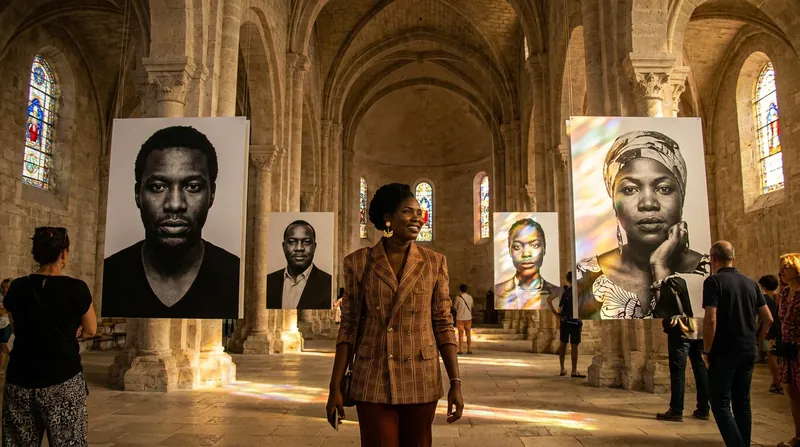
See all →Visual IP Licensing
Getty Images Signs Multi-Year Display Partnership With OpenAI for ChatGPT
6 sources
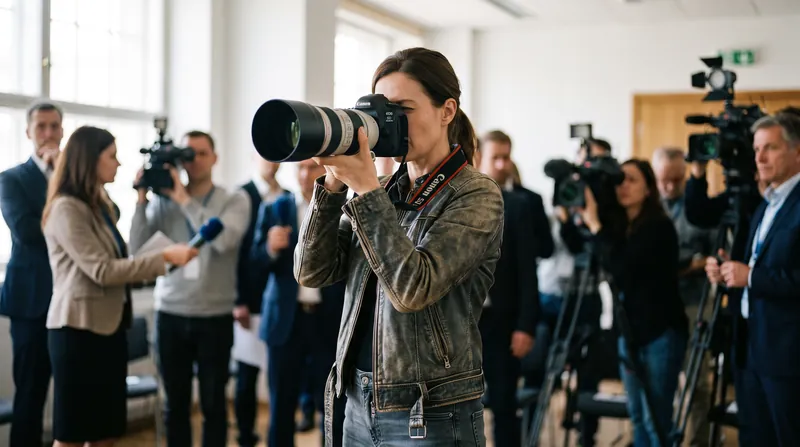
Analog Revival
The Science and Appeal of the Analog Film Photography Resurgence
3 sources
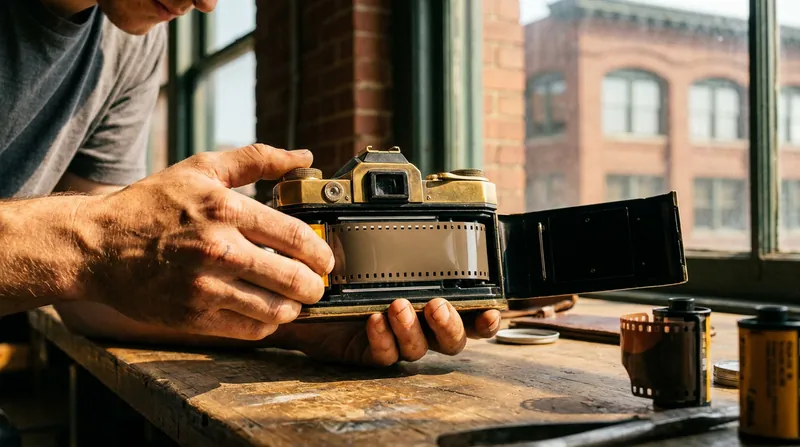
Content Credentials
How Cameras Are Cryptographically Signing Photos to Prove They Aren't AI
4 sources

Media Provenance
How Content Credentials Work: The Cryptographic Standard Saving Photography in 2026
3 sources
Comments
Every angle. Every day.
Get Culture stories with full source coverage and perspective breakdowns, free every day.