
The 2026 Senate Map: The Path to 51 Seats and Key Battlegrounds
With Republicans defending 22 seats and Democrats 13, the battle for control of the Senate in the 2026 midterms hinges on a handful of highly competitive races. Democrats need a net gain of four seats to flip the chamber, while Republicans aim to expand their 53-47 majority amid high-profile retirements and historic primary upsets.
By Factlen Editorial Team
- Structural Map Analysts
- Emphasizes the mathematical advantage Republicans hold by defending seats in deeply conservative states.
- Political Volatility Watchers
- Focuses on how high-profile retirements and incumbent primary defeats have injected uncertainty into the race.
- Real-Time Forecasters
- Tracks immediate shifts in voter sentiment and prediction markets to gauge momentum changes.
What's not represented
- · Local grassroots organizers in battleground states
- · Independent and third-party candidates affecting tight margins
Why this matters
The outcome of the 2026 Senate elections will determine whether President Trump has a compliant upper chamber for judicial appointments and legislation in the second half of his term, or if a Democratic majority can effectively block his agenda.
Key points
- Republicans currently hold a 53-47 majority in the Senate, meaning Democrats need a net gain of four seats to win control.
- The 2026 map heavily favors the GOP structurally, with Republicans defending 22 seats compared to the Democrats' 13.
- Two special elections will be held in Ohio and Florida to fill the seats vacated by J.D. Vance and Marco Rubio.
- Incumbent Republican Senators John Cornyn and Bill Cassidy both lost their primary elections, creating unexpected battlegrounds in Texas and Louisiana.
- Democrats are heavily targeting open seats in North Carolina and Michigan, while Republicans aim to flip Democratic seats in Georgia and Michigan.
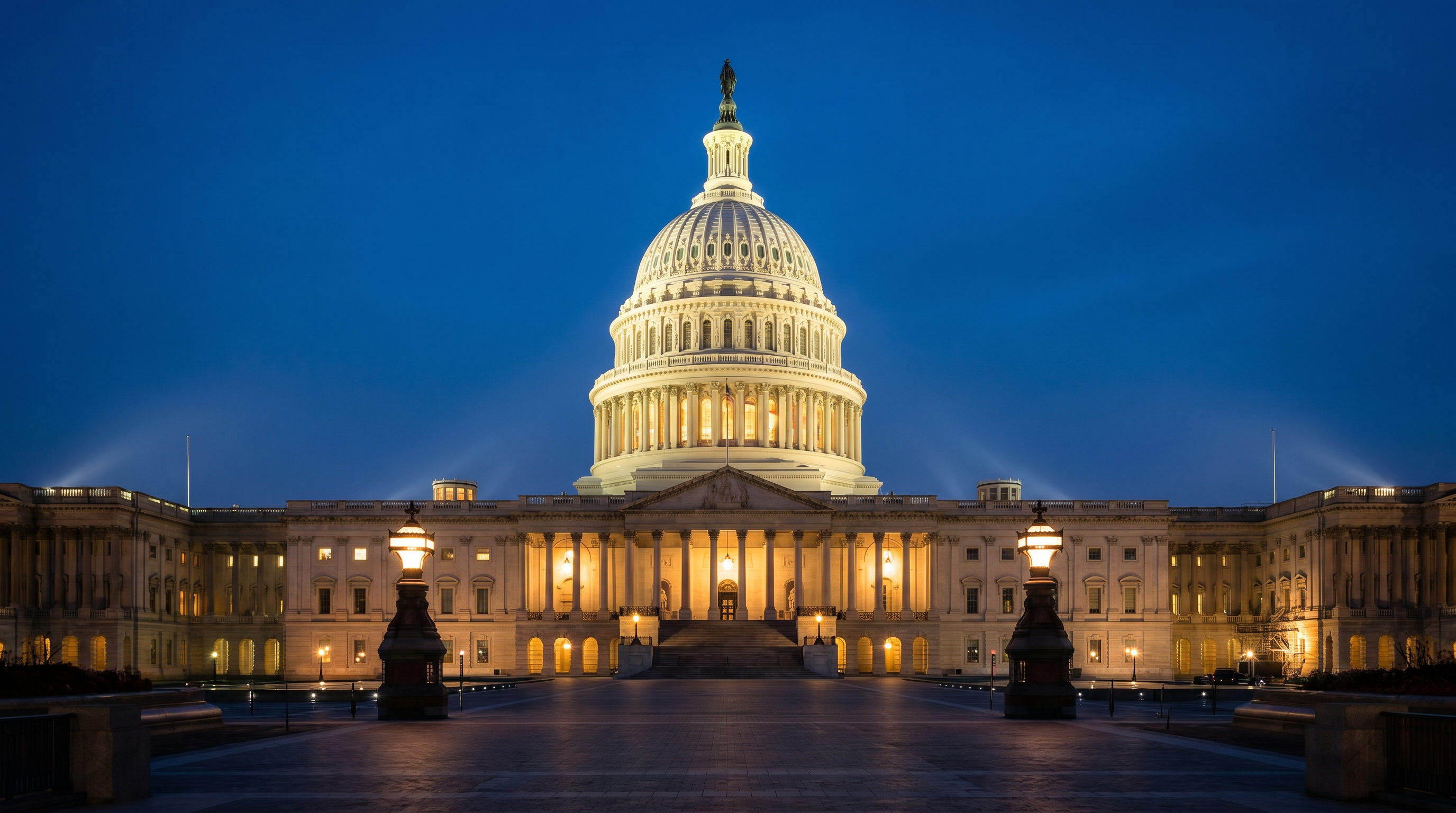
The 2026 midterm elections are rapidly approaching, and the battle for control of the United States Senate is shaping up to be one of the most consequential political showdowns of the decade. With the balance of power in Washington hanging by a thread, both major political parties are pouring historic financial resources and strategic focus into a handful of battleground states that will ultimately determine the legislative future of the country. For the incumbent administration, maintaining control of the upper chamber is essential for confirming judicial nominees and advancing domestic policy priorities during the second half of the presidential term. For the opposition, flipping the Senate represents the most viable path to establishing a legislative firewall.[9]
Republicans currently hold a 53–47 majority in the upper chamber, a comfortable cushion they secured during the sweeping 2024 elections. To flip the chamber and derail the second half of President Donald Trump's legislative agenda, Democrats need a net gain of four seats to reach a 51-seat outright majority. This mathematical reality means that the minority party must not only play flawless defense in the states they currently hold, but they must also successfully go on the offensive in territories that have traditionally leaned conservative. The margin for error is effectively zero, making every single competitive race a nationalized focal point for fundraising and campaign infrastructure.[2][3][4][8]
The structural reality of the 2026 map, however, presents a daunting mathematical challenge for the Democratic party. Of the 35 Senate seats up for election this cycle, Republicans are defending 22, while Democrats are defending just 13. This imbalance is a legacy of the 2020 election cycle, where Republicans successfully defended a large swath of their territory. Because only one-third of the Senate is up for election every two years, the geographic distribution of the seats in play can often matter just as much as the national political environment. In this cycle, the geographic concentration of Republican-held seats in the South, Great Plains, and Mountain West provides the GOP with a robust structural advantage.[4][5]

The total number of races on the ballot this November is higher than the usual 33 because of two high-profile special elections that were added to the calendar. Voters in Ohio and Florida will head to the polls to fill the remaining terms of J.D. Vance and Marco Rubio, both of whom resigned their Senate seats to join the Trump administration. These special elections have forced both parties to stretch their campaign budgets further than initially anticipated. While Florida and Ohio have trended reliably Republican in recent statewide contests, the sheer cost of running simultaneous Senate campaigns in massive media markets adds an unpredictable financial strain to the national senatorial committees.[5][8]
Despite having significantly fewer seats to defend overall, Democrats face severe exposure in the Midwest and the Sun Belt. They are defending seats in two critical swing states that Donald Trump carried in the 2024 presidential election: Georgia and Michigan. Holding these seats is the absolute baseline requirement for any Democratic path to the majority. If the party loses either of these contests, their required net gain increases, forcing them to flip even more deeply entrenched Republican incumbents in increasingly hostile political environments. Consequently, these two states have already seen an influx of early advertising spending aimed at defining the race before the general election season fully begins.[5][8]
In Georgia, incumbent Democrat Jon Ossoff is seeking a second term in a state that has become ground zero for national political spending over the last three election cycles. Republicans view Ossoff's seat as one of their absolute best pickup opportunities on the entire map, given the state's narrow partisan margins and recent rightward shifts. However, the GOP has faced unexpected recruitment hurdles after popular term-limited Governor Brian Kemp declined to enter the race, leaving the party searching for a consensus candidate who can unite the establishment and populist wings of the state party.[1][3][6]
Meanwhile, in Michigan, the retirement of Democratic Senator Gary Peters has triggered a chaotic and highly competitive open-seat scramble. Republicans are rallying around former Representative Mike Rogers, hoping to capture a Senate seat that has eluded the GOP for decades. Democrats, on the other hand, are navigating a crowded and expensive primary field that threatens to drain resources ahead of the general election. The outcome in Michigan will likely serve as a bellwether for the broader Rust Belt, testing whether the working-class coalition that delivered the state to Republicans in recent presidential cycles will translate down-ballot to congressional races.[1][3][6]
While the broader map heavily favors the GOP mathematically, Republicans are navigating their own severe internal turbulence that threatens to undermine their structural advantages. High-profile retirements and bitter primary challenges from the party's right flank have injected unexpected volatility into historically safe red states. Instead of focusing entirely on expanding their majority, national Republican strategists have been forced to spend time and money defending incumbents against intra-party insurgencies. This dynamic has given Democrats a glimmer of hope, as divisive primaries often produce general election candidates who struggle to appeal to moderate swing voters in the suburbs.[1][3][4]
High-profile retirements and bitter primary challenges from the party's right flank have injected unexpected volatility into historically safe red states.
The most shocking development of the 2026 cycle occurred in Texas, where incumbent Republican Senator John Cornyn lost his primary to state Attorney General Ken Paxton. The defeat marked a rare historical anomaly; multiple incumbent senators losing renomination in the same cycle has not happened since 2010, and an incumbent placing poorly in a primary is a stark indicator of shifting grassroots energy. Cornyn's loss sent shockwaves through the Republican establishment, signaling that traditional conservative credentials are no longer sufficient to survive challenges from candidates aligned with the populist, America First wing of the party.[6][7]

Following his primary victory, Paxton now faces Democratic challenger James Talarico in what analysts project will be the most expensive Senate race in United States history. Polling shows a surprisingly tight race, giving Democrats a rare offensive target in the Lone Star State and forcing national Republicans to spend heavily to defend a seat they have held comfortably for decades. The Texas race has fundamentally altered the national calculus; if Democrats can force the GOP to spend millions defending Texas, it limits the resources Republicans can deploy offensively in vulnerable Democratic states like Michigan and Georgia.[1][3][7]
A strikingly similar dynamic unfolded in Louisiana, where Senator Bill Cassidy was ousted in his primary election by a conservative challenger. Cassidy had faced intense, sustained backlash from his state party apparatus after voting to convict Donald Trump during his 2021 impeachment trial, highlighting the continued, unyielding influence of the former president over Republican primary electorates. While Louisiana remains a deeply conservative state where the Republican nominee is heavily favored in the general election, the sheer turbulence of the primary process underscores the broader ideological realignment occurring within the GOP's senatorial ranks.[1][3][6]
In North Carolina, the retirement of Republican Senator Thom Tillis has created another highly competitive open seat that both parties view as a must-win. The state was won by Trump by a single-digit margin in 2024, making it a top-tier battleground where Democrats believe they have a strong, viable chance to flip a seat. The absence of an incumbent removes the traditional fundraising and name-recognition advantages, turning the race into a pure test of party turnout operations. Both national committees have already reserved massive blocks of autumn television airtime in the Charlotte and Raleigh media markets.[1][6]
Maine represents a unique anomaly on the 2026 map, standing out as a distinct geographic and political outlier. It is the only state where a Republican incumbent, Susan Collins, is defending a seat in a state won by Kamala Harris in the 2024 presidential election. While Collins has a long, proven history of outperforming partisan leans and surviving difficult electoral environments, Democrats are heavily targeting the race as an absolutely necessary stepping stone to capturing the majority. The race will test whether ticket-splitting remains a viable political survival strategy in an era of intense national polarization.[2][6]

As traditional polling struggles to accurately capture the rapidly shifting dynamics of these volatile races, political strategists and media analysts are increasingly looking to prediction markets like Kalshi for real-time insights. These platforms, which aggregate financial wagers from thousands of participants on specific election outcomes, offer a different, often faster-moving lens on the race for the Senate. Because participants are risking actual capital, proponents argue that prediction markets cut through partisan noise and offer a more objective assessment of candidate viability and momentum shifts than traditional telephone surveys.[7][9]
Recent prediction market data has shown a surprising momentum shift over the summer months, with some contracts pricing in a notably higher probability of a Democratic takeover than traditional poll aggregators currently suggest. Market participants point to the GOP primary chaos in states like Texas, combined with the historical gravity of the "six-year itch," as the primary factors driving this shift in sentiment. While prediction markets are not infallible, their divergence from traditional polling has prompted campaign managers on both sides of the aisle to reevaluate their resource allocation heading into the final stretch.[7][9]
The "six-year itch" refers to the well-documented historical trend where the party of a two-term president typically suffers significant electoral losses during the midterm elections of their second term. In the six midterm elections since 2002, the incumbent president's party has lost an average of 3.5 Senate seats per cycle. This phenomenon is driven by a combination of voter fatigue, the mobilization of the out-party's base, and the natural accumulation of political grievances against the administration in power. Democrats are banking heavily on this historical headwind to drag Republican candidates down in tight battleground races.[2][5]

Ultimately, the path to 51 seats for either party remains fraught with profound uncertainty and razor-thin margins. For Republicans, the goal is not merely to hold the chamber, but to aggressively expand their majority to 55 seats. Achieving this would insulate them from future unfavorable electoral maps and ensure long-term, uninterrupted control over federal judicial confirmations, regardless of who wins the presidency in 2028. To do so, they must successfully navigate their internal party divisions and capitalize on the structural advantages of a map heavily tilted in their favor.[3][4]
For Democrats, threading the needle requires a near-perfect execution of electoral strategy across multiple distinct regions. They must hold their vulnerable incumbents in the Rust Belt and Sun Belt, while simultaneously capitalizing on GOP primary chaos to flip seats in states like Texas, North Carolina, and Maine. The 2026 Senate cycle is ultimately a collision between structural Republican advantages and historical Democratic tailwinds, guaranteeing that control of the chamber will likely not be decided until the final ballots are counted in the early hours of Wednesday morning.[1][4][9]
How we got here
November 2024
Republicans secure a 53-47 Senate majority during the presidential election cycle.
January 2025
Senators J.D. Vance and Marco Rubio resign to join the Trump administration, triggering 2026 special elections.
Spring 2026
Incumbent Republican Senators John Cornyn and Bill Cassidy suffer historic primary defeats in Texas and Louisiana.
June 2026
Prediction markets and polling aggregators show a tightening race, with Democrats gaining momentum in key battlegrounds.
November 3, 2026
Voters will head to the polls to decide control of the 35 Senate seats up for election.
Viewpoints in depth
Democratic Campaign Arm
Focuses on capitalizing on Republican primary chaos and historical midterm trends to flip the chamber.
Democratic strategists argue that the historical 'six-year itch'—where voters traditionally punish the incumbent president's party during their second midterm—provides a strong tailwind. They are heavily targeting open seats in North Carolina and Michigan, while pouring historic resources into Texas following Ken Paxton's primary victory, betting that a polarizing GOP nominee puts the reliably red state in play.
Republican Senatorial Committee
Aims to leverage a highly favorable map to not just hold the Senate, but expand to a filibuster-proof majority.
Republican leadership points to the raw math of the 2026 map: they are defending 22 seats, but 21 of those are in states Donald Trump won in 2024. By targeting vulnerable Democratic seats in Georgia and Michigan, the GOP believes they can build a 55-seat majority that would insulate them from unfavorable maps in 2028 and beyond, ensuring long-term control over judicial confirmations.
Nonpartisan Election Forecasters
Emphasizes that while structural advantages favor Republicans, candidate quality introduces massive volatility.
Independent analysts and polling aggregators note that while the map heavily favors the GOP, the era of hyper-polarization means traditional advantages are shrinking. Forecasters point to the primary defeats of established incumbents like John Cornyn and Bill Cassidy as evidence that intra-party ideological battles are producing general election candidates who may struggle to win over moderate swing voters in tight battlegrounds.
What we don't know
- Whether the historical 'six-year itch' against the incumbent president's party will be enough to overcome the Democrats' structural map disadvantage.
- How the unprecedented primary defeats of established Republican incumbents will impact general election turnout in states like Texas and Louisiana.
- The final impact of prediction market momentum shifts on actual voter behavior and campaign fundraising in the closing months of the cycle.
Key terms
- Class 2 Senators
- The group of U.S. Senators whose six-year terms expire in January 2027, making their seats up for regular election in 2026.
- Special Election
- An election held to fill a political office that has become vacant between regularly scheduled elections.
- Six-Year Itch
- A historical political trend where the party of a two-term president typically suffers significant electoral losses during the midterm elections of their second term.
- Prediction Markets
- Financial exchanges where individuals can buy and sell contracts based on the outcome of future events, such as election results.
- Open Seat
- An election race where no incumbent is running for re-election, often due to retirement or a primary defeat.
Frequently asked
Why are there 35 Senate seats up for election instead of the usual 33?
In addition to the 33 regularly scheduled Class 2 Senate seats, there are two special elections in Ohio and Florida to fill the vacancies left by J.D. Vance and Marco Rubio joining the presidential administration.
How many seats do Democrats need to win the majority?
Democrats currently hold 47 seats, meaning they need a net gain of four seats to reach the 51 required for an outright majority.
Why is the 2026 map considered difficult for Democrats?
Democrats only have 13 seats up for election compared to the Republicans' 22, but they must defend vulnerable incumbents in states won by Donald Trump in 2024, such as Michigan and Georgia.
What happened to incumbent Senators John Cornyn and Bill Cassidy?
Both Republican senators lost their primary elections in Texas and Louisiana, respectively, marking a rare occurrence of multiple incumbent senators failing to secure renomination.
Sources
Source coverage
9 outlets
3 viewpoints surfaced









[1]Associated PressPolitical Volatility Watchers
The 2026 Senate map is tough for Democrats, but Republicans have their own headaches
Read on Associated Press →[2]BallotpediaStructural Map Analysts
U.S. Senate battlegrounds, 2026
Read on Ballotpedia →[3]Plurus StrategiesPolitical Volatility Watchers
Outlook on the 2026 Senate Elections: Notable Developments
Read on Plurus Strategies →[4]HB StrategiesStructural Map Analysts
MIDTERM ELECTIONS SNAPSHOT
Read on HB Strategies →[5]Council on Foreign RelationsStructural Map Analysts
Midterm Elections Are Nine Months Away
Read on Council on Foreign Relations →[6]WikipediaPolitical Volatility Watchers
2026 United States Senate elections
Read on Wikipedia →[7]TEC NewsReal-Time Forecasters
The SHOCKING 2026 Senate Map NEW Data Shows Senate FLIPPING
Read on TEC News →[8]BallotWireReal-Time Forecasters
Overview of the 2026 U.S. Senate Elections
Read on BallotWire →[9]Factlen Editorial TeamReal-Time Forecasters
Synthesis by Factlen editorial team
Read on Factlen Editorial Team →

More in news politics
See all 39 stories →Science of Debunking
Evidence Pack: The Science of Debunking and Why Fact-Checking Actually Works
7 sources

Platform Moderation
Fact-Checking the Fact-Checkers: Does Crowdsourced Moderation Actually Work?
8 sources

Digital Trust
The Evidence Behind Crowdsourced Fact-Checking: Does the 'Wisdom of the Crowd' Actually Work?
7 sources

Reform UK Surge
Reform UK Surges to First Place in National Polls Following Labour's Local Election Collapse
7 sources
Every angle. Every day.
Get news politics stories with full source coverage and perspective breakdowns delivered to your inbox.