
SpaceX Raises $75 Billion in Largest Global IPO on Record
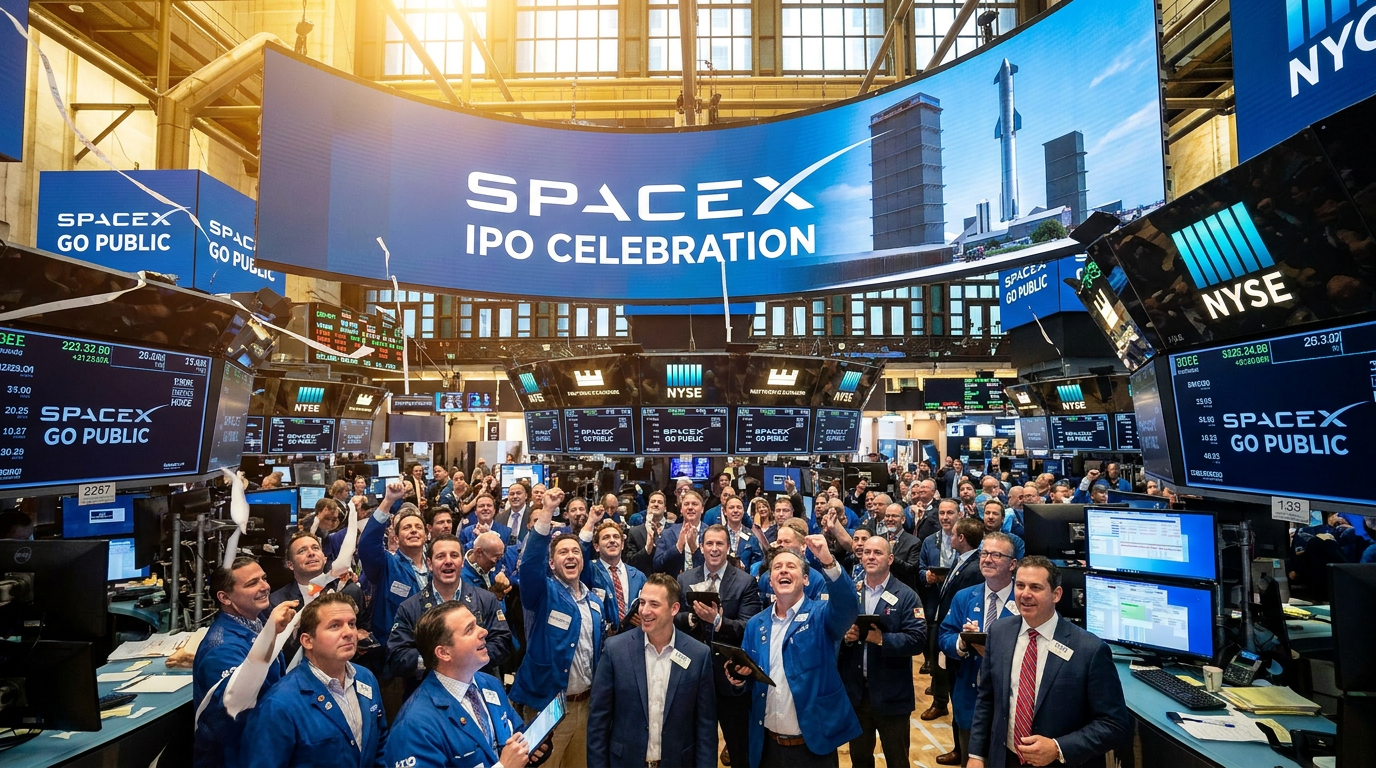
SpaceX has successfully executed the largest initial public offering in history, raising $75 billion and bucking traditional Wall Street norms. The landmark debut signals strong investor appetite for the commercial space economy and is expected to generate significant momentum for the broader equities market.
By Factlen Editorial Team
- Growth Investors
- View the IPO as a generational opportunity to invest directly in the rapidly expanding commercial space economy and satellite internet infrastructure.
- Financial Institutions
- Focus on the massive trading volume, underwriting fees, and secondary market momentum generated by the record-breaking listing.
- Retail Market Participants
- Driven by enthusiasm for the brand and leadership, eager to secure shares despite potential short-term volatility.
What's not represented
- · Traditional Aerospace Competitors
- · Space Policy Regulators
Why this matters
The sheer scale of SpaceX's public debut injects massive liquidity and optimism into the stock market, proving that appetite for ambitious, capital-intensive tech ventures remains robust. For retail and institutional investors alike, it opens direct access to the commercial space economy while providing a lucrative windfall for the financial institutions underwriting the deal.
Key points
- SpaceX executed the largest IPO in history, raising $75 billion.
- The offering bypassed several traditional Wall Street norms, allowing the company to dictate favorable terms.
- Major investment banks are expected to see a significant boost in trading income from the listing.
- The capital will primarily fund the expansion of Starlink and the development of the Starship rocket.
- The successful debut signals strong investor confidence in capital-intensive, physical infrastructure tech companies.
SpaceX has officially rewritten the financial record books, executing the largest initial public offering in global history by raising a staggering $75 billion. The highly anticipated market debut shattered previous benchmarks set by state-owned energy giants and e-commerce conglomerates, signaling an unprecedented level of investor confidence in the commercial space sector. The offering not only cements the company's dominance in aerospace but also injects a massive wave of liquidity and optimism into the broader equities market, proving that appetite for generational technology companies remains exceptionally strong.[3][5]
The mechanics of the offering were as unconventional as the company's reusable rockets. Rather than adhering strictly to traditional Wall Street roadshow playbooks, leadership opted for a streamlined allocation process that bypassed several customary institutional hurdles. Analysts noted that the company effectively dictated its own terms, leveraging immense pre-IPO demand to secure favorable pricing while minimizing the dilution typically associated with mega-offerings. "I'm not sure that this could have gone much better," remarked one prominent Silicon Valley investor, highlighting the flawless execution of the capital raise.[1][4]

While the aerospace firm dictated the terms, traditional financial institutions are still reaping massive rewards. Major investment banks are projected to see a significant boost in second-quarter trading income, driven by the sheer volume and volatility surrounding the listing. Financial sector analysts point out that the market is currently underestimating the upside for Wall Street underwriters, who are collecting substantial fees and benefiting from the massive surge in secondary market trading activity that followed the opening bell.[2][7]
For retail investors, the debut has sparked a frenzy reminiscent of the most euphoric tech listings of the past decade. Brokerage platforms reported record login traffic as everyday traders scrambled to secure a piece of the space exploration giant. Financial advisors are fielding a deluge of inquiries from clients asking if it is "too late" to buy in, prompting widespread comparisons to the post-IPO trajectory of sister company Tesla. While some caution against chasing initial price spikes, the underlying sentiment remains overwhelmingly bullish.[8]
For retail investors, the debut has sparked a frenzy reminiscent of the most euphoric tech listings of the past decade.
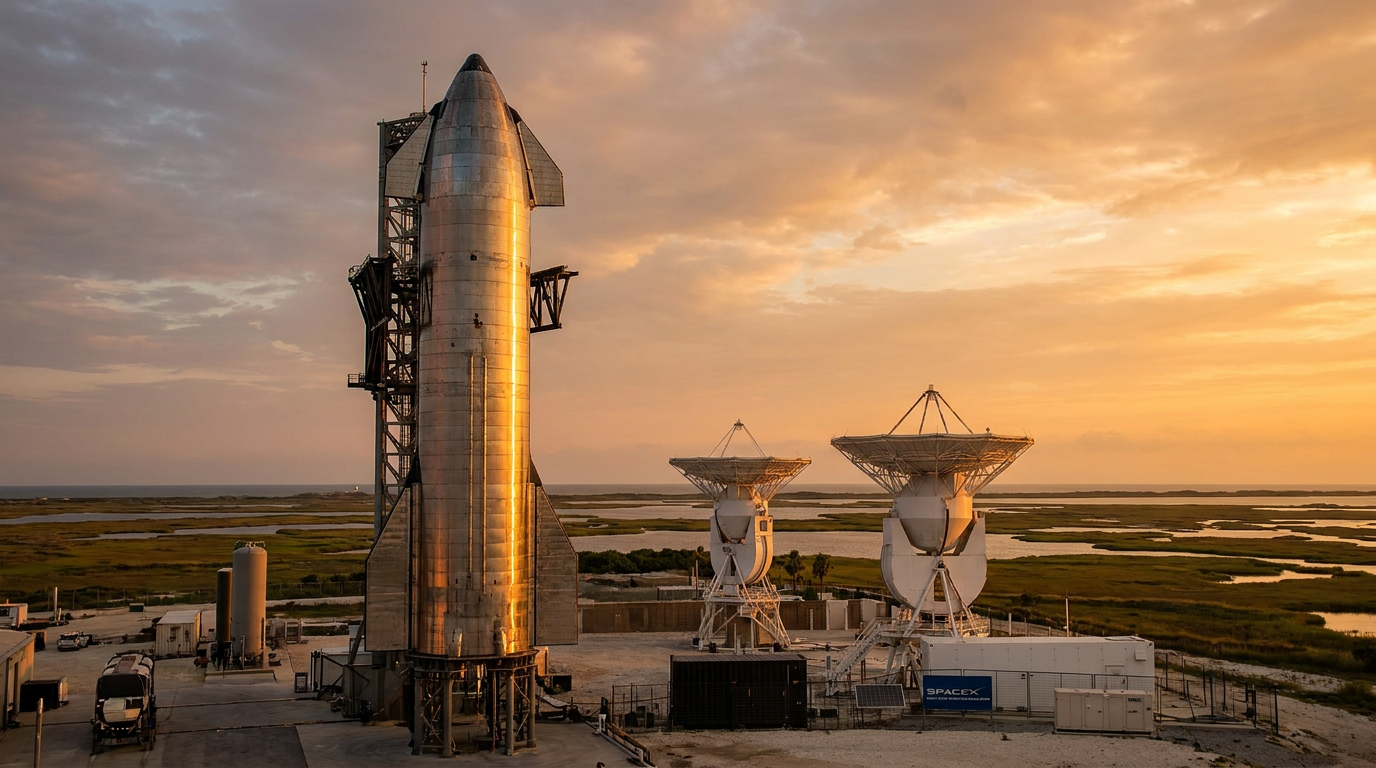
The $75 billion capital injection is not merely a financial milestone; it is a war chest designed to accelerate humanity's multi-planetary ambitions. Industry experts anticipate that the funds will be aggressively deployed to scale the production of the next-generation Starship launch vehicle and rapidly expand the Starlink satellite internet constellation. By securing this unprecedented level of funding, the company has effectively insulated its most ambitious research and development projects from short-term macroeconomic headwinds.[3][5]

The blockbuster debut is also serving as a powerful catalyst for the broader technology sector. After a period where software and semiconductor stocks dominated market narratives, the success of a capital-intensive, hardware-focused aerospace company proves that investors are still willing to fund audacious physical infrastructure projects. This shift is prompting portfolio managers to reevaluate their growth allocations, potentially opening the door for a new wave of deep-tech and climate-tech unicorns to test the public markets.[6]
Interestingly, the mega-IPO arrives at a moment when value stocks have been quietly outperforming growth equities by a wide margin. Market strategists suggest that this specific listing bridges the gap between the two philosophies. While inherently a high-growth technology play, the company's established launch contracts, proven reusable rocket economics, and cash-generating satellite internet business provide a tangible revenue floor that appeals to more traditional, fundamentals-focused institutional investors.[1][6]

As the dust settles on the historic offering, the focus now shifts to execution and quarterly earnings scrutiny. The transition from a tightly controlled private entity to a publicly traded behemoth will require navigating strict regulatory disclosures and managing the expectations of a highly vocal shareholder base. However, the overwhelming success of the $75 billion raise has definitively proven that the public markets are ready to underwrite the next era of space exploration, setting a bullish tone for the remainder of the financial year.[4][5]
How we got here
2002
SpaceX is founded with the goal of reducing space transportation costs and enabling the colonization of Mars.
2008
The Falcon 1 becomes the first privately developed liquid-fueled launch vehicle to reach orbit.
2020
SpaceX successfully launches NASA astronauts to the International Space Station, marking a new era of commercial crew transport.
2024
The Starlink satellite internet constellation achieves global coverage and positive cash flow.
June 2026
SpaceX goes public, raising a record-breaking $75 billion in its initial public offering.
Viewpoints in depth
Institutional Investors
Focused on the long-term revenue potential of the commercial space sector.
Large-scale asset managers and institutional funds view the SpaceX IPO as a rare opportunity to buy into a foundational monopoly in the space economy. While the valuation is steep, these investors point to the company's proven launch cadence and the recurring revenue model of Starlink as justification. They argue that the $75 billion war chest effectively guarantees SpaceX's technological lead over legacy aerospace competitors for the next decade.
Retail Traders
Driven by brand enthusiasm and the historical performance of related ventures.
Everyday investors have flooded brokerage platforms to secure shares, driven largely by a fear of missing out (FOMO) on what many consider the most important tech listing of their lifetimes. Retail sentiment is heavily influenced by the historical stock performance of Tesla, with many traders viewing SpaceX as a parallel opportunity to invest in disruptive, paradigm-shifting engineering.
Wall Street Underwriters
Benefiting from the massive trading volume and structural fees of the mega-deal.
Despite SpaceX bucking several traditional roadshow norms, the financial institutions facilitating the deal are celebrating a massive windfall. Analysts note that the sheer size of the $75 billion offering generates unprecedented underwriting fees. Furthermore, the intense secondary market trading activity following the IPO is expected to significantly bolster the quarterly earnings of major investment banks.
What we don't know
- How the stock will perform in the secondary market once the initial retail euphoria subsides.
- The exact timeline for when the Starship vehicle will begin regular, commercial payload operations.
- How increased regulatory scrutiny as a public company might impact SpaceX's rapid, iterative testing culture.
Key terms
- Initial Public Offering (IPO)
- The process by which a private company offers shares of its stock to the public for the first time, raising capital from public investors.
- Underwriter
- Financial institutions, typically investment banks, that evaluate and assume the risk of bringing a new securities issue to the market, helping to set the initial price.
- Commercial Space Economy
- The industry encompassing private companies providing goods and services in space, including satellite internet, cargo transport, and space tourism.
Frequently asked
How much money did SpaceX raise in its IPO?
SpaceX raised $75 billion in its initial public offering, making it the largest IPO in global financial history.
What will the company do with the $75 billion?
The capital is expected to fund the accelerated development of the Starship launch vehicle and the global expansion of the Starlink satellite internet network.
Did Wall Street banks benefit from the IPO?
Yes. Major investment banks are projected to see a significant boost in trading income and underwriting fees due to the massive scale and volume of the offering.
Sources
Source coverage
8 outlets
3 viewpoints surfaced







[1]MarketWatchFinancial Institutions
How Elon Musk nailed the SpaceX IPO: ‘I’m not sure that this could have gone much better’
Read on MarketWatch →JPMorgan says investors are overlooking the upside to Wall Street banks that comes from SpaceX and other mega IPOs
Read on MarketWatch →[3]BloombergGrowth Investors
SpaceX Shatters Records With $75 Billion IPO, Igniting Wall Street Frenzy
Read on Bloomberg →[4]CNBCRetail Market Participants
SpaceX goes public in historic $75 billion offering, defying traditional Wall Street norms
Read on CNBC →[5]Reuters
Musk's SpaceX raises $75 bln in largest global IPO to date
Read on Reuters →[6]The Wall Street JournalGrowth Investors
SpaceX’s Blockbuster IPO Reshapes the Tech Investment Landscape
Read on The Wall Street Journal →[7]Financial TimesFinancial Institutions
SpaceX IPO delivers massive windfall for early backers and Wall Street underwriters
Read on Financial Times →[8]Yahoo FinanceRetail Market Participants
Is it too late to buy SpaceX stock? Analysts weigh in after record-breaking debut
Read on Yahoo Finance →
More in finance
See all 125 stories →Medical Debt
How Medical Debt is Disappearing from Credit Reports in 2026
7 sources

Mega IPO
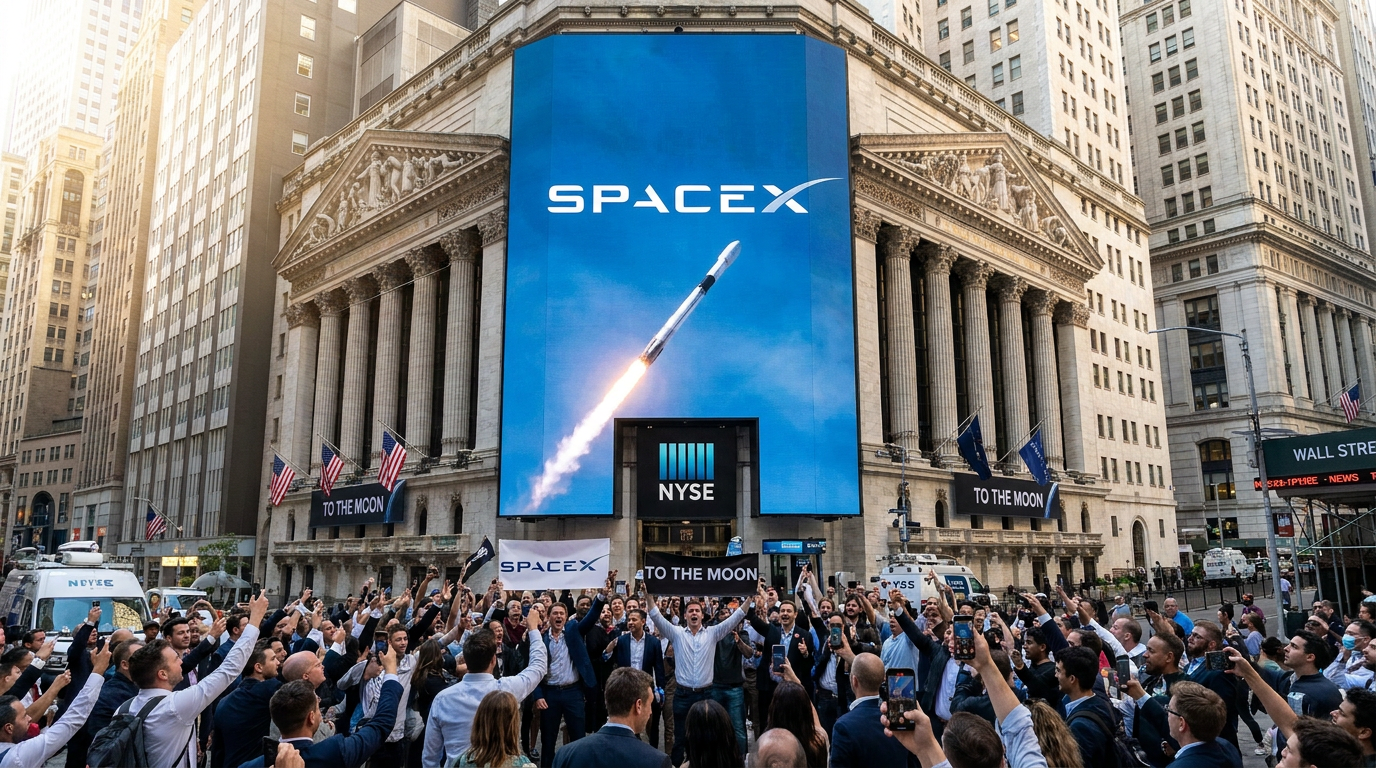
SpaceX Completes Historic $75 Billion IPO, Shattering Wall Street Records
10 sources
Retirement Planning
How Fixed-Index Annuities Work: Decoding the Retirement Seminar Pitch
7 sources

Creator Economy
The Rise of the AI-Augmented Side Hustle: How Generative Tools are Reshaping Freelance Economics
6 sources

Every angle. Every day.
Get finance stories with full source coverage and perspective breakdowns delivered to your inbox.