
SpaceX Options Break Records Following Historic $75 Billion IPO
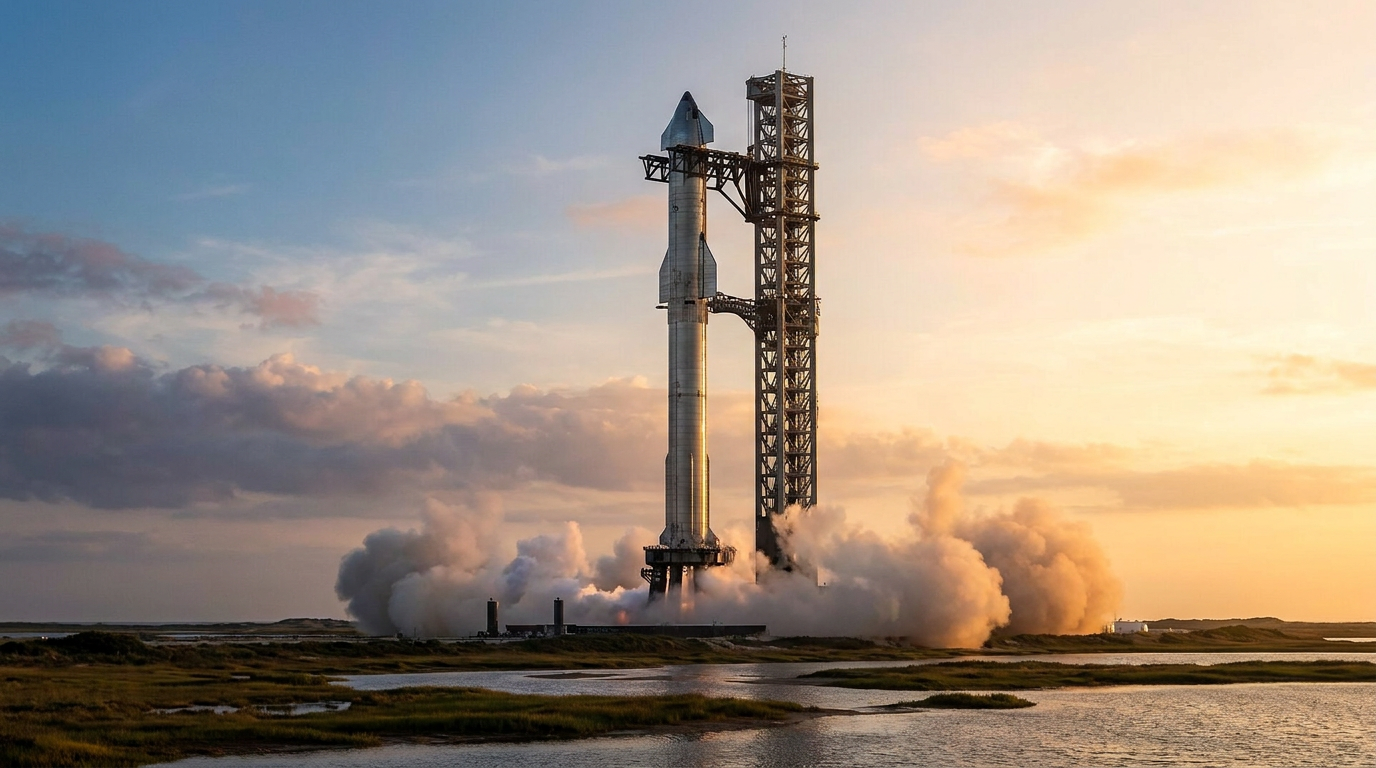
SpaceX's debut in the options market shattered volume records this week, extending a historic public listing that pushed the aerospace company's valuation past $2 trillion.
By Factlen Editorial Team
- Retail Bulls
- Retail investors and bullish analysts see SpaceX as a generational wealth opportunity.
- Institutional Strategists
- Large institutional players are focused on the mechanical market impact of a $2 trillion new entrant.
- Valuation Skeptics
- Cautious analysts warn that the stock's massive premium leaves little room for error.
- General Market Observers
- Broad market observers tracking the historic wealth milestones and index implications.
What's not represented
- · Traditional aerospace competitors facing a newly capitalized $2 trillion rival.
- · Regulatory bodies monitoring the unprecedented concentration of wealth and market power.
Why this matters
SpaceX's public debut fundamentally reshapes the global equity landscape, introducing a $2 trillion mega-cap stock that will force massive reallocations across index funds and retirement portfolios.
Key points
- SpaceX options trading debuted with a record-breaking 500,000 contracts exchanged in the first hour.
- The derivatives frenzy follows a historic $75 billion IPO that valued the company at $1.75 trillion.
- Strong retail demand and a 20% first-day stock pop pushed CEO Elon Musk's net worth past $1 trillion.
- Institutional analysts are already calculating the massive mechanical buying pressure expected when SpaceX joins the S&P 500.
- Skeptics warn that extreme implied volatility and a 94x revenue multiple leave the stock vulnerable to sharp corrections.
SpaceX’s highly anticipated entry into the public markets has transitioned from a historic initial public offering into a retail trading frenzy. Just days after the aerospace giant completed the largest IPO in stock market history, its debut in the options market shattered volume records. Over 500,000 options contracts changed hands within the first 60 minutes of trading, eclipsing previous benchmarks set by tech giants like Meta and Alibaba.[1][5]
The options explosion follows a landmark listing on the Nasdaq under the ticker SPCX. On June 12, SpaceX sold 555 million shares at a fixed price of $135, raising an unprecedented $75 billion. The offering dwarfed the previous record held by Saudi Aramco’s $25.6 billion IPO in 2019. By the end of its first day of trading, the stock had surged nearly 20% to close above $160, pushing the company's market capitalization past the $2 trillion mark.[3][4]
The immediate market reaction validated the eye-popping valuation and triggered a historic wealth milestone. With his roughly 50% stake in the newly public entity, CEO Elon Musk officially became the world’s first trillionaire. The listing also generated massive liquidity for thousands of current and former SpaceX employees who hold stock options, instantly minting a new wave of aerospace millionaires.[2][3]

Institutional appetite for the stock is driven by SpaceX's unique position as effectively three dominant businesses operating under one umbrella. The company controls approximately 90% of the global commercial launch market with its reusable Falcon 9 rockets. Furthermore, its Starlink satellite internet division is targeting 100 million subscribers by 2030, while its recent February 2026 merger with Musk’s artificial intelligence startup, xAI, positions it as a central player in the generative AI arms race.[4]
Unlike traditional IPOs that heavily favor institutional clients, SpaceX structured its offering to maximize retail participation. Musk reportedly directed underwriters to allocate up to 30% of the IPO shares to everyday investors, which is roughly three times the standard 5% to 10% retail allocation seen in typical offerings. This structural decision fueled massive grassroots demand, with retail brokerages reporting near-total participation rates among eligible clients.[6][7]
Unlike traditional IPOs that heavily favor institutional clients, SpaceX structured its offering to maximize retail participation.
That retail enthusiasm has now spilled over into the derivatives market. The record-breaking options volume was heavily skewed toward bullish call options, indicating that traders are aggressively positioning for further upside. However, the surge has pushed implied volatility to extreme levels, peaking at 93% during the opening sessions. Analysts warn that this heavy concentration of call buying creates a speculative feedback loop, driving the underlying stock higher but leaving it vulnerable to sharp reversals.[1][5]

The sheer scale of the rally has sparked intense debate over SpaceX's fundamental valuation. Skeptics point out that the company is now vastly more expensive than almost any stock in the S&P 500, trading at a staggering 94 times its annual revenues. Critics argue that the current price action is driven more by a fear of missing out than by near-term cash flow realities, especially given the massive capital expenditures required for Starship development and xAI data centers.[1][4]
Conversely, institutional strategists argue that traditional revenue multiples fail to capture the company's long-term trajectory. Supporters point to a more reasonable multiple of 25 times the projected 2027 enterprise value-to-sales ratio. They argue that SpaceX's near-monopoly on space access, combined with the recurring revenue of Starlink and the exponential growth of xAI, justifies a premium that traditional aerospace or telecom companies could never command.[4][8]
Beyond individual portfolios, the sheer size of the SpaceX listing is set to mechanically reshape the broader equity landscape. At a $2 trillion valuation, SpaceX is expected to carry a weight of roughly 1.4% when it is eventually added to the S&P 500, likely in June 2027. This impending inclusion means passive index funds will be forced to absorb massive amounts of the company's available float, creating a substantial baseline of mechanical buying pressure.[4]

The successful debut of SpaceX is already sending ripples through Silicon Valley, effectively opening the floodgates for a new wave of mega-cap technology listings. With AI rivals Anthropic and OpenAI reportedly preparing their own public offerings later this year, the US stock market is undergoing a rapid reorientation toward artificial intelligence and commercial space infrastructure. For now, Wall Street remains fixated on SPCX, watching to see if the rocket company's stock can maintain its stratospheric trajectory.[2][4]
How we got here
April 2026
SpaceX confidentially submits a draft registration statement to the SEC.
May 2026
The company publicly files its S-1 prospectus, offering the first look at its internal finances.
June 12, 2026
SpaceX officially begins trading on the Nasdaq under the ticker SPCX, raising $75 billion.
June 16, 2026
Options trading debuts, breaking volume records with over 500,000 contracts traded in the first hour.
Viewpoints in depth
Retail Bulls
Retail investors and bullish analysts see SpaceX as a generational wealth opportunity.
Driven by a fear of missing out and unprecedented access to IPO shares, retail investors are aggressively buying into SpaceX's long-term vision. This camp views the company not just as a rocket manufacturer, but as a foundational pillar of the future economy, combining the launch monopoly of Falcon 9, the global connectivity of Starlink, and the generative AI potential of xAI. They argue that traditional valuation metrics are irrelevant for a company actively building multi-planetary infrastructure.
Institutional Strategists
Large institutional players are focused on the mechanical market impact of a $2 trillion new entrant.
For institutional fund managers, the SpaceX IPO is less about the romance of space exploration and more about portfolio mechanics. At a valuation exceeding $2 trillion, SpaceX is instantly one of the most heavily weighted companies in the global equity landscape. Strategists are calculating the massive mandatory buying pressure that will occur when the stock is inevitably added to major indices like the S&P 500, forcing passive funds to absorb billions of dollars in shares regardless of the underlying price.
Valuation Skeptics
Cautious analysts warn that the stock's massive premium leaves little room for error.
Skeptics point to the extreme implied volatility in the options market and the staggering 94x revenue multiple as warning signs of a speculative bubble. They argue that the heavy concentration of call option buying is creating an artificial feedback loop that temporarily inflates the stock price. If SpaceX faces any operational setbacks—such as delays in Starship development or regulatory hurdles for xAI—this camp warns that the stock could suffer a severe and rapid correction.
What we don't know
- How the extreme implied volatility in the options market will resolve once the initial IPO hype cools down.
- The exact timeline and mechanical impact of SpaceX's inclusion in the S&P 500 index.
- Whether the massive capital expenditures required for Starship and xAI will eventually strain the company's balance sheet.
Key terms
- Implied Volatility
- A metric used in options trading that captures the market's forecast of a likely movement in a security's price.
- Call Option
- A financial contract that gives the buyer the right, but not the obligation, to buy a stock at a specified price within a specific time period.
- Float
- The regular shares a company has issued to the public that are available for everyday investors to trade.
- Enterprise Value-to-Sales
- A valuation measure that compares the total value of a company (including debt and excluding cash) to its annual sales revenue.
Frequently asked
What is the SpaceX stock ticker symbol?
SpaceX trades on the Nasdaq exchange under the ticker symbol SPCX.
How much did SpaceX raise in its IPO?
The company raised $75 billion by selling 555 million shares at $135 each, making it the largest IPO in history.
Did Elon Musk become a trillionaire?
Yes, the surge in SpaceX's stock price on its first day of trading pushed Elon Musk's net worth past the $1 trillion mark.
When will SpaceX be added to the S&P 500?
Analysts project that SpaceX could be added to the S&P 500 index by June 2027, once more of its shares become available for public trading.
Sources
Source coverage
8 outlets
4 viewpoints surfaced








[1]MarketWatchValuation Skeptics
SpaceX options volume explodes as trading kicks off. Here is a low-risk strategy to play the massive surge.
Read on MarketWatch →[2]The GuardianGeneral Market Observers
SpaceX IPO makes Elon Musk world's first trillionaire as share prices jump
Read on The Guardian →[3]Zacks Investment ResearchInstitutional Strategists
SpaceX IPO broke records, raising $75 billion
Read on Zacks Investment Research →[4]Neuberger BermanInstitutional Strategists
The SpaceX IPO: Mega-Cap Tech Reshapes Markets
Read on Neuberger Berman →[5]MorningstarRetail Bulls
SpaceX options volume explodes as trading kicks off. Here is a low-risk strategy to play the massive surge.
Read on Morningstar →[6]Capital.comValuation Skeptics
SpaceX IPO 2026: Valuation, price drivers and how to trade
Read on Capital.com →[7]Hargreaves LansdownRetail Bulls
SpaceX IPO: Retail allocation and trading details
Read on Hargreaves Lansdown →[8]ReutersGeneral Market Observers
SpaceX targets $1.75 trillion valuation in largest IPO in history
Read on Reuters →

More in finance
See all 8 stories →Global Payments
Global Remittance Costs Plunge to Record Lows as Major Payment Networks Adopt Stablecoins
8 sources

Student Debt
Federal Student Loan Borrowers to Receive 1% Interest Rate Cut for Enrolling in Auto-Pay
6 sources

401(k) Strategy
The 2026 Roth 401(k) Mandate: How the New Catch-Up Rules Change Retirement Math
7 sources

Student Debt
Federal Student Loan Borrowers Can Secure a 1% Interest Rate Cut by Enrolling in Autopay
7 sources

Every angle. Every day.
Get finance stories with full source coverage and perspective breakdowns delivered to your inbox.