
Snowboarding Injury Report: Comebacks, Recoveries, and Status Updates for the 2026–27 Season
As the Southern Hemisphere training season hits full swing, several of snowboarding's biggest stars are navigating the grueling road back from major injuries sustained during the Olympic year.
By Jackson Reed


- Riders & Athletes
- Focus on the psychological resilience required to overcome back-to-back injuries and the drive to reclaim their competitive standing.
- Medical & Rehabilitation Experts
- Emphasize conservative, phased return-to-sport protocols to prevent reinjury and ensure long-term joint health.
- National Federations
- Prioritize the long-term health of their athletes while strategically managing rosters for the upcoming World Cup cycle.
Why this matters
In extreme sports, physical attrition is inevitable, but the recovery timelines of elite riders like Chloe Kim, Liam Brearley, and Ayumu Hirano will reshape the competitive landscape and podium favorites for the upcoming World Cup circuit.
Key points
- Chloe Kim is recovering from a torn labrum sustained before her silver-medal run at the 2026 Olympics.
- Liam Brearley has returned to snow after a knee surgery that sidelined him for the Milano Cortina Games.
- Ayumu Hirano is rehabilitating a fractured hip and severe knee bruising following a gritty Olympic performance.
- Julia Marino is working through a broken ankle suffered immediately after returning from a two-year knee rehab.
- Medical experts emphasize strict plyometric and psychological benchmarks before riders return to unrestricted on-snow training.
The 2026 Winter Olympics in Milano Cortina demanded a heavy physical toll from the world's top snowboarders, leaving several podium favorites navigating complex recoveries. Now, six months later, August marks a critical inflection point. As the Southern Hemisphere winter provides vital on-snow training camps in New Zealand and Australia, the global snowboarding community is closely monitoring the rehabilitation timelines of its biggest stars. For many, the focus has shifted from immediate post-surgical rest to rigorous physical therapy and phased returns to the halfpipe and slopestyle courses.[7]
American halfpipe icon Chloe Kim provided one of the most enduring displays of grit during the 2026 Games. After suffering a dislocated shoulder and a torn labrum during a training crash at the Laax Open in January, Kim opted to delay surgery. Wearing a restrictive shoulder brace that severely limited her arm mobility, she adapted her tricks and successfully secured a silver medal in Italy. Following the Olympics, Kim confirmed her intention to undergo surgery to repair the joint. She is currently taking a well-deserved physical and mental break from the sport, focusing on her recovery rather than rushing a return to competition.[1][2]
Canadian slopestyle world champion Liam Brearley is actively working his way back to the top of the World Snowboard Points List. Brearley suffered knee and ankle injuries in November 2025, ultimately requiring surgery that sidelined him for the entire Olympic season. Despite the heartbreak of missing Milano Cortina, Brearley and his medical team structured a meticulous rehabilitation program. Canada Snowboard officials targeted April 2026 for his initial return to light on-snow progression. With the Southern Hemisphere season now underway, Brearley is focused on reclaiming his elite form ahead of the upcoming World Cup circuit.[3]
The men's halfpipe field is awaiting the return of Japanese defending Olympic champion Ayumu Hirano, who endured a brutal physical ordeal in Italy. Hirano arrived at the 2026 Games with severe knee bruising and a fractured hip, yet still managed to qualify for the finals and finish seventh. Relying on adrenaline and painkillers to execute his runs, Hirano later expressed gratitude simply for finishing the event safely. He has since committed to a comprehensive recovery, stating his desire to "start from zero again" and build his body back step-by-step for future competitions.[4]
The men's halfpipe field is awaiting the return of Japanese defending Olympic champion Ayumu Hirano, who endured a brutal physical ordeal in Italy.
For American slopestyle and big air specialist Julia Marino, the recovery journey has required immense psychological resilience. Marino spent nearly two years rehabilitating a severe knee injury to qualify for the 2026 U.S. Olympic team, only to suffer a broken ankle on her very first day back on a snowboard. The back-to-back injuries forced the 2022 silver medalist to withdraw from Milano Cortina. Despite the devastating timing, Marino has maintained a positive outlook, relying on her support system in Breckenridge and expressing high motivation to strap back into her board once her ankle fully heals.[5]
Canadian veteran Mark McMorris is also moving past a heavy crash sustained during big air training at the Olympics. The three-time bronze medalist was stretchered off the course in Livigno and taken to the hospital as a precaution. Though he was forced to skip the big air qualification, McMorris was cleared of life-threatening injuries and released shortly after. Having previously overcome a collapsed lung, ruptured spleen, and multiple fractures during a 2017 backcountry crash, McMorris's latest recovery adds another chapter to his long history of bouncing back from the sport's inherent dangers.[8]
The snowboard cross discipline saw one of the most frightening incidents of the year when Australian veteran Cam Bolton fractured his neck in two places during an Olympic training run. Bolton initially walked away from the high-speed crash but was airlifted to a hospital shortly after experiencing severe, radiating pain. Replaced in the mixed team event by James Johnstone, Bolton miraculously avoided paralysis and is currently undergoing a long-term, highly monitored recovery process. The international snowboard cross community continues to rally around his rehabilitation, highlighting the tight-knit nature of the high-risk racing circuit.[6]
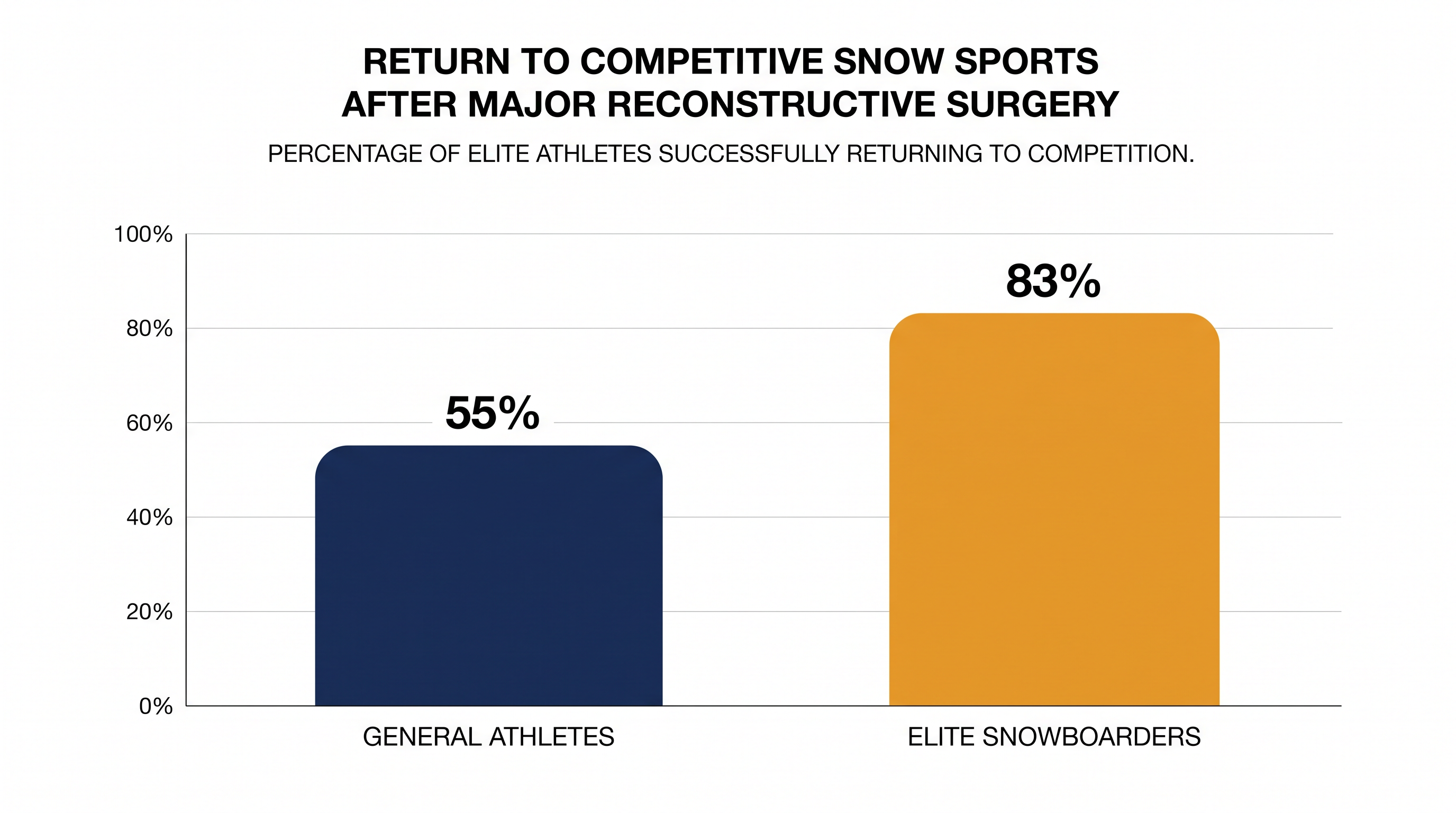
Returning to elite snowboarding requires more than just waiting for bones and ligaments to heal. A recent consensus statement commissioned by the International Ski and Snowboard Federation (FIS) outlined the rigorous demands of returning to snow sports. Medical experts emphasize that athletes must achieve full baseline muscle strength, complete extensive plyometric training, and overcome the psychological fear of reinjury before attempting unrestricted on-snow activities. For riders like Kim, Brearley, and Hirano, this phased approach is essential to safely absorb the massive G-forces generated in modern halfpipe and slopestyle landings.[7]
As August gives way to September, the progress made on the slopes of New Zealand and Australia will dictate the rosters for the Northern Hemisphere's winter kickoff. While some riders will seamlessly transition back into World Cup bibs, others will wisely choose to sit out the early contests in favor of long-term joint preservation. Ultimately, the 2026–27 season will be defined not just by the progression of new, gravity-defying tricks, but by the remarkable resilience of the athletes who refuse to let devastating crashes dictate the end of their careers.[7]
How we got here
November 2025
Liam Brearley suffers knee and ankle injuries, forcing him to miss the Olympics.
January 2026
Chloe Kim dislocates her shoulder and tears her labrum at the Laax Open.
February 2026
The Milano Cortina Winter Olympics take place, resulting in multiple high-profile injuries and gritty performances.
April 2026
Brearley begins his targeted return to light on-snow progression.
August 2026
Riders utilize the Southern Hemisphere winter to test their physical recoveries on snow.
Viewpoints in depth
The Athletes' View
Riders view injuries as an inevitable hurdle and focus heavily on the mental resilience required to return.
For elite snowboarders, severe injuries are widely accepted as an occupational hazard rather than a career-ending tragedy. Riders like Julia Marino and Ayumu Hirano emphasize the psychological aspect of the comeback, noting that the motivation to return often eclipses the trauma of the crash. Their focus remains on taking the recovery day-by-day, trusting their physical therapists, and using the downtime to reset mentally before strapping back into their bindings.
Medical Professionals' View
Sports medicine experts advocate for strict, data-driven rehabilitation timelines to prevent chronic joint instability.
Orthopedic surgeons and physical therapists stress that returning to snow too early dramatically increases the risk of reinjury. The extreme G-forces involved in landing triple corks or navigating icy snowboard cross tracks require the body to be at 100% baseline strength. Medical consensus, such as the recent FIS guidelines, dictates that athletes must pass rigorous biomechanical testing and plyometric benchmarks before they are cleared for unrestricted on-snow training.
What we don't know
- Whether Chloe Kim will ultimately decide to compete in the 2030 Winter Olympics in the French Alps.
- How quickly riders like Liam Brearley will regain their pre-injury form during the upcoming World Cup season.
Key terms
- Labrum
- A piece of cartilage attached to the rim of the shoulder socket that helps keep the ball of the joint in place.
- Plyometrics
- Jump training exercises that use speed and force of different movements to build muscle power, essential for absorbing snowboard landings.
- Slopestyle
- A snowboarding discipline where athletes ride down a course featuring a variety of obstacles including rails, jumps, and other terrain park features.
- World Snowboard Points List (WSPL)
- The definitive global ranking system for competitive freestyle snowboarders.
Frequently asked
Will Chloe Kim compete in the 2030 Winter Olympics?
Kim has not yet committed to the 2030 Games in the French Alps. She is currently focused on recovering from shoulder surgery and taking a mental break from competition.
How long does it take to recover from an ACL injury in snowboarding?
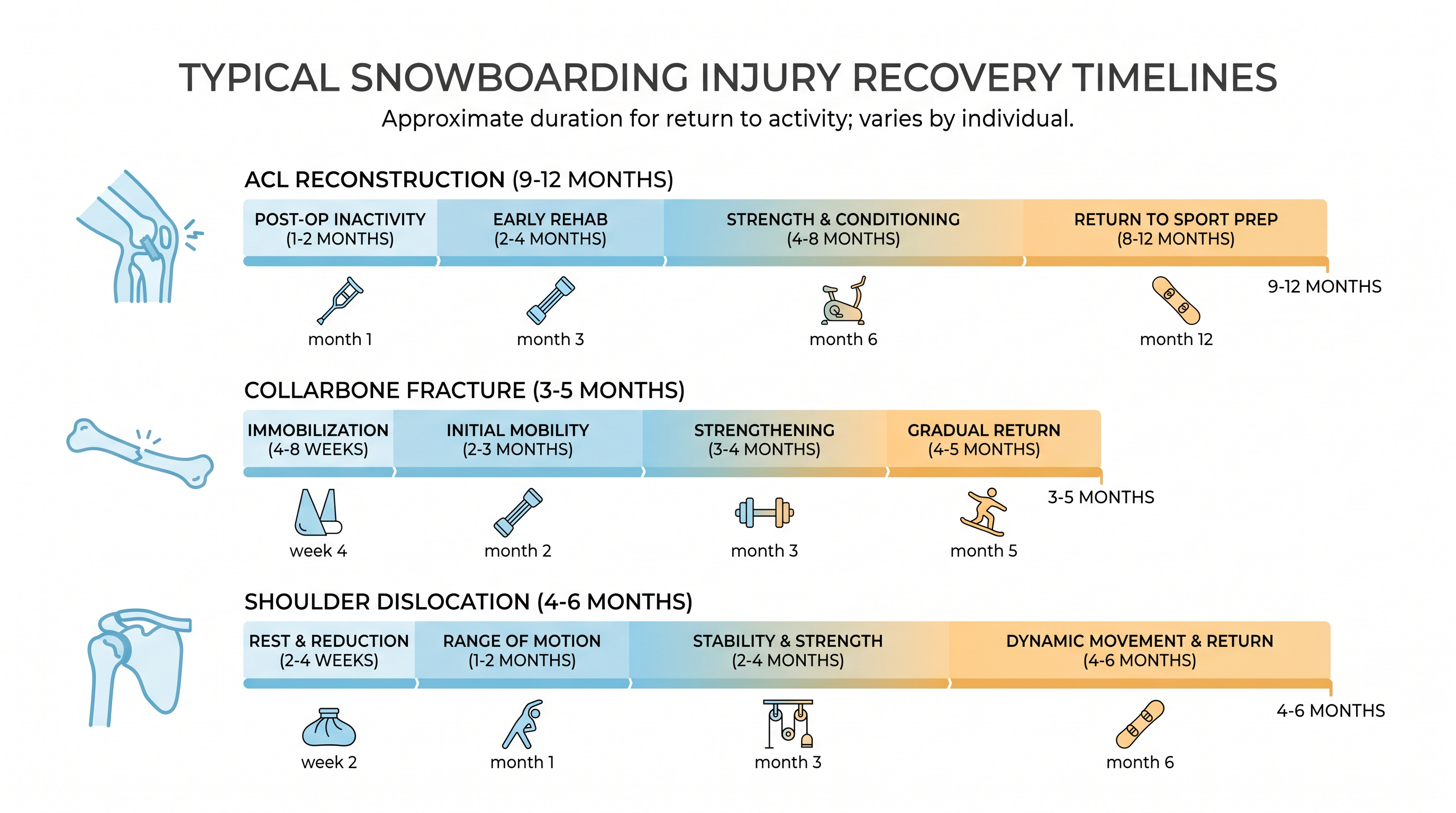
Elite snowboarders typically require 9 to 12 months of intensive physical therapy and plyometric training before they can safely return to the high-impact landings of competitive snowboarding.
Why are snowboarders training in August?
August is the peak of the Southern Hemisphere winter, making resorts in New Zealand and Australia the primary training grounds for elite riders preparing for the upcoming Northern Hemisphere season.
Sources
Source coverage
8 outlets
3 viewpoints surfaced







[1]NBC SportsNational Federations
Chloe Kim says she's 'good to go' for Milan Cortina Olympics after being diagnosed with torn labrum
Read on NBC Sports →[2]CBS NewsRiders & Athletes
Chloe Kim wins silver at 2026 Winter Olympics, plans surgery
Read on CBS News →[3]Canada SnowboardNational Federations
Liam Brearley Faces Knee Injury — Focused on the Comeback
Read on Canada Snowboard →[4]Olympics.comRiders & Athletes
Winter Olympics 2026: Japan's Hirano Ayumu “glad I was able to finish alive today”
Read on Olympics.com →[5]9NewsRiders & Athletes
Julia Marino to miss 2026 Milan Cortina Winter Olympics
Read on 9News →[6]Men's JournalNational Federations
Snowboarder Airlifted to Hospital After Breaking Neck
Read on Men's Journal →[7]BMJMedical & Rehabilitation Experts
Consensus statement on return-to-performance in competitive snow sports
Read on BMJ →[8]Global NewsNational Federations
Mark McMorris crash: Olympic snowboarder will miss big air qualifier
Read on Global News →
More in sports
See all 40 stories →Standings
August 2026 FIDE Ratings: 15-Year-Old Erdoğmuş Claims Junior No. 1 as Firouzja Returns to Top 10
7 sources
Injury
Global Netball Injury Report: Ward and Teague-Neeld Headline Inspiring Returns as Super Netball Stars Conquer Rehab
7 sources
Standings
The Race to Sydney: Six Nations Brace for the High-Stakes Asian Netball Championships
7 sources
Injury
Sydney Swans Defender Julie O'Sullivan Makes Triumphant Return From ACL Injury
6 sources
Every angle. Every day.
Get sports stories with full source coverage and perspective breakdowns delivered to your inbox.