
Ski Mountaineering Secures Olympic Future With Expanded Roster for 2030 French Alps Games
Following a successful debut at the 2026 Winter Games, the IOC has approved ski mountaineering for the 2030 Olympics, doubling the athlete quota and adding the sport's traditional endurance races.
By Omar Haddad
The mountains of the French Alps have long been the spiritual home of ski mountaineering, and in 2030, they will serve as its ultimate global stage. During the 146th International Olympic Committee (IOC) Session in Lausanne, Switzerland, officials formally approved ski mountaineering—widely known as "skimo"—as an additional sport for the Alpes 2030 Winter Games. The decision cements the sport's rapid ascent within the Olympic movement.
Skimo made its highly anticipated debut just months ago at the Milano Cortina 2026 Winter Games, where its unique blend of grueling uphill endurance and high-speed downhill precision captivated global audiences. Now, the International Olympic Committee is doubling down on that success, signaling that human-powered mountain sports represent a crucial growth area for the Winter Games.[1]
For the 2030 Games, the athlete quota will double from 36 to 72 competitors, allowing a much deeper field of international talent to qualify. More importantly for purists of the sport, the medal program will expand from three events to five.
The fast-paced sprints and mixed relays that defined the 2026 debut will be joined by the men's and women's individual races. These grueling, multi-ascent endurance tests form the historical bedrock of ski mountaineering, and their inclusion marks a major victory for athletes who felt the initial Olympic format was too heavily skewed toward short-burst television entertainment.[1]
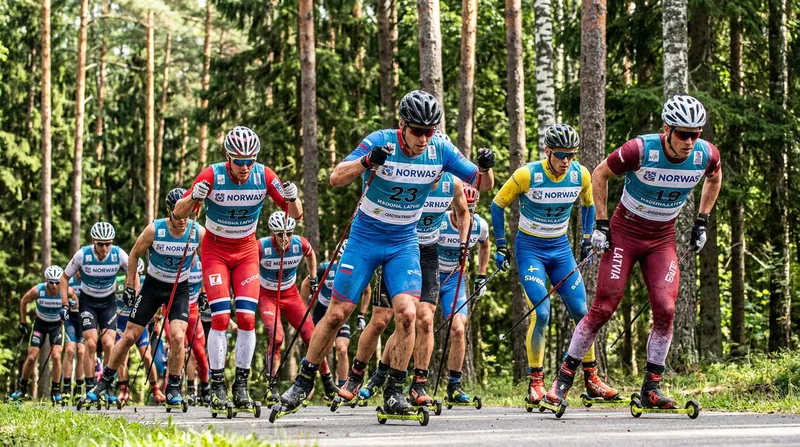
To understand the significance of this expansion, one must understand the mechanics of the sport itself. Ski mountaineering is an intense, multi-disciplinary mountain race that demands both the cardiovascular engine of a marathon runner and the technical bravery of a downhill skier.
Competitors begin at the bottom of a mountain, ascending steep, snow-covered terrain using specialized skis equipped with "skins"—strips of textured fabric attached to the bases that glide forward but grip the snow to prevent sliding backward. As the incline steepens into jagged, rocky terrain, athletes prepare for the sport's defining feature: the transition.
In a matter of seconds, competitors unclip from their bindings, strap their skis to their backpacks, and climb vertically on foot, often kicking steps into the snow or navigating icy ridges.
Once they reach the summit, another frantic transition occurs: skins are ripped off and stuffed into racing suits, boots are locked into downhill mode, and the athletes plunge into a steep, unmarked alpine descent. The sport merges the relentless aerobic output of cross-country skiing with the high-speed precision of traditional alpine racing, punishing any athlete who lacks mastery in either discipline.
During the Milano Cortina 2026 Games, the IOC limited the program to sprint events and a mixed relay. These formats, which last between four and twelve minutes, were designed for maximum television appeal, featuring head-to-head racing on compact, easily visible courses. While the sprints delivered thrilling finishes and introduced the sport to millions of new viewers, many within the skimo community felt they only showcased a fraction of the sport's true identity. The short courses eliminated the massive elevation gains and remote alpine environments that define traditional ski mountaineering.[1][2]
The approval of the individual race for 2030 changes that narrative entirely. The individual format is a sprawling, multi-ascent marathon that typically spans 10 kilometers and lasts up to two hours. It forces athletes deep into the high alpine, navigating unpredictable snow conditions, massive elevation gains, and complex natural topography.
This is the format that athletes train for year-round, requiring a delicate balance of pacing, nutrition, and technical mountain survival skills that simply do not factor into a four-minute sprint. For the purists, the individual race is the ultimate test of human engineering and mountain mastery, making its Olympic approval a deeply emotional milestone.[2]
"The individual race is the heart of ski mountaineering," French Olympic gold and silver medalist Emily Harrop told the IOC delegation during the Lausanne session. "It's the format that best captures the essence of our sport, and including it in the program for 2030 would not only honor the history and the authenticity of ski mountaineering, but would also allow athletes and spectators to experience the sport in its purest and most complete form." Harrop's passionate plea underscored the cultural weight of bringing the long-form race to the French Alps.[1][2]
The push to expand the sport was spearheaded by the French Alps 2030 Organizing Committee. Under a decade-old IOC rule, host cities are permitted to propose additional sports that hold specific cultural relevance to their region. For the French delegation, skimo was an undeniable centerpiece.
"Ski mountaineering isn't just a guest, it's at home here," said Edgar Grospiron, the President of the French Alps 2030 Organizing Committee and a former Olympic moguls champion. "It is part of the scenery, part of our landscape, part of our culture. This discipline is the embodiment of our vision."[1][3]
France's advocacy is backed by absolute dominance on the snow. At the 2026 Winter Games, the French national team topped the skimo medal standings, taking home three medals, including a gold in the mixed team relay. The 2030 events are slated to be held in the Briançonnais region near the Italian border, a rugged alpine sector that hosted the very first ski mountaineering World Championships in 2002. Bringing the expanded Olympic roster back to the birthplace of the modern World Championships provides a poetic symmetry for the sport's pioneers.
The International Ski Mountaineering Federation (ISMF) views the 2030 inclusion as a historic milestone that will supercharge the sport's global development. Since skimo was initially proposed for the Olympics in 2021, the ISMF has seen its registered athlete club members more than double.
Today, the federation boasts 53 national governing bodies, and recreational participation has surged to an estimated three million people worldwide. The sport's low environmental impact—requiring no ski lifts, snowmaking machines, or massive infrastructure—has made it increasingly attractive to a younger generation of winter athletes seeking sustainable, human-powered access to the mountains.[1][2][3]
"We recognized the sport's potential to add meaningful value to the program, supported by its strong presence in Alpine regions, and its ability to enhance diversity, authenticity, and appeal," said Karl Stoss, chair of the IOC's Olympic Program Working Group. Stoss specifically highlighted the sport's youth appeal and its alignment with the IOC's push for more environmentally conscious Games. As climate change increasingly threatens traditional winter sports, disciplines that rely solely on natural snowfall and human power are becoming vital to the Winter Olympics' long-term viability.[1]
While ski mountaineering is not yet a permanent fixture on the core Winter Olympic program—meaning future host cities like Salt Lake City in 2034 will have to propose it again—the doubling of its athlete quota and the addition of its flagship endurance races make it incredibly difficult to ignore. For the athletes who spend their winters breaking trail through freezing, thin air, the 2030 Games represent the ultimate validation. The world has seen the high-speed sprints; now, the French Alps will show them the true, grueling soul of the mountains.
The essentials
- The IOC officially approved ski mountaineering for the 2030 Winter Olympics in the French Alps.
- The athlete quota will double from 36 to 72 competitors compared to the sport's 2026 debut.
- The 2030 program will expand to five medal events, adding the traditional long-form individual races.
- Organizers praised the sport's low environmental impact and deep cultural ties to the Alpine host region.
Timeline
July 2021
The IOC unanimously approves ski mountaineering as an additional sport for the Milano Cortina 2026 Games.
February 2026
Ski mountaineering makes its Olympic debut in Italy, featuring sprint and mixed relay events.
June 25, 2026
The 146th IOC Session in Lausanne officially approves skimo for the French Alps 2030 Games.
February 2030
The sport will debut its expanded five-event program, including the traditional individual races.
- Skimo Purists & Athletes
- Celebrate the addition of the long-form individual race, which they believe captures the true endurance and high-alpine essence of the sport.
- Olympic Organizers
- Focus on the sport's youth appeal, low environmental impact, and deep cultural ties to the Alpine host region.
- International Ski Mountaineering Federation
- Views the expanded Olympic footprint as a historic milestone that will supercharge global participation and funding.
Perspectives this story doesn't cover
- Traditional Alpine Skiers
- Environmental Advocacy Groups
Sources
Source coverage
4 outlets
3 viewpoints surfaced




- [1]Olympics.comOlympic Organizers
Ski mountaineering approved as additional sport for Alpes 2030 Olympic Winter Games
Read on Olympics.com → - [2]Powder MagazineSkimo Purists & Athletes
Ski Mountaineering Approved for 2030 Winter Olympics in French Alps
Read on Powder Magazine → - [3]SportzhubInternational Ski Mountaineering Federation
Ski mountaineering confirmed for French Alps 2030 Olympic Winter Games
Read on Sportzhub → - [4]WikipediaOlympic Organizers
2030 Winter Olympics
Read on Wikipedia →
More in Sports
See all →Injury
Ester Ledecká Returns to Alpine Skiing Following Complex Collarbone Injury and Snowboard Comeback
4 sources
Standings
FIS Freeski and Snowboard ANC Standings: Park & Pipe Stars Battle for Early-Season Dominance Down Under
2 sources
Injury
Petra Vlhová Targets Full World Cup Return After Two-Year Injury Layoff
7 sources
Standings
FIS Grass Skiing World Cup Standings: Knapp and Zamboni Battle for Mid-Summer Lead
2 sources
Comments
Every angle. Every day.
Get Sports stories with full source coverage and perspective breakdowns, free every day.