
FIS Grass Skiing World Cup Standings: Knapp and Zamboni Battle for Mid-Summer Lead
As the 2026 FIS Grass Skiing World Cup reaches its critical summer stretch, Germany's Marcel Knapp and Italy's Filippo Zamboni are locked in a tight race for the men's overall globe. The niche sport continues to draw both dedicated specialists and alpine skiers seeking off-season cross-training.
By Jackson Reed

Share this story
The Northern Hemisphere's snow may have melted months ago, but the International Ski and Snowboard Federation (FIS) World Cup circuit is still in full swing. The 2026 FIS Grass Skiing World Cup has reached its critical mid-summer stretch, transforming the green slopes of Central Europe into high-speed racecourses.
While traditional alpine athletes are currently grinding through dryland gym workouts or chasing winter in the Southern Hemisphere, a dedicated contingent of racers is battling for crystal globes on the grass. The sport, which mirrors the disciplines of alpine skiing—including slalom, giant slalom, super-G, and combined—is experiencing a surge in competitive intensity this season as the leaderboard tightens.[1][2]
In the men's overall standings, a fierce and highly technical battle is unfolding at the top of the leaderboard following the early July races in Jasenská Dolina, Slovakia. Germany's Marcel Knapp currently holds the number one position, showcasing remarkable consistency across both technical and speed events.
However, he is fending off a relentless challenge from Italy's Filippo Zamboni, who has capitalized on aggressive runs in the super-combined to close the points gap. Czechia's Ales Knor and Switzerland's Mirko Hueppi remain within striking distance in third and fourth place, respectively. With several tour stops remaining, the race for the men's overall globe is widely considered one of the most contentious in recent years.[1]
The women's circuit is proving to be equally competitive, dominated by a strong and technically precise Central European contingent. Czechia's Eliska Rejchrtova and Sarka Abrahamova are consistently trading podium finishes with Austria's Lara Teynor. The tight margins in the giant slalom and super-G events mean the overall title will likely come down to the final races in September.
Rejchrtova has demonstrated exceptional edge control on the steep, grassy pitches, while Teynor's aggressive lines have kept the Austrian team in the hunt for the overall title. The rivalry between the Czech and Austrian camps has elevated the standard of racing, drawing larger crowds to the summer tour stops.[1]
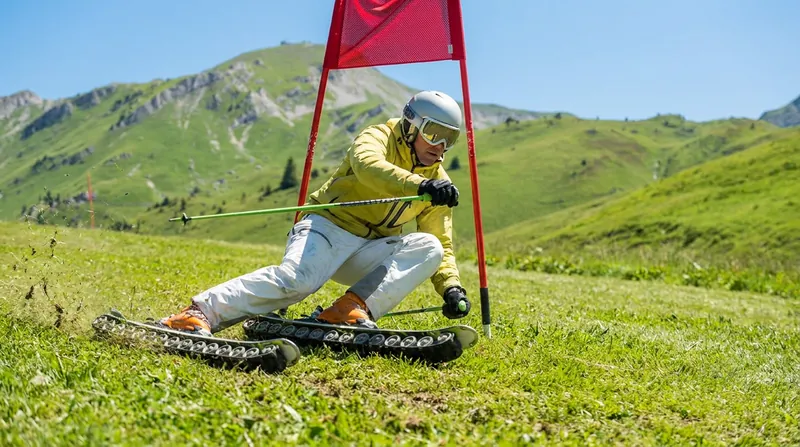
For the uninitiated, grass skiing is an official FIS-sanctioned sport that requires immense physical strength and specialized equipment. Instead of traditional snow skis, athletes use shortened gear ranging from 65 to 105 centimeters in length. These skis feature a continuous belt or track mounted on 16 sets of rollerblade-style wheels, allowing racers to carve down grassy mountain faces.
Because grass skis do not allow for lateral sliding or "snowplowing" to scrub speed, racers must commit entirely to a carved turn. This mechanical reality makes the sport exceptionally unforgiving; a slight miscalculation in balance or edge pressure almost inevitably results in a crash, demanding a level of precision that rivals elite ice skiing.
Historically, the sport was developed in Europe during the 1960s as an off-season training method for alpine skiers looking to maintain their edge feel during the summer. That tradition continues robustly today. Prominent alpine coaches, including former Swiss World Cup slalom winner Didier Plaschy, actively use grass skiing to keep their athletes' balance, core stability, and slalom technique sharp well past the spring snowline.
Because the mechanics of turning a grass ski perfectly mimic the physics of carving a modern alpine ski, the crossover benefits are immense. Coaches note that athletes who master the unforgiving nature of grass skis often return to the snow with vastly improved edge control and core strength.
However, grass skiing is taking on entirely new relevance in 2026 beyond mere cross-training. With European ski resorts facing increasingly mild winters, shrinking glaciers, and a heavy reliance on water-intensive artificial snow cannons, grass skiing offers a sustainable, snow-free alternative. A recent study highlighted that artificial snow production in the Alps requires hundreds of millions of liters of water per season—a practice that is becoming ecologically and economically strained.
As a result, some forward-thinking resort managers and local municipalities are looking at grass skiing not just as a niche hobby, but as a viable way to keep ski lifts running and local economies afloat during dry winters and extended summers.
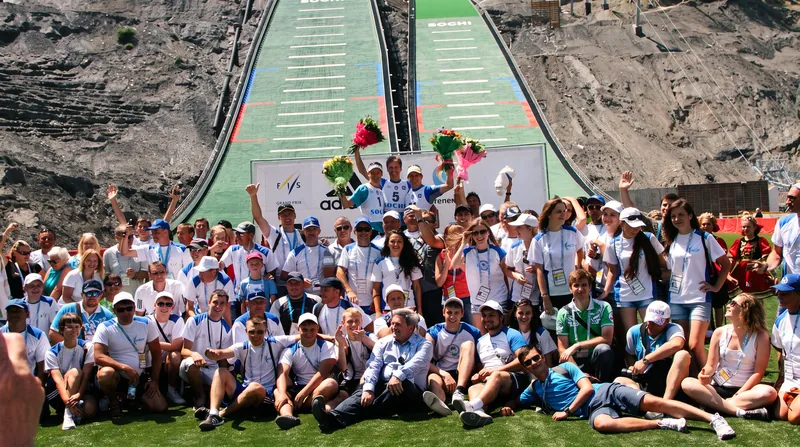
Despite its obvious benefits, the competitive community remains relatively small, with an estimated 200 to 300 elite racers competing worldwide. To combat this, national federations and equipment manufacturers are investing heavily in grassroots development. Recent youth camps, such as the massive U10 to U16 gathering in Jasenská Dolina, have drawn dozens of young athletes from across Europe and Japan.
By introducing children to the sport early, organizers hope to build a sustainable pipeline of talent that views grass skiing as a primary discipline rather than just a summer distraction. The influx of new, lighter ski models designed specifically for children has further accelerated this youth movement.
As the FIS Grass Skiing World Cup tour prepares for its grueling August stretch, the stakes for the current leaders could not be higher. Knapp and Zamboni will need to maintain their physical peak through a series of demanding slalom and super-G events in Italy and the Czech Republic.
As the FIS Grass Skiing World Cup tour prepares for its grueling August stretch, the stakes for the current leaders could not be higher.
For the athletes, the pursuit of the crystal globe is a testament to year-round dedication. For the broader winter sports industry, the mid-summer spectacle serves as a compelling reminder that the thrill of carving a perfect turn down a mountain face does not strictly require freezing temperatures or artificial snow.[1][2]
Key points
- The 2026 FIS Grass Skiing World Cup is currently at its mid-season mark, with Germany's Marcel Knapp leading the men's overall standings.
- Czechia's Eliska Rejchrtova and Austria's Lara Teynor are locked in a tight battle for the women's crystal globe.
- Grass skis use a tracked wheel system that prevents lateral sliding, demanding flawless carving technique and core stability.
- Alpine coaches increasingly utilize the sport for summer cross-training to keep athletes sharp.
- As climate change threatens traditional winter snowfall, grass skiing is gaining visibility as a sustainable, snow-free alternative for mountain resorts.
How we got here
1960s
Grass skiing is invented in Europe as an off-season training method for alpine ski racers.
1970s
The sport gains standalone popularity, leading to organized competitions across Central Europe.
2000s
The International Ski and Snowboard Federation (FIS) officially sanctions the Grass Skiing World Cup.
July 2026
The 2026 FIS Grass Skiing World Cup reaches its mid-season peak, with Marcel Knapp and Filippo Zamboni leading the men's standings.
- Grass Skiing Specialists
- Athletes who view the sport as a primary, standalone professional discipline.
- Alpine Crossover Advocates
- Coaches and racers using the sport strictly to improve winter snow technique.
- Climate Adaptation Proponents
- Industry voices looking to grass skiing to save snow-starved mountain resorts.
Perspectives this story doesn't cover
- Mainstream sports broadcasters who currently overlook the sport due to its niche status.
- Traditional winter tourists who may be hesitant to embrace snow-free mountain activities.
Sources
Source coverage
2 outlets
3 viewpoints surfaced


- [1]FISGrass Skiing Specialists
FIS Cup Standings - Grass Skiing
Read on FIS → - [2]Factlen Editorial TeamAlpine Crossover Advocates
Synthesis by Factlen editorial team
Read on Factlen Editorial Team →
More in Sports
See all →Standings
FIS Southern Hemisphere Standings: The High-Stakes Race for 2026 World Cup Quotas
5 sources
Injury
Petra Vlhová Targets Full World Cup Return as Slovakian Star Completes First Healthy Summer Camp in Two Years
7 sources
Injury
Alpine Skiing Injury Report: Lauren Macuga Targets Chile Comeback as World Cup Stars Navigate Summer Rehab
7 sources
Standings
Nordic Combined Enters a New Era: The 2026 Summer Grand Prix Standings Race Begins Without Its Monarchs
5 sources
Comments
Every angle. Every day.
Get Sports stories with full source coverage and perspective breakdowns, free every day.