
SK Hynix Secures Record $26.5 Billion in US IPO, Setting New Benchmark for Foreign Tech Listings
The South Korean memory chip giant has executed the largest foreign initial public offering in US history, raising $26.5 billion to fund massive expansion in AI-focused semiconductor manufacturing.
Share this story
South Korean semiconductor giant SK Hynix has officially completed the largest foreign initial public offering in United States history, raising a staggering $26.5 billion on the New York Stock Exchange. The listing of its American depositary receipts priced at the absolute top of their marketed range, granting the newly listed entity an implied valuation of roughly $185 billion. The sheer scale of the offering shatters the previous record held by Chinese e-commerce behemoth Alibaba, which raised $25 billion during its landmark 2014 debut.[1][2][3]
The driving force behind this historic capital raise is the insatiable global demand for artificial intelligence infrastructure. SK Hynix is the world's dominant producer of High Bandwidth Memory (HBM), a specialized and highly complex type of semiconductor that stacks memory chips vertically. These components are essential for the advanced graphics processing units (GPUs) designed by Nvidia and AMD, which train and operate the world's most sophisticated AI models.[3][5]
Currently, SK Hynix commands an estimated 65% of the global HBM market, giving it a near-monopoly on the most critical bottleneck in the AI supply chain. However, maintaining that lead requires eye-watering levels of capital expenditure. Modern semiconductor fabrication plants, or fabs, routinely cost upwards of $20 billion to construct and equip with the latest extreme ultraviolet (EUV) lithography machines.[2][5]
By tapping into the deep liquidity of US capital markets, SK Hynix has secured the war chest necessary to fund a massive expansion of its manufacturing footprint directly on American soil. The company has already earmarked $15 billion of the IPO proceeds to accelerate the construction of advanced packaging facilities in Indiana and to break ground on a new, state-of-the-art memory fabrication complex in the American Southwest.[1]
This geographic pivot is not merely a financial calculation; it is heavily influenced by international geopolitics. The US government, through the CHIPS and Science Act, has aggressively incentivized foreign semiconductor companies to onshore their manufacturing. By building fabs in the United States, SK Hynix aligns itself with Washington's strategic imperative to decouple critical technology supply chains from pure reliance on East Asia.[4][6]
The strategic alignment offers SK Hynix a dual advantage: it secures billions in potential federal subsidies while insulating the company from the escalating trade restrictions between Washington and Beijing. While SK Hynix still operates legacy memory plants in China, the company has made it clear that its most advanced HBM production lines will be concentrated in South Korea and the United States.[6]
Wall Street's reaction to the offering underscores the market's enduring appetite for AI-adjacent equities. The order book for the IPO was reportedly oversubscribed by a factor of ten, drawing massive commitments from sovereign wealth funds, institutional asset managers, and retail investors eager for pure-play exposure to the AI hardware boom. Analysts note that the successful listing provides a clear read-through for the broader tech sector, signaling that the AI investment supercycle remains robust.[1][3][5]
The record-breaking IPO also serves as a stark reminder of the gravitational pull of US capital markets. Financial centers in London and Hong Kong have struggled in recent years to attract blockbuster technology listings, losing out to the deeper pools of capital and higher valuation multiples available in New York. The decision by a South Korean national champion to list its primary growth engine in the US highlights this enduring structural advantage.[4]
However, the massive influx of capital into the memory sector is not without its skeptics. The semiconductor industry is notoriously cyclical, characterized by periods of intense undersupply followed by punishing gluts. Competitors like Samsung Electronics and US-based Micron Technology are also pouring tens of billions of dollars into their own HBM capacity expansions, racing to capture market share from SK Hynix.[2]
Industry analysts warn that if AI model training efficiency improves faster than expected, or if the deployment of AI applications fails to generate sufficient return on investment for end-users, the current scramble for HBM chips could result in severe overcapacity by 2028. A sudden drop in memory prices would heavily impact the profitability of the newly expanded fabs.[5][6]
Despite these long-term risks, the immediate operational reality for SK Hynix is one of severe supply constraints. The company's HBM production capacity is reportedly entirely sold out through the end of 2027. The $26.5 billion raised this week will allow the firm to pull forward equipment purchases and expedite construction timelines, attempting to close the gap between supply and demand.[1][5]
For Nvidia, which relies heavily on SK Hynix to assemble its flagship AI accelerators, the IPO is a highly positive development. A well-capitalized supplier capable of scaling production rapidly in North America reduces the risk of hardware bottlenecks that could otherwise throttle Nvidia's revenue growth. It also simplifies logistics, allowing advanced packaging to occur closer to where the final servers are assembled.[3][5]
Ultimately, the SK Hynix IPO represents a watershed moment in the industrialization of artificial intelligence. It transitions the AI narrative from software breakthroughs to the brute-force reality of heavy manufacturing, proving that the next era of computing will be built on foundations of concrete, steel, and unprecedented amounts of Wall Street capital.[3][4][6]
Key points
- SK Hynix raised $26.5 billion on the NYSE, surpassing Alibaba as the largest foreign US IPO in history.
- The funds will primarily finance new High Bandwidth Memory (HBM) manufacturing facilities in the United States.
- SK Hynix currently controls an estimated 65% of the global HBM market, a critical component for AI processors.
- The listing underscores Wall Street's continued dominance in financing the global artificial intelligence boom.
What we don’t know
- Whether the massive influx of capital into memory manufacturing will lead to a supply glut and price collapse by the end of the decade.
- How the Chinese government will react to SK Hynix shifting its most advanced capital investments and supply chains to the United States.
- If the new US-based fabrication plants will face the same labor shortages and construction delays that have plagued other recent semiconductor projects in America.
How we got here
2014
Chinese e-commerce giant Alibaba raises $25 billion, setting the previous record for a foreign US IPO.
2023
SK Hynix emerges as the primary supplier of High Bandwidth Memory chips for Nvidia's flagship AI processors.
April 2024
SK Hynix announces a $3.87 billion advanced packaging plant in West Lafayette, Indiana.
January 2026
The company confidentially files for a US listing to fund broader North American manufacturing expansion.
July 11, 2026
SK Hynix begins trading on the NYSE, raising a record-breaking $26.5 billion.
- AI Infrastructure Bulls
- Argue that massive capital expenditure is required to sustain the AI revolution and prevent hardware bottlenecks.
- Supply Chain Security Advocates
- Emphasize the strategic importance of moving critical semiconductor manufacturing onto US soil to mitigate geopolitical risk.
- Market Cyclicality Skeptics
- Warn that the memory chip market is historically boom-and-bust, and massive capacity expansion could lead to a future glut.
Perspectives this story doesn't cover
- South Korean retail investors who may feel diluted or sidelined by the US-focused listing.
- Environmental groups concerned about the massive water and power requirements of the new US fabrication plants.
Sources
Source coverage
6 outlets
3 viewpoints surfaced






- [1]BloombergMarket Cyclicality Skeptics
SK Hynix Raises $26.5 Billion in Record-Shattering US IPO
Read on Bloomberg → - [2]Reuters
South Korea's SK Hynix prices US IPO at top of range, valuing firm at $185 billion
Read on Reuters → - [3]Wall Street JournalAI Infrastructure Bulls
The AI Chip Boom Just Delivered the Biggest Foreign IPO in Wall Street History
Read on Wall Street Journal → - [4]Financial TimesSupply Chain Security Advocates
SK Hynix listing highlights US dominance in AI capital markets
Read on Financial Times → - [5]CNBCAI Infrastructure Bulls
New housing law targets affordability — what it means for homebuyers and sellers
Read on CNBC → - [6]The EconomistSupply Chain Security Advocates
The geopolitics of SK Hynix's American listing
Read on The Economist →
More in Business
See all →Energy Policy
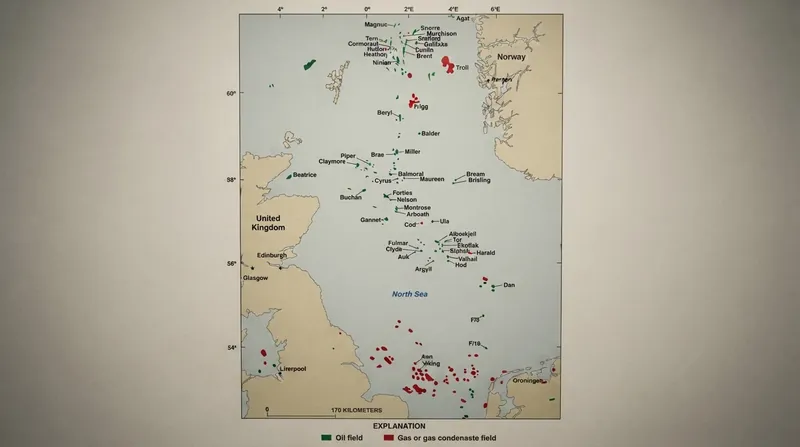
UK Approves Jackdaw North Sea Gas Field to Bolster Domestic Energy Security
7 sources
Bilateral Trade
Trump Signals Imminent US-India Trade Accord Following Bilateral Negotiations
3 sources

Trade Policy
Food Importer Sues to Block Trump's 50% Tariffs on Canadian Goods Under 1930 Trade Law
5 sources

Market Microstructure
How Dollar Funding Squeezes Break Covered Interest Parity in Cross-Currency Swaps
9 sources

Comments
Every angle. Every day.
Get Business stories with full source coverage and perspective breakdowns, free every day.