
SCOTUS Expands FAA Exemption, Allowing Delivery Drivers to Bypass Mandatory Arbitration for Wage Claims
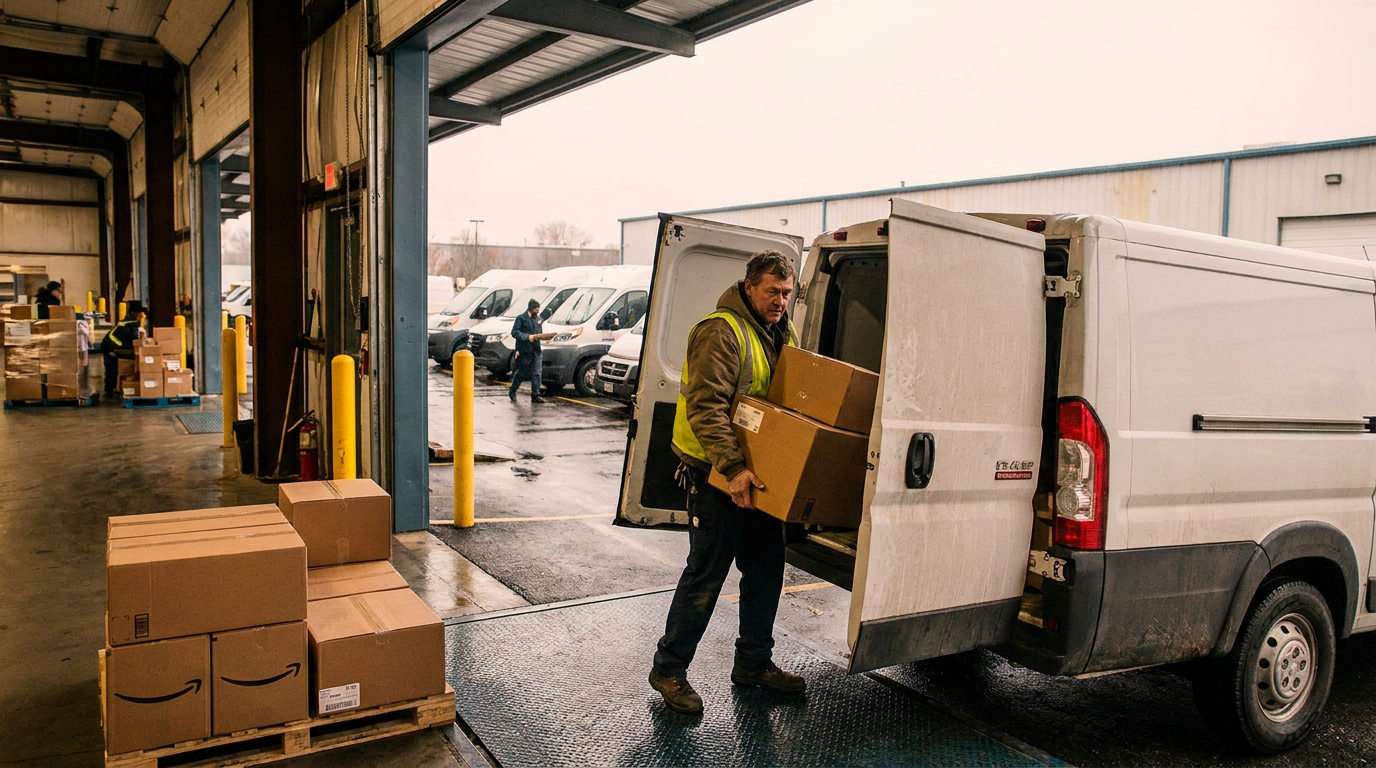
A unanimous Supreme Court ruled that 'last-mile' delivery drivers qualify for the Federal Arbitration Act’s transportation exemption even if they never cross state lines, empowering logistics workers to sue for wage theft in open court.
By Factlen Editorial Team
- Worker Advocates & Labor Unions
- View the ruling as a critical restoration of Seventh Amendment rights and a necessary tool to fight systemic wage theft and misclassification.
- Corporate Employers & Franchisors
- Argue that arbitration is faster and more efficient, warning that the ruling will trigger a flood of costly class-action litigation that could raise delivery prices.
- Legal Analysts
- Note that while the federal exemption is broadened, employers will likely pivot to enforcing arbitration under state laws, meaning the legal fight is not entirely over.
What's not represented
- · Independent Owner-Operators who prefer arbitration
- · Consumers affected by potential delivery cost increases
Why this matters
Forced arbitration clauses have historically prevented millions of gig and logistics workers from recovering stolen wages. This ruling dismantles a major corporate legal shield, allowing delivery drivers to band together in class-action lawsuits to hold employers publicly accountable.
Key points
- The Supreme Court ruled unanimously that last-mile delivery drivers are exempt from the Federal Arbitration Act.
- Drivers do not need to cross state lines to qualify, provided the goods they carry are on an interstate journey.
- The decision allows logistics workers to bypass secretive arbitration and file class-action lawsuits in open court.
- Employers are expected to respond by attempting to enforce arbitration clauses under state-level laws instead.
For decades, the American workplace has been quietly rewritten by a single contract clause. Today, an estimated 60 million non-union private-sector workers are bound by forced arbitration agreements—mandatory provisions that require employees to waive their right to a judge and jury, funneling wage disputes and discrimination claims into secretive, employer-funded private tribunals.[2]
In the logistics and gig economy, these clauses have been particularly devastating. When delivery drivers experience wage theft or independent contractor misclassification, arbitration agreements typically force them to fight the company one-by-one, explicitly banning class-action lawsuits. In recent years, thousands of app-based delivery drivers have been forced to file individual arbitration claims simultaneously just to seek unpaid overtime, a logistical nightmare designed to suppress claims.
But a unanimous Supreme Court ruling has just blown a massive hole in the corporate arbitration shield. In Flowers Foods, Inc. v. Brock, decided in late May 2026, the Court ruled 9-0 that "last-mile" delivery drivers are exempt from the Federal Arbitration Act (FAA), empowering them to bypass private tribunals and sue their employers in open court.
The legal battle hinged on a nearly century-old carveout. When Congress passed the FAA in 1925, it included Section 1, which exempts "seamen, railroad employees, or any other class of workers engaged in foreign or interstate commerce." For years, corporate employers argued this exemption only applied to long-haul truckers, sailors, or pilots who physically crossed state borders.[2]

In the Brock case, the defendant—the multibillion-dollar bakery conglomerate behind Wonder Bread—argued that its local Colorado distributor, Angelo Brock, could not claim the exemption because his delivery route never left the state. Brock had sued the company for wage-and-hour violations under the Fair Labor Standards Act, and Flowers Foods attempted to force the dispute into private arbitration.
Brock had sued the company for wage-and-hour violations under the Fair Labor Standards Act, and Flowers Foods attempted to force the dispute into private arbitration.
Writing for the unanimous Court, Justice Neil Gorsuch flatly rejected the bakery's geographical argument. The Court ruled that a worker does not need to personally cross state lines, nor interact directly with a vehicle that does, to be engaged in interstate commerce.
Instead, the justices focused on the "continuous journey" of the goods. Because the packaged bread and snacks originated in out-of-state manufacturing facilities and were moving through an interstate supply chain, the local driver performing the final intrastate leg of that journey is still fundamentally engaged in interstate commerce.[1]
"The individual does not have to physically cross state lines to be engaged in interstate commerce," legal experts noted following the decision, emphasizing that the worker's role in the practical movement of goods is what ultimately matters to the courts.

The ruling is the culmination of a multi-year Supreme Court trend steadily expanding the Section 1 exemption. It builds on the 2022 Southwest Airlines v. Saxon decision, which exempted airport cargo loaders, and the 2024 Bissonnette v. LePage Bakeries ruling, which clarified that a worker doesn't need to be employed by a dedicated transportation company to qualify.[2]
For the booming "last-mile" delivery sector—spanning food distribution, e-commerce logistics, and app-based courier services—the implications are staggering. Delivery drivers who have been misclassified as independent contractors can now band together in class-action lawsuits to recover stolen wages, a mechanism that is vastly more threatening to corporate bottom lines than isolated arbitration cases.[2]

Management-side law firms are already advising clients to brace for a wave of litigation. While the FAA exemption blocks federal enforcement of forced arbitration, some employers are expected to pivot, attempting to rewrite contracts and enforce their arbitration clauses under a patchwork of state-level laws instead.[1]
Despite the looming state-court battles, labor advocates are celebrating the Brock decision as a monumental victory. By dismantling the "bright-line" border test, the Supreme Court has handed hundreds of thousands of local delivery workers the keys to the courthouse, restoring their ability to publicly hold employers accountable for fair pay.[2]

How we got here
1925
Congress passes the Federal Arbitration Act, including an exemption for transportation workers.
2022
The Supreme Court rules in Southwest Airlines v. Saxon that airline cargo loaders qualify for the exemption.
2024
The Court rules in Bissonnette v. LePage Bakeries that workers do not need to work for a dedicated transportation company to be exempt.
May 2026
The Court rules in Flowers Foods v. Brock that local delivery drivers moving interstate goods are also exempt.
Viewpoints in depth
Worker Advocates & Labor Unions
Labor groups view the ruling as a critical restoration of Seventh Amendment rights and a tool to fight systemic wage theft.
For worker advocates, forced arbitration is a mechanism designed to hide corporate wrongdoing and suppress claims. Because wage theft often involves small individual amounts—such as unpaid overtime or missed breaks—it is rarely financially viable for a worker to hire a lawyer for a single arbitration case. By restoring the right to file class-action lawsuits, advocates argue that the Supreme Court has given gig workers and delivery drivers the collective leverage necessary to force multibillion-dollar logistics companies to comply with federal labor laws.
Corporate Employers & Franchisors
Employers argue that arbitration is faster and cheaper, warning that the ruling will trigger a flood of costly litigation.
Corporate groups and franchisors maintain that arbitration is a more efficient, less adversarial way to resolve workplace disputes compared to the backlogged federal court system. They warn that exempting last-mile delivery drivers from the FAA will invite a wave of opportunistic, lawyer-driven class-action lawsuits. Industry representatives caution that the resulting legal costs could ultimately force logistics companies to raise prices for consumers relying on e-commerce and grocery delivery.
Legal Analysts
Legal experts note that while the federal exemption is broadened, employers will likely pivot to enforcing arbitration under state laws.
While acknowledging the significance of the 9-0 ruling, legal analysts caution that the fight over forced arbitration is far from over. Because the Supreme Court only ruled on the Federal Arbitration Act, employers are already rewriting contracts to invoke state-level arbitration statutes. Analysts predict the next wave of litigation will focus on whether state laws can compel arbitration for workers who have just been explicitly exempted at the federal level, creating a complex, state-by-state patchwork of worker rights.
What we don't know
- Whether lower courts will allow employers to successfully enforce arbitration under state-level laws instead of the FAA.
- How the ruling will specifically impact the classification of gig-economy drivers who transport both goods and passengers.
- If major logistics companies will alter their supply chain models to break the 'continuous journey' of goods and avoid the exemption.
Key terms
- Federal Arbitration Act (FAA)
- A 1925 federal law that generally requires courts to enforce private arbitration agreements, with a specific exemption for transportation workers.
- Forced Arbitration
- A contract clause requiring employees to resolve workplace disputes privately rather than in a public court of law.
- Last-Mile Delivery
- The final step of the shipping process, where goods are transported from a local distribution center to the end consumer.
- Class-Action Waiver
- A legal agreement preventing employees from joining together to sue an employer collectively for widespread violations like wage theft.
Frequently asked
What is forced arbitration?
A private dispute resolution process where workers are required to waive their right to sue in court, often signed as a mandatory condition of employment.
Does this ruling apply to ride-share drivers?
Generally, no. The exemption requires the worker to be engaged in interstate commerce. Courts have typically ruled that transporting local passengers does not meet this standard, unlike transporting goods that originated out of state.
Do delivery drivers have to cross state lines to be exempt?
No. The Supreme Court ruled that as long as the goods are on a continuous interstate journey, the driver performing the final local leg is exempt from the Federal Arbitration Act.
Sources
Source coverage
2 outlets
3 viewpoints surfaced


[1]Mass Lawyers WeeklyLegal Analysts
Supreme Court rules delivery drivers on intrastate legs may qualify for FAA exemption
Read on Mass Lawyers Weekly →[2]JustiaWorker Advocates & Labor Unions
Brock: Winners, Losers and Undecided Issues After the Supreme Court's Latest Decision On Section 1 of the FAA
Read on Justia →
Every angle. Every day.
Get careers work stories with full source coverage and perspective breakdowns delivered to your inbox.