
Saudi Arabia Prepares 100,000-Troop Offensive to Retake Bab el-Mandeb Strait from Houthis
Riyadh is finalizing plans for a major military operation to reverse recent Houthi gains along the Red Sea coast, though Washington has declined requests to participate directly. The planned offensive follows a sharp escalation in airstrikes and aims to secure one of the world's most critical maritime chokepoints.
By Layla Zaher

Saudi Arabia is mobilizing a massive military response to reclaim the Bab el-Mandeb Strait, preparing an offensive that could involve more than 100,000 Yemeni ground troops backed by Saudi air power. The operation aims to push Iran-aligned Houthi forces out of the strategic Red Sea coastal areas they seized last month.[1][2][3]
Riyadh is reportedly weighing two distinct operational scenarios for the campaign, which was approved by the Saudi leadership in recent days. The first option focuses on a limited, concentrated coastal assault designed specifically to secure the strait and restore commercial maritime traffic.[1][3]
The second option envisions a broader, synchronized campaign across multiple fronts, including the Al Bayda, Marib, Taiz, and Al Jawf provinces. Under either scenario, the ground campaign would be executed by Saudi-backed Yemeni government forces, with the Royal Saudi Air Force providing continuous air cover.[3][4]
Washington Declines Direct Combat Role
Despite direct requests from Riyadh, the United States has refused to join the offensive in a combat capacity. On October 1, Saudi Defense Minister Prince Khalid bin Salman briefed U.S. officials on the planned operation and requested American airstrikes against Houthi positions.[1]
Washington rejected the appeal, marking the second time in recent weeks the administration has declined to conduct direct kinetic strikes in support of the Saudi campaign. U.S. officials stated that the immediate priority is avoiding direct entanglement in another Middle Eastern ground war.[1]
"The US will not take kinetic action for now," a U.S. official told Axios, outlining Washington's current posture.[1]
While avoiding combat, the U.S. military is heavily involved in the planning and intelligence phases. American personnel are providing the Saudi military with critical surveillance and targeting data, reportedly identifying more than 200 specific Houthi targets over the past two weeks.[1]
U.S. officials have indicated that Washington's posture could shift if the Saudi-led operation encounters severe difficulties or if the Houthis threaten broader regional stability, but the current directive limits support to non-kinetic assistance.[1]
A Sharp Escalation in Aerial Bombardment
The preparations for a ground war follow a severe spike in cross-border violence and aerial bombardment. Over a single 24-hour period this week, Houthi military spokesman Yahya Saree claimed Saudi warplanes launched 94 airstrikes across Yemen.[7]
The attacks, utilizing fighter jets and precision missiles, reportedly hit sites in the capital Sana'a, as well as the Saada, Taiz, Hajjah, Amran, and Al Bayda governorates.[7]
Houthi officials allege the bombardment targeted civilian infrastructure, including bridges, and resulted in numerous casualties. They claim the total number of Saudi strikes since the recent escalation began has reached 1,350.[7]
"Civilian bridges are not used for military purposes," a Sana'a military source stated regarding the airstrikes, calling the Saudi targeting practices "utter bankruptcy."[7]
Saudi sources maintain they are strictly targeting Houthi missile launch platforms, drone facilities, and military assets used to threaten the kingdom. Riyadh recently reported that a Houthi projectile damaged a school in the southern Saudi city of Najran, near the Yemeni border.[1][7]
The Battle for the Maritime Chokepoint
The immediate catalyst for the planned offensive was the Houthis' rapid advance down the Red Sea coast in September. The militia successfully captured Perim Island—a 13-square-kilometer landmass that splits the strait into two channels—and the mainland coastal town of Dhubab.[1][2]
That maneuver gave the Houthi movement physical control over the Bab el-Mandeb Strait, effectively allowing them to dictate terms of passage. In response, the group announced a naval blockade on Saudi shipping in the Red Sea, escalating the economic threat to Riyadh.[2]
The waterway connects the Red Sea to the Gulf of Aden, serving as the southern gateway for shipping between Asia and the Mediterranean via the Suez Canal. Approximately 7 percent of global seaborne oil output passes through the strait, making it a critical artery for international energy markets.[2]
With the Strait of Hormuz already compromised by wider regional conflicts involving Iran, securing Bab el-Mandeb has become an urgent economic and security priority. Western diplomats note that Saudi Arabia views peace negotiations as impossible while the Houthis hold the strait.[2][3]
The Challenge of Ground Coordination
The current escalation shatters a fragile status quo that had largely held since a 2022 truce reduced the intensity of Yemen's civil war. Tensions reignited in July 2026 following an incident at Sana'a airport, prompting renewed Houthi missile attacks on Saudi energy infrastructure.[1][2]
The timing of the ground assault remains fluid, with estimates ranging from the coming days to early November. The delay reflects the logistical challenge of assembling and coordinating a massive proxy force of 100,000 troops.[3]
The ground component will depend heavily on disparate Yemeni factions armed and trained by Saudi Arabia and the United Arab Emirates over the past decade.[3][4]
Analysts warn that these anti-Houthi forces remain politically divided and have previously clashed with one another. Their ability to sustain a unified, major offensive against entrenched Houthi positions remains the operation's most significant vulnerability.[4]
Key points
- Saudi Arabia is finalizing plans for a major offensive to push Houthi forces away from the Bab el-Mandeb Strait.
- The operation could mobilize over 100,000 Saudi-backed Yemeni troops, supported by continuous Saudi air cover.
- Washington has rejected Riyadh's requests to conduct direct airstrikes, opting instead to provide intelligence and targeting data.
- The preparations follow a sharp escalation in violence, with Houthis reporting 94 Saudi airstrikes across six provinces in 24 hours.
What we don’t know
- Whether the offensive will be limited to the Red Sea coast or expand into a multi-front war across several Yemeni provinces.
- The exact timeline for the ground operation's launch, which remains dependent on troop readiness and political calculations.
- How effectively the fragmented, Saudi-backed Yemeni ground forces can coordinate a sustained campaign against entrenched Houthi positions.
How we got here
July 2026
Tensions escalate following an incident at Sana'a airport, prompting renewed Houthi missile and drone attacks on Saudi territory.
September 2026
Houthi forces launch a rapid coastal offensive, seizing Perim Island and gaining physical control of the Bab el-Mandeb Strait.
October 1, 2026
Saudi Defense Minister Prince Khalid bin Salman briefs U.S. officials on the planned counteroffensive, requesting direct American air support.
October 2, 2026
Houthi officials report 94 Saudi airstrikes across Yemen in a 24-hour period as preparations for the ground assault accelerate.
- Saudi Coalition
- Argues that military action is necessary to restore freedom of navigation and prevent an Iran-aligned militia from holding a critical global trade route hostage.
- Houthi Leadership
- Frames the impending offensive and recent airstrikes as unwarranted foreign aggression, claiming the Saudi campaign deliberately targets civilian infrastructure.
- U.S. Administration
- Seeks to support its Gulf partners through intelligence sharing while strictly avoiding direct military entanglement in another Middle Eastern ground war.
- Neutral Analysts
- Questions the operational viability of the offensive, highlighting the political divisions and lack of cohesion among the Saudi-backed Yemeni ground forces.
Perspectives this story doesn't cover
- Commercial Shipping Operators
- Yemeni Civilians
Sources
Source coverage
7 outlets
4 viewpoints surfaced







- [1]AxiosU.S. Administration
Saudis plan major offensive against the Houthis, but U.S. won't join for now
Read on Axios → - [2]The Straits TimesSaudi Coalition
Saudi Arabia planning assault on Houthis to break Red Sea chokehold: Sources
Read on The Straits Times → - [3]YnetnewsNeutral Analysts
Saudi Arabia plans 100,000-troop Yemen offensive to retake Bab el-Mandeb from Houthis
Read on Ynetnews → - [4]The Times of IndiaNeutral Analysts
Saudi Arabia readies 100,000 Yemeni troops for Houthi assault: Can fragmented Yemeni forces retake Bab el-Mandeb?
Read on The Times of India → - [5]The Siasat DailySaudi Coalition
Saudi Arabia plans Houthi offensive to retake Bab el-Mandeb
Read on The Siasat Daily → - [6]Israel HayomSaudi Coalition
Saudi Arabia prepares major operation against Houthis
Read on Israel Hayom → - [7]The Jerusalem PostHouthi Leadership
Saudi Arabia launched more than 90 attacks in Yemen in 24 hours, Houthis claim - report
Read on The Jerusalem Post →

More in Defense & Security
See all →Indo-Pacific Posture
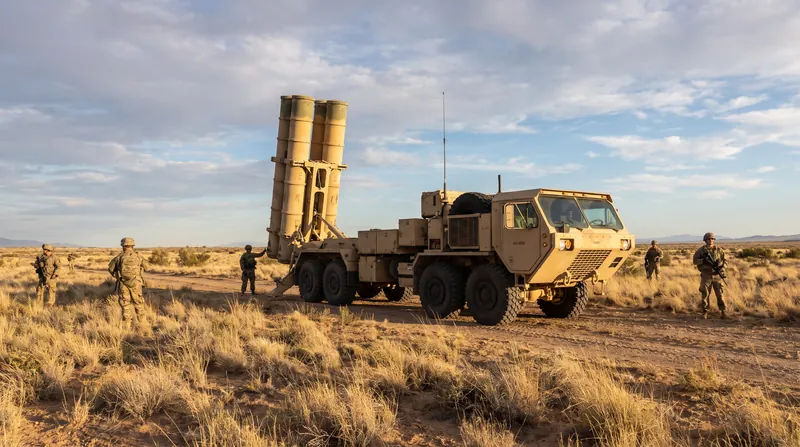
US Deploys Typhon Missile System to Okinawa as China and Russia Condemn Move
6 sources
Grid Defense
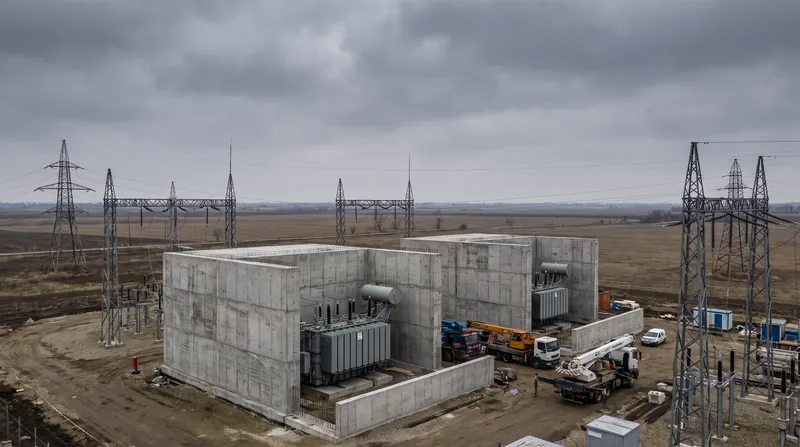
Lithuania Fortifies Key Power Substation Near Kaliningrad With Concrete 'Sarcophagi' Against Drone Attacks
7 sources
Military Doctrine
The Find, Fix, Track, Target, Engage, and Assess Sequence: How the Military Executes the Joint Targeting Cycle
6 sources

Nuclear Deterrence
The Bus, the Post-Boost Vehicle, and the Reentry Vehicles: How a MIRV System Delivers Multiple Warheads to Separate Targets
6 sources

Comments
Every angle. Every day.
Get Defense & Security stories with full source coverage and perspective breakdowns, free every day.