
Pilot Trial: Psilocybin Therapy Achieves 75% Remission in Veterans With Treatment-Resistant PTSD
A groundbreaking clinical trial found that combining synthetic psilocybin with structured psychotherapy eliminated PTSD symptoms in three-quarters of participating military veterans. The pilot study offers a promising new avenue for patients who have exhausted traditional psychiatric treatments.

- Clinical Researchers
- Emphasize the safety profile and the critical role of the psychotherapy wrapper, arguing that the drug alone is not a silver bullet.
- Veterans & Advocates
- Focus on the urgent need for new treatments, highlighting the high rates of suicide and disability among veterans who fail standard therapies.
- Psychedelic Medicine Proponents
- View the results as evidence of a paradigm shift, arguing these compounds address the root of trauma rather than just suppressing symptoms.
Why this matters
For veterans suffering from severe, treatment-resistant PTSD, standard therapies often fail, leading to high rates of disability and suicide. This breakthrough suggests that combining psychedelics with structured psychotherapy could offer a profound, life-saving reset for those who have run out of medical options.
Key points
- A pilot trial found that 75% of veterans with severe, treatment-resistant PTSD achieved remission after psilocybin-assisted therapy.
- The 11-week protocol combined two doses of synthetic psilocybin with 14 to 16 hours of structured psychotherapy.
- Clinician-rated PTSD severity scores dropped by an average of 27.5 points one month after the treatment.
- The therapy was well-tolerated, producing no serious adverse events or increases in suicidal ideation.
- Researchers stress that larger, randomized trials are needed to confirm the drug's efficacy and rule out expectancy bias.
For thousands of U.S. military veterans, returning home from combat marks the beginning of a different, internal war. Severe post-traumatic stress disorder (PTSD) can be profoundly disabling, characterized by intrusive nightmares, hypervigilance, and an inability to find stillness [2]. While conventional treatments like SSRI antidepressants and standard talk therapy help many, a significant subset of veterans develop treatment-resistant PTSD, leaving them vulnerable to long-term disability and an elevated risk of suicide [6]. The urgent need for alternative interventions has driven researchers to explore unconventional avenues, leading to a renewed scientific focus on psychedelic compounds [3].[2][3][6]
A groundbreaking pilot trial published in the journal Communications Medicine offers a compelling new signal of hope for this hard-to-treat population [1]. Researchers at Ohio State University's Center for Psychedelic Drug Research and Education (CPDRE) conducted the first U.S. clinical trial evaluating psilocybin-assisted therapy specifically in military veterans [2]. The results significantly exceeded typical clinical expectations: one month after completing the protocol, 75% of the participants achieved full remission, meaning their symptoms no longer met the diagnostic criteria for PTSD [1, 5].[1][2][5]
The open-label trial recruited 12 veterans, aged 21 to 64, all of whom suffered from severe PTSD that had persisted despite at least six months of psychotherapy and three months on standard antidepressant medications [3]. At the start of the study, the participants' average clinician-rated symptom score hovered near 40—a level indicative of severe, daily impairment [6]. The trial was primarily designed to test the safety of administering synthetic psilocybin to this specific demographic, a requirement set by the FDA before larger efficacy trials could proceed [3].[3][6]
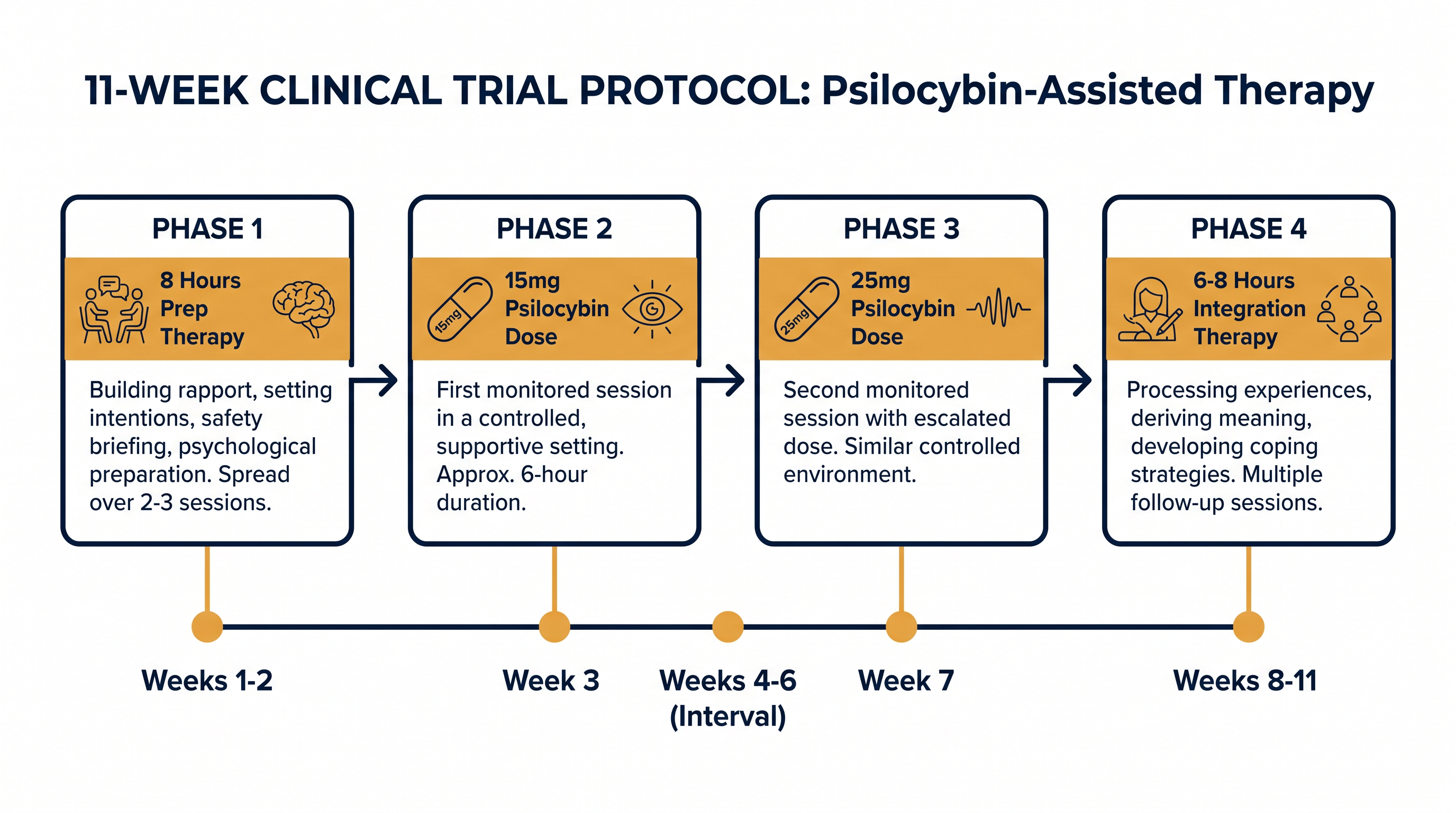
Crucially, the intervention was not simply a pharmacological treatment, but a highly structured 11-week therapeutic protocol [4]. Researchers emphasize that the non-drug psychotherapy acts as an essential substrate, which the psilocybin then catalyzes to achieve therapeutic breakthroughs [1]. The process began with approximately eight hours of preparatory talk therapy spread across four weekly sessions [3]. This phase was designed to build profound trust between the veterans and their clinicians, establishing a safe psychological container and setting clear intentions for the dosing experience [6].[1][3][4][6]
Following the preparation phase, participants underwent two supervised dosing sessions spaced two to three weeks apart [5]. In a controlled, comfortable clinical setting, the veterans received a 15-milligram dose of synthetic psilocybin during the first session, followed by a higher 25-milligram dose during the second [1]. During these day-long sessions, patients wore eyeshades and listened to curated music, allowing them to direct their attention inward while supported by two trained therapists [3].[1][3][5]
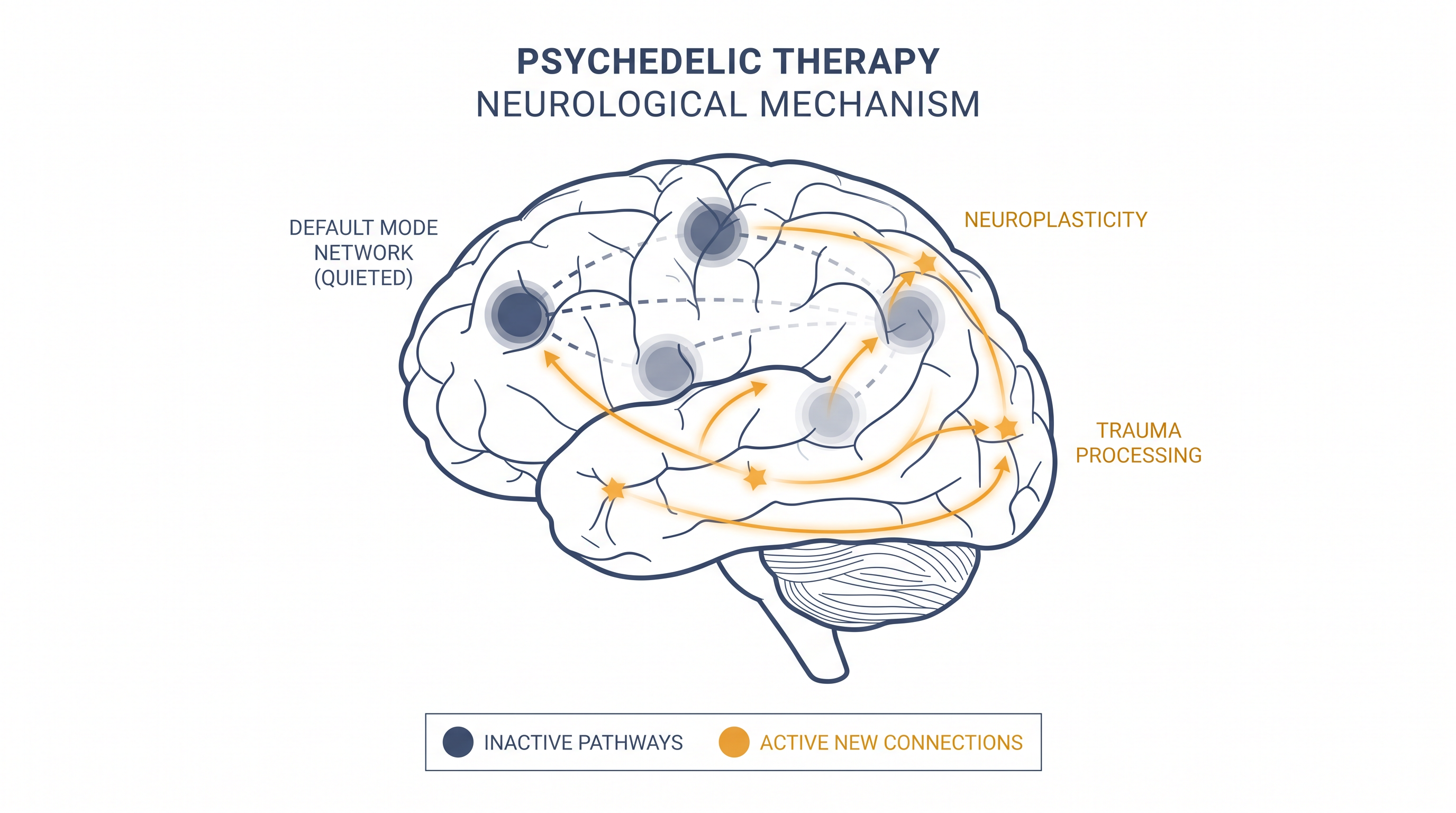
The physiological and psychological effects of psilocybin temporarily alter brain connectivity, particularly by quieting the default mode network—a system often hyperactive in trauma survivors [1]. This neurological shift can allow patients to revisit and process deeply entrenched traumatic memories without triggering the overwhelming fear and panic responses that typically block progress in standard therapy [2]. Following each dosing session, the veterans completed six to eight hours of integration therapy, designed to help them make sense of their psychedelic experiences and apply those insights to their daily lives [4].[1][2][4]
The clinical outcomes measured at the one-month follow-up were striking. Clinician-administered assessment scales revealed an average decrease of 27.5 points in overall PTSD symptom severity [1]. Nine of the twelve veterans met the rigorous thresholds for both treatment response (a 50% reduction in symptoms) and full remission [3]. Furthermore, ten of the participants cleared the 15-point mark, which is considered the threshold for clinically meaningful improvement in daily functioning [3].[1][3]
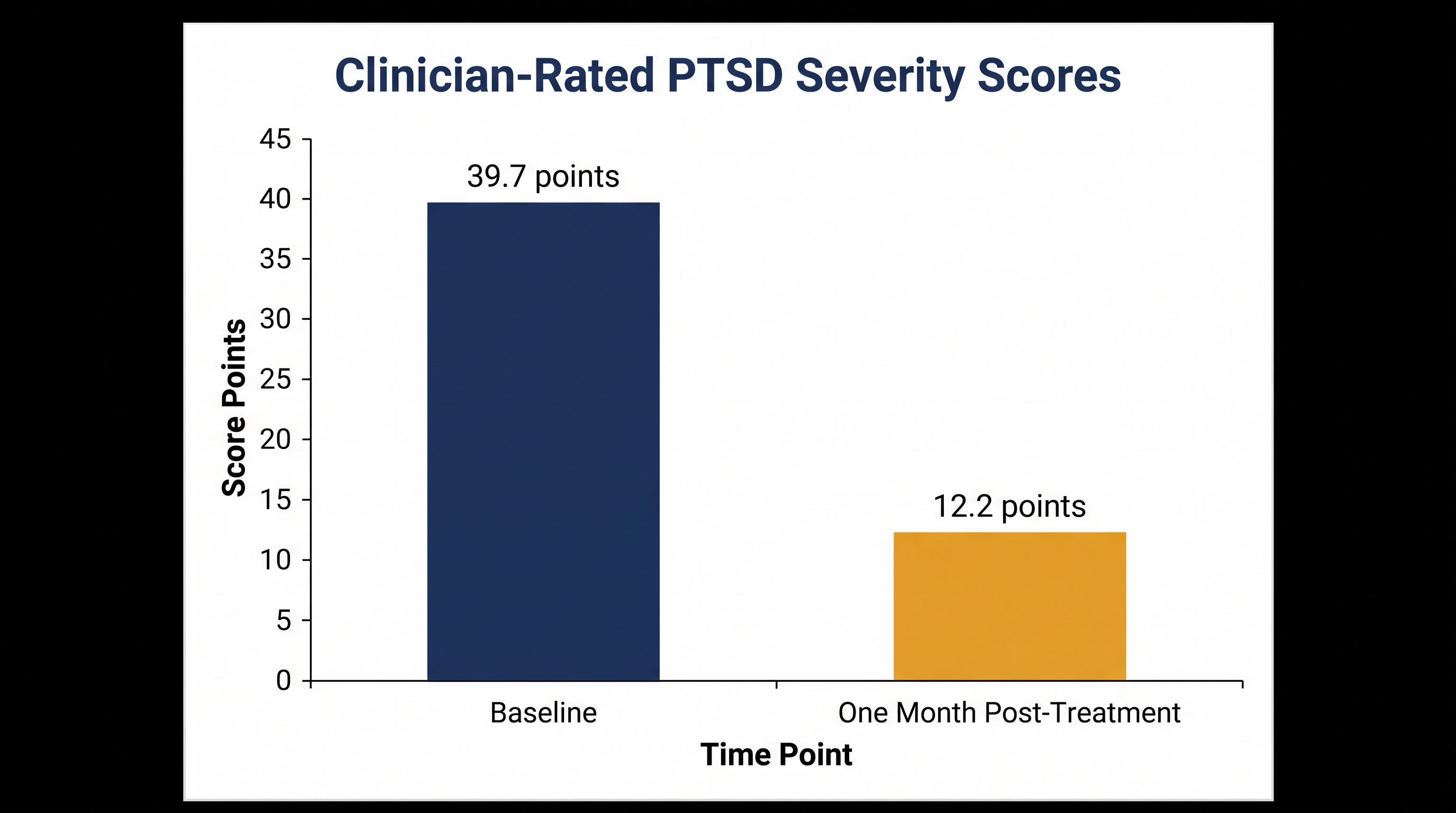
The clinical outcomes measured at the one-month follow-up were striking.
The human impact of these numbers is profound. Zachariah Collett, a 25-year-old U.S. Army veteran who served a 28-month combat tour in Iraq, participated in the trial after being medically retired [4]. Collett described being "absolutely tortured by the internal struggle" and the constant noise in his head before the treatment [4]. Following the psilocybin-assisted therapy, he credited the protocol with helping him rediscover a sense of peace and stillness that had eluded him for years [2].[2][4]
Safety, the primary endpoint of the pilot study, was clearly established [6]. The protocol produced no serious adverse events, and crucially, researchers observed no increase in suicidal ideation or behavior among the participants [1]. Vital signs, including blood pressure and heart rate, remained within protocol-defined safety limits throughout the dosing sessions [6]. The most common side effect was a mild to moderate headache following the administration of the drug, which resolved without significant medical intervention [3].[1][3][6]
The success of this trial arrives amid a broader paradigm shift within the Department of Veterans Affairs regarding psychedelic medicine [2]. The VA is currently involved in 19 active clinical trials focused on psychedelic therapies for mental health conditions, supported by more than $23 million in external funding [2]. This includes a recently announced trial evaluating MDMA-assisted therapy for severe mental health disorders, signaling a growing institutional willingness to explore once-taboo compounds [2].[2]
Despite the highly encouraging results, researchers are careful to contextualize the findings [6]. As an open-label pilot trial with only 12 participants, the study lacked a placebo control group [3]. This design makes it difficult to entirely rule out expectancy bias—the phenomenon where patients experience improvement simply because they strongly believe the novel treatment will work [5]. The study's authors, including senior researcher Alan Davis, acknowledge that larger, randomized controlled trials are necessary to definitively prove efficacy [4].[3][4][5][6]
There are also ongoing debates within the psychiatric field about the exact ratio of the treatment's success [4]. Researchers are actively trying to determine how much of the remission is driven by the pharmacological effect of the psilocybin, how much by the intensive 14-to-16 hours of psychotherapy, and how much by the unique synergy of the two [4]. However, data from the trial showed that while symptoms began to decline during the preparatory therapy, the most dramatic reductions occurred immediately following the dosing sessions [6].[4][6]
Looking ahead, the research team plans to assess the six-month outcomes for this cohort to determine the durability of the remission [6]. They are also seeking funding for larger Phase 2 and Phase 3 trials, which will be required before the FDA would consider approving psilocybin as a prescription treatment [2]. For now, psilocybin remains a Schedule I controlled substance, but for the veterans who found relief in this pilot study, the therapy has already provided a life-altering reprieve from the shadow of trauma [3].[2][3][6]
How we got here
Jan 2023 - Apr 2025
Researchers recruit 12 veterans for the open-label pilot trial at Ohio State University.
May 2026
The VA announces a new clinical trial for MDMA-assisted therapy, part of a broader $23 million investment in psychedelic research.
July 30, 2026
The Ohio State University trial results are published in Communications Medicine, revealing a 75% remission rate.
Viewpoints in depth
Clinical Researchers
Focus on the safety profile and the critical role of the psychotherapy wrapper.
Medical investigators emphasize that the success of this trial cannot be attributed to the pharmacological effects of psilocybin alone. They argue that the 14 to 16 hours of structured preparatory and integration therapy are the essential substrate that allows the drug to work safely. Their primary focus remains on the lack of serious adverse events and the absence of increased suicidal ideation, which clears the path for larger, randomized trials to definitively prove efficacy.
Veterans & Advocates
Focus on the urgent need for new treatments to combat high rates of suicide and disability.
Veterans' advocacy groups highlight the staggering human cost of treatment-resistant PTSD, pointing out that standard SSRIs and talk therapy fail a significant portion of returning service members. For this camp, the 75% remission rate represents a life-saving breakthrough. They are pushing for accelerated research and expanded access, arguing that veterans suffering from severe trauma cannot afford to wait decades for regulatory approval.
Psychedelic Medicine Proponents
Focus on the paradigm shift in treating the root causes of mental health disorders.
Advocates for psychedelic medicine view these results as further proof that psychiatry needs a fundamental reset. Rather than relying on daily medications that suppress symptoms, they argue that compounds like psilocybin—when paired with therapy—promote neuroplasticity and allow patients to actively process and resolve the root trauma. They see this trial as a crucial stepping stone toward the eventual FDA approval and rescheduling of psychedelic compounds.
What we don't know
- Whether the remission holds steady at the six-month and one-year marks.
- How much of the improvement is driven by the drug versus the intensive 14-to-16 hours of psychotherapy.
- Whether these results will replicate in a larger, randomized placebo-controlled Phase 2 trial.
Key terms
- Psilocybin
- The psychoactive compound found in 'magic mushrooms,' currently being studied as a synthetic therapeutic for mental health disorders.
- Treatment-Resistant PTSD
- Post-traumatic stress disorder that has not improved despite multiple rounds of standard treatments, such as SSRI medications and conventional talk therapy.
- Integration Therapy
- Talk therapy sessions conducted after a psychedelic experience to help patients process their insights and apply them to daily life.
- CAPS-5
- The Clinician-Administered PTSD Scale, considered the gold standard clinical interview for diagnosing and measuring the severity of PTSD.
Frequently asked
Is psilocybin an approved treatment for PTSD?
No. Psilocybin remains a Schedule I controlled substance under federal law and is not yet approved by the FDA. The drug was administered under strict FDA-authorized research conditions.
Did the veterans just take the drug on their own?
No. The protocol required 14 to 16 hours of structured psychotherapy before and after the dosing sessions, which were supervised by trained clinicians.
What were the side effects?
The treatment was well-tolerated with no serious adverse events. The most common side effect was a mild to moderate headache following the dosing sessions.
Sources
Source coverage
6 outlets
3 viewpoints surfaced





[1]Neuroscience NewsClinical Researchers
Psilocybin Therapy Drives 75% PTSD Remission
Read on Neuroscience News →[2]Military.comVeterans & Advocates
Veterans With PTSD Experience 'Striking' Improvements From Psilocybin Treatments
Read on Military.com →[3]Psychedelics TodayPsychedelic Medicine Proponents
Psilocybin Trial in Veterans With Treatment-Resistant PTSD Reports 75% Remission at One Month
Read on Psychedelics Today →[4]HealthDay NewsVeterans & Advocates
Psilocybin shown to ease PTSD in veterans in small study
Read on HealthDay News →[5]Nutrition InsightPsychedelic Medicine Proponents
Pilot study: psilocybin therapy helped treatment-resistant PTSD in US veterans
Read on Nutrition Insight →[6]EpocratesClinical Researchers
Psilocybin therapy may ease severe PTSD in veterans
Read on Epocrates →
Every angle. Every day.
Get health stories with full source coverage and perspective breakdowns delivered to your inbox.