
How Reuben Ward Captured Historic Men's All-Around Gymnastics Gold for Scotland
Scottish gymnast Reuben Ward secured a landmark Men's All-Around gold at the 2026 Commonwealth Games in Glasgow, edging out a stacked international field. The victory marks a generational breakthrough for Scottish gymnastics, driven by a high-risk, high-reward strategy on the final two apparatuses.

The roar inside the OVO Hydro in Glasgow reached a deafening crescendo on Tuesday evening as 20-year-old Reuben Ward stuck his dismount on the high bar. With a final score of 84.850, the Scottish gymnast captured the Men's All-Around gold medal at the 2026 Commonwealth Games, etching his name into the history books.[1]
Ward's victory marks the first time a Scottish male gymnast has won the prestigious All-Around title at the Commonwealth Games, breaking a long streak of dominance traditionally held by English and Australian competitors. The win was secured by a razor-thin margin of 0.250 points over England's Jake Jarman, with Canada's Felix Dolci taking the bronze.[2]
To understand the magnitude of Ward's achievement, one must look at the mechanics of the Men's All-Around event. Gymnasts must compete across six distinct apparatuses: floor exercise, pommel horse, rings, vault, parallel bars, and horizontal (high) bar.
The All-Around is widely considered the ultimate test of a gymnast's versatility and endurance. Unlike apparatus specialists who hone a single routine, All-Around competitors must balance explosive power on the vault and floor with the intricate balance and stamina required for the pommel horse and rings.
Ward entered the competition as a dark horse, known for his clean execution but historically trailing the massive difficulty scores of rivals like Jarman. However, the Scottish coaching staff implemented a high-risk strategy for the 2026 cycle, significantly upgrading Ward's start values on the parallel bars and vault.[1]
The competition began with Ward on the floor exercise, where he delivered a solid, if unspectacular, routine scoring 14.100. Jarman, the reigning floor champion, immediately took the lead with a massive 14.850, setting a daunting pace for the rest of the field.
The second rotation brought the gymnasts to the pommel horse, notoriously the most volatile apparatus in men's gymnastics. A single slip can result in a full-point deduction, effectively ending an All-Around campaign. Ward navigated the apparatus with clinical precision, scoring a 13.950 and keeping himself within striking distance of the leaders.
As the athletes moved through the rings and vault, the standings tightened. Ward's upgraded Kasamatsu double-twist on the vault earned him a 14.600, narrowing the gap with Jarman, who suffered a minor hop on his landing. By the end of the fourth rotation, less than half a point separated the top three competitors.[2]
The turning point of the evening arrived during the fifth rotation on the parallel bars. This apparatus requires a grueling combination of swing, flight, and static holds. Ward executed a flawless routine, linking complex release moves with impeccable handstand positions.
When Ward's parallel bars score of 14.900 flashed on the arena screens, the dynamic of the competition shifted entirely. The massive score—the highest recorded on that apparatus all evening—catapulted him into first place, setting the stage for a dramatic final rotation on the high bar.
The high bar is a fitting finale for the All-Around, demanding spectacular aerial releases and immense grip strength. Dolci performed first among the leaders, securing his bronze medal with a soaring routine that energized the crowd and put pressure on the remaining competitors.[2]
Jarman followed, needing a near-perfect routine to reclaim the lead. The English star delivered a phenomenal performance, sticking his double-twisting double-layout dismount to score a 14.400. The math was simple: Ward needed a 13.350 or higher to win the gold.
Competing last in front of a partisan home crowd, the pressure on the young Scot was immense. Ward opted for a slightly downgraded routine, prioritizing execution and clean connections over maximum difficulty—a calculated decision designed to avoid catastrophic falls.[1]
The strategy paid off brilliantly. Ward caught every release move with textbook form and minimized deductions on his swings. When his feet hit the mat on the dismount with only a tiny step, the Scottish coaching staff erupted in celebration before the score was even announced.[1]
The final score of 13.600 on the high bar was enough to secure the gold, cementing a total of 84.850. The victory is a testament to the evolution of the Scottish national program, which has invested heavily in sports science and biomechanical analysis over the past quadrennial.[1]
Beyond the national pride, Ward's performance provides a fascinating case study in modern gymnastics scoring. The current Code of Points heavily rewards execution, meaning that a cleaner routine with a lower start value can often outscore a highly difficult routine with multiple form breaks.
Beyond the national pride, Ward's performance provides a fascinating case study in modern gymnastics scoring.
Analysts note that Ward's ability to minimize execution deductions—particularly on his landings and handstand holds—was the defining factor in his victory. He incurred the fewest execution penalties of any gymnast in the top ten.
Looking ahead, this Commonwealth gold positions Ward as a legitimate contender on the global stage. With the World Championships approaching in Rotterdam and the Los Angeles 2028 Olympics on the horizon, the Scottish star has officially announced his arrival among the sport's elite.
Key points
- Reuben Ward won the Men's All-Around gold at the 2026 Commonwealth Games in Glasgow.
- The victory marks the first time a Scottish male gymnast has claimed the prestigious title.
- Ward defeated England's Jake Jarman by a narrow margin of 0.250 points.
- A flawless parallel bars routine scoring 14.900 was the turning point of the competition.
- Ward's strategy prioritized clean execution and minimal deductions over maximum difficulty.
How we got here
2022
Ward makes his senior international debut, showing promise but struggling with consistency across all six apparatuses.
2024
Scottish Gymnastics overhauls its coaching structure, heavily integrating sports science and biomechanical analysis.
Early 2026
Ward debuts significantly upgraded routines on the vault and parallel bars during the World Cup circuit.
August 2026
Ward captures the Men's All-Around gold medal at the Commonwealth Games in Glasgow.
- Execution Advocates
- Argue that Ward's victory proves clean form and minimal deductions are the most reliable path to All-Around success.
- Difficulty Proponents
- Acknowledge Ward's brilliance but maintain that pushing the sport's boundaries with high-risk skills remains essential for global dominance.
- National Programs
- Focus on the structural investment, sports science, and coaching pipelines that enabled Scotland's breakthrough.
Perspectives this story doesn't cover
- Grassroots Gymnastics Coaches
- International Judging Commission
Sources
Source coverage
2 outlets
3 viewpoints surfaced


- [1]The ScotsmanNational Programs
Glasgow erupts as Ward claims all-around gymnastics crown
Read on The Scotsman → - [2]CBC SportsNational Programs
Canada's Dolci secures bronze in fierce Commonwealth All-Around battle
Read on CBC Sports →
More in Sports
See all →Trade
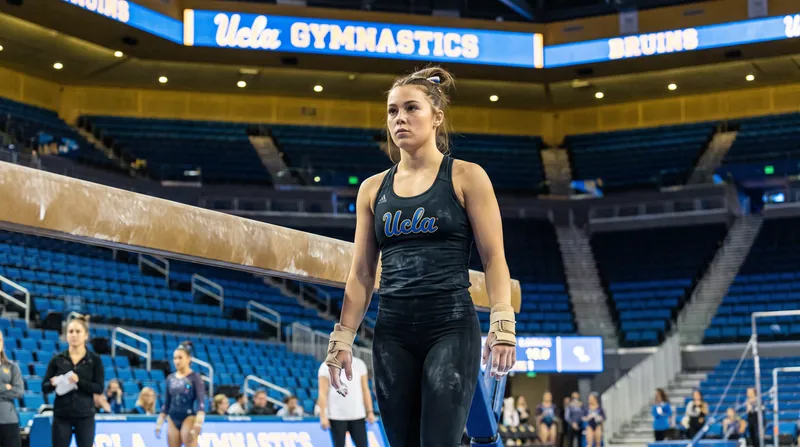
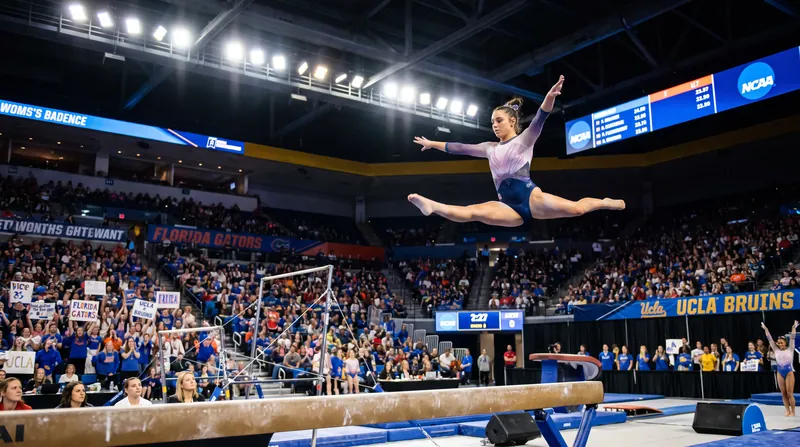
NCAA Gymnastics Offseason Reaches Finish Line: The Biggest Roster and Coaching Moves Ahead of 2027
6 sources
Storyline
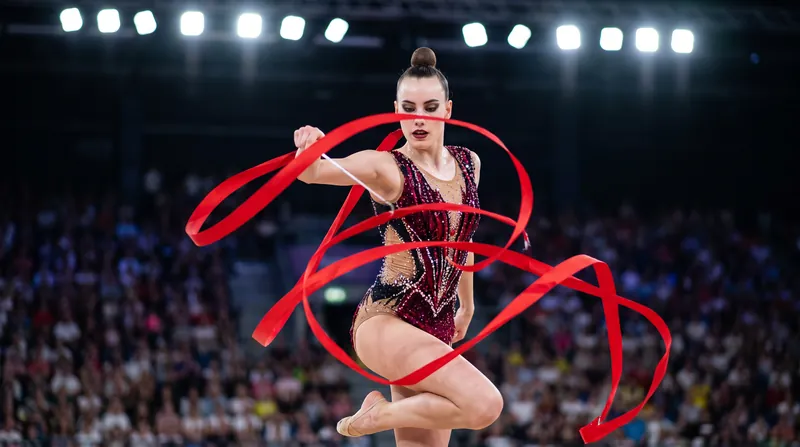
Darja Varfolomeev Captures Historic Third Consecutive All-Around Title at 2026 Rhythmic Gymnastics World Championships
6 sources
Standings
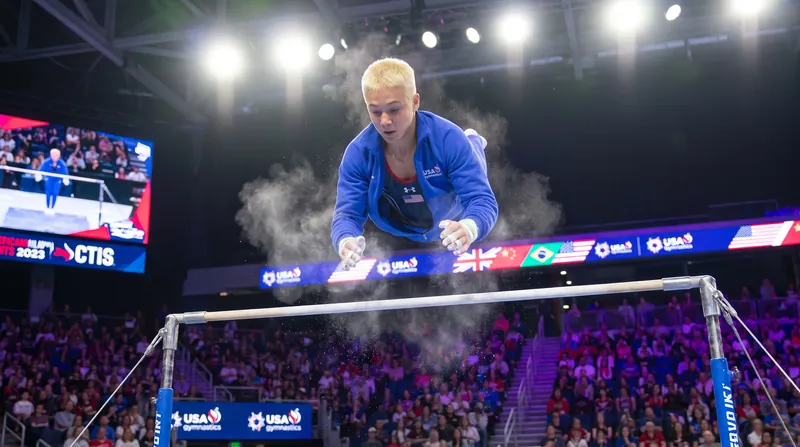
Global Men's Floor Exercise Standings: Eldrew Yulo Surges as Sharamkou Holds the Lead
5 sources

Preview
2026 World Artistic Gymnastics Championships Preview: The High-Stakes Race to Rotterdam Begins
5 sources
Comments
Every angle. Every day.
Get Sports stories with full source coverage and perspective breakdowns, free every day.