
How the Open-Ended Code of Points Revolutionized Gymnastics
By abolishing the Perfect 10, gymnastics created a scoring system that pushed human limits—and the new 2025-2028 rules are refining that balance to protect athletes.
By Meera Iyer

For decades, the pinnacle of athletic achievement was defined by a single, flawless number: the Perfect 10. When Nadia Comăneci first achieved it at the 1976 Montreal Olympics, the scoreboard famously lacked the digits to display it, flashing "1.00" instead.
But the Perfect 10 had a fatal flaw. It created an artificial ceiling. If two gymnasts both executed their routines flawlessly, but one performed a routine that defied the laws of physics while the other played it safe, the scoreboard could not mathematically tell them apart.
In 2006, following a series of judging controversies, the Fédération Internationale de Gymnastique (FIG) made a radical decision. They abolished the Perfect 10 and introduced the open-ended Code of Points, fundamentally altering the trajectory of the sport.[1]
This new system split the score into two distinct halves. The E-Score (Execution) still starts at 10.0, with judges deducting tenths of a point for bent knees, flexed feet, or steps on landing.
The revolution, however, lived in the D-Score (Difficulty). This score is open-ended, calculated by adding up the values of the hardest skills in a routine, plus connection bonuses and specific compositional requirements.[1][6]
Suddenly, the ceiling was shattered. Gymnasts were no longer just chasing perfection; they were chasing the impossible. The open-ended code incentivized athletes to invent new, mind-bending skills to drive their D-Scores higher.
No athlete has exploited this mathematical landscape more effectively than Simone Biles. By pushing the boundaries of human biomechanics, Biles has accumulated five eponymous skills—moves so difficult they are named after her because she was the first to land them in international competition.[2]
Her signature vault, the Biles II (a Yurchenko double pike), carries a staggering D-score of 6.4. Because her starting difficulty is so astronomically high, she can afford minor execution deductions and still outscore competitors who perform easier routines flawlessly.[2]
But the relentless pursuit of difficulty has sparked an ongoing debate about athlete safety and the aesthetic soul of the sport. As the difficulty values climbed, so did the physical toll on athletes' joints and ligaments.
In response to these concerns, the FIG regularly updates the Code of Points every four years—a period known as a quadrennium. As the sport enters the 2025-2028 cycle leading up to the Los Angeles Olympics, the pendulum is swinging back toward quality and sustainability.[1]
The most significant shift in the new 2025-2028 Code of Points affects Men's Artistic Gymnastics (MAG). For the first time in modern history, the number of "counting skills"—the elements that contribute to the D-Score—has been reduced from ten to eight.[3]
This reduction fundamentally alters routine construction. Previously, male gymnasts had to pack ten grueling skills into a single floor or high bar routine, often leading to exhaustion and dangerous falls by the dismount.[3]
By capping the counting skills at eight, the FIG is explicitly prioritizing athlete health. Gymnasts can now focus on executing fewer, higher-quality elements with better form, rather than treating routines as endurance marathons.[3][6]
The new code also introduces a 0.1 "stick bonus" for dismounts of C-value or higher across most apparatuses. This mathematical nudge is designed to reward the elusive perfect landing, ensuring that execution remains just as vital as the acrobatics preceding it.[3]
Beyond the elite scoring tables, the ethos of gymnastics is also expanding to become more inclusive. The sport is increasingly recognizing that pushing boundaries isn't just about triple-twisting double flips; it's about access.
In 2026, the Simone Biles International Invitational will formally incorporate the HUGS program, an adaptive gymnastics initiative. This allows athletes with special needs to compete under official USA Gymnastics rules, judged on their own execution and difficulty metrics.[4][5]
This inclusion marks a profound evolution in how the sport defines achievement. Whether an athlete is aiming for the Special Olympics or the Los Angeles 2028 podium, the underlying mechanism remains the same: mastering the body's movement through space.[4]
As the 2025-2028 quadrennium unfolds, the tension between the D-Score and the E-Score will continue to shape the sport. Coaches and athletes are currently in the laboratory, recalculating their routines to maximize the new rules.[6]
The open-ended Code of Points did more than just change the math of gymnastics; it changed the philosophy. It transformed a sport of rigid perfection into a dynamic, ever-expanding frontier of human capability.
The essentials
- Gymnastics abolished the Perfect 10 in 2006 in favor of an open-ended scoring system.
- The D-Score (Difficulty) allows athletes to earn higher marks by inventing and landing harder skills.
- Simone Biles has used this system to push human limits, securing five eponymous skills.
- The 2025-2028 Code of Points reduces men's counting skills from 10 to 8 to protect athlete health.
- A new 0.1 'stick bonus' has been introduced to reward flawless dismount landings.
- Adaptive gymnastics programs are expanding, allowing athletes with special needs to compete under official rules.
Timeline
2006
The FIG abolishes the Perfect 10 and introduces the open-ended Code of Points.
2021
Simone Biles debuts the Yurchenko double pike (Biles II) in competition, fundamentally shifting the difficulty ceiling.
August 2024
The FIG finalizes the 2025-2028 Code of Points, introducing major changes to routine construction.
January 2025
The new Code of Points officially takes effect for the Los Angeles 2028 Olympic cycle.
January 2026
The Simone Biles International Invitational formally incorporates the HUGS adaptive gymnastics program.
- Difficulty Innovators
- Advocates for an open-ended system that rewards athletes for pushing the absolute limits of human physics.
- Athlete Health Advocates
- Experts and coaches focused on the physical toll of high-difficulty routines and the need for sustainable pacing.
- Inclusion Champions
- Voices pushing to expand gymnastics beyond elite scoring to accommodate athletes of all abilities.
Perspectives this story doesn't cover
- Lower-resourced national federations struggling to keep up with the equipment and coaching demands of high-difficulty skills.
- Traditionalist judges who believe the sport has lost its artistic and choreographic soul in favor of pure acrobatics.
Sources
Source coverage
6 outlets
3 viewpoints surfaced






- [1]Fédération Internationale de GymnastiqueAthlete Health Advocates
2025-2028 Code of Points
Read on Fédération Internationale de Gymnastique → - [2]OlympicsDifficulty Innovators
Every Simone Biles eponymous gymnastics skill explained
Read on Olympics → - [3]MAGnasticsAthlete Health Advocates
Changes in the 2025-28 Code of Points
Read on MAGnastics → - [4]The IX SportsInclusion Champions
Adaptive gymnastics to be included at 2026 Simone Biles International Invitational
Read on The IX Sports → - [5]USA GymnasticsInclusion Champions
USA Gymnastics Rules and Policies
Read on USA Gymnastics → - [6]Factlen Editorial Team
Synthesis by Factlen editorial team
Read on Factlen Editorial Team →
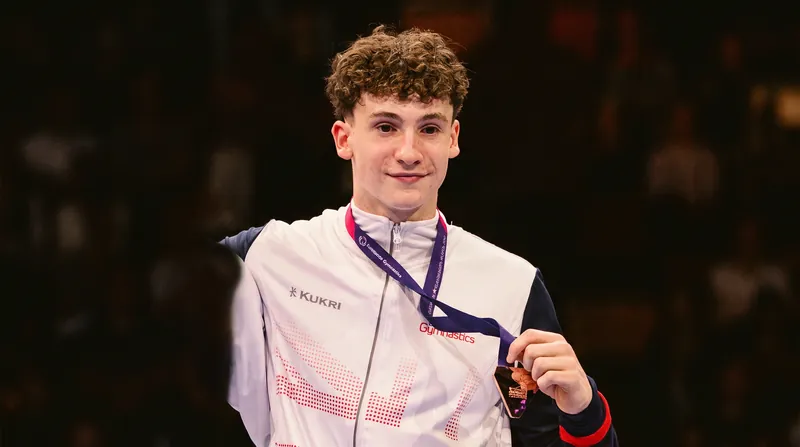
More in Sports
See all →Injury
NCAA Gymnastics Injury Report: Alexis Jeffrey and Creslyn Brose Headline a Season of Resilient Returns
6 sources
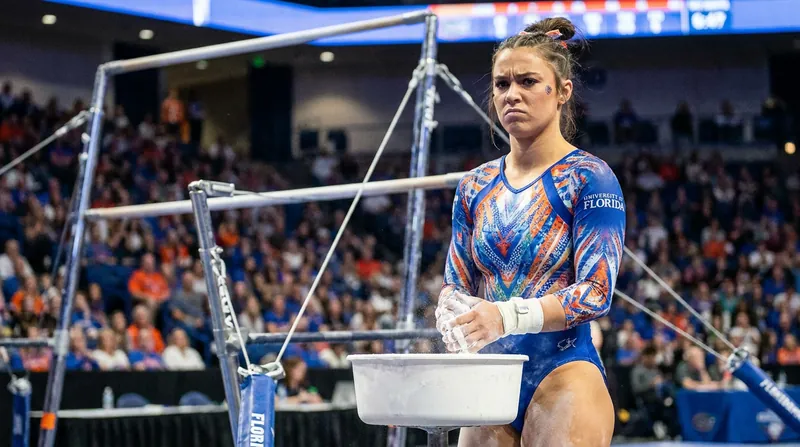
Injury
Gymnastics Injury Report: Max Whitlock Navigates Setback as Katelyn Ohashi and Makayla Green Mount Resilient Returns
5 sources
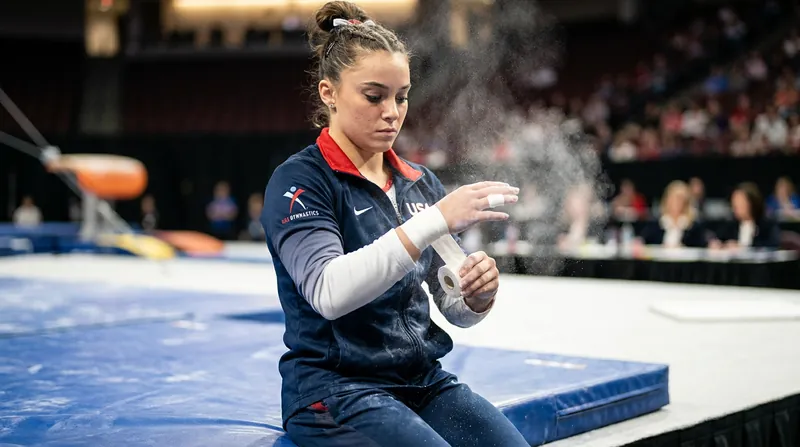
Standings
The Race to Szombathely: Matthews and Idrissov Headline the Global Artistic World Challenge Cup Standings
2 sources
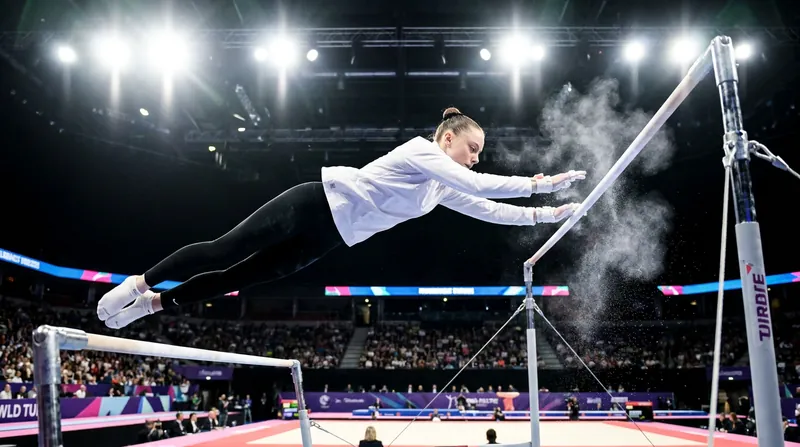
Injury
Gymnastics Injury Report: Kylee Kvamme's Resilient Return Headlines a Summer of Recovery
4 sources
Comments
Every angle. Every day.
Get Sports stories with full source coverage and perspective breakdowns, free every day.