
NCAA Gymnastics Injury Report: Alexis Jeffrey and Creslyn Brose Headline a Season of Resilient Returns
As the 2026 NCAA gymnastics season unfolds, programs across the country are receiving massive boosts from veterans returning from severe injuries, proving that modern rehabilitation can extend collegiate careers.

Share this story
The 2026 NCAA gymnastics season is being defined not just by the arrival of highly touted freshmen, but by the triumphant returns of veterans emerging from the medical tent. Across the Southeastern Conference and the Big Ten, programs are seeing their competitive trajectories fundamentally altered by gymnasts who have spent the last year overcoming severe physical setbacks.
These comeback stories highlight a broader shift in collegiate sports medicine, where advanced surgical techniques and patient, criterion-based rehabilitation are allowing athletes to reclaim their elite form rather than being forced into early retirement.[1]
In Baton Rouge, the reigning national champion LSU Tigers received a massive veteran boost when all-around senior Alexis Jeffrey announced she would use her extra year of eligibility to return for a fifth season in 2026.
Jeffrey had been a crucial specialist on the uneven bars for the Tigers, boasting a career-high of 9.925, but a persistent and painful back injury forced her out of the 2024 postseason and eventually required surgical intervention. Her announcement confirmed that she had successfully undergone the procedure and was deep into a rigorous recovery protocol aimed at getting her back on the competition floor.[2]
Jeffrey’s return is about more than just her scoring potential; it provides an essential emotional anchor for a transitioning roster. Last season, LSU relied heavily on a massive class of ten senior gymnasts to guide the team through the pressures of the SEC. In 2026, Jeffrey will be one of only three seniors on a much younger squad.
Her resilience in battling back from spinal surgery serves as a powerful example for the incoming class, proving that the grueling, unglamorous hours spent in the physical therapy room can ultimately lead back to the bright lights of the Pete Maravich Assembly Center.[2]
Meanwhile, in Lexington, Kentucky gymnast Creslyn Brose turned a frustrating early-season absence into a masterclass in sideline leadership. Brose was forced to miss the first four and a half weeks of the 2026 campaign, sitting out the Wildcats' first two crucial meets. Rather than withdrawing, she embraced a new role, focusing entirely on team morale and communication. She became the loudest voice in the corral, moving mats, delivering pep talks, and ensuring the younger athletes didn't let the pressure of SEC competition overwhelm their joy for the sport.[3]
When Brose was finally cleared to return to the lineup in late February, the emotional investment she had made in her teammates paid immediate dividends. Her presence back on the floor provided a tangible spark, and the Wildcats surged to record their highest team scores of the season immediately following her return. Brose has since set her sights on reclaiming her perfect 10.0 on the floor exercise, driven by the collective goal of hosting a successful NCAA Regional in Lexington and advancing to the national championships.[3]
Sometimes, the most uplifting injury news is the surgery that isn't required. Florida Gators sophomore Ly Bui experienced a terrifying moment when she hyperextended her knee while competing on vault against Auburn in late January. Bui, a 17-year-old former U.S. Senior National Team member who graduated high school early to join the Gators, had just tied her career-high of 9.925 a few weeks prior. The awkward landing immediately sparked fears of a season-ending ligament tear, a devastating prospect for a Florida team with deep postseason aspirations.[4]
However, subsequent medical evaluations brought a massive wave of relief to Gainesville. Head coach Jenny Rowland confirmed that MRI results showed no structural damage requiring surgical repair, and Bui would only be sidelined for approximately four weeks of focused rehabilitation.
The young standout, who had already undergone a sudden collegiate growth spurt that required her to adjust her spatial awareness, immediately began her recovery protocol. Her teammates rallied around her, dedicating their subsequent routines to her recovery, while Bui remained an active, supportive presence in the practice gym while on crutches.[4]
In the Big Ten, Rutgers is witnessing the fierce resurgence of Emily Leese. After suffering an injury that forced her to miss the Scarlet Knights' historic return to the NCAA Regionals last season—their first appearance in a decade—Leese made it her mission to come back stronger for her final collegiate campaign. Her absence left a noticeable void in the team's difficulty scores, but her 2026 return has completely revitalized the Rutgers vault and floor lineups, giving the squad the depth required to survive the grueling conference schedule.[1]
Leese’s comeback was emphatically announced the moment she debuted her Yurchenko one-and-a-half vault, a high-difficulty skill that immediately injected much-needed scoring potential into the Scarlet Knights' rotation. She marked her return to the apparatus with a stunning 9.900, proving that her explosive leg power had fully recovered. While she continues to refine her consistency on the balance beam, her prowess on the leg events ensures that Rutgers remains a dangerous dark-horse contender as postseason projections begin to take shape.[1]
A similar narrative is unfolding at Penn State, where Ava Piedrahita has stormed back onto the scene after an injury completely sidelined her for the 2025 season. The former all-around competitor spent a grueling year rebuilding her strength and trusting her body's mechanics again. In the early weeks of 2026, she has proven that the wait was entirely worth it, delivering rock-solid performances that have fundamentally elevated the Nittany Lions' competitive ceiling.[1]
Piedrahita’s impact was immediate and undeniable. She opened her 2026 campaign by posting scores of 9.900 or better on both the vault and the uneven bars, providing the anchor scores Penn State desperately needed. Her triumphant return was a primary catalyst in pushing the Nittany Lions to an impressive No. 13 national ranking early in the season. As she continues to work her way back into the floor and beam lineups, her steady progression highlights the effectiveness of a patient, phased return to competition.[1]
These successful comebacks are not merely coincidences; they are the result of a paradigm shift in how gymnastics injuries are managed. Sports physical therapists are increasingly abandoning rigid, time-based recovery calendars in favor of criterion-based progression. For complex issues like spinal stress fractures or ligament repairs, athletes must now pass specific, objective functional tests—such as demonstrating equal hip flexor strength or holding a 60-second plank without compensation—before they are cleared to attempt back handsprings or high-impact dismounts.[5]
Furthermore, modern rehabilitation heavily incorporates biomechanical analysis to ensure that the athlete is not just healed, but mechanically sound. Therapists focus on correcting the underlying movement patterns and landing mechanics that may have contributed to the initial injury. By replicating the specific multi-planar forces involved in gymnastics routines during the late stages of rehab, medical staffs can drastically reduce the risk of re-injury, ensuring that when a gymnast finally salutes the judges, her body is fully prepared for the immense forces of elite competition.[6]
Ultimately, the 2026 season is proving that a severe injury is no longer the definitive end of a gymnast's career. Through a combination of cutting-edge sports medicine, unwavering personal resilience, and the deep emotional support of their collegiate programs, athletes like Jeffrey, Brose, Bui, Leese, and Piedrahita are rewriting their own endings. Their returns not only elevate the standard of NCAA gymnastics but serve as a powerful testament to the human body's remarkable capacity to heal, adapt, and soar once again.[1][2][3][4][5][6]
Key points
- LSU senior Alexis Jeffrey announced her return for a fifth year following successful back surgery.
- Kentucky's Creslyn Brose returned from a 4.5-week absence to spark the Wildcats to season-high scores.
- Florida sophomore Ly Bui avoided knee surgery and is expected to return after a four-week rehab.
- Rutgers' Emily Leese and Penn State's Ava Piedrahita have both returned to anchor their respective lineups with 9.9-plus scores.
- Sports physical therapists are increasingly using criterion-based rehabilitation to ensure gymnasts return safely.
How we got here
2024 Postseason
LSU's Alexis Jeffrey is sidelined by a persistent back injury that eventually requires surgery.
2025 Season
Rutgers' Emily Leese and Penn State's Ava Piedrahita miss their respective seasons due to severe injuries.
January 2026
Florida's Ly Bui hyperextends her knee on vault but avoids surgery, beginning a four-week rehab.
February 2026
Kentucky's Creslyn Brose returns to the floor after a 4.5-week absence, leading the Wildcats to season-high scores.
- Collegiate Medical Staffs
- Focuses on the shift toward criterion-based rehabilitation and biomechanical safety to prevent re-injury.
- The Athletes
- Emphasizes the mental resilience required to overcome the isolation of rehab and the joy of returning to the sport.
- NCAA Head Coaches
- Values the veteran leadership, emotional stability, and scoring depth that returning athletes provide to young rosters.
Perspectives this story doesn't cover
- High School Recruits
- Gymnastics Judges
Sources
Source coverage
6 outlets
3 viewpoints surfaced






- [1]College Gym NewsThe Athletes
NCAA Gymnastics Power Rankings: Rousing Returns of 2026
Read on College Gym News → - [2]The ReveilleNCAA Head Coaches
LSU gymnast Alexis Jeffrey set to return for fifth year in 2026
Read on The Reveille → - [3]UK AthleticsThe Athletes
Kentucky Gymnastics Sparked by Brose's Return
Read on UK Athletics → - [4]WRUFNCAA Head Coaches
Ly Bui Out Four Weeks With Knee Injury for Gators Gymnastics
Read on WRUF → - [5]In Motion Physical TherapyCollegiate Medical Staffs
Returning to Gymnastics After Spondylolysis: A Step-by-Step Guide
Read on In Motion Physical Therapy → - [6]InstasportCollegiate Medical Staffs
Mastering ACL Reconstruction Recovery: A Biomechanical Approach for Gymnasts
Read on Instasport →
More in Sports
See all →Standings
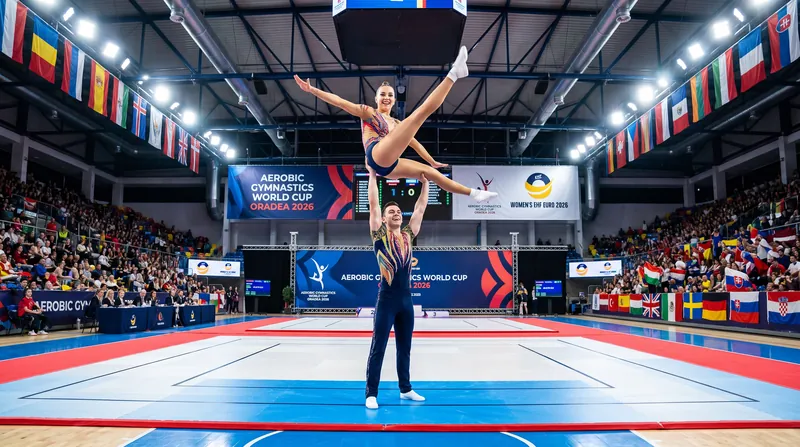
Ukraine's Kurashvili and Halaida Capture Mixed Pair Title as Aerobic World Cup Standings Finalize in Oradea
2 sources
Standings
Global Men's All-Around Standings: Richard, Oka, and Zhang Headline the High-Stakes Race to Rotterdam
4 sources
Standings
Global Women's Balance Beam and Floor Exercise Standings: Nemour and Kalmykova Headline the Apparatus Race to Rotterdam
4 sources
Standings
Global Rhythmic Gymnastics Standings: Varfolomeev Surges as Frankfurt Worlds Approach
9 sources
Comments
Every angle. Every day.
Get Sports stories with full source coverage and perspective breakdowns, free every day.