
The Race to Frankfurt: Global Rhythmic Gymnastics Standings Tighten After Cluj-Napoca Finale
Darja Varfolomeev and Taisiia Onofriichuk traded golds at the final World Challenge Cup in Romania, setting the stage for a dramatic showdown at the upcoming 2026 World Championships.
By Ryder James

Share this story
The 2026 Rhythmic Gymnastics World Challenge Cup series concluded in spectacular fashion in Cluj-Napoca, Romania, delivering a thrilling preview of the sport's ultimate prize. With just weeks remaining until the World Championships in Frankfurt, the global standings have crystallized into a fierce two-way battle at the top, flanked by a surging pack of teenage challengers.
The Romanian finale served as the last major testing ground for the world's elite, confirming that the race for the all-around crown is tighter than it has been in years, as gymnasts finalize their routines and peak their conditioning.
At the center of the drama are reigning Olympic and World Champion Darja Varfolomeev of Germany and Ukrainian sensation Taisiia Onofriichuk. The two superstars traded blows across the weekend in Cluj-Napoca, pushing the boundaries of the current Code of Points with breathtaking displays of flexibility and apparatus mastery. Their ongoing duel has defined the 2026 season, transforming the World Cup and World Challenge Cup circuits into a high-stakes chess match of difficulty and execution, where every pivot and catch carries immense weight.[1]
In Romania, it was Varfolomeev who ultimately secured the All-Around title, reinforcing her status as the gold-medal favorite. The German standout amassed a commanding total score of 116.950 across her four routines, proving her readiness for the upcoming World Championships.
Her crowning moment came in the Clubs final, where she posted a massive 30.250—a score that underscores her unmatched technical ceiling when she hits her intricate apparatus handling cleanly. That routine alone sent a clear message to the rest of the field about the level of perfection required to unseat her.
However, Onofriichuk proved she is more than capable of matching the champion's relentless pace. The Ukrainian took silver in the All-Around with a highly respectable score of 112.000, but she struck back fiercely in the individual apparatus finals. Onofriichuk claimed gold with the Hoop, scoring 28.850, and followed it up with another gold in the Ribbon final at 28.000. Her performances demonstrated her signature versatility and expressive artistry, ensuring that Varfolomeev will not have an uncontested path to the top of the podium in Germany.
While the Varfolomeev-Onofriichuk rivalry dominated the headline narratives, the Cluj-Napoca event also marked a historic and uplifting breakthrough for Poland's Liliana Lewinska. The 17-year-old captured her first major World Challenge Cup gold medal on the Ball apparatus, posting a pristine 28.250 to edge out the veteran field. Lewinska's flawless routine was a masterclass in control and musicality, signaling her official arrival as a top-tier contender capable of disrupting the established hierarchy. Her victory was celebrated widely as a testament to her rapid development since her junior career.[2]
Lewinska’s triumph is the culmination of a grueling and relentless 2026 campaign that has tested her physical and mental endurance. Unlike some gymnasts who selectively skip events to rest and recover, the Polish teenager has competed almost continuously since the spring.
She has appeared at the Tartu Grand Prix, the European Championships in Varna, and the Beijing World Challenge Cup before arriving in Romania. Her bronze medal in the Clubs final in Beijing clearly foreshadowed her golden breakthrough in Cluj-Napoca, proving that her heavy competition schedule is paying dividends in consistency.[2]
The broader 2026 World Cup and World Challenge Cup series have painted a picture of a rapidly evolving sport where dominance is fleeting. The season opened in March with the World Cup in Sofia, Bulgaria, where Onofriichuk laid down an early marker by taking the All-Around gold and establishing herself as the season's early frontrunner. The circuit then moved to Tashkent, Uzbekistan, where Varfolomeev answered back with a commanding All-Around victory of her own, setting the seesaw dynamic that would define the summer.[1]
As the spring progressed into summer, the momentum continued to swing wildly between the top contenders. Onofriichuk reclaimed the top spot at the Baku World Cup, while other international stars like Italy's Sofia Raffaeli and Uzbekistan's Takhmina Ikromova secured vital podium finishes across the European and Asian stops. The sheer variety of stage winners indicates that the margin for error at the top of the sport has vanished; a single dropped apparatus or missed pivot is now enough to drop a gymnast entirely out of the medal conversation.[1]
In the group gymnastics discipline, the standings are equally fiercely contested and unpredictable. Israel delivered a dominant performance in Cluj-Napoca, sweeping the group titles to establish themselves as the team to beat heading into the late summer. This followed a dramatic World Challenge Cup debut in Beijing earlier in June, where the group from the People's Republic of China and emerging Russian athletes—competing as authorized neutrals—swept the gold medals, showcasing the deep global parity in the team events.[2]
All of these results now funnel directly into the pinnacle of the 2026 calendar: the 42nd Rhythmic Gymnastics World Championships. From August 12 to 16, roughly 300 of the world's best rhythmic gymnasts will descend upon Frankfurt am Main.
The historic Festhalle will host five days of elite competition, covering senior individual, senior group, and junior categories, serving as the ultimate proving ground for the routines that have been refined all season. The event is expected to draw massive international viewership and shape the sport's trajectory for the next Olympic cycle.
For Varfolomeev, the Frankfurt World Championships represent a unique and immense pressure cooker. Competing on home soil as the defending champion, she will carry the heavy expectations of a massive German crowd eager to witness a historic title defense. The local organizing committee has already reported that the final days of the competition are completely sold out, ensuring an electric, deafening atmosphere that could either buoy the German star to new heights or amplify the crushing pressure of the moment.
Varfolomeev will not be alone in defending home turf, as the German federation has assembled a powerhouse team. She is backed by a formidable squad that includes Margarita Kolosov, who placed fourth at the Paris Olympics, and Anastasia Simakova, a 2025 European silver medalist. Together with the German senior group, the host nation is fielding one of the deepest and most talented rosters in its history, aiming to dominate the team standings and secure multiple podium finishes across the disciplines.
Coaches and technical analysts watching the standings closely note that the 2026 season is being defined by a rapid, almost dizzying escalation in routine difficulty. Under the current International Gymnastics Federation Code of Points, top gymnasts are attempting increasingly complex body-apparatus combinations to maximize their base scores. The intense pressure to pack more technical content into the 90-second routines has led to higher scoring ceilings, but it has also introduced a significantly higher risk of catastrophic drops and execution penalties.[3]
Coaches and technical analysts watching the standings closely note that the 2026 season is being defined by a rapid, almost dizzying escalation in routine difficulty.
As the gymnasts enter their final summer training blocks before arriving in Frankfurt, the narrative is firmly set. The reigning champion has the undeniable home-court advantage and the highest scoring potential, but a resilient Ukrainian star and a surging Polish teenager have proven that the podium is far from locked. When the music starts at the Festhalle in August, the global standings will be wiped clean, and the race for rhythmic gymnastics immortality will begin anew under the brightest lights.[3]
Key points
- Darja Varfolomeev won the All-Around title at the Cluj-Napoca World Challenge Cup with a score of 116.950.
- Taisiia Onofriichuk secured All-Around silver but claimed gold medals in both the Hoop and Ribbon apparatus finals.
- Poland's 17-year-old Liliana Lewinska achieved a major career milestone by winning the Ball apparatus gold.
- The results set up a highly anticipated showdown at the 2026 World Championships in Frankfurt this August.
How we got here
March 2026
Taisiia Onofriichuk wins the All-Around title at the World Cup series opener in Sofia, Bulgaria.
April 2026
Darja Varfolomeev claims the All-Around gold at the Tashkent World Cup in Uzbekistan.
May 2026
The European Championships in Varna serve as a major qualification event and form check for the World Championships.
June 2026
The World Challenge Cup series concludes in Cluj-Napoca, Romania, with Varfolomeev taking the All-Around title.
August 2026
The 42nd Rhythmic Gymnastics World Championships will take place in Frankfurt, Germany.
- The Challenger Camp
- Believes the relentless consistency of Onofriichuk and the breakthrough of Lewinska prove the reigning champion is vulnerable.
- German Home-Advantage Optimists
- Argues that Varfolomeev's experience and the massive home crowd in Frankfurt will propel her to another World title.
- Neutral Technical Analysts
- Focuses on the math of the Code of Points, noting that execution deductions on high-difficulty routines will decide the podium.
Perspectives this story doesn't cover
- Junior Gymnasts Transitioning to Senior
- Non-European Federations
Sources
Source coverage
3 outlets
3 viewpoints surfaced



- [1]Eurovision SportThe Challenger Camp
Rhythmic Gymnastics World Cup 2026 Series Recap
Read on Eurovision Sport → - [2]WikipediaThe Challenger Camp
Liliana Lewińska - Competitive History
Read on Wikipedia → - [3]Factlen Editorial TeamNeutral Technical Analysts
Synthesis by Factlen editorial team
Read on Factlen Editorial Team →

More in Sports
See all →Standings
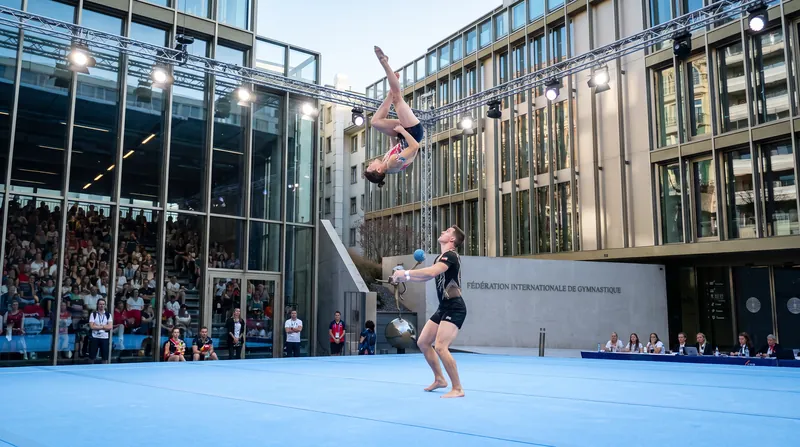
USA, Israel, Azerbaijan, and Ukraine Capture 2026 Acrobatic Gymnastics World Cup Series Titles
6 sources
Injury
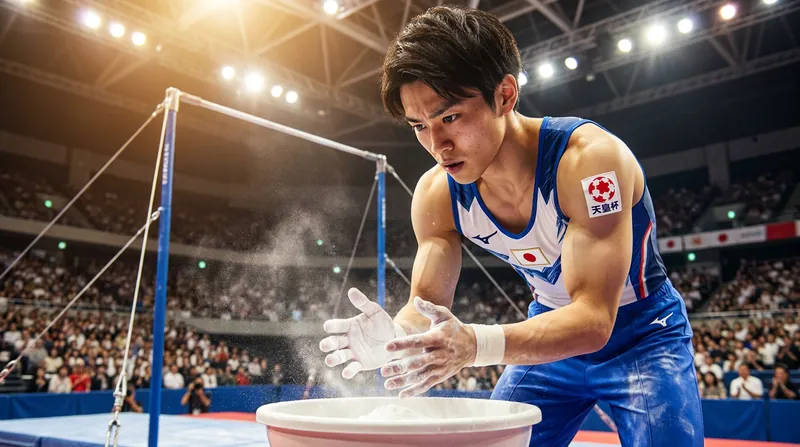
Hashimoto Daiki Overcomes Shoulder Injury to Claim Sixth Straight All-Japan Gymnastics Title
3 sources
Standings
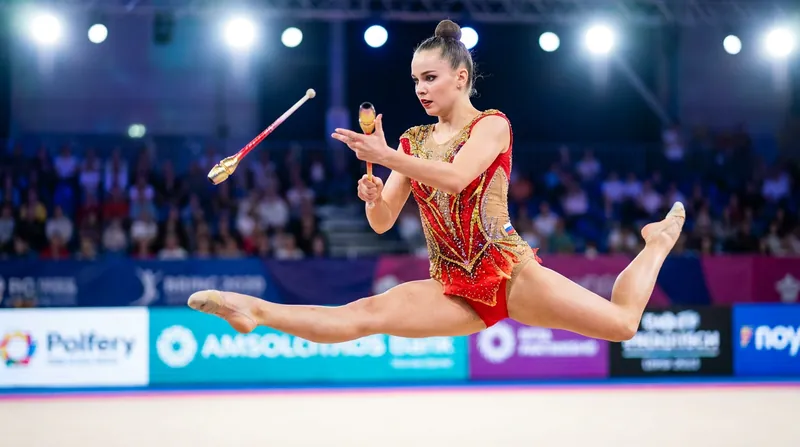
Global Rhythmic Gymnastics Standings Finalized as Varfolomeev Dominates Milan World Cup Finale
4 sources
Injury
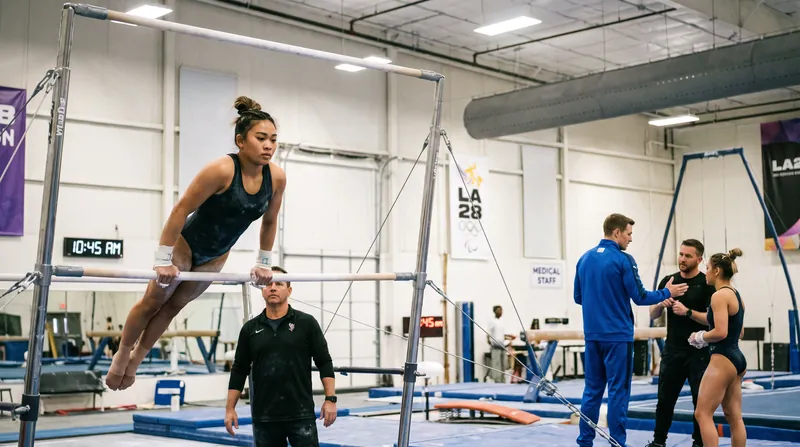
Gymnastics Injury Report: Suni Lee Launches LA28 Comeback as European Stars Target Strategic Returns
5 sources
Comments
Every angle. Every day.
Get Sports stories with full source coverage and perspective breakdowns, free every day.