
Global Rhythmic Gymnastics Standings Finalized as Varfolomeev Dominates Milan World Cup Finale
Germany’s Darja Varfolomeev secured four of the five individual series titles at the 2026 Rhythmic Gymnastics World Cup, capping her dominant season with an all-around victory in Milan. Brazil claimed the group all-around title in a tightly contested finale ahead of the upcoming World Championships.

Share this story
The 2026 Rhythmic Gymnastics World Cup circuit reached its dramatic conclusion at the Unipol Forum in Milan over the weekend, finalizing the global standings and setting the stage for August's World Championships. Eleven nations secured medals in the series finale, but the overarching narrative belonged to Germany's Darja Varfolomeev, who delivered a masterclass to cement her status as the sport's undisputed frontrunner.[2]
Varfolomeev captured the individual all-around title with a commanding score of 119.400, fending off fierce challenges from host nation favorites. The victory in Milan sealed a historic season for the German star, who officially claimed four of the five individual series trophies awarded for the 2026 World Cup circuit. Her performance underscored a rare combination of mature stability and daring apparatus combinations.[1]
The pinnacle of Varfolomeev's weekend came during the clubs final, where she shattered the 30-point barrier to score a massive 31.000. The routine, characterized by high-risk throws and seamless transitions, marked the highest score recorded on the apparatus globally this year. Bulgaria's Stiliana Nikolova and Israel's Daniela Munits also broke the 30-point threshold in the same final with scores of 30.300 and 30.150 respectively, highlighting the unprecedented technical difficulty required to reach the podium in 2026.
Italy's Sofia Raffaeli proved to be the most consistent challenger to Varfolomeev's reign. Competing in front of a passionate home crowd, Raffaeli secured silver in the all-around and matched Varfolomeev by qualifying for all four apparatus finals. The Italian champion delighted the Milan audience by capturing gold in the hoop final, showcasing her signature expressive upper-body dynamics and precise footwork.
The apparatus finals saw the wealth spread among several top contenders. Beyond Varfolomeev's golds in ball and clubs, and Raffaeli's hoop victory, Bulgaria's Nikolova claimed the ribbon title with a sparkling 28.650 routine set to the dance classic "We No Speak Americano." Italy's Tara Dragas added to the host nation's medal haul with a silver in the ball final and a bronze in the overall all-around.[1]
While the individual competition featured familiar names at the top, the group standings provided the weekend's most intense drama. Brazil emerged victorious in the group all-around, claiming the title with 56.050 points—edging out the People's Republic of China by a razor-thin margin of just 0.2 points. The result signals a continued shift in the global balance of power for group rhythmic gymnastics.[1]
The battle for the remaining podium spots in the group all-around required a tie-breaker. Spain matched China's total of 55.850 points but was relegated to bronze due to the tie-break system, which favors the higher combined execution scores across both routines. The razor-thin margins reflect a highly competitive international field where minor execution deductions are proving decisive.[4]
Spain exacted its revenge in the apparatus finals, fighting back to take gold in the 5 Balls routine ahead of Brazil and China. Meanwhile, the Chinese squad showcased their artistic range by winning the 3 Hoops and 2 Clubs final with an evocative routine set to the "Game of Thrones" soundtrack. Germany secured silver in the mixed apparatus final, while a rebuilding Ukrainian squad took bronze, indicating their new roster is beginning to gel.
Further down the standings, the United States delegation gained crucial international repetitions ahead of the World Championships. American gymnasts Rin Keys and Megan Chu finished 12th and 13th in the individual all-around, with Keys advancing to the ribbon final where she placed sixth. The U.S. Senior National Group finished 16th overall, highlighting the steep learning curve in the elite group ranks.[1]
With the World Cup series now in the books, the global rhythmic gymnastics community turns its undivided attention to the 42nd World Championships in Frankfurt, Germany, scheduled for mid-August. The finalized Milan standings serve as the definitive form guide, confirming that while Varfolomeev remains the athlete to beat, the margins separating the world's elite have never been tighter.[3]
The essentials
- Darja Varfolomeev won the individual all-around title in Milan with a score of 119.400.
- Varfolomeev claimed four of the five individual series trophies for the 2026 World Cup circuit.
- Brazil won the group all-around title by 0.2 points over China.
- Sofia Raffaeli of Italy took silver in the all-around and gold in the hoop final.
- The World Cup series standings set the stage for the World Championships in August.
Timeline
March 2026
The World Cup series kicks off in Sofia, Bulgaria, setting the initial benchmark for the Olympic cycle.
April 2026
The circuit moves through Tashkent and Baku, with Varfolomeev and Taisiia Onofriichuk trading all-around titles.
July 10-12, 2026
The series concludes in Milan, Italy, finalizing the global standings and crowning the overall circuit champions.
August 12-16, 2026
The sport's elite will converge in Frankfurt, Germany, for the 42nd Rhythmic Gymnastics World Championships.
- Individual Dominance Analysts
- Focusing on the unprecedented technical difficulty required to win in the current quadrennial.
- Group Competition Followers
- Highlighting the shifting balance of power away from traditional Eastern European dominance.
- Host Nation Supporters
- Emphasizing the consistency and depth of the Italian program on the global stage.
Perspectives this story doesn't cover
- Athletes recovering from injury who missed the series finale.
Sources
Source coverage
4 outlets
3 viewpoints surfaced




- [1]USA GymnasticsHost Nation Supporters
Weekend Recap: RG Milan World Cup, T&T Stars & Stripes Championships
Read on USA Gymnastics → - [2]Inside the GamesIndividual Dominance Analysts
Varfolomeev stars at final FIG Rhythmic Gymnastics World Cup of the year in Milan
Read on Inside the Games → - [3]WikipediaIndividual Dominance Analysts
2026 FIG Rhythmic Gymnastics World Cup series
Read on Wikipedia → - [4]SmartScoringGroup Competition Followers
2026 Milan World Cup Group All Around Results
Read on SmartScoring →
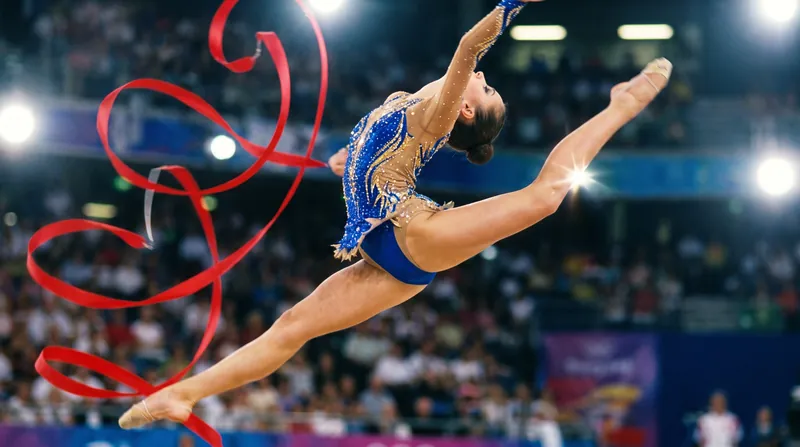
More in Sports
See all →Standings
Global Rhythmic Gymnastics Olympic Quota Standings: Germany, Spain, and Brazil Capture First LA28 Berths
3 sources
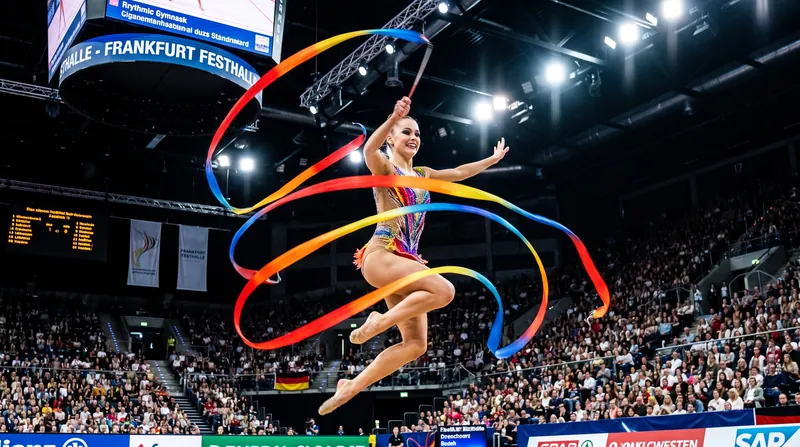
Standings
Global World Challenge Cup Standings: Timo Eder and Tijana Korent Headline the Mid-Season Race
7 sources
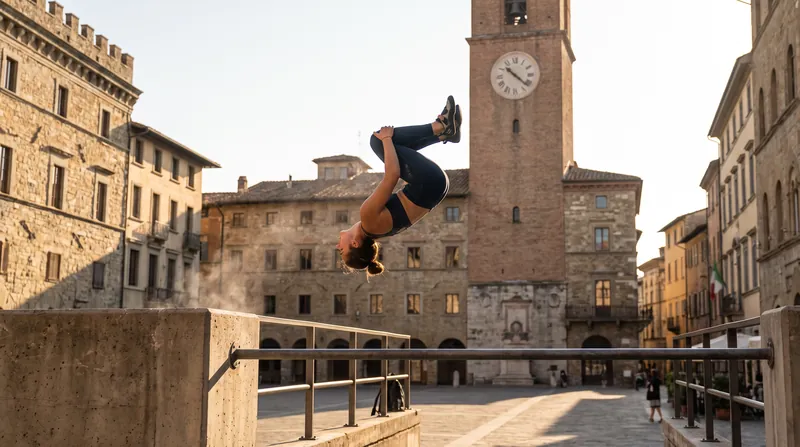
Standings
Noa Man and Elis Torhall Headline Final Parkour World Cup Standings in Istanbul
6 sources
Standings
Ukraine's Kurashvili and Halaida Capture Mixed Pair Title as Aerobic World Cup Standings Finalize in Oradea
2 sources
Comments
Every angle. Every day.
Get Sports stories with full source coverage and perspective breakdowns, free every day.