
Nvidia Invests $2 Billion in AI Cloud Startup Nebius to Build 5-Gigawatt 'AI Factories'
Nvidia has taken a roughly 8% stake in neocloud provider Nebius Group, fueling a massive infrastructure buildout designed to power the next generation of autonomous AI.

Share this story
Nvidia has cemented its role as the chief financier of the artificial intelligence boom, announcing a $2 billion strategic investment in Amsterdam-based neocloud provider Nebius Group. The deal, which effectively gives the chipmaker an 8 percent stake in the startup, is designed to accelerate the construction of hyperscale "AI factories" capable of supporting the next generation of machine learning.[1]
The market reacted swiftly to the partnership, sending shares of Nebius surging 16 percent in morning trading. Investors interpreted the massive capital injection as a definitive vote of confidence from the world's most valuable semiconductor company, validating Nebius's strategy of building infrastructure exclusively for high-performance computing.[3]
At the heart of the agreement is a staggering physical milestone: the deployment of more than 5 gigawatts of Nvidia-powered computing capacity by the end of 2030. To put that figure into perspective, 5 gigawatts is roughly equivalent to the energy output of five large nuclear reactors, underscoring the immense power requirements of modern artificial intelligence.
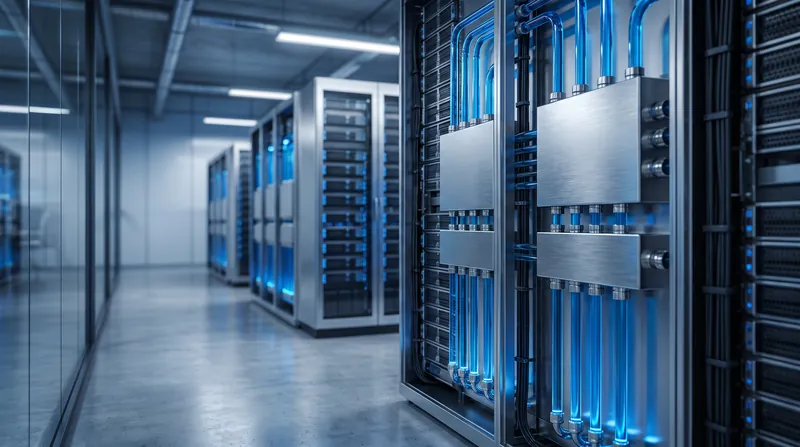
Nvidia CEO Jensen Huang framed the investment as a necessary step to prepare for the "agentic AI" era. Unlike early generative AI models that functioned primarily as conversational chatbots, agentic AI involves autonomous systems capable of executing complex, multi-step workflows. This shift demands a fundamental reimagining of data center architecture, moving away from general-purpose cloud hosting toward high-density, liquid-cooled environments.[1][2]
"Nebius is building an AI cloud designed for the agentic era, fully integrated from silicon to software and powered by Nvidia's next-generation accelerated compute," Huang said in a statement. The partnership ensures Nebius will be an early adopter of Nvidia's forthcoming hardware, including the Rubin platform, Vera CPUs, and BlueField storage systems.[1]
The financial mechanics of the deal highlight Nvidia's strategic approach to ecosystem building. Rather than a standard equity purchase, Nvidia bought pre-funded warrants exercisable into roughly 21 million Nebius Class A ordinary shares. This structure provides Nebius with immediate cash to fund its capital-intensive data center projects while deferring the formal issuance of shares.
Nebius, which emerged as an independent European entity following the restructuring of the Russian tech giant Yandex, has positioned itself as a "neocloud"—a specialized provider aiming to compete with legacy hyperscalers like Amazon Web Services and Microsoft Azure. By focusing entirely on AI workloads, Nebius argues it can offer better performance and lower latency for AI-native startups and enterprise clients.[2]
The $2 billion injection will immediately accelerate Nebius's physical footprint, particularly in the United States. The company recently secured approval to break ground on a massive 1.2-gigawatt AI factory campus on a 400-acre site in Independence, Missouri. That single facility represents nearly a quarter of the partnership's 2030 capacity target.[2]
For Nvidia, the Nebius deal is part of a broader playbook to ensure its chips have a physical home. The company has made similar multi-billion-dollar investments in other specialized infrastructure providers, including a $2 billion commitment to CoreWeave earlier this year. By funding the "execution layer" of the AI stack—the racks, cooling, and power delivery—Nvidia guarantees that infrastructure bottlenecks do not throttle the sales of its highly profitable GPUs.
Wall Street analysts have grown increasingly bullish on the physical infrastructure required for AI, noting that the race has shifted from simply acquiring chips to securing the electricity and land necessary to run them. With institutional buyers pouring billions into the sector, companies that can successfully navigate the complex logistics of gigawatt-scale power delivery are emerging as the new gatekeepers of the tech economy.[3]
The collaboration also extends beyond hardware. Nvidia and Nebius will work together on fleet management optimization, utilizing Nvidia's latest GPU health monitoring tools to ensure maximum uptime across Nebius's global network. The two companies will also co-develop an optimized software stack specifically tuned for inference and agentic AI workloads.[1][3]
As the 2030 deadline approaches, the partnership sets a new benchmark for the scale of private-sector technology investments. By vertically integrating the capital, the silicon, and the physical data centers, Nvidia and Nebius are laying the concrete foundation for an economy increasingly driven by autonomous machine intelligence.[2]
Key points
- Nvidia is investing $2 billion into Amsterdam-based AI cloud provider Nebius Group.
- The partnership aims to deploy 5 gigawatts of Nvidia-powered computing capacity by 2030.
- Nvidia effectively secures an 8% equity stake through pre-funded warrants.
- Nebius will build purpose-built 'AI factories,' including a massive 1.2-gigawatt campus in Missouri.
What we don’t know
- Whether Nebius can secure the necessary grid interconnection agreements and power contracts to hit the massive 5-gigawatt target by 2030.
- How legacy hyperscalers like AWS and Microsoft Azure will respond to Nvidia heavily funding their direct 'neocloud' competitors.
How we got here
Late 2024
Nebius closes a $700 million funding round, with Nvidia taking an initial 0.5% equity stake.
January 2026
Nvidia invests $2 billion in CoreWeave, establishing a blueprint for funding multi-gigawatt neocloud providers.
Early March 2026
Nebius secures approval for a 1.2-gigawatt AI factory campus in Independence, Missouri.
March 11, 2026
Nvidia and Nebius announce a $2 billion strategic partnership to deploy 5 gigawatts of AI capacity by 2030.
- AI Infrastructure Providers
- Argue that purpose-built 'neoclouds' are essential because legacy data centers cannot handle the power and cooling density required for next-generation AI.
- Silicon Manufacturers
- View these investments as necessary ecosystem-building to ensure physical power and rack space bottlenecks do not slow down the adoption of their newest chips.
- Market Analysts
- Emphasize the high capital expenditure risks, noting that the execution of gigawatt-scale power delivery remains a massive logistical hurdle.
Perspectives this story doesn't cover
- Local communities hosting gigawatt-scale data centers
Sources
Source coverage
3 outlets
3 viewpoints surfaced



- [1]NvidiaSilicon Manufacturers
NVIDIA and Nebius Group Announce Strategic Partnership to Build Hyperscale AI Cloud
Read on Nvidia → - [2]The Motley FoolMarket Analysts
Nvidia Just Poured $2 Billion Into This $28 Billion AI Cloud Company
Read on The Motley Fool → - [3]Investing.comMarket Analysts
NVIDIA Invests $2 Billion in Nebius
Read on Investing.com →
More in Business
See all →AI Infrastructure
Anthropic Abandons $6 Billion Acquisition of AI Startup Decart Ahead of Planned IPO
5 sources
AI Infrastructure
Nvidia Assembles $500 Billion AI Infrastructure Financing Pool with Global Financial Institutions
3 sources
AI Infrastructure
Andreessen Horowitz Closes $1.1 Billion 'Machine Age' Fund to Back AI Hardware and Infrastructure
4 sources
AI Infrastructure
Ecolab Acquires AI Cooling Firm CoolIT Systems for $4.75 Billion at 29x Premium
6 sources
Comments
Every angle. Every day.
Get Business stories with full source coverage and perspective breakdowns, free every day.