
New Zealand Parliament Advances Bill to Block All Corporate Climate Liability Lawsuits
The New Zealand government has advanced legislation that will permanently shield corporations from civil lawsuits over greenhouse gas emissions. The bill effectively cancels a landmark, Supreme Court-approved trial against the country's largest polluters.
By Anaya Sharma

Share this story
The New Zealand Parliament has advanced legislation that will permanently block citizens and organizations from suing corporations over the effects of greenhouse gas emissions, abruptly halting a landmark climate trial. The Climate Change Response (Tort Liability) Amendment Bill passed its first reading with the backing of the ruling center-right coalition, comprising the National, ACT, and New Zealand First parties.
The statutory amendment prevents any person, company, or the Crown from being found liable under common tort law for climate change damage or harm caused by their emissions. By applying the legal bar to both current and future proceedings, the government is effectively shutting down one of the most closely watched avenues for corporate climate accountability globally.[1][4]
The legislation is explicitly designed to terminate a high-profile civil lawsuit brought by Māori leader and climate activist Mike Smith against six of the country's largest corporate emitters. The defendants in the targeted case include dairy cooperative giant Fonterra, fuel retailer Z Energy, Genesis Energy, New Zealand Steel, Dairy Holdings, and BT Mining.
Together, these companies are responsible for approximately one-third of New Zealand's total greenhouse gas emissions. Smith's lawsuit sought to hold the corporations accountable for harms stemming from flooding, wildfires, storm damage, and sea-level rise, arguing they had a legal duty to communities damaged by the escalating effects of global warming.[3]
The legislative intervention overrides a unanimous February 2024 ruling by the New Zealand Supreme Court, which had determined that Smith's claims could proceed to trial. Smith's legal team utilized tort law—a branch of civil law where one entity claims another has caused them harm—specifically citing public nuisance, negligence, and a proposed novel climate tort.
The Supreme Court had explicitly noted that there was no basis to conclude Parliament had displaced the law of torts in the realm of climate change. The ruling was hailed by environmental advocates as a watershed moment, and the trial was scheduled to begin in the High Court in April 2027. If the new bill is enacted before then, the case will be permanently dismissed.[4]
Justice Minister Paul Goldsmith, who introduced the bill, strongly defended the statutory amendment, arguing that allowing the courts to invent new climate torts creates a chaotic legal environment. He asserted that the ongoing litigation was generating "uncertainty in business confidence and investment," which ultimately harms the nation's economic competitiveness.
According to Goldsmith, subjecting major employers to unpredictable, piece-meal litigation overseen by judges heavily jeopardizes long-term commercial planning and deters international investment. The government maintains that the complex environmental, economic, and social trade-offs inherent in climate change are fundamentally unsuited for resolution through civil liability claims.[1][2]
Instead of courtroom litigation, the ruling coalition insists that climate policy must remain the exclusive domain of elected officials and established regulatory frameworks. The government pointed to the country's existing Emissions Trading Scheme (ETS) as the proper mechanism for managing corporate greenhouse gas output.
Under the ETS, companies already face strict legal requirements and financial costs associated with their carbon footprints. Goldsmith argued that allowing a parallel system of judicial penalties to develop on top of the ETS would leave firms entirely unsure of their legal standing and financial exposure, undermining the regulatory coherence of the nation's climate strategy.[1]
During the bill's first reading, government lawmakers framed the intervention as a necessary restoration of parliamentary sovereignty. ACT Party MP Simon Court dismissed the opposition's concerns as "climate alarmism" and "cult-like fearmongering," accusing climate advocates of utilizing doom-laden rhetoric to harvest public donations. New Zealand First MP Mark Patterson supported this perspective, arguing that the statutory amendment brings essential clarity to the legal framework by ending an unpredictable "Wild West" environment where judges attempt to invent completely new common law liabilities rather than applying the statutes enacted by Parliament.[1][3]
The move has sparked fierce backlash from opposition parties, environmental groups, and the plaintiffs themselves, who accuse the government of abusing its power to protect corporate polluters. Green Party and Te Pāti Māori lawmakers condemned the bill as "gaslighting" the public and stripping citizens of their fundamental right to seek redress for environmental harms.
The Labour Party criticized the legislation as "very, very bad law" and pledged to repeal the amendment if they return to power. Mike Smith called the intervention "an affront to democracy," arguing that if Parliament can cancel a live court case simply because it is politically inconvenient for powerful interests, no legal claim in the country is secure.[1][2]
Beyond the immediate environmental implications, the legislation has raised profound constitutional questions regarding the separation of powers in New Zealand. Legal experts, including the advocacy group Lawyers for Climate Action NZ, warned that the bill represents a direct and troubling interference with an active judicial proceeding.
By legislating over the top of a unanimous Supreme Court decision, critics argue the government is cutting across the judiciary's legitimate constitutional role in developing the common law. The Environmental Law Initiative noted that such a blanket ban avoids even theoretical findings of corporate wrongdoing, effectively placing the interests of major emitters above the rights of impacted communities.[2]
The New Zealand bill mirrors a broader international pushback against the rising tide of climate litigation. In the United States, Republican lawmakers have proposed similar legislative shields designed to protect fossil fuel companies from a growing wave of municipal and state-level lawsuits seeking damages for climate-related extreme weather and infrastructure costs. As courts around the world increasingly become battlegrounds for climate accountability, corporate lobbying efforts have intensified to move the venue back to legislatures, where industry groups often wield more direct influence over policy outcomes.
While New Zealand is typically viewed as a global leader in progressive climate policy, this statutory amendment signals a sharp pivot toward prioritizing corporate legal certainty over novel environmental accountability mechanisms. The legislation is also at the center of transparency complaints, with the Ombudsman recently finding that the Prime Minister's Office unreasonably withheld documents provided by lobbyists on behalf of Z Energy and Fonterra regarding the law change.
With the ruling coalition holding a firm parliamentary majority, the bill is widely expected to pass its final readings, setting a precedent that other jurisdictions may follow to permanently curtail corporate climate liability.[1]
Key points
- The New Zealand Parliament passed the first reading of a bill banning civil lawsuits against corporations for greenhouse gas emissions.
- The legislation effectively cancels a landmark climate trial against six major emitters that was scheduled for 2027.
- The government argues that climate policy should be managed through Parliament and the Emissions Trading Scheme, not the courts.
- Opposition parties and environmental groups condemn the move as an abuse of power that protects corporate polluters.
Unanswered questions
- Whether the opposition Labour Party will fulfill its promise to repeal the legislation if it wins the next election.
- How the statutory bar will affect other ongoing environmental litigation in New Zealand that relies on tort law.
- Whether other nations will adopt similar legislative shields to protect their domestic industries from climate lawsuits.
How we got here
August 2019
Māori leader Mike Smith files a climate lawsuit against seven major corporate emitters.
October 2021
The Court of Appeal strikes out the lawsuit, ruling tort law is not the appropriate vehicle for climate claims.
February 2024
The New Zealand Supreme Court reinstates the case, ruling it can proceed to a full trial.
May 2026
The New Zealand government announces its intention to amend the Climate Change Response Act to block the lawsuit.
July 2026
The statutory amendment passes its first reading in Parliament, advancing the ban on climate torts.
- New Zealand Government & Industry
- Argues that climate policy belongs in Parliament and that tort lawsuits create business uncertainty that deters investment.
- Climate Advocates & Opposition
- Views the bill as a shocking abuse of power that shields major polluters from accountability and denies citizens legal recourse.
- Legal & Constitutional Experts
- Expresses deep concern over Parliament directly intervening to shut down an active trial and restricting the courts' ability to develop common law.
Perspectives this story doesn't cover
- Impacted Māori Communities
- International Investors
Sources
Source coverage
4 outlets
3 viewpoints surfaced




- [1]Radio New ZealandNew Zealand Government & Industry
Bill stopping climate lawsuits passes first hurdle
Read on Radio New Zealand → - [2]ESG TodayClimate Advocates & Opposition
New Zealand to Block Climate Lawsuits Against Companies
Read on ESG Today → - [3]eDairy NewsNew Zealand Government & Industry
Historic NZ Bill Blocks Fonterra Climate Court Cases
Read on eDairy News → - [4]New Zealand ParliamentNew Zealand Government & Industry
Climate Change Response (Tort Liability) Amendment Bill
Read on New Zealand Parliament →
More in News & Politics
See all →Climate Policy
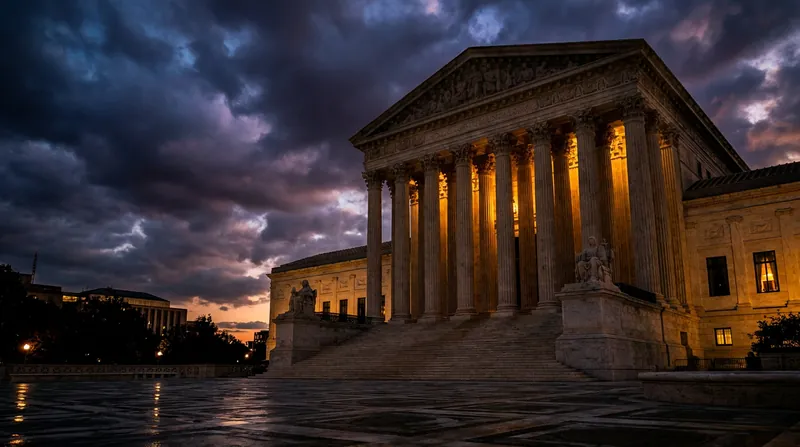
EPA Finalizes Repeal of Greenhouse Gas Endangerment Finding and Federal Vehicle Emission Standards
4 sources
State Preemption
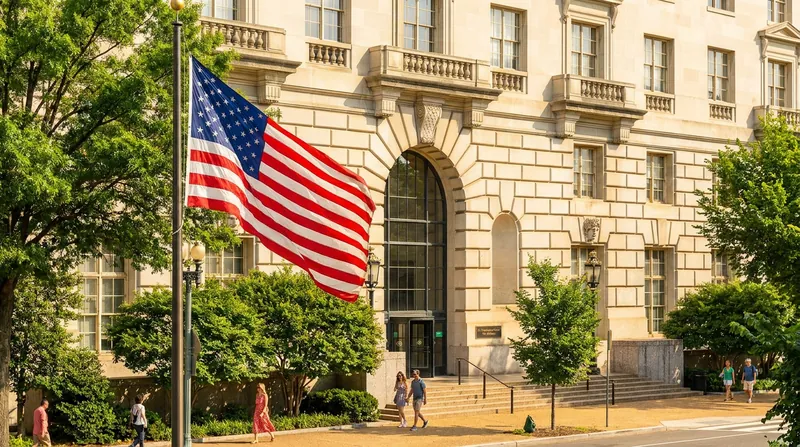
Florida Law Takes Effect Banning Local Government Net-Zero Emissions Policies
6 sources
Climate Law
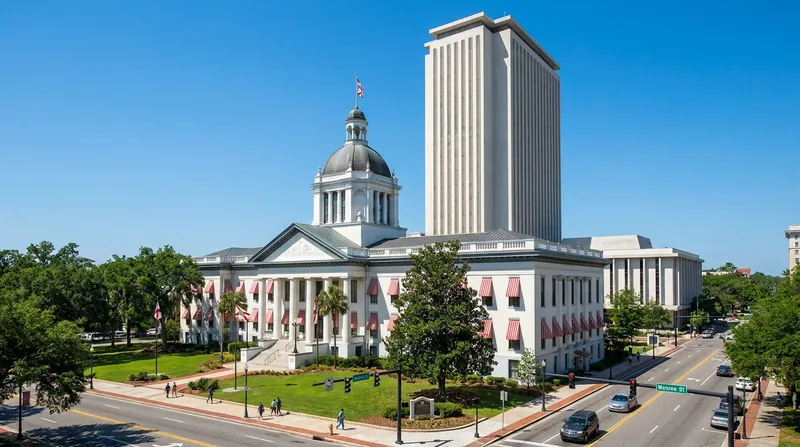
UN General Assembly Adopts Landmark Resolution Operationalizing ICJ Opinion on State Climate Obligations
4 sources
Corporate Liability
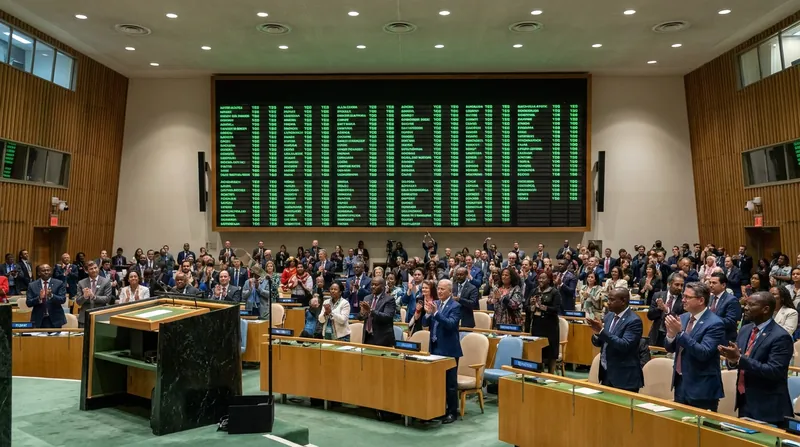
French Court Orders TotalEnergies to Revise Climate Plan in Landmark Corporate Liability Ruling
6 sources
Comments
Every angle. Every day.
Get News & Politics stories with full source coverage and perspective breakdowns, free every day.