
New French Law Sets Global Precedent as Guimet Museum Pledges 24-Hour Return of Looted Chinese Art
Following a landmark French law streamlining the restitution of cultural property, Paris's Guimet Museum has committed to returning definitively proven looted Chinese artifacts within 24 hours. The legislation dismantles the strict 'inalienability' principle that previously required case-by-case parliamentary approval for repatriations.
By Factlen Editorial Team
- Cultural Heritage Advocates
- View the law as a long-overdue moral correction that dismantles bureaucratic roadblocks to justice.
- Legal & Administrative Realists
- Emphasize that the framework is a meticulous compromise that strictly controls the flow of returns.
- Institutional Traditionalists
- Accept the compromise but remain cautious about eroding the principle of inalienability for public collections.
What's not represented
- · Private collectors who may face increased pressure to verify the provenance of their own Asian art holdings.
- · Citizens of claimant nations who may debate where and how the returned artifacts should be displayed domestically.
Why this matters
For decades, Western museums have used complex legal doctrines to delay or deny the return of looted artifacts to their countries of origin. France's new administrative framework—and the Guimet Museum's aggressive 24-hour pledge—shifts the burden of inertia, creating a reproducible blueprint that will heavily pressure other global institutions to follow suit.
Key points
- The Guimet Museum in Paris pledged to return definitively proven looted Chinese artifacts within 24 hours.
- The pledge follows a landmark French law streamlining the restitution of cultural property taken between 1815 and 1972.
- The new framework replaces the need for case-by-case parliamentary votes with an administrative decree process.
- Claims will be evaluated by a bilateral scientific committee to verify illicit provenance.
- Requesting states must commit to protecting the artifacts and ensuring they remain accessible to the public.
- The law dismantles the strict French doctrine of 'inalienability' that previously blocked mass repatriations.
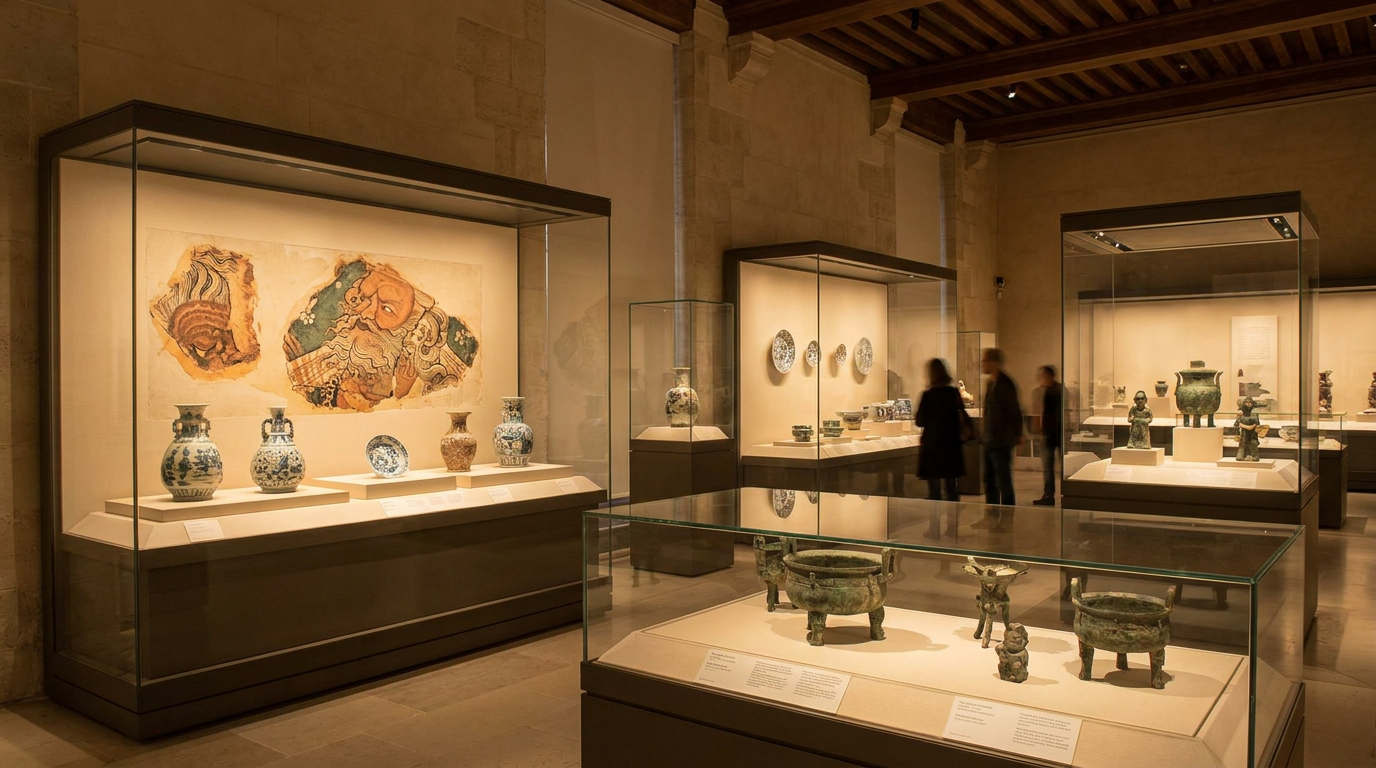
For generations, the global debate over looted cultural heritage has been defined by institutional friction. Source nations would file formal claims for stolen artifacts, only to be met with decades of bureaucratic delays, legal roadblocks, and philosophical defenses of the encyclopedic Western museum. Now, a renowned Parisian institution has inverted that dynamic entirely. The Musée Guimet of Asian Arts has announced that any Chinese artifact in its collection definitively proven to be looted will be returned to its country of origin within 24 hours.
The bold pledge, issued by Guimet director Yannick Linz, represents a seismic shift in how major museums handle provenance and repatriation. Chinese artifacts currently make up roughly a third of the Guimet’s extensive collection, making the institution one of the most significant repositories of Asian art in Europe. By committing to an immediate transfer protocol upon proof of theft, the museum is effectively daring the rest of the international art world to match its pace.
This 24-hour turnaround is not merely an institutional policy change; it is the direct result of a sweeping legislative overhaul in France. In April 2026, the French National Assembly unanimously passed a landmark framework law designed to streamline the restitution of cultural property acquired through illicit means. The vote was a rare display of total political unity, passing with 170 votes in favor and zero against, following an equally unanimous vote in the French Senate earlier in the year.
To understand the magnitude of this legal shift, one must understand the bedrock principle of French heritage law: "inalienability." For decades, French law dictated that objects in public museum collections were the perpetual property of the state and could never be given away, sold, or returned. The only way to bypass this doctrine was to pass a specific, bespoke law through the French Parliament for every single artifact or collection—a grueling political process that effectively capped the number of restitutions at a trickle.[1]
The new legislation dismantles that bottleneck. It creates a permanent, predictable administrative framework that removes the restitution decision from the legislature and places it within the executive branch. Under the new system, a requesting state submits a claim, which is then evaluated by a bilateral scientific committee composed of experts from both France and the claimant nation. If the committee verifies that the item was illicitly acquired, the French government can authorize its return via a simple executive decree.[1]

The law specifically targets cultural property that was subject to "illicit appropriation"—defined as theft, looting, or cession obtained under duress or violence. Crucially, it establishes a strict historical window for these claims: the artifacts must have been taken between November 20, 1815 (the Congress of Vienna, following Napoleon's fall) and April 23, 1972 (when the UNESCO convention against the illicit trafficking of cultural property came into force).
The law specifically targets cultural property that was subject to "illicit appropriation"—defined as theft, looting, or cession obtained under duress or violence.
While the framework simplifies the exit of artifacts from French collections, it is not an unconditional surrender of state assets. The legislation is a meticulous legal compromise designed to balance historical justice with preservation standards. Requesting states must formally commit to protecting the returned items according to international museographic standards, ensuring they remain accessible to the public, and providing legal guarantees against their future illicit sale or export.[1]
Furthermore, the French Parliament retains a mechanism for oversight. The government is required to inform relevant parliamentary committees of any restitution request within one month. Lawmakers then have a six-month window to review the proposed return; a qualified majority vote against the decree can block the restitution, ensuring that highly sensitive or contested transfers still face democratic scrutiny.

The Guimet Museum's 24-hour pledge operates within this new, streamlined reality. Once the bilateral scientific committee confirms an artifact's illicit provenance and the administrative decree is cleared, the museum will not drag its feet on the physical and legal transfer. This rapid-response commitment is designed to build trust with source nations, particularly China, which has become increasingly assertive in tracking and reclaiming antiquities plundered during the 19th and 20th centuries.
The momentum for this framework law has been building for nearly a decade. In 2017, President Emmanuel Macron made a historic pledge in Ouagadougou to facilitate the return of African cultural heritage within five years. That promise commissioned the groundbreaking 2018 Savoy-Sarr report, which estimated that upwards of 90 percent of Africa's art heritage resided outside the continent. While the initial focus was heavily on African nations—resulting in high-profile, case-by-case returns to Benin, Senegal, and Côte d'Ivoire—the new 2026 law is universal in its application.
Legal scholars note that the framework transforms restitution from a highly charged political spectacle into a standardized administrative procedure. By establishing clear, cumulative conditions for eligibility, the law provides claimant nations with a predictable legal pathway. It also equips the French government with a powerful tool for cultural diplomacy, allowing it to repair historical grievances without requiring a bruising parliamentary fight for every statue or manuscript.[1]
However, the legislation does have strict limitations that have drawn criticism from some heritage advocates. An amendment proposed by leftist lawmakers to remove the 1815 cutoff date—which would have opened the door to claims regarding earlier colonial looting—was rejected by the assembly. Additionally, military items, public archives, and the shared yields of authorized archaeological digs are explicitly excluded from the restitution framework.

Despite these guardrails, the combination of France's legislative overhaul and the Guimet Museum's aggressive timeline sets a formidable precedent. It places immediate pressure on other global institutions, particularly those in the United Kingdom and Germany, which still rely on their own versions of the inalienability principle to deflect restitution claims. When a major European power proves that a streamlined, scientifically grounded return process is legally viable, the administrative excuses of peer institutions begin to ring hollow.[2]
For the Guimet Museum, the 24-hour pledge is a calculated embrace of authenticity over accumulation. As French senators noted during the bill's passage, the goal is not to empty Western museums, but to achieve a relationship with global heritage that is free from denial. By voluntarily accelerating the final step of the restitution process, the Guimet is betting that transparency and rapid cooperation will ultimately secure its standing as a premier institution of Asian art in the 21st century.[2]
How we got here
Nov 1815
The Congress of Vienna establishes the start date for the new law's eligibility window regarding illicitly acquired cultural property.
Apr 1972
The UNESCO convention against illicit trafficking comes into force, marking the end date for the law's historical window.
Nov 2017
President Emmanuel Macron pledges in Ouagadougou to facilitate the return of African cultural heritage within five years.
Nov 2018
The Savoy-Sarr report is published, estimating that 90 to 95 percent of Africa's art heritage resides outside the continent.
Jan 2026
The French Senate unanimously adopts the initial draft of the cultural property restitution bill.
Apr 2026
The French National Assembly unanimously passes the final framework law, streamlining the restitution process.
Jul 2026
The Guimet Museum announces its pledge to return definitively proven looted Chinese artifacts within 24 hours.
Viewpoints in depth
Cultural Heritage Advocates
View the law and the Guimet's pledge as a long-overdue moral correction and a victory for source nations.
For nations that have spent decades lobbying for the return of their cultural heritage, France's new framework is a watershed moment. Advocates argue that the previous system of requiring individual parliamentary laws was intentionally designed to be exhausting, effectively weaponizing bureaucracy to protect stolen goods. The Guimet Museum's 24-hour pledge is seen as the ultimate validation of this perspective—proof that when the legal roadblocks are removed, institutions can and should act with immediate moral clarity to return plundered history to its rightful owners.
Legal and Administrative Realists
Emphasize that the law is a meticulous compromise that strictly controls the flow of returns.
Legal analysts point out that while the law is historic, it is not a blank check for repatriation. By requiring bilateral scientific review, imposing a strict 1815–1972 eligibility window, and demanding that requesting states guarantee the public display and protection of the items, the framework heavily regulates the restitution pipeline. Realists argue this is a feature, not a bug: it transforms a chaotic, politically charged debate into a predictable administrative process, ensuring that returns are based on hard evidence rather than diplomatic pressure.
Institutional Traditionalists
Accept the compromise but remain cautious about the erosion of the 'inalienability' principle.
While the law passed unanimously, traditionalists within the European museum sector harbor quiet concerns about the precedent it sets. The principle of 'inalienability' was originally designed to protect public collections from being sold off or dispersed by short-sighted governments. By creating a permanent legal exception to this rule, traditionalists worry it could eventually lead to the hollowing out of encyclopedic museums, which they argue serve a vital role in allowing global citizens to study the interconnectedness of human civilizations in a single location.
What we don't know
- How many specific artifacts currently in the Guimet Museum's collection will meet the strict evidentiary threshold for 'definitively proven' looting.
- Whether the French Parliament will utilize its six-month oversight window to block any highly contested restitutions.
- How quickly other major European institutions, such as the British Museum, will respond to the pressure created by France's streamlined framework.
Key terms
- Inalienability
- A legal doctrine in France dictating that objects in public museum collections are the perpetual property of the state and cannot be given away, sold, or permanently removed.
- Restitution
- The act of returning stolen or illicitly acquired cultural property and artifacts to their country or community of origin.
- Provenance
- The documented history of an artifact's ownership and location, used to determine whether it was legally acquired or looted.
- Bilateral Scientific Committee
- A joint panel of experts from both France and the requesting nation tasked with verifying the evidence of an artifact's illicit acquisition.
- Encyclopedic Museum
- A large institution, typically in the West, that aims to collect and display artifacts from all global cultures and eras under one roof.
Frequently asked
What does the Guimet Museum's 24-hour pledge mean?
It means that once an artifact in its collection is definitively proven by a scientific committee to have been looted, the museum will execute the physical and legal transfer back to the source country within 24 hours, eliminating bureaucratic delays.
Why couldn't France easily return looted art before?
French law operated under the strict principle of 'inalienability,' meaning public collections belonged permanently to the state. Returning even a single item required passing a specific, bespoke law through the French Parliament.
What time period does the new French law cover?
The law applies to cultural property that was illicitly acquired—through theft, looting, or coercion—between November 20, 1815, and April 23, 1972.
Can any country request their artifacts back?
Yes, the new framework is universal and applies to any requesting state, provided they can prove the item was illicitly acquired during the eligible time period and commit to protecting and displaying the artifact.
Does this mean French museums will be emptied?
No. The law requires strict scientific proof of looting, excludes military items and public archives, and demands that requesting states meet international preservation standards, ensuring a controlled rather than mass exodus of artifacts.
Sources
Source coverage
2 outlets
3 viewpoints surfaced


[1]American Bar AssociationLegal & Administrative Realists
France's New Restitution Bill: A Legal Framework for Colonial-era Objects
Read on American Bar Association →[2]MoMAACultural Heritage Advocates
French Senate Unanimously Adopts Bill to Streamline Restitution of Colonial-Era Cultural Property
Read on MoMAA →


Every angle. Every day.
Get culture stories with full source coverage and perspective breakdowns delivered to your inbox.