
Local Governments Nationwide Adopt Mandatory Zoning Reforms to Boost Housing Supply and Density
Cities and states across the U.S. are systematically dismantling single-family-only zoning laws to allow for 'missing middle' housing like duplexes and ADUs. The sweeping policy shift aims to combat a 4.7 million home shortage by unlocking density in historically exclusive neighborhoods.
By Factlen Editorial Team
- Urban Planners & Advocates
- Argue that eliminating single-family exclusivity is the only mathematical way to solve the housing shortage.
- Municipal Leaders
- Focus on the practical mechanics of updating codes to unlock local economic growth and comply with state laws.
- Homebuilders & Developers
- View the zoning changes as a massive market opportunity to pivot business models toward middle housing.
What's not represented
- · Neighborhood Preservationists concerned about local infrastructure strain and changing community character.
- · Low-income renters who fear that new market-rate middle housing might accelerate gentrification in historically affordable areas.
Why this matters
By dismantling century-old zoning restrictions, cities are unlocking the legal ability to build millions of new homes. This structural shift aims to lower housing costs, reduce commute times, and offer more diverse living options in historically exclusive neighborhoods.
Key points
- Local and state governments nationwide are systematically eliminating single-family-only zoning mandates to combat a 4.7 million home shortage.
- Reforms allow property owners to build duplexes, triplexes, and ADUs "by-right" on lots previously restricted to one home.
- States like Washington, Oregon, and California have passed sweeping mandates forcing municipalities to allow middle housing.
- Cities are pairing zoning changes with the removal of parking minimums and the introduction of pre-approved building plans.
- The construction industry is pivoting to "missing middle" infill projects to meet demand at more attainable price points.
For nearly a century, the American suburban dream was legally locked into a single shape: the detached single-family home. But in 2026, a sweeping wave of zoning reforms is fundamentally rewriting the rules of residential land use across the United States. Driven by a crippling nationwide housing shortage, local and state governments are systematically dismantling single-family-only zoning mandates to allow for denser, more diverse housing options.[1]
The math driving this policy shift is stark. The United States is currently facing an estimated shortage of 4.7 million homes, a deficit that has driven rents and purchase prices to historic highs. Compounding the crisis is the fact that approximately 75 percent of residential land in U.S. metropolitan areas is zoned exclusively for single-family homes. By legally prohibiting anything else, municipalities effectively capped their own housing capacity, pushing sprawl further outward while hollowing out the affordability of existing neighborhoods.
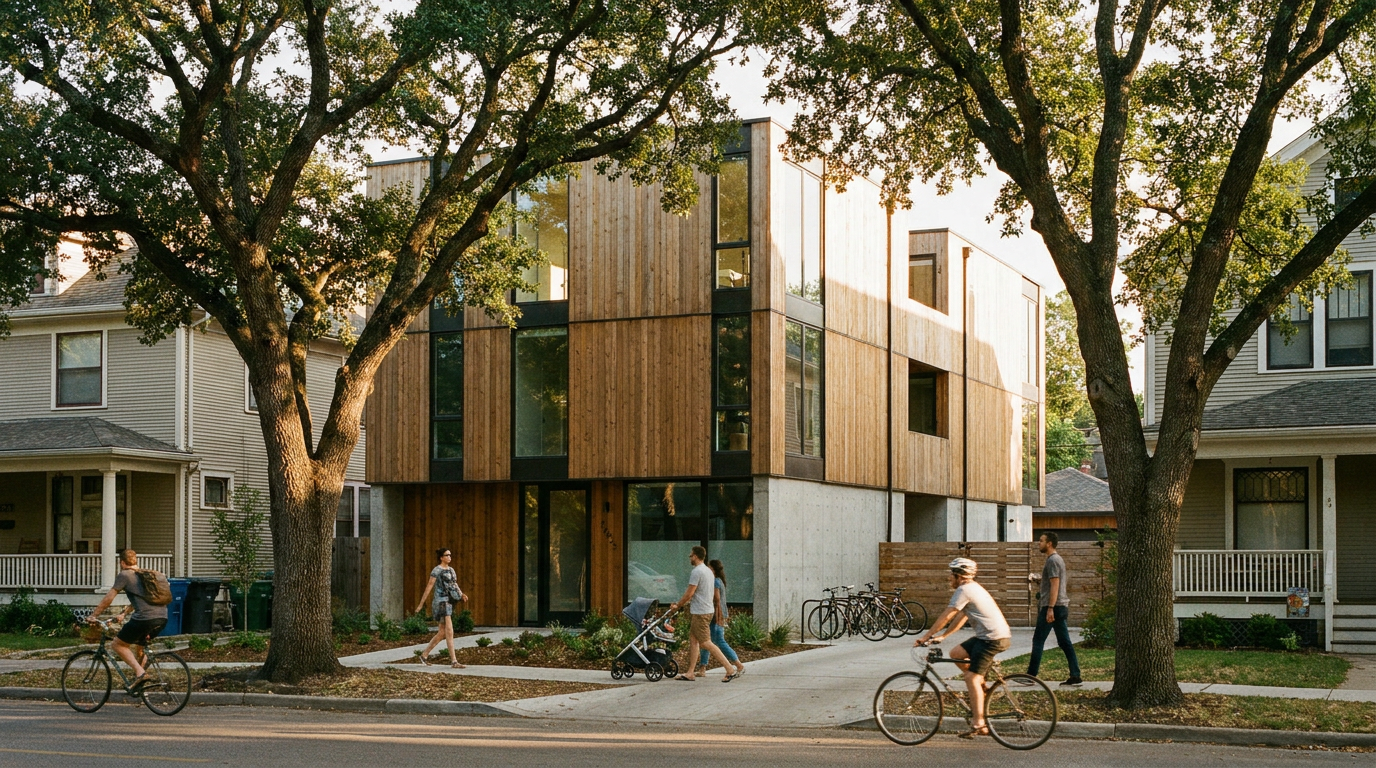
The term "eliminating single-family zoning" is often misunderstood. It does not mean banning the construction of detached houses or forcing homeowners to alter their properties. Instead, it removes the exclusivity mandate, allowing property owners the "by-right" option to build duplexes, triplexes, or townhomes on lots that previously permitted only one structure. This legalizes what urban planners call "missing middle" housing—the gentle density that bridges the gap between sprawling subdivisions and high-rise apartment towers.[1][2]

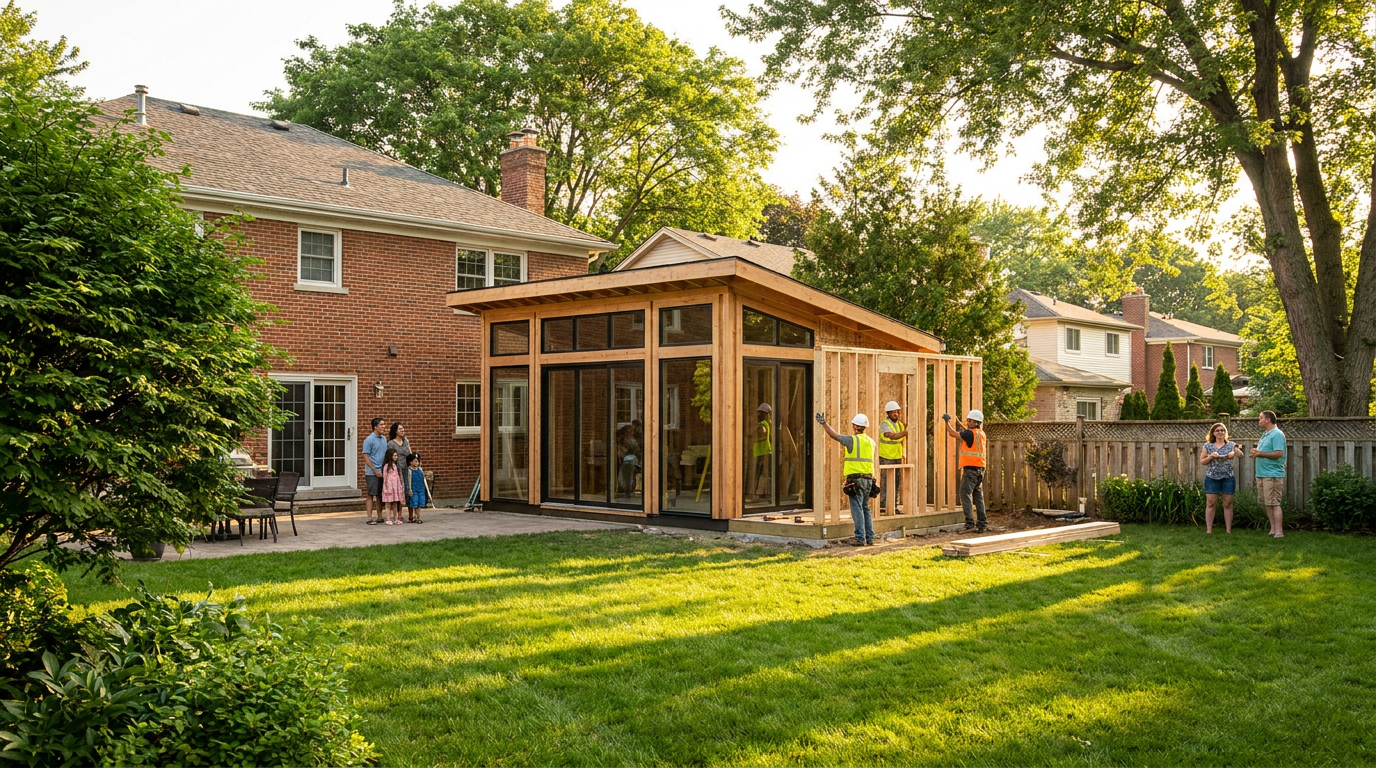
The most visible vanguard of this movement is the Accessory Dwelling Unit (ADU), commonly known as a backyard cottage or granny flat. Once a niche architectural workaround, ADUs have gone mainstream. States like California have permitted over 80,000 ADUs since streamlining their regulations in 2016, proving that homeowners are eager to utilize their backyards for rental income or multi-generational living.
Recognizing this success, a cascade of states has passed legislation forcing local municipalities to accept ADUs and middle housing. Washington's House Bill 1110, which took full effect recently, requires cities above a certain population threshold to allow multiple units per residential lot. Similar statewide mandates have been enacted or expanded in Oregon, Maine, Vermont, and Florida, effectively stripping local exclusionary zoning boards of their veto power over modest density increases.[1]
But local governments are not just waiting for state mandates; many are proactively overhauling their own codes. Minneapolis pioneered the approach with its 2040 plan, becoming the first major U.S. city to allow triplexes on all residential lots. Now, cities from St. Louis to Sacramento are following suit, recognizing that housing stagnation directly translates to economic decline.[1][2]

But local governments are not just waiting for state mandates; many are proactively overhauling their own codes.
In Washington D.C., policy analysts have starkly warned that the city's inability to add housing at scale threatens its fiscal capacity and competitiveness. With roughly three-quarters of D.C.'s residential lots restricted to low-density use, reformers are pushing to expand multifamily zoning, eliminate minimum parking requirements, and adopt uniform, smaller minimum lot sizes to unlock new development.
New York City has taken a similar targeted approach with its "City of Yes for Housing Opportunity" initiative. The plan aims to create 82,000 new homes over 15 years by re-legalizing modest apartment buildings near transit stations and allowing ADUs citywide in one- and two-family areas. Rather than forcing density everywhere, these modern zoning reforms often focus on transit-oriented growth, ensuring new residents have access to jobs and services without relying on cars.
The construction industry is rapidly adapting to this new regulatory landscape. Homebuilders who previously focused exclusively on luxury, large-lot single-family homes are pivoting their business models. Developers are finding that splitting lots to build duplexes or adding ADUs to new builds allows them to maintain profit margins while offering homes at more attainable price points for the bulk of the buyer market.[2]

Crucially, the 2026 wave of zoning reform goes beyond simply changing the legal text; it includes practical implementation tools. To prevent bureaucratic bottlenecks from stifling new legal housing, cities are rolling out pre-approved architectural plan libraries for ADUs, site feasibility software, and dedicated financing support. By making the permitting process faster and more transparent, local governments are ensuring that "legal to build" actually translates to "built."
Another major domino falling alongside single-family zoning is the parking mandate. Historically, requirements to build off-street parking for every new unit severely inflated construction costs and consumed valuable land. Cities like Minneapolis, San Francisco, and Buffalo have entirely removed these parking minimums, a move that developers cite as a massive cost-saver that makes small apartment buildings and middle housing financially viable.[2]
The coalition pushing for these changes is notably broad, bringing together strange political bedfellows. Free-market advocates support the restoration of property rights, allowing owners to build what they want on their land. Environmentalists champion the climate benefits of dense, walkable, transit-oriented neighborhoods. And racial equity advocates view the dismantling of single-family zoning as a necessary step to unwind decades of exclusionary redlining practices that segregated communities by class and race.[2]

While the momentum is undeniable, the transition is not without friction. Neighborhood preservation groups frequently express concerns about parking shortages, strained local infrastructure, and the changing "character" of established communities. In some areas, fierce local opposition has successfully stalled or watered down proposed density increases, highlighting the ongoing tension between regional housing needs and hyper-local control.[2]
Despite these localized battles, the structural shift is permanent. The era of the legally mandated, exclusively single-family neighborhood is drawing to a close in America's economic hubs. As these 2025 and 2026 reforms translate into physical buildings over the coming years, the American suburb will gradually transform into a more dynamic, diverse, and accessible landscape.[1][2]
How we got here
2016
California passes sweeping statewide reforms to legalize and streamline Accessory Dwelling Units (ADUs).
December 2018
Minneapolis adopts its 2040 plan, becoming the first major U.S. city to eliminate single-family-only zoning.
2019
Oregon passes HB 2001, becoming the first state to require cities to allow middle housing statewide.
2023
Washington state passes HB 1110, requiring cities to allow multiple units per lot in residential zones.
2025–2026
A massive wave of states and cities, including New York City and St. Louis, adopt comprehensive zoning reforms to unlock housing supply.
Viewpoints in depth
Urban Planners & Advocates
Argue that eliminating single-family exclusivity is the only mathematical way to solve the housing shortage.
This coalition views single-family-only zoning as an artificial, government-imposed cap on housing supply that directly causes skyrocketing rents and home prices. By legalizing 'missing middle' housing, they argue cities can build their way out of the 4.7 million home deficit without relying solely on massive high-rise developments. Furthermore, they emphasize that denser, transit-oriented neighborhoods are essential for reducing carbon emissions from long car commutes and for unwinding decades of exclusionary redlining practices that segregated communities by class and race.
Municipal Leaders
Focus on the practical mechanics of updating codes to unlock local economic growth and comply with state laws.
For city planners and mayors, the focus is on economic survival and state compliance. They recognize that a city unable to house its workforce will eventually lose employers and tax revenue. Their approach centers on the mechanics of reform: eliminating parking minimums, shrinking minimum lot sizes, and providing pre-approved architectural plans to ensure that new zoning laws actually translate into physical construction rather than just theoretical capacity.
Homebuilders & Developers
View the zoning changes as a massive market opportunity to pivot business models toward middle housing.
The construction industry is embracing the shift away from sprawling, land-intensive luxury subdivisions. Builders are finding that splitting lots to construct duplexes, or adding ADUs to existing properties, allows them to maintain healthy profit margins while serving a much larger demographic of middle-income buyers. For developers, the removal of parking mandates and discretionary review processes significantly lowers the risk and cost of new projects.
What we don't know
- How quickly the construction industry can scale up the labor and materials needed to build millions of new middle-housing units.
- Whether the increased density will genuinely lower housing costs in the most highly sought-after, expensive metro areas.
- How local infrastructure—such as water, sewer, and power grids—will handle the gradual densification of historically low-density suburbs.
Key terms
- Single-Family-Only Zoning
- A land-use regulation that prohibits the construction of anything other than one detached house per lot, effectively banning duplexes and apartments.
- Missing Middle Housing
- House-scale buildings with multiple units—such as duplexes, triplexes, and courtyard apartments—that fit seamlessly into existing residential neighborhoods.
- Accessory Dwelling Unit (ADU)
- A smaller, independent residential dwelling unit located on the same lot as a stand-alone single-family home, often called a backyard cottage or granny flat.
- By-Right Development
- A project that complies with all zoning standards and can be approved administratively without requiring discretionary public hearings or neighbor approval.
- Parking Minimums
- Local laws requiring developers to provide a set number of off-street parking spaces for every new housing unit built.
Frequently asked
Does ending single-family zoning mean my house will be torn down?
No. It simply means that property owners now have the legal option to build a duplex, triplex, or ADU on their land if they choose to. Existing single-family homes remain perfectly legal.
Will this instantly make housing cheap?
Not instantly. Experts view zoning reform as a long-term structural fix to increase supply, which should stabilize prices over time, rather than an overnight cure for high rents.
Can my Homeowners Association (HOA) still block an ADU?
It depends on the state. Many recent state laws explicitly prohibit HOAs from banning ADUs or middle housing, overriding local neighborhood covenants.
Sources
Source coverage
2 outlets
3 viewpoints surfaced


[1]PropertyZonedMunicipal Leaders
States That Have Eliminated Single-Family Zoning
Read on PropertyZoned →[2]Builder OnlineHomebuilders & Developers
The End of Single-Family Zoning
Read on Builder Online →
Every angle. Every day.
Get community stories with full source coverage and perspective breakdowns delivered to your inbox.