
Jeff Bezos Confirmed as Major Liverpool Investor in Deal Set to Reshape Club Ownership
Fenway Sports Group has sold a 30 percent minority stake in Liverpool FC to a consortium featuring Jeff Bezos, injecting over $2 billion into the club while retaining operational control.
By Omar Haddad
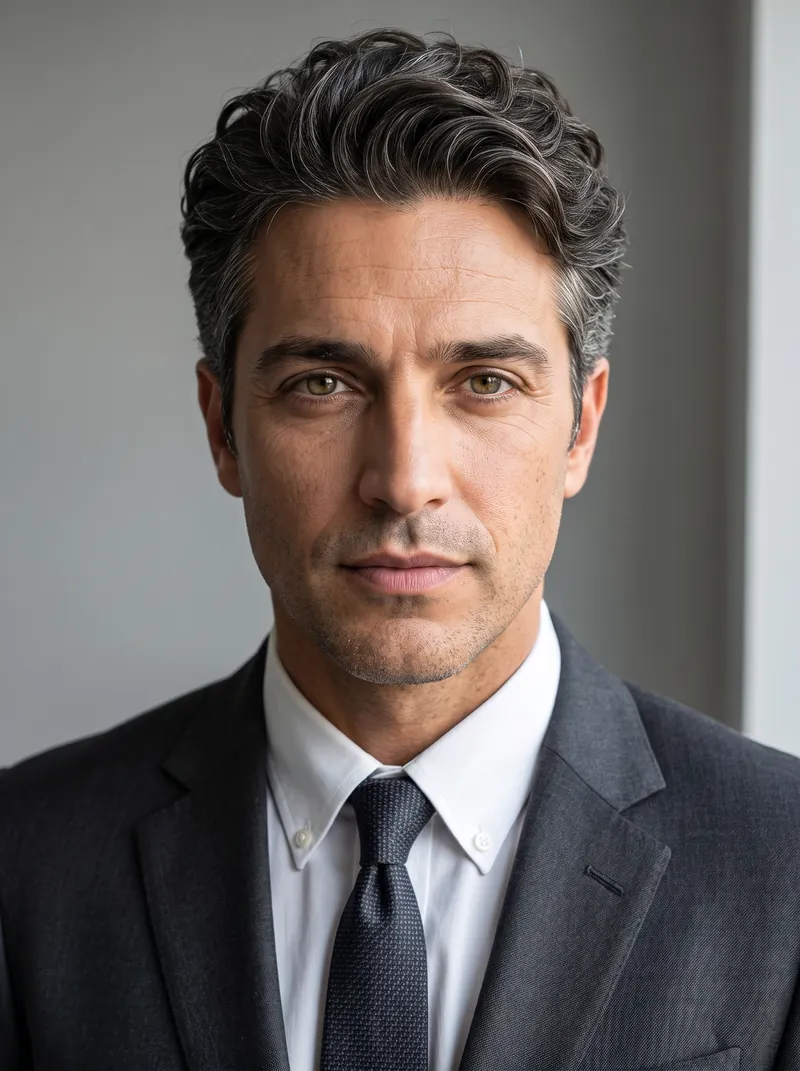
The immediate reaction to Friday's blockbuster announcement was that Amazon founder Jeff Bezos had just bought Liverpool Football Club, instantly transforming the Premier League landscape. The reality is far more strategic, and arguably much more dangerous for Liverpool's rivals. Fenway Sports Group has not handed over the keys to Anfield.
Instead, they have executed a surgical financial maneuver, securing a massive cash injection while retaining absolute operational control. By bringing in Silicon Valley wealth without surrendering the boardroom, Liverpool has effectively armed itself for the next decade of global football dominance without compromising the identity that defines the club.[1][3][4][5]
The deal sees FSG sell a roughly 30 percent minority equity stake to 1892 Holdings, a bespoke investor consortium named after the year of the club's founding. This is not a single billionaire vanity project. The group is led by Amit Bhatia, the former Queens Park Rangers co-owner and son-in-law of steel magnate Lakshmi Mittal. Behind Bhatia sits a staggering assembly of global wealth, designed to fortify Liverpool's war chest without disrupting the club's existing hierarchy. It is a carefully calibrated partnership aimed at scaling the club's commercial operations globally.[2][3][4][6]
The financial firepower within 1892 Holdings is unprecedented for a minority stake in English football. It includes the Mittal Family Trusts, EE Capital—the family office of Facebook co-founder Eduardo Saverin—and K5 Sports. It is within K5 Sports that Bezos operates as the lead investor.
This marks the Amazon founder's first official foray into major sports ownership, placing his estimated $274 billion net worth adjacent to the Anfield boardroom. For a club that has historically relied on a self-sustaining business model, the arrival of such immense personal wealth represents a paradigm shift.[1][2][5][6]
The numbers reshaping the club's future are staggering. The transaction values Liverpool at roughly $7.4 billion, meaning the 30 percent stake commands a price tag in excess of $2 billion, or £1.65 billion. This capital injection arrives at a critical juncture in global football finance, where the arms race against state-owned clubs has pushed traditional ownership models to their absolute limits. FSG has recognized that to compete with sovereign wealth funds, they needed to tap into the only other sector capable of matching that liquidity: global technology and private equity.[2][4]
Crucially, the power dynamics at Anfield remain unchanged. FSG president Mike Gordon and principal owner John Henry retain majority ownership and day-to-day control of the football club. Bezos is classified as a strictly passive investor and will not hold a seat on the board, mitigating fears of an abrupt cultural shift.
Instead, Bhatia steps in as vice-chairman, while Elaine Saverin and K5 Global co-founder Bryan Baum will join the Liverpool board to offer strategic oversight. The football operations, recruitment strategy, and managerial hierarchy will continue exactly as they have under FSG's stewardship.[4][5][6]
This structural choice is deliberate. By opting for a minority mega-investment rather than a full sale, FSG protects the self-sustaining business model that delivered their recent Premier League and Champions League triumphs. They gain the financial leverage of Silicon Valley and global industry titans without subjecting the club to the geopolitical scrutiny that accompanies sovereign wealth takeovers.
However, the move has still drawn some criticism; a handful of lawmakers and ethical watchdogs have raised concerns regarding Amazon's labor record and corporate contracts, warning against clubs becoming mere portfolio assets for mega-billionaires.[1][7]
The timing aligns perfectly with the impending 2026 World Cup in North America, a market where Liverpool is already aggressively expanding its footprint. Tapping into the networks of Bezos and Saverin provides the club with unparalleled access to tech, media, and data analytics expertise.
It is a calculated bet that the next era of football dominance will be won not just on the pitch, but in the cloud and across global digital ecosystems. Liverpool is positioning itself to capture the massive influx of American soccer fans expected over the next two years.
As the £1.65 billion transaction awaits final regulatory approval—a process expected to take up to 90 days—the broader football industry is dissecting this new blueprint. The sport is now caught between two competing visions for ultimate financial supremacy. The choice is no longer just about how much money a club can spend, but how that capital is structured, governed, and deployed. As clubs evaluate their futures, the debate centers on whether to pursue minority mega-investments or full sovereign wealth takeovers. Here is how the two models compare.[4]
Key points
- Fenway Sports Group has sold a 30% minority stake in Liverpool FC to 1892 Holdings.
- The consortium includes Amazon founder Jeff Bezos, Facebook co-founder Eduardo Saverin, and Amit Bhatia.
- The £1.65 billion transaction values the Premier League club at approximately $7.4 billion.
- FSG retains majority ownership and absolute operational control of the club.
Unanswered questions
- How the $2 billion capital injection will be allocated between infrastructure, debt servicing, and the transfer budget.
- Whether 1892 Holdings possesses a contractual pathway to majority ownership in the future.
- Sustainable Growth Advocates
- Argue that minority tech investments preserve a club's operational stability while providing necessary capital to compete.
- Financial Supremacy Analysts
- Focus on the sheer scale of the capital injection, viewing it as a necessary counterweight to sovereign wealth funds.
- Labor and Ethics Watchdogs
- Raise concerns about the labor records of incoming mega-billionaires, warning against clubs becoming mere portfolio assets.
Perspectives this story doesn't cover
- Legacy Liverpool supporters concerned about ticket pricing under tech-billionaire influence
- Rival Premier League executives evaluating their own valuation models
Sources
Source coverage
7 outlets
3 viewpoints surfaced






- [1]Business InsiderSustainable Growth Advocates
Jeff Bezos has entered his sports ownership era
Read on Business Insider → - [2]ForbesFinancial Supremacy Analysts
Investor Group Including Jeff Bezos Buys Liverpool FC Stake In Multibillion-Dollar Deal
Read on Forbes → - [3]Sky SportsFinancial Supremacy Analysts
Amazon founder Jeff Bezos closing in on a deal to buy a roughly one-third stake in Liverpool
Read on Sky Sports → - [4]The GuardianSustainable Growth Advocates
Liverpool owner FSG seals £1.65bn sale of 30% stake to consortium including Jeff Bezos
Read on The Guardian → - [5]Sports IllustratedSustainable Growth Advocates
Liverpool Confirm Major Jeff Bezos Investment—But How Much Influence Will He Have?
Read on Sports Illustrated → - [6]Goal.comFinancial Supremacy Analysts
FSG agree minority equity investment
Read on Goal.com → - [7]Anadolu AgencyLabor and Ethics Watchdogs
UK lawmaker condemns Bezos-linked investment in Liverpool
Read on Anadolu Agency →
More in Sports
See all →UEFA Nations League
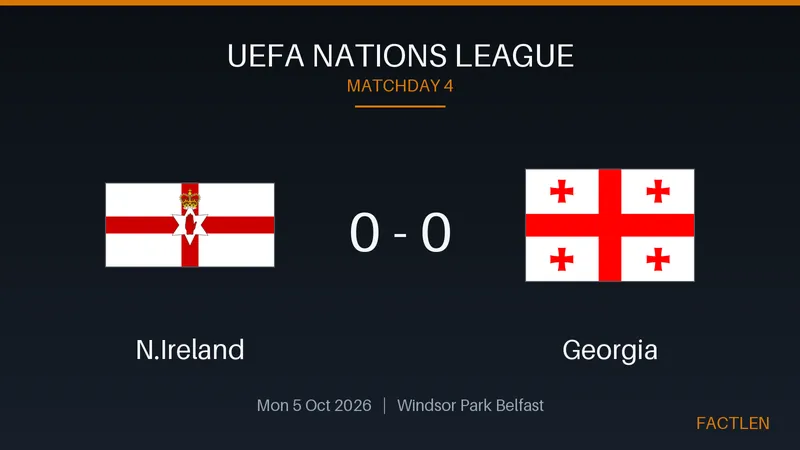
Northern Ireland Held to 0-0 Draw by Georgia as Mamardashvili Saves Late Penalty
2 sources
Standings
MLS Playoff Bubble Boils Over: Three-Way Tie in the East as Decision Day Looms
3 sources

UEFA Nations League
Northern Ireland Chases Nations League Promotion Against Struggling Georgia
6 sources
UEFA Nations League
Ukraine and Hungary Face Defining Nations League Clash in Trnava
6 sources
Comments
Every angle. Every day.
Get Sports stories with full source coverage and perspective breakdowns, free every day.