
Israel Home Prices Record Largest Monthly Drop in Eight Years Amid War, High Rates, and Record Supply
Israel's housing market saw its steepest monthly price decline since 2018, driven by high interest rates, a surplus of unsold new homes, and ongoing geopolitical uncertainty.

The Israeli housing market has officially registered its sharpest monthly contraction in nearly a decade, signaling a definitive shift in one of the world's most historically robust real estate sectors. According to the latest data released by the Central Bureau of Statistics, home prices fell by 1% during April and May 2026 compared to the preceding two-month period.
On an annual basis, the national index has declined by 2%, confirming a sustained cooling trend in a market that has long been defined by relentless, year-over-year price growth. For a country accustomed to real estate functioning as a one-way upward bet, the consecutive months of decline represent a profound psychological and economic recalibration.[1][3][4]
For a prospective buyer navigating the streets of Tel Aviv or Jerusalem, these abstract macroeconomic figures translate into a rare and tangible shift in leverage. Sellers who once dictated terms and expected immediate bidding wars are now demonstrating unprecedented flexibility, often accepting offers well below their initial asking prices.
At the same time, major developers are aggressively marketing generous financing promotions and upgrade packages to move their stagnant inventory. Real estate analysts note that this combination of high inventory and hesitant buyers has created the first genuine buyer's market the country has seen in over ten years, allowing purchasers to finally negotiate from a position of strength.[5]
The price adjustments are not uniform across the map, reflecting how localized demand, urban density, and security concerns are reshaping property values in real time. The Tel Aviv district, traditionally the most expensive and resilient market in the country, led the downward trend with a striking 2.3% drop in prices over the two-month period.
Jerusalem followed closely, recording a 1.8% decline, while the Haifa district saw a more modest 0.5% dip. In contrast, the northern district actually saw a slight annual increase of 1.4%, underscoring the highly fragmented nature of the current market and the varying pressures affecting different municipalities.[1][3][4]
High borrowing costs remain the primary structural barrier keeping local buyers on the sidelines. Following a series of aggressive rate hikes by the Bank of Israel to combat inflation, fixed-rate mortgages continue to hover between 4.5% and 5.5%.
This drastically increases the monthly financial burden for average households compared to the near-zero interest rate environment that fueled the buying frenzy of 2021 and 2022. This elevated cost of capital has effectively frozen out many first-time buyers who can no longer meet the stricter lending criteria, while simultaneously forcing existing homeowners to delay their plans to upgrade to larger properties.[2][5]
Simultaneously, shifting currency dynamics are suppressing the international demand that typically buoys the Israeli luxury market during domestic economic downturns. The shekel has strengthened by roughly 10% against the US dollar over the past year, and has seen significant fluctuations against the pound and the euro.
For foreign buyers and diaspora investors looking to secure a foothold in the country, this means their foreign capital does not stretch nearly as far. The exchange rate alone has effectively raised the cost of an Israeli home by hundreds of thousands of shekels for overseas purchasers, cooling a vital segment of the market.[1]
This dual suppression of domestic and foreign demand has resulted in a massive, unprecedented supply glut across the country. Developers are currently holding a record inventory of nearly 84,000 unsold housing units nationwide, a figure that continues to climb as completions outpace new sales.
The Tel Aviv district alone accounts for nearly 30% of this unsold stock, with tens of thousands of luxury and mid-market apartments sitting empty. At the current sluggish pace of transactions, market observers and government economists estimate it would take nearly two and a half years to clear the existing inventory, putting immense pressure on builders to offload units.[2][6]
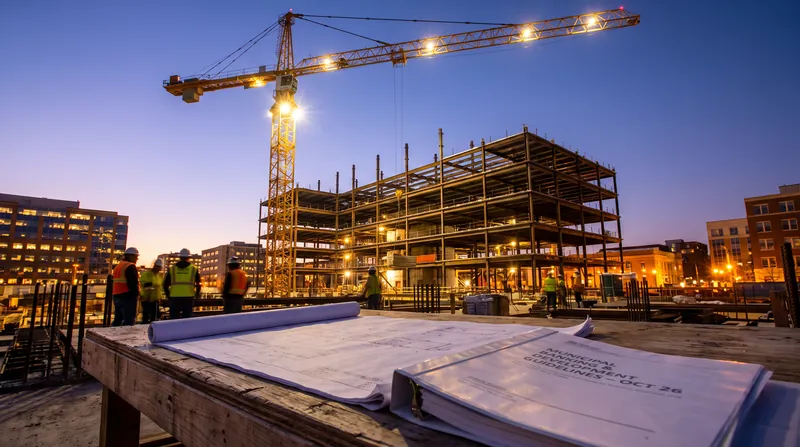
While buyers are currently enjoying the upper hand, the construction sector is facing severe operational and financial headwinds that threaten the industry's long-term stability. Industry leaders point out that the market went through a massive upheaval following the outbreak of the multifront war in late 2023, which severely disrupted supply chains and labor availability.
A severe, ongoing shortage of construction workers, coupled with negative cash flows from stalled sales, has forced many developers to pause new projects entirely. Even after securing the necessary building permits and zoning approvals, builders are increasingly hesitant to break ground in an uncertain economic climate.[1][4]
Some industry executives argue that the official government statistics actually understate the true extent of the market correction currently underway. Because developers are heavily utilizing creative financing promotions, subsidized mortgages, and other off-book buyer benefits to close deals, the effective price of a new home has dropped more significantly than the baseline index suggests.
One major construction CEO recently estimated that the true cost of housing has fallen by as much as 20% over the last few years when factoring in these hidden discounts and the psychological toll of the prolonged market stagnation.
The central question for the market is how long this buyer's window will remain open before the pendulum swings back. Real estate professionals warn that the current drop in building permits and construction starts is quietly setting the stage for a severe future supply crunch.
Once the geopolitical situation stabilizes and interest rates eventually begin to ease, pent-up demand from sidelined buyers is expected to flood back into the market. If that sudden surge in demand meets a constrained pipeline of new homes, the current period of affordability could quickly give way to another sharp, aggressive rebound in housing prices.[4][5]
Key points
- Israel's Central Bureau of Statistics reported a 1% drop in home prices for April and May 2026, the largest monthly decline in eight years.
- Annual home prices have fallen by 2%, with the Tel Aviv district recording the sharpest regional drop at 2.3%.
- Developers are currently holding a record inventory of nearly 84,000 unsold housing units across the country.
- High interest rates and a strong shekel have suppressed demand from both domestic purchasers and foreign buyers.
- Market Analysts & Brokers
- Viewing the current climate as a rare window of opportunity for buyers.
- Developers & Builders
- Warning that the current slowdown in construction will lead to future price spikes.
- Economic Observers
- Focusing on the macroeconomic pressures of war, currency, and interest rates.
Perspectives this story doesn't cover
- First-time homebuyers struggling with mortgage rates
- Renters facing increased costs as buyers delay purchases
Sources
Source coverage
6 outlets
3 viewpoints surfaced






- [1]The Times of IsraelEconomic Observers
Housing snapshot August 2026: Home prices fall 1%, largest drop in eight years
Read on The Times of Israel → - [2]The Jerusalem PostEconomic Observers
Israel's housing market is slowing, yet mortgage volumes are rising
Read on The Jerusalem Post → - [3]Israel National NewsEconomic Observers
Home prices fall by 1% in April-May
Read on Israel National News → - [4]BuyitinisraelMarket Analysts & Brokers
Israeli apartment prices continued to decline in April-May 2026
Read on Buyitinisrael → - [5]Alayof GroupMarket Analysts & Brokers
Israel's housing market is experiencing a significant recalibration
Read on Alayof Group → - [6]i24NEWSDevelopers & Builders
Israeli housing market continues to slow as home sales decline
Read on i24NEWS →
More in Real Estate
See all →Capital Markets
Global Real Estate Investment Rebounds 13% in Q2 as Investors Prioritize Selective Deals
4 sources
CMBS Issuance
August Private Label CMBS Issuance Reaches Decade-High $11.6 Billion Volume
4 sources
Ground Leases
The Mechanics of Ground Leases: How Separating Land Ownership from Building Ownership Unlocks Urban Development
6 sources
Banking Regulation
The Mechanics of Basel Accords: How Global Banking Rules Determine Local Real Estate Loans
11 sources
Comments
Every angle. Every day.
Get Real Estate stories with full source coverage and perspective breakdowns, free every day.