
The Mechanics of Ground Leases: How Separating Land Ownership from Building Ownership Unlocks Urban Development
By decoupling the cost of dirt from the cost of construction, long-term ground leases allow developers to achieve viable yields on urban projects that would otherwise fail standard financial hurdles. However, the structure fundamentally alters the risk profile, financing options, and tax benefits for both landowners and tenants.
By Dev Anand

Share this story
In short
- A ground lease separates the ownership of land from the ownership of the building constructed upon it.
- Developers use ground leases to remove land acquisition costs from their capital stack, significantly boosting their yield on cost.
- Landowners benefit from a passive, triple-net income stream while retaining ultimate ownership of the parcel.
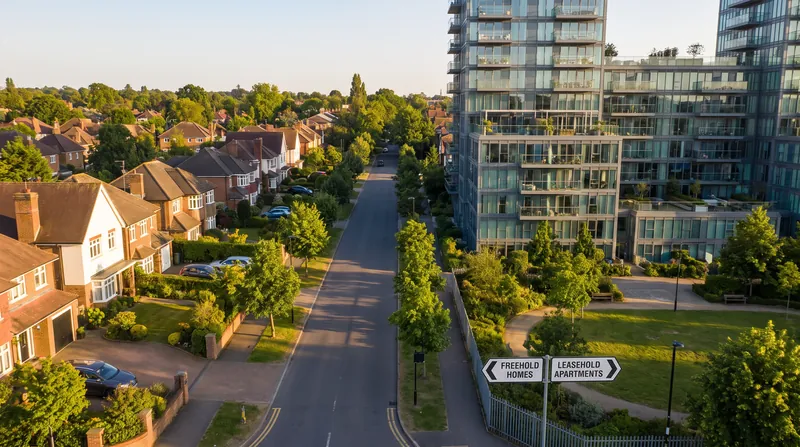
When a developer cuts the ribbon on a gleaming new downtown high-rise, the natural assumption is that they own the property top to bottom. But in many of the world's most expensive urban cores, the developer owns the glass, the steel, and the elevators, while someone else entirely owns the dirt underneath. This separation of land and building is known as a ground lease, and it is the hidden financial engine driving modern urban development.[2][6]
The traditional model of real estate ownership is known as "fee simple absolute." Under a fee simple structure, the buyer acquires both the land and the improvements permanently, holding the highest possible estate permitted by law. They have the right to use, sell, lease, or demolish the property, subject only to local zoning and government regulations. For generations, fee simple ownership has been the gold standard for real estate investors seeking total control and long-term appreciation.[1][5]
But in dense urban markets, fee simple ownership presents a massive mathematical hurdle for new construction. Land acquisition can consume up to 40 percent of a project's total budget before a single shovel hits the dirt. When developers are forced to deploy tens of millions of dollars just to secure the site, the required return on that capital drags down the overall profitability of the project, often making new housing or commercial space financially unviable to build.[6]
Enter the ground lease. Instead of buying the land, a developer signs a long-term contract—typically spanning 50 to 99 years—to rent the parcel from the landowner. The developer then constructs, operates, and owns the building for the duration of the lease. This structure effectively removes the land acquisition cost from the developer's initial capital stack, fundamentally altering the project's financial mechanics.[2][6]
To understand why this matters to an actual builder's next decision, consider the capitalization rate, or "cap rate," which measures a property's annual net operating income against its total value. Ground-up developers use a related metric called "yield on cost" to determine if a project is worth the construction risk. By stripping out the land cost, a ground lease mathematically transforms the yield on cost.[4][6]
Factlen modeled a theoretical $40 million urban development project generating $2.8 million in stabilized net operating income. Under a fee simple purchase, the developer's yield on cost sits at 7.0 percent. But if the $16 million land cost is removed via a ground lease, the total project cost drops to $24 million. Even after accounting for ground rent payments, the yield on the actual construction dollars deployed jumps significantly, often clearing the 150 to 200 basis point "development spread" required to secure financing.[4][6]
For the landowner, the ground lease offers a completely different set of benefits. Many prime urban parcels are owned by generational family trusts, universities, or religious institutions that are either unwilling or legally forbidden to sell their real estate. A ground lease allows these entities to monetize their holdings without surrendering ownership.[6]
Furthermore, ground leases are almost universally structured as "triple net" (NNN) leases. In a triple net arrangement, the tenant is responsible for all property taxes, insurance premiums, and maintenance costs. The landowner simply collects a passive, bond-like rent check every month for nearly a century, completely insulated from the operational headaches of property management.[3][6]
However, this financial engineering comes with severe trade-offs, particularly regarding taxes and depreciation. In commercial real estate, the physical building is a depreciating asset that owners use to shelter their income from taxes, while the underlying land cannot be depreciated.[1][6]
In a fee simple transaction, the buyer gets the tax benefits of depreciating the building. In a ground lease, the landowner gives up those depreciation benefits entirely, as they only own the non-depreciable dirt. The developer, who funded and owns the improvements, claims the depreciation. For tax-sensitive investors, this shift in the depreciation shield can make or break a deal.[6]
Financing a ground lease also introduces unique complexities. Because the developer does not own the land, they cannot offer the fee simple title as collateral to a construction lender. Instead, they must secure a "leasehold mortgage," borrowing against their contractual right to operate the building.[2][6]
This brings up the critical distinction between "subordinated" and "unsubordinated" ground leases. In a subordinated ground lease, the landowner agrees to let the developer's lender place a lien on the actual land. If the developer defaults, the lender can foreclose and take the dirt. Because this puts the landowner's generational asset at risk, subordinated leases are rare and command significantly higher ground rents.[6]
The vast majority of modern commercial ground leases are unsubordinated. The landowner's fee simple interest remains untouched, and the lender's only collateral is the leasehold estate—the building and the right to collect rent from its tenants. If the developer defaults, the lender can only take over the operation of the building for the remainder of the lease term.[2][6]
Because the collateral is a depreciating asset with an expiration date, lenders underwrite unsubordinated leasehold mortgages with extreme caution. The loan must fully amortize well before the ground lease expires, and the interest rates are typically higher to compensate for the lack of hard land collateral.[6]
The most dramatic mechanic of a ground lease, however, is the "reversion." A leasehold estate is a finite asset. When the 99-year clock runs out, the lease expires, and the ownership of the building automatically reverts to the landowner, usually at no cost.[2][6]
In the early decades of a 99-year lease, the reversion is so far in the future that it has little impact on the building's market value. But as the clock ticks down past year 40 or 30, the leasehold estate begins to rapidly lose value. A buyer purchasing a building with only 20 years left on the ground lease knows they are buying a temporary income stream, not a permanent asset.[6]
This ticking clock forces developers and operators to make difficult decisions about capital expenditures. Why invest $10 million in a new roof and HVAC system if the building will be handed over to the landowner in 15 years? This dynamic often leads to deferred maintenance and declining property conditions in the final decades of a ground lease unless extension options are negotiated.[6]
Despite these complexities, the ground lease remains a vital tool for urban growth. By separating the low-risk, low-yield business of owning dirt from the high-risk, high-yield business of vertical construction, the real estate industry can match different types of capital with their ideal risk profiles.[4][6]
For the local buyer or operator, understanding whether a property is fee simple or leasehold is the first step in underwriting any deal. It dictates the financing terms, the tax strategy, and the ultimate exit plan. In a world where urban land is increasingly scarce and expensive, the ability to build without buying the dirt will only become more essential.[5][6]
How we did this
- Method
- Calculated the yield on cost for a hypothetical $40 million development project under both fee simple and ground lease structures by applying the standard capitalization rate formula to a fixed net operating income, isolating the mathematical effect of removing land acquisition costs.
- What we found
- Removing a 40% land acquisition cost ($16 million) from a $40 million fee simple development project increases the developer's yield on cost from 7.0% to 11.6% on the exact same $2.8 million net operating income, demonstrating how ground leases mathematically unlock projects that would otherwise fail standard capitalization rate hurdles.
- What we worked from
- Capitalization rate formula (NOI / Value): NOI / Current Value — Wikipedia
- Fee simple definition (land + improvements): Combined asset ownership — Wikipedia
- Baseline project cost and NOI: $40M cost, $2.8M NOI — Factlen Editorial Team
- Limits of this analysis
- This mathematical derivation assumes the ground rent payments do not fully offset the NOI gains and that construction financing costs remain identical, which is rarely true in unsubordinated ground leases.
Competing readings
Fee Simple Purists
Investors who argue that owning the land is the only true way to capture long-term real estate appreciation.
This camp views ground leases as an unnecessary complication that strips the investor of real estate's greatest historical benefit: the permanent appreciation of land. They argue that buildings inevitably degrade and require massive capital injections, while the dirt underneath is what actually gains value over decades. By accepting a leasehold estate, they contend, a buyer is essentially purchasing a depreciating asset with an expiration date, leaving the true generational wealth with the landowner.
Yield-Focused Developers
Builders who value ground leases for reducing upfront capital requirements and boosting project returns.
For developers focused on internal rates of return and yield on cost, the ground lease is a powerful financial lever. This perspective emphasizes that land is a 'lazy' asset that consumes massive amounts of upfront capital without generating immediate cash flow during construction. By renting the dirt instead of buying it, developers can deploy their equity entirely into vertical construction, achieving the necessary development spreads to satisfy institutional investors and lenders.
Institutional Landowners
Entities that prefer ground leases as a bond-like, passive income stream that preserves generational wealth.
Universities, religious organizations, and legacy family trusts often hold prime urban real estate that they cannot or will not sell. From their viewpoint, a ground lease is the ultimate passive investment. It allows them to monetize their holdings through a triple-net structure where the tenant handles all taxes, insurance, and maintenance. They secure a steady, inflation-adjusted income stream for a century, while resting assured that the fully developed property will eventually revert to their heirs or endowment.
- Yield-Focused Developers
- Value ground leases for reducing upfront capital requirements and boosting project returns.
- Fee Simple Purists
- Argue that owning the land is the only true way to capture long-term real estate appreciation.
- Institutional Landowners
- Prefer ground leases as a bond-like, passive income stream that preserves generational wealth.
Perspectives this story doesn't cover
- Commercial Tenants
- Municipal Zoning Boards
Sources
Source coverage
6 outlets
3 viewpoints surfaced



- [1]WikipediaInstitutional Landowners
Fee simple
Read on Wikipedia → - [2]WikipediaInstitutional Landowners
Leasehold estate
Read on Wikipedia → - [3]WikipediaInstitutional Landowners
Net lease
Read on Wikipedia → - [4]WikipediaInstitutional Landowners
Capitalization rate
Read on Wikipedia → - [5]Cornell Law SchoolFee Simple Purists
fee simple
Read on Cornell Law School → - [6]Factlen Editorial TeamYield-Focused Developers
Synthesis by Factlen editorial team
Read on Factlen Editorial Team →

More in Real Estate
See all →Commercial Property
Global Cross-Border Commercial Property Investment Jumps 56% in First Half of 2026
5 sources

Property Tenure
How Freehold and Leasehold Estates Differ in Property Rights and Duration
7 sources
Institutional Benchmarks
Tracking Institutional Property Yields: How MSCI, NCREIF, and IPD Indices Measure Global Real Estate Returns
7 sources

Housing Supply
Portugal's 15.2% House Price Surge Defies Global 1.2% Decline, BIS Data Shows
5 sources

Comments
Every angle. Every day.
Get Real Estate stories with full source coverage and perspective breakdowns, free every day.