
Deterrence by Entanglement: Using Mutual Vulnerability to Prevent Cyber Conflict
For decades, national security relied on threatening retaliation or hardening defenses to prevent conflict. As warfare shifts to interconnected cyber domains, a third model—deterrence by entanglement—is replacing traditional statecraft by leveraging mutual vulnerability.

Share this story
In short
- Deterrence by punishment relies on the credible threat of a devastating counter-attack.
- Deterrence by denial focuses on hardening physical and digital infrastructure to make attacks unfeasible.
- The cyber domain's attribution challenges make traditional punishment and denial strategies difficult to execute.
Deterrence is the strategic art of preventing an adversary from taking a specific action by manipulating their cost-benefit calculus. For the better part of a century, this condition was achieved through two primary mechanisms: the threat of devastating retaliation, known as deterrence by punishment, and the hardening of defenses to make an attack futile, known as deterrence by denial.[1][2]
Today, the architecture of global security is undergoing a structural shift. The proliferation of cyber warfare, information operations, and space-based assets has introduced domains where traditional boundaries do not exist and attribution is often ambiguous.[6][8]
In response, a third conceptual framework has emerged: deterrence by entanglement. Unlike punishment or denial, which rely on unilateral strength, entanglement leverages the inherent interconnectedness of modern states, positing that an adversary will refrain from attacking if doing so guarantees severe damage to their own integrated systems.[6][7]
To understand this shift, one must first examine the classical foundation of deterrence by punishment. This model relies on a simple, coercive promise: if a hostile actor strikes, the counter-strike will impose costs that far outweigh any potential strategic gains.[3]
The efficacy of punishment depends entirely on three variables operating in tandem: capability, credibility, and communication. The deterring state must possess the actual military means to inflict unacceptable damage, the demonstrated political will to use those means, and the ability to communicate this threshold clearly to the adversary.[1][5]
Nuclear deterrence remains the purest expression of the punishment model. The doctrine of Mutually Assured Destruction stabilized the Cold War by guaranteeing that any nuclear first strike would result in the annihilation of both the attacker and the defender, effectively removing the incentive for direct superpower conflict.[2]
However, the punishment model struggles in the modern era of gray zone conflicts. When adversaries utilize proxy forces, cyber intrusions, or disinformation campaigns, the threshold for massive retaliation is rarely crossed. Furthermore, punishment requires rapid and definitive attribution—a state cannot credibly threaten retaliation if it cannot definitively prove who launched the attack.[8][9]
This structural limitation elevates the second classical pillar: deterrence by denial. Rather than threatening a counter-attack, denial focuses on rendering the adversary's offensive action operationally unfeasible or strategically pointless from the outset.[4]
Denial operates through physical and systemic hardening. A layered ballistic missile defense system, a heavily fortified border, or a resilient power grid are all instruments of denial. They signal to the adversary that an attack will simply fail to achieve its objectives, thereby wasting resources and exposing the attacker to unnecessary risk.[4]
In practice, denial is often more credible than punishment because it does not require the political will to launch an escalatory counter-strike; it is inherently defensive. However, it is also highly resource-intensive. No state can perfectly harden every node of its critical infrastructure against every conceivable vector of attack.[3]
This brings the strategic calculus to the cyber domain, where both punishment and denial face severe operational deficits. Cyberspace is characterized by low barriers to entry, rapid technological innovation, and the persistent, systemic challenge of attribution.[6]
A state-sponsored hacker group can route an attack through dozens of compromised servers across multiple jurisdictions, delaying definitive attribution for months. By the time the attacker is identified, the tactical window for deterrence by punishment has closed. Similarly, the sheer surface area of digital infrastructure makes absolute deterrence by denial mathematically impossible.[9]
Enter deterrence by entanglement. This framework recognizes that in a globalized, digitized economy, adversaries are often deeply connected to the very systems they might wish to disrupt. It shifts the deterrent from a weapon system to the architecture of the network itself.[6]
Entanglement operates on the principle of mutual vulnerability. If a hostile state wishes to cripple a rival's financial sector through a cyberattack, it must calculate whether that disruption will cascade through global markets and devastate its own economy. The deterrence is achieved through shared systemic risk.[7]
This dynamic is particularly evident in the US Indo-Pacific strategy and European cyber defense postures. By deeply integrating allied networks and economic systems, these coalitions create a web of entanglement. An attack on a small state's digital infrastructure risks destabilizing a broader economic zone, which in turn impacts the attacker's trade and financial stability.[7][9]
Yet, entanglement is not without profound systemic risks. It relies on the assumption that adversaries accurately perceive their own vulnerabilities and act rationally to protect them. In the fog of a rapidly escalating crisis, a state might miscalculate the blast radius of a cyber weapon, triggering a cascading failure that neither side intended.[6][8]
Furthermore, entanglement can be weaponized in reverse. A state might use its integration into global supply chains or energy markets as a shield, conducting aggressive operations while betting that rivals will not retaliate for fear of triggering mutual economic collapse.[5]
Ultimately, the mechanics of deterrence are evolving from a binary posture of threats and walls into a complex ecosystem of shared risk. Modern national security requires a synthesized approach: maintaining the credible threat of punishment for existential attacks, investing in denial to raise the baseline cost of aggression, and carefully managing entanglement to stabilize the interconnected gray zones of modern conflict.[1][3][10]
How we did this
- Method
- A structural comparison of classical deterrence frameworks (punishment and denial) against the emerging cyber-era model of entanglement, normalizing their operational requirements (attribution speed, domain boundaries, and cost-imposition) to identify systemic gaps in modern statecraft.
- What we found
- While punishment and denial require clear attribution and bounded domains to function, entanglement relies on mutual vulnerability, making it the only viable deterrence model for cyber operations where attribution is inherently delayed or ambiguous.
- What we worked from
- Operational requirements for deterrence by denial: Physical and systemic hardening to render attacks unfeasible — Air University
- Mechanisms of cyber entanglement: Mutual vulnerability and integrated digital infrastructure — Taylor & Francis
- Limits of this analysis
- Theoretical frameworks may not perfectly predict state behavior in unprecedented multi-domain crises, and entanglement carries inherent risks of rapid, unintended escalation.
Jargon, explained
- Deterrence by Punishment
- Preventing an adversary's action by threatening a retaliatory response that imposes unacceptable costs.
- Deterrence by Denial
- Preventing an adversary's action by hardening defenses to make the attack operationally unfeasible or unlikely to succeed.
- Entanglement
- A deterrence model where an adversary is discouraged from attacking because their own systems are so interconnected with the target that they would suffer mutual damage.
- Attribution
- The process of definitively identifying the actor responsible for an attack, which is often delayed or obscured in cyber warfare.
- Gray Zone Conflict
- Coercive state behavior that remains below the threshold of conventional military conflict, such as cyberattacks or disinformation campaigns.
Common questions
What is the difference between punishment and denial?
Punishment relies on the threat of a devastating counter-attack after an adversary strikes, while denial focuses on building robust defenses to ensure the adversary's initial attack fails.
Why is traditional deterrence difficult in cyberspace?
Cyberattacks are often routed through multiple proxies, making it difficult to quickly and definitively prove who launched them. Without clear attribution, a state cannot credibly threaten retaliation.
How does entanglement prevent conflict?
Entanglement relies on mutual vulnerability. If two nations' financial or energy grids are deeply connected, one nation will hesitate to attack the other for fear of causing a cascading failure that destroys its own systems.
Competing readings
Classical Realists
Focuses on the necessity of credible military threats and the capacity for punishment.
Classical realists maintain that deterrence ultimately rests on the credible threat of overwhelming force. From this perspective, entanglement is a fragile construct that relies too heavily on an adversary's rational calculation of economic self-interest. They argue that without the hard power to impose unacceptable physical costs—deterrence by punishment—nations invite aggression from actors willing to absorb economic pain for strategic gain.
Cyber Strategists
Emphasizes resilience, mutual vulnerability, and the realities of the digital domain.
Cyber strategists argue that classical deterrence is fundamentally incompatible with the digital age. Because cyber operations occur below the threshold of armed conflict and attribution is often delayed, threatening military retaliation is rarely credible. Instead, they advocate for deep entanglement and robust denial, arguing that the only way to deter a cyberattack is to ensure the attacker's own critical systems are inextricably linked to the target's survival.
Defense Economists
Analyzes the resource burden of maintaining perfect denial architectures.
From an economic perspective, deterrence by denial is a game of diminishing returns. Hardening every node of a nation's critical infrastructure against every possible vector of attack requires an unsustainable expenditure of resources. Defense economists argue that entanglement offers a more cost-effective deterrent, as it leverages existing global market integration to impose costs on adversaries without requiring massive, unilateral defense spending.
- Cyber Strategists
- Focus on mutual vulnerability and the necessity of entanglement in digital domains.
- Classical Realists
- Advocate for military capability and the credible threat of punishment.
- Defense Economists
- Evaluate the cost-effectiveness of denial versus the systemic risks of entanglement.
Perspectives this story doesn't cover
- Non-state actors and hacktivist collectives
- Global South nations excluded from primary cyber alliances
Sources
Source coverage
10 outlets
3 viewpoints surfaced










- [1]RANDClassical Realists
Understanding Deterrence
Read on RAND → - [2]Oxford AcademicDefense Economists
2 What Is Deterrence?
Read on Oxford Academic → - [3]Texas National Security ReviewClassical Realists
Coercion Theory: A Basic Introduction for Practitioners
Read on Texas National Security Review → - [4]Air UniversityDefense Economists
Deterrence by Denial: Theory and Practice
Read on Air University → - [5]Modern War InstituteClassical Realists
Deterrence: I Don’t Think It Means What You Think It Means
Read on Modern War Institute → - [6]Taylor & FrancisCyber Strategists
Entanglement in Cyberspace: Minding the Deterrence Gap
Read on Taylor & Francis → - [7]Project MUSECyber Strategists
Bilateral Alliances in an Interconnected Cyber World: Cyber Deterrence and Operational Control in the US Indo-Pacific Strategy
Read on Project MUSE → - [8]Hoover InstitutionDefense Economists
Protecting Democracy in an Era of Cyber Information War
Read on Hoover Institution → - [9]CSISCyber Strategists
Enter Europe’s Cyber Deterrence
Read on CSIS → - [10]Factlen Editorial Team
Synthesis by Factlen editorial team
Read on Factlen Editorial Team →

More in Defense & Security
See all →Grid Defense
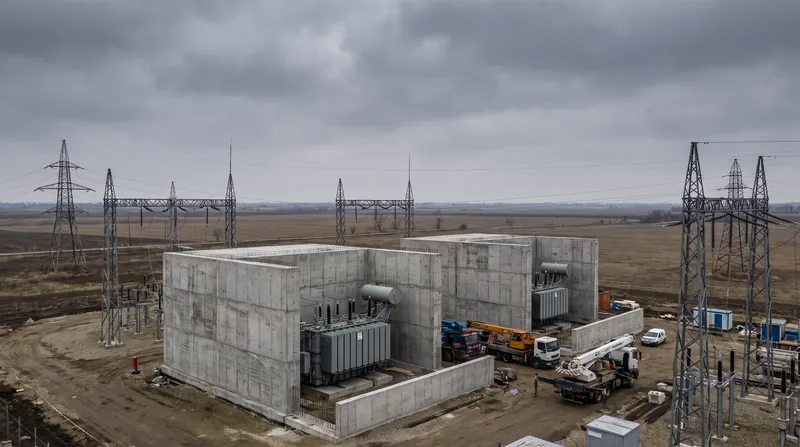
Lithuania Fortifies Key Power Substation Near Kaliningrad With Concrete 'Sarcophagi' Against Drone Attacks
7 sources
Military Doctrine
The Find, Fix, Track, Target, Engage, and Assess Sequence: How the Military Executes the Joint Targeting Cycle
6 sources

Nuclear Deterrence
The Bus, the Post-Boost Vehicle, and the Reentry Vehicles: How a MIRV System Delivers Multiple Warheads to Separate Targets
6 sources

International Law
The Two Exceptions to the UN Charter's Prohibition on the Use of Force: How Article 51 and Chapter VII Authorize Military Action
8 sources

Comments
Every angle. Every day.
Get Defense & Security stories with full source coverage and perspective breakdowns, free every day.