
Tesla Demonstrates Roadster Prototype Executing Airborne Flips With SpaceX Cold-Gas Thrusters
Elon Musk unveiled a functioning prototype of the long-delayed electric sports car, utilizing 10,000-PSI pneumatic thrusters to briefly lift the vehicle off the tarmac. The company opened $250,000 reservations for the aerospace-equipped variant, targeting initial deliveries in 2028.

Share this story
Tesla engineers have successfully demonstrated a cold-gas thruster system on a physical vehicle, executing a brief airborne flip with a next-generation Roadster prototype. Chief Executive Elon Musk presented the modified electric sports car late Thursday, proving the mechanical viability of a concept first teased in 2018. The company now faces a two-year engineering window to reach its 2028 production target.[1][3]
The demonstration vehicle utilized high-pressure air thrusters adapted from SpaceX hardware to momentarily lift off the tarmac and rotate. "Well, it worked," Musk told the audience following the maneuver, which saw the vehicle briefly drive inverted before returning to its wheels. The display marks the first time Tesla has shown the so-called SpaceX package functioning in physical space.[2][10]
While the visual spectacle dominated the presentation, the underlying performance metrics push the boundaries of passenger vehicle physics. Tesla claims the thruster-equipped Roadster accelerates from zero to 60 miles per hour in under one second. That figure halves the acceleration time of the current industry benchmark, the Rimac Nevera, by relying on compressed air rather than tire traction.[3][6]
Accessing that capability requires a substantial upfront commitment from prospective buyers. Tesla opened reservations for the thruster-equipped variant immediately following the event, requiring a $250,000 deposit just to secure a place in line. The base model Roadster, which lacks the aerospace hardware, requires a separate $50,000 reservation fee.[8][9]
Adapting aerospace hardware
The system abandons traditional chemical propulsion in favor of cold-gas thrusters, a technology routinely used to orient satellites and spacecraft in orbit. The vehicle houses a high-pressure composite overwrapped pressure vessel in place of the rear seats. This tank stores air compressed to roughly 10,000 pounds per square inch, fed by an onboard electric pump.[2][7]
When triggered, the system vents this highly pressurized air through multiple nozzles positioned around the vehicle's perimeter. "This is literally rocket technology applied to a street car," Musk stated during the reveal, noting that the thrusters can improve cornering and braking. The airborne flip demonstrated the system's maximum output, firing downward to overcome the vehicle's mass.[3][4]
However, the physical realities of compressed air present significant engineering hurdles for a consumer vehicle. The onboard compressor requires substantial electrical energy and time to repressurize the tank after a discharge. A full-power launch or a brief hover depletes the pressure vessel in seconds, limiting the vehicle's headline capabilities to short bursts.[6][7]
The acoustic impact of venting 10,000-PSI air is another unresolved factor that Tesla omitted from the controlled demonstration. Cold-gas thrusters produce a concussive, high-decibel report when fired, raising questions about the system's viability in populated areas. The prototype operated in a closed environment, insulating the audience from the full auditory force of the system.[5][8]
Navigating regulatory hurdles
Proving the physics is only the first step; legalizing a thruster-equipped vehicle for public roads presents an entirely different challenge. The National Highway Traffic Safety Administration has no existing framework for passenger cars equipped with high-pressure pneumatic propulsion systems. Regulators will need to assess the safety implications of a vehicle capable of venting high-velocity air in traffic.[1][9]
The pedestrian safety risks associated with the thruster nozzles remain a primary concern for automotive analysts. Firing compressed air at street level could easily dislodge debris or destabilize nearby cyclists and pedestrians. "Flying cars are real," Musk declared during the event, though he did not outline how the company plans to certify the vehicle for highway use.[4][5]
Tesla may be forced to geofence the thruster capabilities, restricting their use to closed circuits or sanctioned drag strips. Similar software locks are already employed by manufacturers to limit track-only features to appropriate environments. Without such restrictions, the vehicle would likely fail to meet basic homologation standards in Europe and North America.[6][10]
The vehicle's structural integrity also faces unprecedented stress from the pneumatic system. The forces required to lift a heavy electric vehicle off the ground place immense strain on the chassis and suspension components. Tesla engineers must ensure the production frame can withstand repeated thruster deployments without suffering metal fatigue or compromising the primary battery enclosure.[2][7]
A history of delayed promises
The successful prototype demonstration arrives nearly a decade after the next-generation Roadster was first announced. Tesla originally unveiled the design concept in 2017, promising initial deliveries by 2020. That timeline evaporated as the company prioritized the mass-market Model 3 and the polarizing Cybertruck, pushing the halo sports car to the back of the development queue.[1][9]
Industry observers remain cautious about the newly revised 2028 delivery target. The company has a well-documented history of missing ambitious production deadlines, particularly for vehicles requiring novel manufacturing techniques. The integration of aerospace-grade pressure vessels into a consumer automotive assembly line represents a significant operational leap.[3][8]
The financial strategy behind the reveal also mirrors past Tesla product cycles, utilizing high-dollar reservations to generate immediate capital. The $250,000 deposit required for the SpaceX package variant provides the company with interest-free funding during the two-year development window. This capital influx helps offset the immense research and development costs associated with commercializing the thruster system.[8][9]
Despite the skepticism surrounding the timeline, the physical demonstration silences critics who dismissed the flying car concept as pure marketing hyperbole. The prototype proves that the core mechanical concept is viable, even if mass production remains fraught with obstacles. The automotive industry must now reckon with a competitor actively blurring the line between terrestrial and aerospace engineering.[4][5]
The path to production
Over the next 24 months, Tesla must transition the Roadster from a bespoke demonstration unit to a manufacturable product. This requires finalizing the supply chain for the composite pressure vessels and securing regulatory approval for the pneumatic systems. The company has not yet confirmed which of its global facilities will handle the complex assembly process.[1][7]
The final pricing for the production vehicle remains unconfirmed, though the reservation structure suggests a final cost well exceeding $300,000 for the fully equipped model. This positions the Roadster against established hypercars from Bugatti and Koenigsegg, demanding a level of build quality that Tesla has historically struggled to provide.[6][8]
For now, the Roadster prototype stands as a testament to engineering audacity, successfully executing a maneuver previously confined to science fiction. Whether Tesla can deliver that same capability to consumers in 2028 will depend entirely on their ability to navigate the mundane realities of automotive manufacturing and federal regulation.[3]
Key points
- Tesla engineers demonstrated a physical Roadster prototype using SpaceX cold-gas thrusters to perform a brief airborne flip.
- The system utilizes a 10,000-PSI composite pressure vessel to vent compressed air, achieving zero to 60 mph in under one second.
- Prospective buyers must place a $250,000 deposit to reserve the thruster-equipped variant, which is slated for delivery in 2028.
- The company faces unprecedented regulatory challenges to legalize a vehicle capable of venting high-velocity air on public roads.
Open questions
- How Tesla plans to mitigate the concussive acoustic impact of venting 10,000-PSI air in populated environments.
- Whether the National Highway Traffic Safety Administration will permit pneumatic thruster systems on public roads.
- The final retail price of the fully equipped Roadster, beyond the initial $250,000 reservation deposit.
- Which of Tesla's global manufacturing facilities will be equipped to assemble the aerospace-grade pressure vessels.
Timeline
Nov 2017
Tesla unveils the initial next-generation Roadster concept, promising a 2020 production start.
Jun 2018
Elon Musk first suggests offering a 'SpaceX option package' featuring cold-gas thrusters.
2020–2025
Roadster production is repeatedly delayed as Tesla prioritizes the Model 3, Model Y, and Cybertruck.
Oct 15, 2026
Tesla demonstrates a physical prototype executing an airborne flip and opens $250,000 reservations.
2028
Tesla's newly revised target for initial customer deliveries of the thruster-equipped vehicle.
- Tesla Engineering
- Views the thruster system as a necessary evolution to break the physical traction limits of rubber tires.
- Automotive Regulators & Safety Analysts
- Expresses deep concern over the pedestrian and traffic risks of deploying high-pressure pneumatics on public roads.
- Industry Skeptics
- Questions the 2028 delivery timeline and views the high-dollar reservations as an interest-free capital raise.
Perspectives this story doesn't cover
- Tire manufacturers
- Urban noise pollution advocates
Sources
Source coverage
10 outlets
3 viewpoints surfaced










- [1]ReutersAutomotive Regulators & Safety Analysts
Tesla's new Roadster turns in air with SpaceX thrusters, won't land until 2028
Read on Reuters → - [2]TechCrunchIndustry Skeptics
Tesla reveals SpaceX-powered Roadster that flies and falls with style
Read on TechCrunch → - [3]The VergeTesla Engineering
The Tesla Roadster flew, drove upside down, and hit 60mph in under a second
Read on The Verge → - [4]The GuardianAutomotive Regulators & Safety Analysts
Elon Musk reveals 'world's first flying car' at Tesla event
Read on The Guardian → - [5]CBS NewsTesla Engineering
With Tesla Roadster debut, Elon Musk shows "flying cars are real"
Read on CBS News → - [6]Car and DriverIndustry Skeptics
Revealed! New Tesla Roadster Takes Flight with SpaceX Thrusters
Read on Car and Driver → - [7]ElectrekTesla Engineering
Tesla unveils Cyberfied new Roadster that can kickflip
Read on Electrek → - [8]EngadgetIndustry Skeptics
Tesla's redesigned Roadster has a cold-gas thruster option, but you'll need $250,000 just to reserve it
Read on Engadget → - [9]CNBCAutomotive Regulators & Safety Analysts
Tesla plans next-generation Roadster reveal after almost a decade of delays
Read on CNBC → - [10]EuronewsIndustry Skeptics
'Well, it worked': Elon Musk unveils new Tesla Roadster that can fly
Read on Euronews →
More in Technology
See all →Battery Chemistry
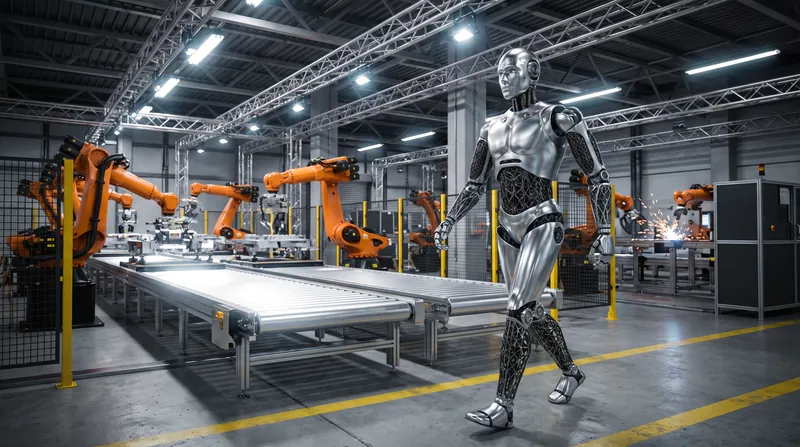
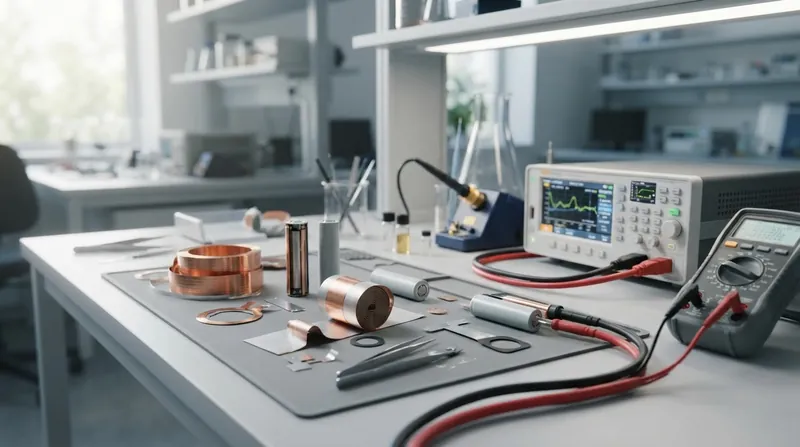
Constant-Current Charging Limits and Copper Dissolution: Why EV Batteries Degrade at Extreme Charges
5 sources
Drivetrain Engineering
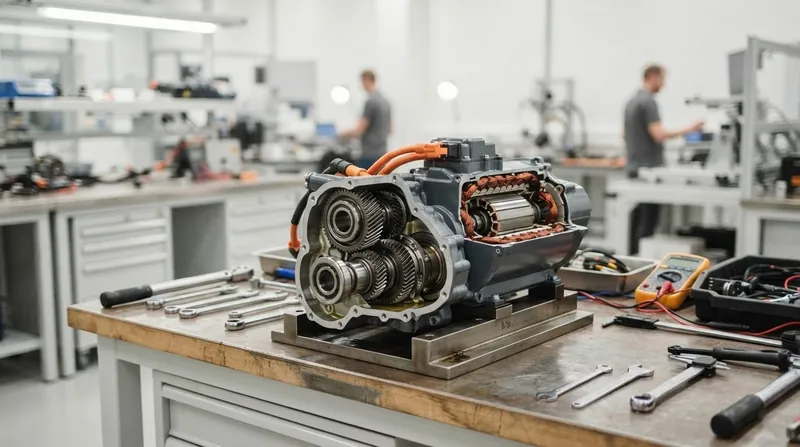
How Instant Torque and Field Weakening Replaced the Car Transmission
4 sources
EV Adoption
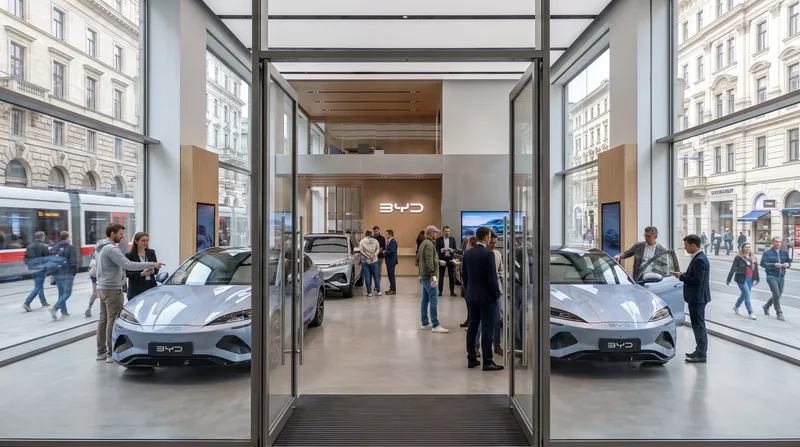
Chinese Automakers Account for 84% of European Car Market Growth, Surpassing 1 Million Sales
4 sources
Battery Tech
The Mechanism of Cold-Weather Charging: Why Lithium-Ion Batteries Reject Fast Currents Below Freezing
8 sources
Comments
Every angle. Every day.
Get Technology stories with full source coverage and perspective breakdowns, free every day.