
South Korea's Kospi Triggers Circuit Breakers in 7.6% Drop as Chip Giants Plunge
The South Korean stock market halted trading after a massive selloff in semiconductor shares erased months of gains. The rout was driven by renewed U.S. inflation fears and growing doubts about the profitability of artificial intelligence infrastructure.
By Madison Lane

Share this story
The Korea Composite Stock Price Index (KOSPI) shed 454.59 points to close at 5,554.22 on October 15, marking a 7.57 percent collapse that erased months of gains. The selloff was severe enough to trip a Level 1 circuit breaker at 12:38 p.m. local time, halting all trading on the national exchange for twenty minutes.[1][3]
The rout was driven by a sudden repricing of the artificial intelligence infrastructure boom, triggered by hotter-than-expected inflation data from the United States. With U.S. consumer prices rising and demonstrating sticky inflation trends, markets rapidly priced in the likelihood of further Federal Reserve rate hikes in the coming months.[1][2]
For global investors and domestic retail traders, the stakes are immediate: higher borrowing costs threaten the massive capital expenditures required to build AI data centers. Because South Korea's economy relies heavily on supplying the memory chips that power those facilities, any pullback in U.S. tech spending directly threatens Korean corporate earnings.[2][3]
The breadth of the selloff underscored the severity of the market's anxiety. The index briefly fell more than 9 percent to an intraday low of 5,450.81, slipping below the 5,500 mark before paring some of its losses toward the close.[1][3]
The Semiconductor Selloff
The damage was concentrated in the semiconductor sector, which anchors the South Korean market and drives its export economy. Samsung Electronics, the world's largest memory chip maker and a bellwether for global tech demand, saw its shares plummet roughly 10 percent during the chaotic trading session.[1]
Its primary domestic rival suffered an even steeper decline. SK Hynix, a critical supplier of high-bandwidth memory for AI processors, tumbled in tandem with Samsung. The two companies alone account for a massive share of the KOSPI's weighting, dragging the broader index down with them.[1][3]
Foreign investors drove the exodus, executing massive net sales on the main bourse. The Dong-A Ilbo reported that foreign outflows exceeded 5 trillion won, overwhelming the dip-buying efforts of retail and institutional investors who attempted to purchase the discounted shares.[1][3]
The offshore selloff immediately spilled over into currency markets, putting severe pressure on the South Korean won. The currency weakened past the 1,350-per-dollar mark, hitting an intraday low of 1,353 as foreign capital rapidly exited the Seoul market.[1][3]
The panic was not limited to the primary exchange. The tech-heavy KOSDAQ index also suffered a 7.65 percent drop, closing at 760.82. It had triggered its own circuit breaker earlier in the session, marking the first time since July 29 that both South Korean markets halted trading on the same day.[1][3]
The Cost of Capital
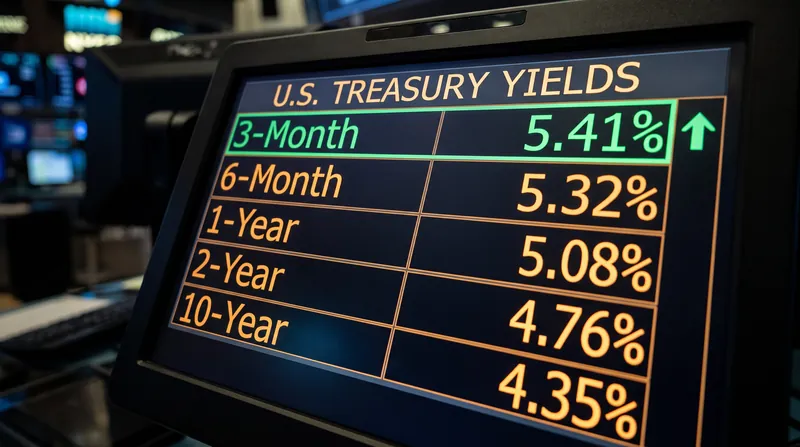
The immediate catalyst for the selloff originated in the U.S. bond market. As inflation data raised the prospect of sustained high interest rates, yields on corporate debt issued by AI infrastructure firms spiked, altering the financial calculus for tech expansion.[2][3]
CoreWeave, a major U.S. AI cloud computing provider, experienced a sharp drop in the price of its corporate bonds. When financing costs rise to those levels, the mathematical viability of building new data centers deteriorates, prompting investors to dump the hardware suppliers that depend on those build-outs.[3]
The broader U.S. market had already signaled this vulnerability the previous night. A technology-led Wall Street selloff sent the Philadelphia Semiconductor Index sliding, demonstrating the vulnerability of hardware valuations to shifting monetary policy and sticky inflation metrics that refuse to cool to the central bank's target.[2]
This dynamic has intensified scrutiny of the AI industry's mounting debt and uncertain returns on investment. Fears that persistently high borrowing costs could squeeze AI companies have prompted investors to rapidly reassess the growth premiums assigned to Asian hardware manufacturers.[3]
The broader South Korean economy is uniquely exposed to this specific vulnerability. Because the nation banked heavily on the AI supercycle for its recent equity gains, the sudden reversal leaves few alternative sectors to absorb the capital flight, leaving the KOSPI nearly 40 percent below its record high in June.[3]
Market Safeguards Activated
The speed of the decline triggered multiple mechanical safeguards within the domestic market. Before the main circuit breaker halted all activity, the exchange had already deployed a sell-sidecar at 9:07 a.m., temporarily suspending sell orders in index futures-linked program trading.[1][3]
These cascading interventions highlight the severity of the downward pressure. The KOSPI 200 Volatility Index, a measure of expected market turbulence, jumped 23.31 percent from the previous day to 55.38, surpassing the 55 threshold for the first time since late August.[3]
The Korea Exchange's circuit breaker mechanism is designed to interrupt exactly this type of unchecked liquidation. By halting trading for twenty minutes across the entire board, the exchange forces a mandatory cooling-off period, though it cannot establish a price floor or guarantee a subsequent rebound once the market finally reopens.[1]
The mechanism functioned as intended, allowing the KOSPI to recover slightly from its steepest intraday depths. However, the sheer volume of foreign selling ensured that the index still closed at its lowest level since April 7, extending its losing streak to seven consecutive trading days.[1][3]
The Path Forward
The convergence of these macroeconomic factors leaves the South Korean market searching for a floor. With the KOSPI's total market capitalization having fallen by about 2,868 trillion won since its June peak, the damage extends far beyond a single trading session.[3]
Investors are now weighing the dual threats of shrinking AI capital expenditures and a weakening domestic currency. The next verifiable checkpoint will be the upcoming U.S. Federal Reserve meeting, which will dictate the cost of capital for the global tech sector and determine whether the current hardware selloff deepens.[2][3]
Key points
- The KOSPI plunged 7.57 percent, triggering a 20-minute market-wide trading halt after falling more than 8 percent intraday.
- Samsung Electronics and SK Hynix led the collapse, shedding roughly 10 percent amid heavy foreign selling.
- The selloff was catalyzed by hotter-than-expected U.S. inflation data, which raised fears of sustained high interest rates squeezing AI infrastructure investments.
- The South Korean won weakened past the 1,350-per-dollar mark as foreign investors offloaded trillions of won in domestic equities.
Unanswered questions
- Whether the U.S. Federal Reserve will actually proceed with further rate hikes in response to the September inflation data.
- The exact threshold at which foreign capital outflows from the South Korean market will stabilize.
- How long the current financing bottleneck for U.S. AI infrastructure companies will persist before affecting actual hardware orders.
- The full extent of the institutional response; international press coverage of the domestic regulatory reaction remains thin at this hour.
- Macroeconomic Analysts
- Argues that the selloff is a rational repricing of AI infrastructure costs due to sustained high U.S. interest rates.
- Domestic Market Observers
- Focuses on the systemic risk the semiconductor downturn poses to South Korea's broader economic stability and currency.
Perspectives this story doesn't cover
- Retail investors facing forced liquidations
- U.S. AI infrastructure companies driving the demand
Sources
Source coverage
3 outlets
2 viewpoints surfaced



- [1]The Korea HeraldDomestic Market Observers
Kospi slides over 7% as chip stocks sink
Read on The Korea Herald → - [2]StreetInsiderMacroeconomic Analysts
South Korea's KOSPI closes at 6-month low as chipmakers slump on AI worries
Read on StreetInsider → - [3]The Dong-A IlboMacroeconomic Analysts
KOSPI plunges 7.57% as foreign investors sell off
Read on The Dong-A Ilbo →
More in Finance
See all →Index Funds
Self-Rebalancing Cap Weights: How Passive Portfolios Adjust Without Triggering Trading Costs
4 sources

Corporate Finance
How Tradeable Subscription Rights Neutralize Share Dilution in Secondary Offerings
5 sources

Telecom Disruption
SpaceX's $8 Billion Spectrum Purchase Erases $39 Billion From Major Telecom Stocks
4 sources
Industrial Software
Schneider Electric Agrees to $22.6 Billion All-Cash Takeover of Industrial Software Maker PTC
5 sources
Comments
Every angle. Every day.
Get Finance stories with full source coverage and perspective breakdowns, free every day.