
Invasive Vagus Nerve Stimulation Shows Sustained Two-Year Remission in Severe Treatment-Resistant Depression
New data from the landmark RECOVER trial reveals that a pacemaker-like implant provides durable, multi-year relief for patients who have exhausted all other depression treatments.
By Aylin Aksoy

In short
- The RECOVER trial tracked 214 patients with severe treatment-resistant depression over a 24-month period.
- 80 percent of patients who saw a meaningful benefit at 12 months maintained that benefit at two years.
- Over 20 percent of treated patients achieved full clinical remission, exhibiting essentially zero depressive symptoms.
Treatment-resistant depression (TRD) is widely considered one of the most grueling and intractable challenges in modern psychiatry, leaving millions of patients without a viable path forward. For up to a third of all individuals diagnosed with major depressive disorder, standard interventions—ranging from first-line SSRI medications to intensive cognitive behavioral therapy—simply do not work.
These patients find themselves trapped in a relentless cycle of profound despair, unable to find a biological or psychological foothold to pull themselves out of the illness. The medical community has long struggled to offer these individuals anything more than temporary, fleeting relief.[3]
Patients suffering from severe treatment-resistant depression often spend decades cycling through dozens of drug combinations, enduring the side effects of heavy pharmacological regimens to no avail. When medications fail, many turn to intensive interventional psychiatry, including electroconvulsive therapy (ECT) and transcranial magnetic stimulation (TMS).
Yet, even when these advanced treatments provide a glimmer of hope, the relief is almost always temporary. The defining tragedy of severe TRD is not just the crushing depth of the depressive episodes, but the sheer inevitability of the relapse, which slowly erodes a patient's hope over a lifetime.
Now, landmark data from a massive, multi-year clinical trial is fundamentally rewriting the prognosis for this exact patient population. Published in January 2026 in the International Journal of Neuropsychopharmacology, the highly anticipated RECOVER trial provides the most robust evidence to date that invasive vagus nerve stimulation (VNS) can deliver what other treatments cannot. The data demonstrates that this surgical intervention offers durable, multi-year remission for patients who have exhausted every other option in the psychiatric playbook, marking a historic turning point in the management of chronic depression.[1]
Vagus nerve stimulation is not an entirely new concept in the medical field—the United States Food and Drug Administration originally approved the therapy for depression back in 2005. However, its widespread clinical adoption has been severely bottlenecked for nearly two decades by a lack of definitive, long-term efficacy data.
The RECOVER trial was designed specifically to fill this glaring void in the medical literature, tracking a large cohort of patients over a 24-month period to determine if the initial benefits of the surgically implanted device would actually stand the test of time.[2]
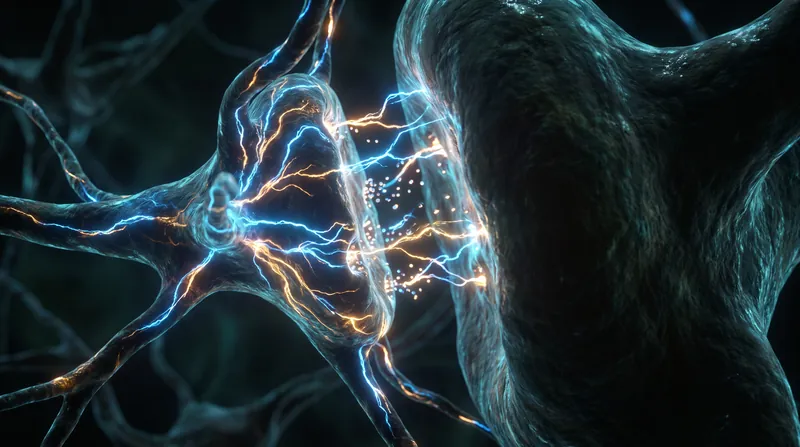
The biological mechanism behind VNS relies on the vagus nerve's unique anatomical role as the body's primary superhighway of communication, linking the internal organs directly to the brain. To harness this pathway, a small, pacemaker-like device is surgically implanted under the skin in the patient's upper chest. A thin, flexible wire is then carefully threaded beneath the skin and wrapped around the left vagus nerve in the neck, creating a direct electrical bridge between the implant and the patient's central nervous system.
Once the device is activated by a physician, it delivers carefully calibrated electrical pulses at regular, automated intervals throughout the day and night. These electrical signals travel up the vagus nerve and directly into the brainstem, specifically targeting deep-brain regions like the locus coeruleus and the raphe nuclei. These specific areas are heavily responsible for producing and regulating critical mood-altering neurotransmitters, such as serotonin and norepinephrine, effectively stimulating the brain's own chemical factories to restore a healthy baseline.[3]
The sheer scale and demographic makeup of the RECOVER trial make its findings particularly significant for the psychiatric community. The trial enrolled 214 participants across 84 different clinical sites in the United States, representing what lead researchers at Washington University School of Medicine described as the sickest treatment-resistant population ever studied. On average, the participants had suffered from continuous or recurring depression for an astonishing 29 years, and had failed an average of 13 different treatment regimens before entering the study.
To ensure the integrity of the data, the RECOVER trial utilized a rigorous, double-blinded design during its first year. While the VNS devices were surgically implanted in all 214 patients, only half of the devices were actually turned on, allowing researchers to establish a strict baseline and account for any surgical placebo effect. After the first 12 months, the blinding was lifted, revealing that nearly 70 percent of the patients receiving active electrical stimulation had experienced a clinically meaningful reduction in their severe depressive symptoms.
The true clinical breakthrough, however, emerged at the two-year mark, answering the most critical question in the field of treatment-resistant depression. The central objective of the RECOVER trial was to determine whether the patients who improved during year one would maintain that hard-won improvement, or if the depression would inevitably return, as it so often does with medications and electroconvulsive therapy. The durability of the response is the ultimate metric of success when dealing with a chronic, lifelong psychiatric illness.[1]
The two-year results were entirely unprecedented for a population with this level of illness severity. According to the published trial data, a remarkable 80 percent of the participants who achieved a clinically meaningful benefit at the 12-month mark maintained that exact level of benefit—or improved even further—at 24 months. This incredibly low rate of relapse stands in stark contrast to the typical trajectory of severe TRD, proving that the electrical stimulation provides a stable, long-lasting foundation for mental health.
Even more striking than the sustained response rate was the number of patients who achieved total freedom from the disease. Over 20 percent of the treated patients achieved full clinical remission by the end of the second year, meaning they exhibited essentially zero depressive symptoms on standardized psychiatric evaluations. For individuals who had been paralyzed by severe depression for decades, unable to work or maintain relationships, reaching a state of total remission for a sustained period is a life-altering clinical milestone.
The trial data also uncovered a fascinating delayed-response phenomenon that is unique to neuromodulation therapies. Among the patients who did not show a meaningful improvement during the first 12 months of active stimulation, approximately 30 to 38 percent eventually responded and achieved significant clinical benefit during their second year of treatment. This finding suggests that for a substantial portion of the population, the brain requires an extended period of continuous stimulation before it can successfully break out of its depressed state.
This delayed efficacy highlights a core biological mystery of vagus nerve stimulation: unlike fast-acting pharmaceutical interventions or ketamine infusions, VNS appears to trigger slow, compounding neuroplastic changes within the brain's architecture. The steady rhythm of electrical pulses gradually rewires entrenched neural circuits over a period of months and years. This slow-burn mechanism explains why the clinical benefits of VNS tend to deepen and solidify over time, rather than fading away as the brain builds a tolerance.[3]
From a safety and tolerability perspective, the two-year data confirmed that the long-term use of the chest implant is generally well-tolerated by patients. Because the stimulation is localized to the vagus nerve, it avoids the systemic side effects associated with heavy psychiatric medications, such as weight gain or emotional blunting. The most common side effects are directly related to the electrical pulses themselves, including temporary voice alteration, a mild cough, or a tingling sensation in the neck, with no new psychiatric safety signals emerging over the 24 months.[1]
Despite the overwhelming clinical success demonstrated in the RECOVER trial, the primary barrier to widespread VNS adoption remains deeply rooted in the American healthcare system's financial structures. The surgical implantation procedure and the proprietary device itself carry a significant upfront cost, often running into the tens of thousands of dollars. Both Medicare and private health insurance companies have historically restricted coverage for the procedure, demanding exactly the kind of long-term, multi-year durability data that the RECOVER trial has now successfully produced to justify the initial surgical investment.
Because the RECOVER trial was explicitly designed in close coordination with the Centers for Medicare and Medicaid Services (CMS) under their strict framework for 'Coverage with Evidence Development,' these new findings are expected to force a major reevaluation of insurance policies across the United States. The trial data directly answers the government's demand for proof that the upfront cost of the surgery prevents the massive downstream costs associated with chronic depression, such as repeated hospitalizations and lifelong disability care.[2]
If CMS moves to expand standard coverage based on this definitive two-year data, private insurance companies are highly likely to follow suit in short order. This administrative shift would fundamentally transform vagus nerve stimulation from an inaccessible, out-of-pocket last resort into a standard, fully covered maintenance option for severe TRD. For clinical psychiatrists, having guaranteed access to a durable neuromodulation tool would drastically alter how they approach long-term care for their most vulnerable and treatment-resistant patients.
If CMS moves to expand standard coverage based on this definitive two-year data, private insurance companies are highly likely to follow suit in short order.
For the millions of patients who have exhausted the traditional psychiatric playbook and lost years of their lives to the disease, the RECOVER data offers a profound and necessary shift in perspective. It proves that even after decades of relentless illness, structural functional impairment, and dozens of failed pharmacological treatments, the human brain retains the remarkable capacity to heal. Vagus nerve stimulation has demonstrated that long-term remission is not just a theoretical hope, but a biologically achievable reality.[3]
Key terms
- Treatment-Resistant Depression (TRD)
- Major depressive disorder that has not responded to multiple adequate trials of standard antidepressant medications or therapies.
- Vagus Nerve
- A major cranial nerve that serves as the primary communication highway between the brain and the body's internal organs.
- Neuroplasticity
- The brain's ability to reorganize itself by forming new neural connections over time.
- Remission
- A clinical state where the symptoms of a disease are essentially absent or reduced to a sub-clinical level.
Frequently asked
How does vagus nerve stimulation work for depression?
A small device implanted in the chest sends electrical pulses to the vagus nerve in the neck, which carries the signals directly to mood-regulating areas of the brainstem.
How long does it take for VNS to start working?
Unlike fast-acting medications, VNS typically takes 4 to 8 months to produce noticeable improvements, as it gradually rewires neural circuits over time.
What are the side effects of the VNS implant?
The most common side effects occur during the electrical pulses and include temporary voice alteration, a mild cough, or a tingling sensation in the neck.
Is VNS covered by insurance?
Coverage has historically been limited, but the new two-year data from the RECOVER trial was specifically designed to help secure broader Medicare and private insurance approval.
Viewpoints in depth
Clinical Researchers
Focusing on the unprecedented durability of the response in a highly refractory population.
For the scientists and psychiatrists who conducted the RECOVER trial, the most significant finding is not just that VNS works, but that its effects compound over time. In a field where the sickest patients almost always relapse within months of a new treatment, seeing 80 percent of responders maintain their benefit at the two-year mark is a paradigm shift. Researchers emphasize that VNS should no longer be viewed as an experimental last resort, but as a proven maintenance therapy for chronic illness.
Healthcare Payers
Cautious about the upfront surgical costs, demanding the long-term efficacy data that RECOVER now provides.
Insurance companies and Medicare administrators have historically balked at the high upfront costs of surgical implantation for a psychiatric condition. Their primary argument has been the lack of definitive, multi-year evidence proving that the device prevents expensive future hospitalizations. With the RECOVER trial specifically designed to meet the Centers for Medicare and Medicaid Services' evidence requirements, payers are now facing a robust dataset that justifies the initial investment through long-term clinical stability.
Patients & Advocates
Valuing the return of daily function and quality of life after decades of suffering.
For patient advocacy groups, the VNS data represents a lifeline for a demographic that is often written off by the medical system. Participants in the trial had been depressed for an average of 29 years, losing careers, relationships, and decades of functional life. Advocates stress that even a 30 percent reduction in symptoms—the trial's threshold for a meaningful response—can be the difference between total paralysis and the ability to engage with the world, making the push for universal insurance coverage a moral imperative.
- Clinical Researchers
- Focusing on the unprecedented durability of the response in a highly refractory population.
- Patients & Advocates
- Valuing the return of daily function and quality of life after decades of suffering.
- Healthcare Payers
- Cautious about the upfront surgical costs, demanding the long-term efficacy data that RECOVER now provides.
Perspectives this story doesn't cover
- Surgical specialists performing the implantations
- Patients who experienced device failure or removal
Sources
Source coverage
3 outlets
3 viewpoints surfaced



- [1]International Journal of NeuropsychopharmacologyClinical Researchers
Durability of the benefit of vagus nerve stimulation in markedly treatment-resistant major depression: a RECOVER trial report
Read on International Journal of Neuropsychopharmacology → - [2]ClinicalTrials.govClinical Researchers
A Prospective, Multi-center, Randomized Controlled Blinded Trial Demonstrating the Safety and Effectiveness of VNS Therapy® System
Read on ClinicalTrials.gov → - [3]Factlen Editorial TeamPatients & Advocates
Synthesis by Factlen editorial team
Read on Factlen Editorial Team →
More in Health
See all →Digital Therapeutics
FDA Clears Motivista as First Digital Treatment for Negative Symptoms of Schizophrenia
6 sources

Antidepressant Deprescribing
Hyperbolic Serotonin Transporter Saturation Concentrates Most Withdrawal in the Final Milligrams of Antidepressant Deprescribing
11 sources

Cellular Biology
The Apoptosis Bottleneck: How Intrinsic and Extrinsic Pathways Converge on the Caspase Cascade
11 sources

Psychedelic Medicine
Definium Therapeutics' Single-Dose LSD Therapy Clears Second Phase 3 Trial for Generalized Anxiety Disorder
6 sources

Comments
Every angle. Every day.
Get Health stories with full source coverage and perspective breakdowns, free every day.