
How the US Intervention in Venezuela Rewrites the Rules of State Sovereignty and Energy Security
The January 2026 military operation to capture Nicolás Maduro bypassed international law, setting a new precedent for how global powers secure strategic resources.
By Lila Morgan

In short
- The January 2026 U.S. intervention in Venezuela bypassed traditional international law, using domestic criminal indictments to justify military force.
- Despite holding 300 billion barrels of proven reserves, Venezuela's heavy, high-sulfur crude requires massive investment to extract and refine.
- Legal scholars warn the operation establishes a dangerous precedent, effectively creating a 'resource-enforcement exception' to state sovereignty.
When U.S. forces launched Operation Absolute Resolve in January 2026, the immediate assumption was that Washington had secured a limitless, ready-to-pump energy windfall. By capturing Nicolás Maduro and asserting control over a nation holding 300 billion barrels of proven oil reserves, the administration appeared to have executed the ultimate resource grab.[2]
But the reality of those reserves is far more complicated, and the true legacy of the intervention lies not in the oil it secured, but in the international laws it dismantled. The operation bypassed the United Nations Security Council entirely, relying instead on domestic U.S. narcotics indictments to justify a military strike against a sovereign head of state.[1]
This legal maneuver effectively created what scholars are calling a "resource-enforcement exception" to the post-1945 Westphalian order. By framing the invasion as a law enforcement action rather than a war of conquest, the U.S. sidestepped the UN Charter's prohibition on the use of force, setting a precedent that deeply alarms international legal experts.[1][6]
The economic justifications for the intervention were laid bare almost immediately. Within days of the operation, the administration announced plans to "get the oil flowing" and extract an initial 30 to 50 million barrels to offset the costs of the transition.
Yet, energy economists quickly pointed out the glaring flaw in this strategy: Venezuela's oil does not simply flow. The vast majority of the country's 300 billion barrels is located in the Orinoco Belt and consists of ultra-heavy, high-sulfur crude.[2]
As researchers at UC Berkeley noted, this crude comes out of the ground with the consistency of cold peanut butter. It cannot be pumped into a standard pipeline or refined in a typical facility; it requires specialized, highly expensive "coker" refineries to process into usable products.[2]
Furthermore, the state-owned oil company, PDVSA, has suffered from decades of institutional decay. Following the nationalization of the industry in 1976 and the subsequent politicization of its revenues, the company experienced a massive brain drain.[5]
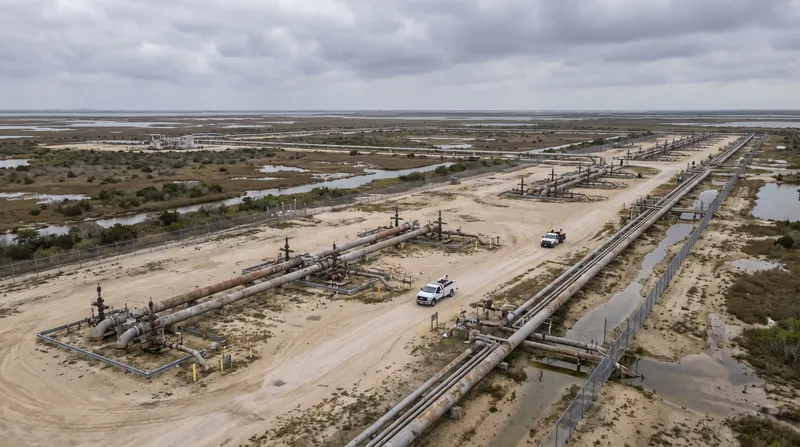
Skilled engineers were replaced by political loyalists, and revenues that should have been reinvested in infrastructure were instead diverted to fund social programs. By the time the U.S. intervened, the infrastructure was rusting, pipelines were leaking, and production had plummeted to a fraction of its historical peak.[4][5]
Reversing this decline requires more than just a change in management; it requires hundreds of billions of dollars in capital investment and years of sustained effort. Independent estimates suggest that only about 10 percent of Venezuela's headline reserves are actually economically recoverable under current market conditions.[6]
The environmental costs of reviving this carbon-intensive industry are equally staggering. The extraction and refining of Orinoco crude emit significantly more greenhouse gases than lighter alternatives.
Ramping up production using decaying wellheads and aging pipelines dramatically increases the risk of catastrophic oil spills and methane leaks, raising urgent questions about the environmental liability of the occupying forces.
Despite these economic and environmental hurdles, the geopolitical logic of the intervention remains clear. For Washington, removing a government that had increasingly aligned with Russia and China was a strategic imperative.[3][4]
The operation served as a brutal reassertion of U.S. hegemony in the Western Hemisphere, signaling to rival powers that the Americas remain firmly under Washington's security umbrella.[3]
Ultimately, the intervention in Venezuela represents a profound shift in global governance. It demonstrates that when strategic resources and great-power competition are at stake, the world's preeminent military power is willing to discard the normative constraints of international law.[1][4]
Whether the U.S. can actually turn Venezuela's heavy sludge into a profitable energy asset remains to be seen. But the geopolitical shockwaves of Operation Absolute Resolve have already rewritten the rules of sovereignty for the 21st century.[6]
How we did this
- Method
- A comparative legal and economic synthesis of the January 2026 intervention, cross-referencing international legal frameworks (UN Charter) against stated US energy security objectives and geological realities.
- What we found
- The intervention establishes a new geopolitical precedent where domestic legal enforcement (narcotics indictments) and energy security imperatives are treated as superseding traditional Westphalian sovereignty, effectively creating a 'resource-enforcement exception' to international law.
- What we worked from
- Venezuela's proven oil reserves: 300 billion barrels — UC Berkeley Haas
- US stated extraction goal: 30-50 million barrels
- Limits of this analysis
- This analysis relies on early economic estimates of extraction viability and cannot predict the ultimate legal rulings of international courts regarding the seizure of state assets.
Terms to know
- Westphalian Sovereignty
- The principle in international law that each state has exclusive sovereignty over its territory, and external powers should not interfere in its domestic affairs.
- Orinoco Belt
- A territory in the southern strip of the eastern Orinoco River Basin in Venezuela, which holds the majority of the country's heavy crude oil reserves.
- API Gravity
- A measure of how heavy or light a petroleum liquid is compared to water; Venezuela's heavy crude has a very low API gravity, making it dense and difficult to extract.
- Resource Nationalism
- The tendency of people and governments to assert control over natural resources located on their territory, often leading to the nationalization of foreign-owned assets.
Questions readers ask
Did the UN authorize the U.S. intervention in Venezuela?
No. The military operation was conducted unilaterally by the United States without UN Security Council authorization, leading to widespread condemnation from international legal scholars.
Why is Venezuela's oil so difficult to refine?
Most of Venezuela's reserves consist of heavy, high-sulfur crude from the Orinoco Belt. It requires specialized, expensive 'coker' refineries to process into usable products like gasoline.
What was the official U.S. justification for the operation?
The U.S. justified the capture of Nicolás Maduro by citing longstanding federal indictments for narco-terrorism and drug trafficking, framing the military strike as a law enforcement action.
Different angles
The Legal Consensus
How international law views the breach of sovereignty.
Legal scholars overwhelmingly view Operation Absolute Resolve as a manifest violation of the UN Charter's prohibition on the use of force. Because the operation lacked UN Security Council authorization and was not a response to an armed attack, it bypassed the established exceptions for self-defense. By justifying the military action through domestic narcotics indictments, the U.S. effectively asserted that its internal legal enforcement supersedes the Westphalian principle of state sovereignty, a move critics warn could unravel the post-1945 international order.
The Economic Reality Check
Why 300 billion barrels doesn't equal immediate wealth.
While the headline figure of 300 billion barrels suggests a limitless windfall, energy economists point out that the vast majority of this crude is located in the Orinoco Belt and possesses the consistency of cold peanut butter. Extracting and refining this heavy, high-sulfur oil requires complex 'coker' refineries and massive capital investment. Decades of institutional decay, brain drain, and underinvestment at the state-owned PDVSA mean that ramping up production will take years and billions of dollars, making the short-term economic benefits highly questionable.
The Strategic Hegemony Argument
The realist view of securing the Western Hemisphere.
For geopolitical realists, the intervention was less about immediate oil extraction and more about reasserting U.S. dominance in the Americas. By removing a government that had increasingly aligned with Russia and China, Washington signaled a zero-tolerance policy for rival great-power influence in its hemisphere. This approach prioritizes long-term strategic denial over short-term legal norms, ensuring that Venezuela's resources—and its geographic position—cannot be leveraged by U.S. adversaries during periods of global tension.
- International Legal Scholars
- Argue the intervention fundamentally violated the UN Charter and the prohibition on the use of force, setting a dangerous precedent for sovereignty.
- Energy Economists
- Focus on the logistical and chemical realities of Venezuelan crude, arguing that the geopolitical risk outweighs the economic reward.
- Geopolitical Realists
- View the intervention as a necessary reassertion of U.S. hegemony in the Western Hemisphere to counter Chinese and Russian influence.
Perspectives this story doesn't cover
- Venezuelan civilians
- OPEC member states
Sources
Source coverage
6 outlets
3 viewpoints surfaced






- [1]VerfassungsblogInternational Legal Scholars
The End of an Era? On US Intervention in Venezuela and Its Consequences
Read on Verfassungsblog → - [2]UC Berkeley HaasEnergy Economists
Too dirty, too late? Why the economics of Venezuela's oil don't pencil out
Read on UC Berkeley Haas → - [3]Columbia University SIPAGeopolitical Realists
Rapid Response: Venezuela — What Happens Next?
Read on Columbia University SIPA → - [4]GIS ReportsEnergy Economists
Global oil market dynamics after U.S. intervention in Venezuela
Read on GIS Reports → - [5]PolityEnergy Economists
The Political Economy of Oil in Venezuela: Power, Policy, and Persistent Decline
Read on Polity → - [6]Factlen Editorial TeamGeopolitical Realists
Synthesis by Factlen editorial team
Read on Factlen Editorial Team →

More in Content Types
See all →Media Economics
Evaluating the Nonprofit News Shift: The Revenue Models Replacing Commercial Journalism
6 sources

Dimensionality Reduction
Finding the Orthogonal Axes: How Principal Component Analysis Maximizes Variance to Compress High-Dimensional Data
8 sources

Satellite Navigation
Calculating Coordinates: The Relativity and Trilateration Mechanics Powering Global Positioning
7 sources

Energy Infrastructure
The Mechanics of the US Strategic Petroleum Reserve: How It Actually Works and the Evidence on Price Impact
5 sources
Comments
Every angle. Every day.
Get Content Types stories with full source coverage and perspective breakdowns, free every day.