
How Next-Generation Geothermal Energy is Solving the AI Power Crunch
As artificial intelligence drives unprecedented electricity demand, tech giants are turning to enhanced geothermal systems to provide clean, uninterrupted baseload power.
By Factlen Editorial Team
- Clean Energy Advocates
- Focus on EGS as a zero-carbon baseload replacement for fossil fuels.
- Tech Industry Leaders
- Prioritize securing reliable, 24/7 clean power to fuel AI data center growth.
- Grid Operators & Regulators
- Emphasize grid stability, consumer protection, and transmission infrastructure.
What's not represented
- · Local communities near proposed drilling sites
- · Fossil fuel industry analysts
Why this matters
Artificial intelligence requires massive amounts of 24/7 electricity, threatening to overwhelm aging power grids. Enhanced geothermal technology offers a breakthrough solution: clean, renewable energy that runs around the clock, potentially preventing a collision between the AI boom and global climate goals.
Key points
- AI data centers require massive amounts of 24/7 electricity, straining current grid infrastructure.
- Enhanced Geothermal Systems (EGS) offer a clean, continuous baseload power alternative to fossil fuels.
- Tech giants are increasingly investing in EGS to meet their net-zero climate pledges while expanding AI capabilities.
- High upfront drilling costs and transmission bottlenecks remain the primary hurdles to widespread EGS adoption.
The artificial intelligence boom is colliding with a physical wall: electricity. In June 2026, the Federal Energy Regulatory Commission issued a stark warning that the United States electric grid is not equipped to handle the massive influx of power-hungry data centers. Regulators are actively seeking unprecedented interventions to connect these facilities without passing the immense infrastructure costs onto everyday consumers.[1][2]
The core of the problem lies in the specific type of power required by hyperscale computing. Traditional renewable energy sources like solar and wind are intermittent, meaning they only generate electricity when the sun shines or the wind blows. However, AI data centers require firm baseload power, meaning they must run continuously, 24 hours a day, 365 days a year, without interruption.[6][7]
To bridge this critical gap, tech giants and energy startups are turning to an old idea revitalized by cutting-edge technology: geothermal energy. Specifically, Enhanced Geothermal Systems are rapidly emerging as the gold standard for clean, firm power that can satisfy the tech industry's voracious appetite while adhering to strict corporate net-zero pledges.[5][7]
Understanding the breakthrough requires looking at how traditional geothermal energy works. Historically, geothermal power has relied on naturally occurring underground hot springs, geographically limiting plants to specific regions like Iceland or California's geysers. Enhanced Geothermal Systems bypass this geographic lottery by engineering artificial reservoirs where none naturally exist.[4][7]
The mechanism borrows heavily from the oil and gas industry but eliminates the hydrocarbons. Engineers drill deep into hot, dry rock formations miles below the Earth's surface. They then inject fluid at high pressure to create a network of tiny, permeable fractures in the solid granite, effectively building a subterranean radiator.[3][4]

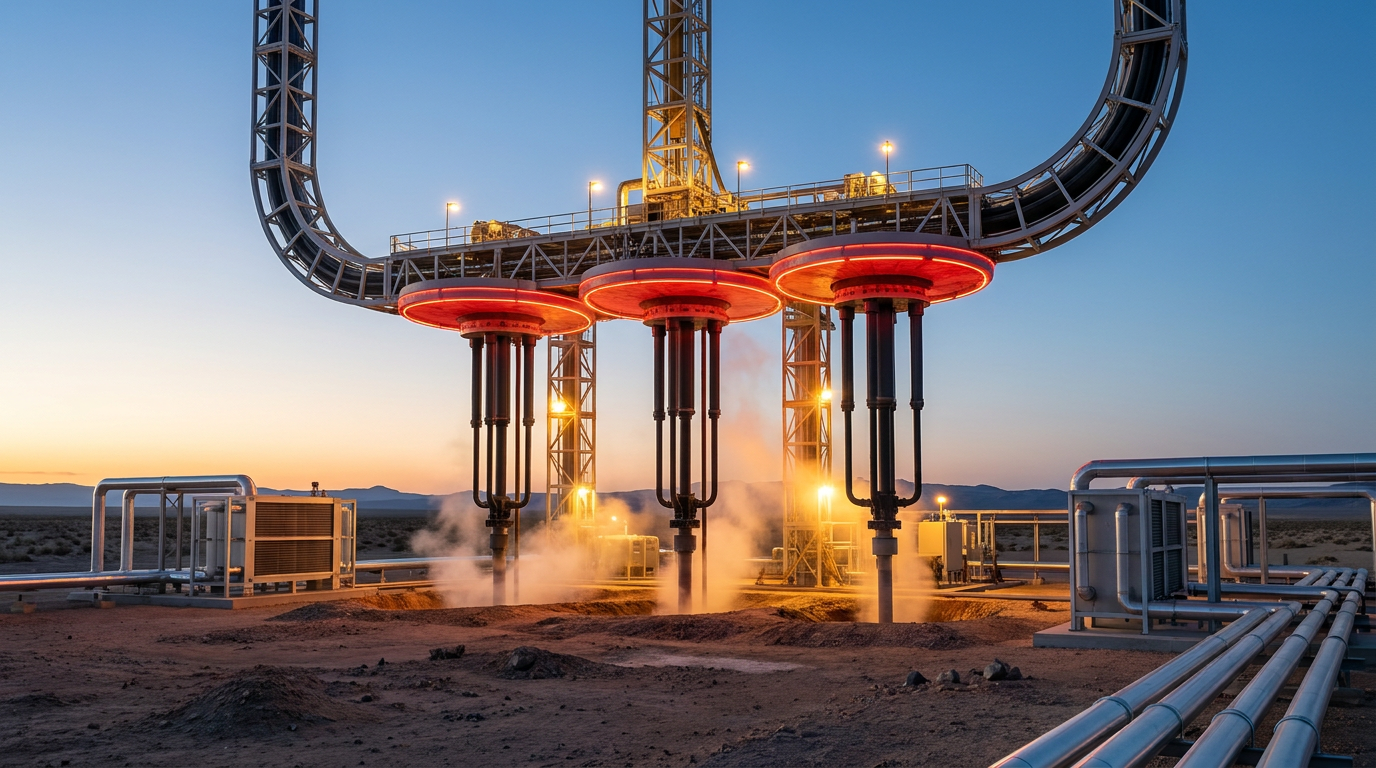
Once the artificial reservoir is established, water is circulated down an injection well and through the newly created fractures. As the water travels through the deep rock, it absorbs the Earth's immense natural heat. The superheated fluid is then brought back to the surface through a production well, where it drives a turbine to generate electricity before being cooled and reinjected in a continuous, closed loop.[3][7]
Once the artificial reservoir is established, water is circulated down an injection well and through the newly created fractures.
This technology is no longer confined to theoretical models or small-scale pilot programs. Companies specializing in next-generation geothermal have successfully brought commercial-scale projects online, proving that the technology can operate reliably and deliver consistent baseload power to the grid.[3][5]
Major technology corporations have taken notice and are aggressively funding the sector. Industry leaders like Google and Microsoft have signed first-of-their-kind power purchase agreements, committing to buy next-generation geothermal electricity to power their massive data center campuses in Nevada and other critical infrastructure hubs.[5][7]
For grid operators struggling to balance supply and demand, enhanced geothermal is a highly attractive asset. Because it provides stable, continuous power, it perfectly complements intermittent renewables. A geothermal plant can seamlessly step in to provide electricity when solar generation drops off in the evening, which is exactly when grid strain typically peaks.[2][4]

The federal government is also throwing its weight behind the technology. The US Department of Energy's Enhanced Geothermal Shot initiative aims to slash the cost of these systems by 90 percent, targeting a price of $45 per megawatt-hour by 2035. This aggressive federal backing is designed to accelerate private investment and rapid deployment across the country.[4][7]
Despite the immense optimism, the sector faces significant hurdles. Drilling deep into hard, abrasive granite is technically challenging and highly capital-intensive. The upfront costs for constructing an enhanced geothermal plant remain significantly higher than building a comparable solar farm or natural gas facility.[5][6]
Furthermore, regulatory and permitting bottlenecks pose a severe threat to deployment timelines. Securing the rights to drill and, more importantly, connecting a new power plant to the transmission grid can take several years. These delays clash directly with the rapid, exponential growth timelines demanded by AI developers.[1][7]

If costs continue to fall and drilling technologies improve as projected, the potential scale is staggering. The Department of Energy estimates that enhanced geothermal could unlock up to 90 gigawatts of firm, flexible power in the United States alone by 2050, fundamentally reshaping the national energy landscape.[4][7]
As the world races to build the physical infrastructure required for the artificial intelligence age, enhanced geothermal systems offer a rare and critical win-win. They provide the highly reliable, continuous power the technology industry demands, delivered with the zero-carbon footprint the planet urgently requires.[6][7]
How we got here
2021
The US Department of Energy launches the Enhanced Geothermal Shot initiative to drastically reduce commercial deployment costs.
2023
Fervo Energy successfully completes a 30-day well test at its Project Red site, proving the commercial viability of EGS technology.
Early 2024
Major tech companies sign first-of-their-kind power purchase agreements for next-generation geothermal energy to power data centers.
June 2026
FERC warns that the US electric grid must adapt rapidly to handle the massive influx of power demand from AI data centers.
Viewpoints in depth
Clean Energy Advocates
View EGS as the missing puzzle piece for a fully decarbonized grid.
Environmental and clean energy advocates argue that while solar and wind are crucial, they cannot decarbonize the grid alone due to their intermittency. They champion enhanced geothermal as the ultimate 'firm' clean energy source that can replace coal and natural gas baseload plants without the radioactive waste concerns associated with nuclear power. They view federal investment in EGS as essential for meeting long-term climate goals.
Tech Industry Leaders
See geothermal as a critical enabler for sustainable AI expansion.
For hyperscalers like Google, Microsoft, and Amazon, the AI arms race is fundamentally an energy race. Tech leaders view EGS as a strategic investment to ensure their massive new data centers can operate continuously without violating their corporate net-zero climate pledges. They are willing to pay a premium for early EGS projects to help scale the technology and secure reliable power for future growth.
Grid Operators & Regulators
Cautiously optimistic but focused on near-term transmission bottlenecks.
Regulators like FERC and regional grid operators acknowledge the immense potential of geothermal to stabilize the grid. However, their immediate concern is the physical reality of connecting these new power sources. They emphasize that even the best EGS technology won't solve the AI power crunch if the United States doesn't drastically accelerate the permitting and construction of high-voltage transmission lines to move the power from remote drilling sites to data center hubs.
What we don't know
- Whether EGS costs will fall quickly enough to compete with natural gas in the near term.
- How quickly regulatory bottlenecks for transmission lines can be resolved to connect new geothermal plants to data centers.
Key terms
- Enhanced Geothermal Systems (EGS)
- A technology that creates artificial geothermal reservoirs by injecting fluid into hot, dry rock deep underground to extract heat for electricity generation.
- Baseload Power
- The minimum amount of electric power needed to be supplied to the electrical grid at any given time, requiring power plants that can run continuously.
- Intermittency
- The characteristic of renewable energy sources, like solar and wind, that do not produce power continuously due to weather conditions or time of day.
- Hyperscaler
- Large cloud service providers, such as Google, Amazon, and Microsoft, that operate massive networks of data centers to support global computing needs.
Frequently asked
Is enhanced geothermal the same as fracking?
While EGS uses similar drilling and fluid injection techniques to the oil and gas industry's hydraulic fracturing, it does not involve extracting hydrocarbons. It uses water to create a closed-loop system for heat extraction.
Can EGS power plants be built anywhere?
In theory, the Earth's crust is hot everywhere if you drill deep enough. However, current commercial technology focuses on areas where hot rock is relatively close to the surface to keep drilling costs manageable.
Why do AI data centers need so much power?
Artificial intelligence models require massive computational power to train and operate. The specialized chips used for AI consume significantly more electricity and require more intense cooling than traditional web servers.
Sources
Source coverage
7 outlets
3 viewpoints surfaced







[1]NYTGrid Operators & Regulators
Federal Energy Regulator Seeks to Limit Conflicts Over Data Centers
Read on NYT →[2]BloombergGrid Operators & Regulators
The Electric Grid Is 'Not Going To Work' As Is For Data Centers Says FERC's Swett
Read on Bloomberg →[3]Fervo EnergyTech Industry Leaders
Commercial EGS Deployment and Performance Data
Read on Fervo Energy →[4]US Department of EnergyClean Energy Advocates
Enhanced Geothermal Shot Initiative
Read on US Department of Energy →[5]MIT Technology ReviewClean Energy Advocates
How next-generation geothermal is solving the AI power crunch
Read on MIT Technology Review →[6]IEATech Industry Leaders
Electricity 2026 Report: Data Center Demand
Read on IEA →[7]Factlen Editorial TeamGrid Operators & Regulators
Synthesis by Factlen editorial team
Read on Factlen Editorial Team →


Every angle. Every day.
Get business stories with full source coverage and perspective breakdowns delivered to your inbox.