
How Ari Emanuel's Mari Acquired Venue Giant ATG Entertainment in a $6 Billion Deal
The Hollywood executive's live-events company is purchasing 70 global venues, fundamentally reshaping the economics of Broadway and the West End through vertical integration.

Ari Emanuel is buying the room where it happens. In a massive $6 billion deal announced this week, Emanuel’s live-events holding company, Mari, is acquiring ATG Entertainment from Providence Equity Partners. The transaction hands Mari the keys to 70 venues across the globe, including seven Broadway theaters and ten in London’s West End. It is a staggering bet on the enduring power of live performance, consolidating real estate, ticketing, and production under a single corporate umbrella.[1][2]
To understand the scale of the acquisition, you have to look at the marquee. ATG isn't just a landlord; it is the infrastructure beneath some of the most lucrative shows in the world. Its venues host over 16,000 performances and welcome 18 million theatergoers annually. If you have seen "The Lion King," "Wicked," or "Harry Potter and the Cursed Child" in a major market, there is a good chance you sat in an ATG-owned seat.[2][6]
Mari is a relatively new player with very deep pockets. Founded in 2025 by Emanuel—the Hollywood super-agent who built the Endeavor empire and merged WWE with the UFC—the company was designed specifically to swallow up premium live experiences. Backed by heavyweights like Apollo and RedBird Capital, Mari has spent the last year assembling a portfolio that reads like a billionaire's weekend itinerary: the Miami Open, the Frieze art fairs, and Barrett-Jackson car auctions.[1][2]
But theater is where Emanuel started his career, and it represents a unique kind of recurring revenue. "I've seen the industry reinvent itself many times, but live has only grown more powerful," Emanuel noted in the acquisition announcement. "Nothing connects great talent with audiences more directly."[6]
The ATG purchase does not exist in a vacuum. Last October, Mari quietly acquired TodayTix Group, the digital ticketing platform that currently accounts for roughly 15 percent of all sales on Broadway and the West End. By bringing ATG into the fold, Mari is executing a classic vertical integration play.[1][5]
Here is how the mechanism works: Mari now owns the venue where the show is staged, the ticketing app where the consumer buys their seat, and, in many cases, a stake in the production itself through ATG's in-house producing arm. This allows the company to capture margin at every step of the theatergoer's journey, from the initial digital transaction to the intermission bar tab.[4][5]
The real estate alone is a crown jewel. On Broadway, venue ownership is a notoriously closed club historically dominated by three families: the Shuberts, the Nederlanders, and Jujamcyn. ATG broke into that oligopoly in a major way, eventually taking control of houses like the Lyric, the Eugene O'Neill, and the Walter Kerr.[5]
Beyond the bright lights of New York and London, ATG operates an extensive network of regional theaters across the United Kingdom, Germany, and Spain. These venues are the lifeblood of touring productions, providing the necessary scale for shows to recoup their massive initial investments. Mari has pledged to act as a "long-term custodian" of these regional hubs, promising modernization and support for local artists.[2][6]
For Providence Equity Partners, the sale marks the end of a highly lucrative 13-year run. Private equity has increasingly circled the live entertainment space, drawn by the reliable cash flow of venue operations. Providence helped ATG expand its footprint aggressively, setting the stage for a strategic buyer like Mari to take the reins.[2][4]
Despite the change in ownership, the day-to-day operations are expected to remain stable. ATG will continue to operate under its existing brand, and global CEO Melanie Smith will stay at the helm. Smith praised the deal, noting that Mari "understands live entertainment and what matters most to ATG: our theaters, the people behind them and the relationships we have built."[6]
Within the theater community, the reaction is a mix of optimism and cautious observation. On one hand, an influx of capital from a Hollywood heavyweight signals immense confidence in the commercial viability of Broadway and the West End. On the other, independent producers are watching closely to see how Mari's ownership might affect rental terms and ticketing fees.[3][4]
The transaction is still subject to regulatory approval, a standard hurdle for a deal of this magnitude. Until it closes, Mari and ATG will operate as separate entities. But the writing is on the wall: the business of live theater is scaling up, moving away from family-run fiefdoms and toward global, diversified entertainment conglomerates.[2][6]
For the average theatergoer, the immediate impact may be invisible. The curtain will still rise, and the ushers will still scan tickets. But behind the scenes, the economics of the stage have fundamentally shifted. Ari Emanuel has placed a $6 billion bet that the future of entertainment isn't just on a screen—it's in a room, surrounded by strangers, waiting for the lights to go down.[1][5]
Key points
- Ari Emanuel's live-events company, Mari, is acquiring ATG Entertainment for roughly $6 billion.
- The deal includes 70 venues worldwide, including seven Broadway houses and ten in London's West End.
- Mari previously acquired the ticketing platform TodayTix, creating a vertically integrated live entertainment powerhouse.
- ATG will retain its existing brand and leadership team under CEO Melanie Smith.
What we don’t know
- How regulatory bodies in the US and UK will view the consolidation of venue ownership and ticketing platforms.
- Whether Mari will alter the rental terms and profit-sharing agreements for independent producers staging shows in ATG venues.
- The specific timeline for the promised modernization and preservation investments across ATG's regional theater network.
How we got here
2013
Providence Equity Partners acquires a major stake in Ambassador Theatre Group (ATG), beginning a 13-year period of expansion.
March 2025
Ari Emanuel founds Mari as a dedicated holding company to acquire premium live-events and experiences.
October 2025
Mari acquires TodayTix Group, capturing a massive share of the digital theater ticketing market.
August 2026
Mari announces the $6 billion acquisition of ATG Entertainment, adding 70 global venues to its portfolio.
- Corporate Consolidators
- Advocates for vertical integration argue that centralized ownership brings necessary capital and efficiency to historic venues.
- Independent Producers
- Independent theatrical producers worry about the loss of leverage when negotiating with a vertically integrated giant.
- Industry Analysts
- Financial and industry analysts view the deal as a logical extension of private equity's growing interest in live event cash flows.
Perspectives this story doesn't cover
- Independent Theater Producers
- Consumer Antitrust Advocates
Sources
Source coverage
6 outlets
3 viewpoints surfaced






- [1]Los Angeles TimesIndustry Analysts
Ari Emanuel's events business will acquire theater owner ATG Entertainment
Read on Los Angeles Times → - [2]TheWrapIndependent Producers
Ari Emanuel's Mari to Acquire Broadway and West End Theater Giant ATG Entertainment
Read on TheWrap → - [3]IQ MagazineIndustry Analysts
ATG Entertainment acquired by Ari Emanuel's Mari in €5bn deal
Read on IQ Magazine → - [4]BroadwayWorldIndependent Producers
Ari Emanuel's MARI Acquires ATG Entertainment, Including 7 Broadway Theatres
Read on BroadwayWorld → - [5]The Real DealCorporate Consolidators
Ari Emanuel's Mari buys ATG Entertainment for $6B
Read on The Real Deal → - [6]Mari GroupCorporate Consolidators
MARI to Acquire ATG Entertainment, a Global Leader in Live Theatre
Read on Mari Group →
More in Entertainment
See all →Live Entertainment
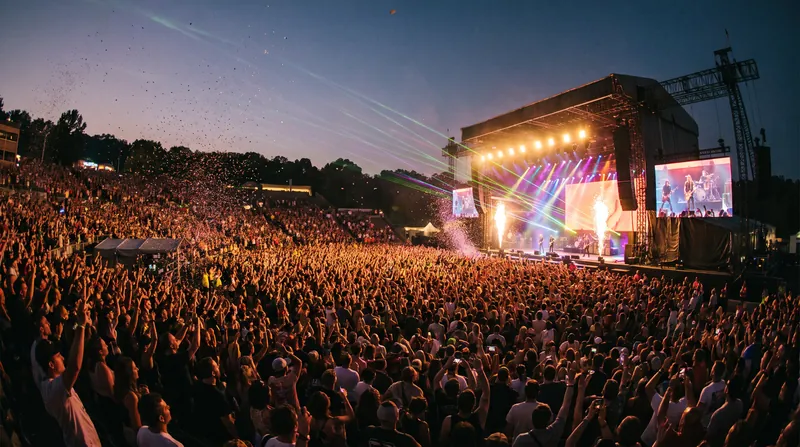
Live Nation Hits $7.7 Billion in Q2 Revenue as 49 Million Fans Flock to Concerts
7 sources
Live Sound Tech
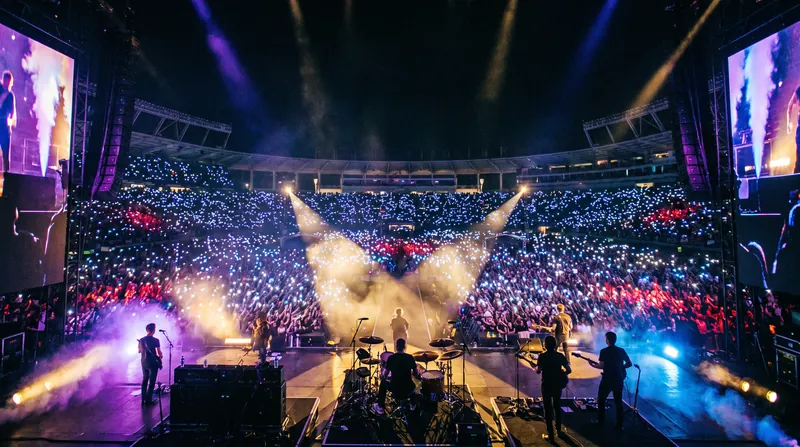
The Inverse Square Law and the Line Array: How Concert Sound Systems Deliver Uniform Volume Across a Stadium
5 sources
Concert Tech
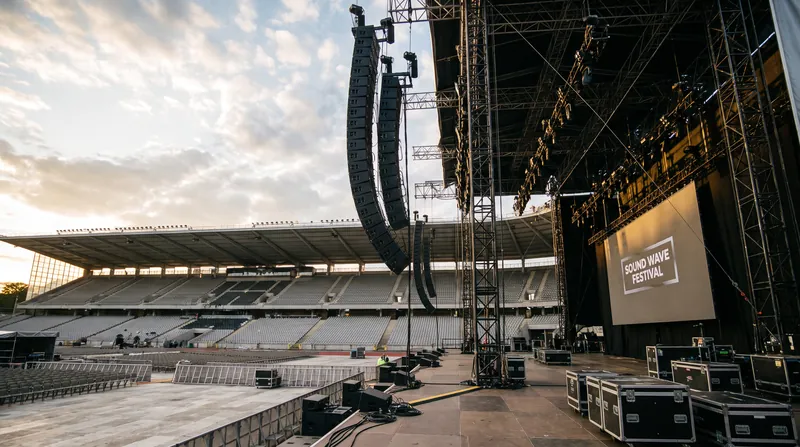
How Hologram Concerts and LED Wristbands Actually Turn Stadium Crowds Into Video Screens
5 sources
Concert Logistics
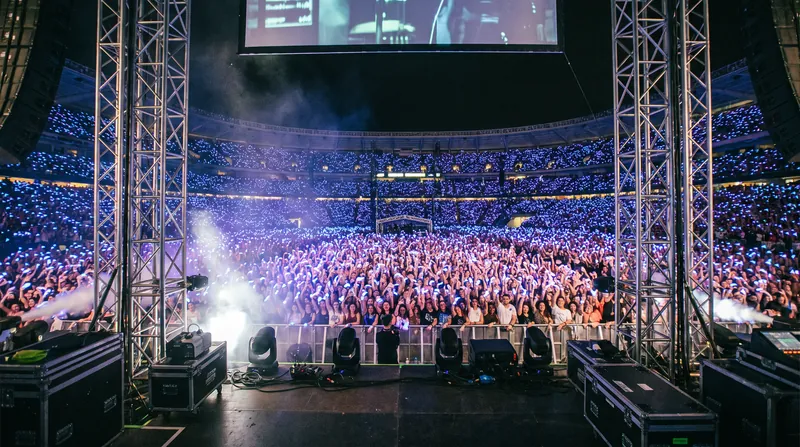
The Leapfrog System: How Stadium Tours Move 3,000-Ton Stages Overnight
6 sources
Comments
Every angle. Every day.
Get Entertainment stories with full source coverage and perspective breakdowns, free every day.