
Global Table Tennis Injury Report: Benyamin Faraji's Knee Setback and the Tour's Mounting Physical Toll
Iranian teenage prodigy Benyamin Faraji continues his rehabilitation from a knee injury that sidelined him from the 2026 World Team Championships, highlighting a broader conversation about the physical demands and sports science of the professional table tennis circuit.
- Player Welfare Advocates
- Argue that the congested WTT calendar and mandatory participation rules contribute heavily to chronic injuries and physical burnout among elite athletes.
- Sports Medicine Specialists
- Emphasize the immense biomechanical strain of modern table tennis and advocate for advanced rehabilitation protocols to extend playing careers.
- National Federations
- Tasked with balancing the immediate need to field top players at major international events with the long-term health and development of their athletes.
Perspectives this story doesn't cover
- WTT Tournament Organizers
- Equipment Manufacturers
At a glance
- Iranian prodigy Benyamin Faraji missed the 2026 World Team Championships due to a knee injury.
- Table tennis places immense rotational stress on the knees, particularly the MCL, during explosive topspin loops.
- Swedish veteran Mattias Falck successfully returned to the TTBL after undergoing a groin operation to fix a chronic issue.
- The congested WTT calendar has drawn criticism for contributing to physical burnout among elite players.
- Olympic champion Chen Meng previously withdrew from the world rankings citing the physical toll of the sport.
- Veterans like Ma Long utilize strict medical protocols and selective scheduling to extend their careers.
The modern professional table tennis calendar is a grueling marathon of high-speed rallies, explosive lateral lunges, and relentless international travel. As the 2026 World Table Tennis (WTT) summer circuit heats up, the physical toll of the sport is taking center stage. While the game is often perceived as low-impact by casual observers, the reality at the elite level is a landscape of chronic joint strain and careful medical management. Players are striking the ball harder and moving faster than ever before, generating immense torque through their lower bodies. This evolution in playstyle has led to a heightened focus on sports medicine, as athletes and their medical teams work tirelessly to rehabilitate injuries and extend world-class careers.
One of the most notable absences from the international stage this year has been Iranian teenage sensation Benyamin Faraji. The 14-year-old prodigy, who captured global attention with his rapid rise and fearless attacking style, was forced to withdraw from the Iranian national team selection process earlier this season due to a significant knee injury. For a young athlete whose game relies heavily on explosive footwork and rapid directional changes, the setback required immediate and careful attention to ensure his long-term physical development was not compromised.
According to the Tasnim News Agency, Iranian head coach Jamil Lotfollah Nasabi confirmed that Faraji's knee setback kept him out of the highly anticipated 2026 World Team Table Tennis Championships in London. Mehdi Keshavarz stepped in to fill the void for the Iranian squad, while Faraji shifted his focus entirely to rehabilitation. The decision to prioritize his recovery over a marquee tournament appearance underscores a growing awareness within national federations about the importance of protecting young prodigies from early physical burnout.
Knee issues are notoriously common in table tennis due to the sustained flexion required in the ready position and the sudden, asymmetrical twisting forces generated during heavy topspin loops. Sports medicine experts note that the medial collateral ligament (MCL) is particularly vulnerable to the repetitive rotational torque of the modern forehand drive. When a player plants their foot to execute a power loop, the knee absorbs a massive amount of kinetic energy, making targeted strength training and flexibility work essential for injury prevention.
Sports medicine experts note that the medial collateral ligament (MCL) is particularly vulnerable to the repetitive rotational torque of the modern forehand drive.
Swedish veteran Mattias Falck knows the grueling nature of lower-body recovery all too well. The former World Championship singles runner-up underwent a groin operation in the summer of 2024 to address a severe issue that had plagued him for over two years. Operating at the highest levels of the sport with compromised mobility had taken a toll, but the surgical intervention provided a permanent solution. Now competing for Werder Bremen in the German Table Tennis Bundesliga (TTBL), Falck has successfully managed his return to the table and is playing with renewed confidence.[1]
In a recent interview with the TTBL, Falck expressed relief at finally having the time to properly treat the chronic injury, even though the timing affected his role in the Swedish Olympic squad. Today, Falck is playing pain-free and has publicly stated that reaching the 2028 Los Angeles Olympics remains his ultimate motivation. His successful rehabilitation serves as an inspiring blueprint for other athletes, proving that careful surgical intervention and dedicated physical therapy can effectively extend a world-class career well into a player's thirties.[1]
The sheer volume of mandatory events on the WTT calendar has forced many top players to make difficult choices regarding their physical longevity. Olympic champion Chen Meng previously made headlines by withdrawing from the world rankings, citing that her body was simply unable to withstand the high-intensity competition required by the congested schedule. Her transparent admission sparked a broader conversation about player welfare, highlighting that even the most dominant champions must listen to their bodies and step away from the table when the physical cost becomes too high.[2]
Even the sport's greatest icon, Ma Long, has had to meticulously manage his body to survive the modern era. The Chinese legend has dealt with a severe chronic MCL knee injury since 2016, a direct result of the immense stress placed on his joints over decades of elite play. By utilizing strict medical protocols—including targeted rest, compression, and specialized physical therapy—and selectively pacing his tournament appearances, Ma Long has managed to adapt his game and extend his legendary career far beyond traditional expectations.
As the sport continues to evolve with faster equipment and more demanding footwork, national federations are increasingly prioritizing sports science and preventative physiotherapy. For rising stars like Faraji and established veterans like Falck, the path to the podium is no longer just about mastering the backhand flick or the pendulum serve. It is about mastering the delicate balance of peak performance and physical preservation, ensuring that the athletes who thrill fans around the world can continue to do so safely for years to come.[1]
Sources
Source coverage
2 outlets
3 viewpoints surfaced


- [1]TTBLNational Federations
Mattias Falck: "The 2028 Olympics are my biggest motivation"
Read on TTBL → - [2]The Straits TimesPlayer Welfare Advocates
Table tennis stars Fan Zhendong, Chen Meng withdraw from world rankings over WTT rules
Read on The Straits Times →
Comments
More in Sports
See all →Football Finance
How the Premier League's Broadcast Revenue Algorithm Distributes £2.8 Billion Annually
5 sources
Managerial Shift
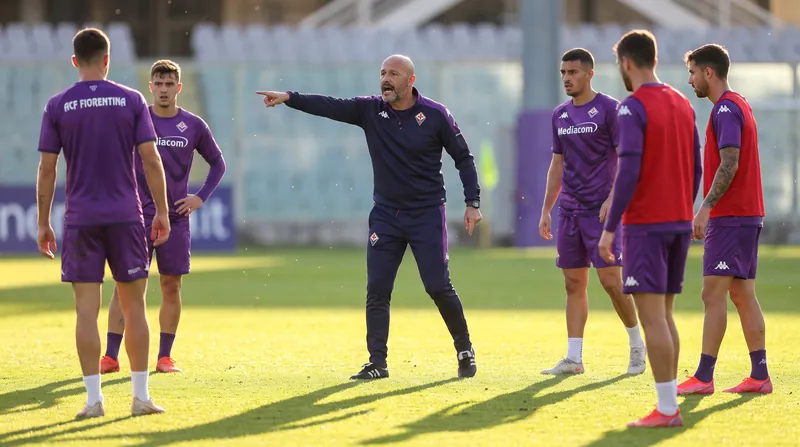
Fiorentina Re-Hire Paolo Vanoli as Head Coach After Sacking Fabio Grosso Three Matches Into Season
6 sources
Revenue Distribution
The €853 Million 'Value Pillar': How UEFA's New Champions League Revenue Engine Actually Works
7 sources
Mount Mizhirgi
Avalanche Kills 11 Climbers and Leaves Six Missing on Russia's Mount Mizhirgi
6 sources

Every angle. Every day.
Get Sports stories with full source coverage and perspective breakdowns delivered to your inbox.