
Global Land Carbon Sink Collapses, Shrinking Remaining Carbon Budget and Accelerating Warming Risk
Earth's forests and soils absorbed almost no carbon in 2023 due to extreme heat and wildfires, leaving the remaining carbon budget for 1.5°C virtually exhausted.
By Ishani Patel

For decades, the Earth's natural ecosystems have acted as a massive, silent buffer against human-caused climate change, absorbing roughly half of all carbon dioxide emissions pumped into the atmosphere. But in 2023, that vital planetary defense system temporarily broke down.
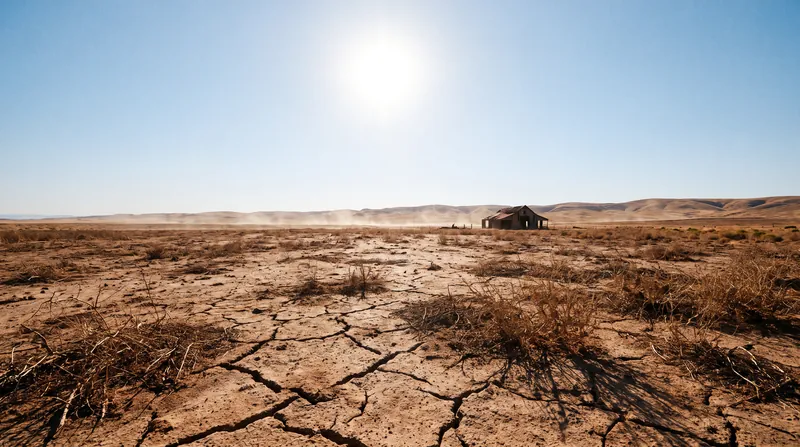
Driven by record-breaking extreme heat, massive wildfires, and severe droughts, the world's forests, plants, and soils absorbed almost no carbon. The sudden collapse of the land carbon sink has alarmed scientists and raised urgent questions about the viability of global climate targets that rely heavily on nature to offset industrial emissions.[3][6]
A comprehensive analysis published in the National Science Review reveals the stark scale of the decline. In 2023, the global net land carbon sink plummeted to just 0.44 gigatonnes of carbon—its weakest performance since 2003 and roughly one-fifth of its average capacity over the past two decades.
During the same period, the atmospheric growth rate of carbon dioxide measured at the Mauna Loa Observatory surged by 86 percent compared to the previous year. This spike hit a record high since observations began in 1958, despite global fossil fuel emissions increasing by only a fraction of a percent during that specific timeframe.[1][2]
The primary drivers of this terrestrial collapse were extreme weather events amplified by a warming climate and the onset of El Niño conditions. Researchers found that land regions exposed to extreme heat in 2023 contributed a gross carbon loss of 1.73 gigatonnes, indicating that record warming had a severe negative impact on ecosystem capacity.
In the northern hemisphere, massive wildfires that ravaged Canada's boreal forests released an estimated 0.58 gigatonnes of carbon, effectively turning a traditional carbon sink into a massive source of emissions. Simultaneously, a severe drought in the Amazon basin caused an additional carbon loss of 0.31 gigatonnes, further crippling the biosphere's ability to draw down carbon.[1][2]
While the land sink faltered dramatically, the ocean—Earth's other major carbon buffer—also exhibited signs of long-term stress. Although the ocean sink slightly increased its carbon uptake in 2023 by 0.10 gigatonnes due to the transition from La Niña to El Niño in the equatorial Pacific, scientists warn that rising sea surface temperatures are steadily degrading its overall absorption capacity.
Melting sea ice and shifting ocean currents threaten to disrupt the biological pump—the daily vertical migration of marine organisms that transports millions of tonnes of carbon from the surface to the ocean floor.[1][3]
The weakening of these natural sinks coincides with a continued, relentless rise in human emissions. According to the 2025 Global Carbon Budget, global carbon dioxide emissions from fossil fuels are projected to reach a record high of 38.1 billion tonnes this year. While the overall growth rate of emissions has slowed over the past decade—driven by the rapid deployment of renewable energy in major economies like China and India—the absolute volume of carbon being pumped into the atmosphere continues to climb, overwhelming the diminished capacity of natural ecosystems.[4][5]
This relentless accumulation of greenhouse gases, combined with the diminished capacity of natural sinks, has drastically shrunk the window for meaningful climate action. The Global Carbon Project estimates that the remaining carbon budget to limit global warming to 1.5 degrees Celsius above pre-industrial levels is now virtually exhausted. At current emission rates, the remaining budget of 170 billion tonnes of carbon dioxide will be entirely consumed in approximately four years, effectively closing the door on the most ambitious target of the Paris Agreement.[4][5]
The implications for international climate policy are profound and immediate. At least 118 nations currently rely on land-based carbon sinks—such as large-scale reforestation and soil management programs—to meet their national net-zero targets. The 2023 data demonstrates the extreme fragility of these ecosystems. If forests and soils can rapidly transition from carbon sinks to carbon sources during years of extreme heat and drought, relying on them to permanently offset ongoing fossil fuel emissions becomes a highly precarious, if not impossible, strategy.[3][6]
While researchers expect the land carbon sink to partially recover as the 2023–2024 El Niño pattern subsides, the underlying trend remains deeply concerning. The terrestrial biosphere in the northern hemisphere has shown a declining trend in carbon absorption since 2015, dropping by half over the last eight years. The unprecedented failure of the land sink in 2023 serves as a stark empirical warning: climate models may be underestimating the speed at which extreme events can erode nature's resilience, potentially accelerating global heating far beyond current projections.[1][3][6]
Key points
- The global land carbon sink dropped to 0.44 gigatonnes in 2023, its weakest level in two decades.
- Extreme heat, Canadian wildfires, and Amazonian droughts drove the sudden collapse in carbon absorption.
- The 2025 Global Carbon Budget projects fossil fuel emissions will hit a record 38.1 billion tonnes.
- The remaining carbon budget to limit global warming to 1.5°C is now equivalent to just four years of current emissions.
How we got here
2015
The Paris Agreement is adopted, establishing the goal of limiting global warming to 1.5°C above pre-industrial levels.
2015–2022
The global land carbon sink absorbs an average of roughly 2 gigatonnes of carbon per year, buffering human emissions.
Mid-2023
Record-breaking global temperatures, Canadian wildfires, and an Amazon drought severely stress terrestrial ecosystems.
Late 2024
Scientific analyses reveal that the land carbon sink temporarily collapsed in 2023, dropping to just 0.44 gigatonnes.
Nov 2025
The 2025 Global Carbon Budget projects record fossil fuel emissions and warns the 1.5°C budget is virtually exhausted.
- Climate Researchers & Modellers
- Focus on the empirical data showing the unprecedented collapse of the land carbon sink and the need to update climate models.
- Policy & Mitigation Advocates
- Argue that the exhaustion of the 1.5°C carbon budget means nations can no longer rely on nature to offset fossil fuel emissions.
- Factlen Editorial Board
- Synthesizes the scientific findings to highlight the broader systemic risk of Earth's natural buffers failing.
Perspectives this story doesn't cover
- Fossil Fuel Industry Representatives
- Developing Nations Relying on Nature-Based Offsets
Sources
Source coverage
6 outlets
3 viewpoints surfaced






- [1]National Science ReviewClimate Researchers & Modellers
Low latency carbon budget analysis reveals a large decline of the land carbon sink in 2023
Read on National Science Review → - [2]arXivClimate Researchers & Modellers
Low latency carbon budget analysis reveals a large decline of the land carbon sink in 2023
Read on arXiv → - [3]The OrcasonianPolicy & Mitigation Advocates
Trees and land absorbed almost no CO2 last year. Is nature's carbon sink failing?
Read on The Orcasonian → - [4]World Economic ForumPolicy & Mitigation Advocates
Fossil fuel emissions to reach new high in 2025
Read on World Economic Forum → - [5]UC DavisClimate Researchers & Modellers
Fossil Fuel CO2 Emissions Hit Record High in 2025
Read on UC Davis → - [6]Factlen Editorial TeamFactlen Editorial Board
Synthesis by Factlen editorial team
Read on Factlen Editorial Team →
More in Science
See all →Polar Ice Sheets
Satellites Show 11 Trillion Tons of Polar Ice Lost Since 1979, Driven by Speeding Glaciers
3 sources
Arctic Sea Ice
Back-to-Back Arctic Cyclones Double Sea Ice Loss, Study Finds
6 sources
Indo-Pacific Climate
How the Indian and Pacific Oceans Are Breaking a 400-Year Climate Link
5 sources
Climate Record
NOAA Data Confirms Summer 2026 Was the Hottest on Record in the US
6 sources
Comments
Every angle. Every day.
Get Science stories with full source coverage and perspective breakdowns, free every day.