
Climate Change Intensified Himalayan Slope Instability That Caused Deadly Nepal Floods
A rapid attribution study concludes that decades of warming, permafrost thaw, and glacial thinning preconditioned the Langtang Lirung mountain for the catastrophic rock and ice collapse that killed over 1,300 people in August 2026.

How this story has developed
This report is part of a developing story — read the earlier chapters below.
- Death Toll Passes 1,300 in Nepal as Himalayan Glacier Collapse Exposes Flaws in Border Early Warning Systems
- Climate Change Intensified Himalayan Slope Instability That Caused Deadly Nepal Floods (this article)
- Climate Attribution Scientists
- Argue that atmospheric warming and permafrost thaw were the primary preconditions for the collapse.
- Geologists and Hydrologists
- Emphasize the compound nature of the disaster, including the 2015 earthquake and glacial retreat.
- Downstream Communities
- Focus on the failure of early warning systems and the limits of climate adaptation.
Perspectives this story doesn't cover
- Chinese border authorities
- Hydropower infrastructure operators
Why it matters
This disaster proves that climate change is no longer just altering weather patterns—it is fundamentally degrading the geological stability of the world's highest mountains. For the millions of people living in high-altitude river valleys, previously stable slopes are rapidly transforming into unpredictable, catastrophic flood hazards.
The freezing threshold in the Himalayas has permanently shifted upward, destabilizing the bedrock that holds the world's highest peaks together and turning previously stable mountain slopes into active flood hazards. That structural degradation, driven by decades of atmospheric warming, was the primary precondition for the August 26 collapse of Langtang Lirung mountain in Nepal, which sent a massive torrent of rock, ice, and mud down the Trishuli River corridor and killed more than 1,300 people.[1][5]
A rapid attribution study released on September 17 by the World Weather Attribution (WWA) initiative concluded that the disaster was not the result of a single extreme weather event, but rather a compounded hazard chain. "This disaster was not an extreme weather event, but the fingerprints of climate change are still clear to see in long-term changes," said Ben Clarke, a climate researcher at Imperial College London who worked on the analysis. Researchers found that human-induced climate change has pushed the altitude at which the ground remains consistently frozen upward by roughly 100 meters (328 feet) per decade.[1][2][5]
This upward shift exposes rock at increasingly high elevations to longer periods above freezing. For millennia, permafrost has acted as a cryospheric glue, binding the fractured rocks and soils of the high Himalayas together. As temperatures rise, this deep ice melts, allowing warm meltwater to flow into the bedrock cracks and exert enormous hydraulic pressure on the mountain's structural integrity.[2][4][5][6]
The Langtang Lirung glacier itself has also retreated by about half a kilometer (0.3 miles) since the 1990s, thinning at a rate of more than half a meter (1.6 feet) per year. The removal of this massive ice weight eliminates the physical buttressing that previously supported the steep rock walls. When the slope finally failed in late August, an enormous mass of rock and ice detached from the mountain's face.[1][2][5][6]
The removal of this massive ice weight eliminates the physical buttressing that previously supported the steep rock walls.
The collapsing mass plummeted to the valley floor, where the grinding friction of the descent instantly liquefied much of the ice. This combined with the rock and sediment to form a debris flow that accelerated to extreme speeds. The resulting flood wave obliterated towns, bridges, and hydroelectric infrastructure across more than 20 miles of the narrow river valleys.[2][5][6]
While the WWA study definitively links the slope's vulnerability to global warming, it also highlights the complexity of mountain geophysics. The weeks before the collapse were unusually warm, accelerating immediate melting. Additionally, researchers noted that changes in precipitation patterns have added excess water volume to the high-altitude system.[1][2][4]
Scientists also point to the lingering effects of the magnitude 7.8 earthquake that struck Nepal in April 2015. The seismic shaking from that event likely fractured the Langtang Lirung bedrock years before the collapse, preconditioning the slope for failure. However, researchers emphasize that without the subsequent permafrost thaw and glacial retreat, the mountain would have been far less likely to disintegrate so catastrophically.[1][2][4][5]
The disaster leaves over 5,000 people still missing and has caused billions of dollars in economic damages across the region. For communities nestled in narrow Himalayan river valleys, the findings confirm that climate change is no longer just altering weather patterns, but fundamentally transforming the geological stability of the mountains above them.[1][5]
What to know
- A World Weather Attribution study concluded that climate change preconditioned the Langtang Lirung mountain for its catastrophic August 2026 collapse.
- Warming temperatures have pushed the Himalayan freezing threshold up by 100 meters per decade, thawing the permafrost that binds mountain bedrock.
- The Langtang Lirung glacier has retreated half a kilometer since the 1990s, removing crucial physical support for the steep rock walls.
- The resulting rock and ice avalanche liquefied into a massive debris flow, killing over 1,300 people and leaving 5,000 missing.
- Scientists noted the disaster was a compound event, with the 2015 Gorkha earthquake likely fracturing the bedrock years before the collapse.
Sources
Source coverage
6 outlets
3 viewpoints surfaced






- [1]WSLS 10Climate Attribution Scientists
Climate change made deadly Nepal glacier and rock collapse more likely, according to analysis
Read on WSLS 10 → - [2]RatopatiGeologists and Hydrologists
Scientists Conclude Devastating Flood Not Caused by Single Event
Read on Ratopati → - [3]Deccan ChronicleDownstream Communities
Climate Change Helped Cause Nepal Glacier Collapse, Scientists Say
Read on Deccan Chronicle → - [4]Phys.orgGeologists and Hydrologists
Climate change contributing to permafrost thawing and glacial thinning
Read on Phys.org → - [5]PBS NewsHourClimate Attribution Scientists
Climate change made deadly Nepal glacier and rock collapse more likely, analysis finds
Read on PBS NewsHour → - [6]Factlen Editorial TeamClimate Attribution Scientists
Synthesis by Factlen editorial team
Read on Factlen Editorial Team →
Comments

More in Science
See all →ENSO Dynamics
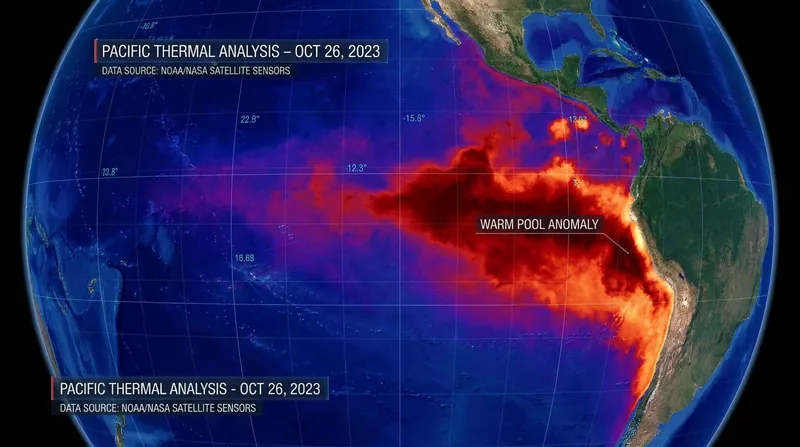
As a New El Niño Begins, Scientists Weigh Evidence of Climate Change Supercharging the Phenomenon
5 sources
Seismology
A Seismic Wave Bounced Off Earth's Core and Shifted the Entire Japanese Archipelago
5 sources
Molecular Physics
The Asymmetric Stretch and Bending Modes: How Triatomic Gases Absorb and Re-emit Infrared Radiation
8 sources

Fundamental Constants
The 1/137.036 Value: How the Fine-Structure Constant Quantifies the Strength of the Electromagnetic Interaction
7 sources

Every angle. Every day.
Get Science stories with full source coverage and perspective breakdowns delivered to your inbox.