
Global Food Prices Climb to Nearly Four-Year High Amid Trade Disruptions and Climate Shocks
Wholesale costs for essential commodities like wheat, maize, and sugar spiked significantly in September, pushing the FAO tracking index to a peak not seen since late 2022. The compounding effects of geopolitical bottlenecks and severe droughts are forcing importers to scramble for alternative supplies.
By Kabir Mehra

Despite early-year forecasts that international grocery markets would finally stabilize after years of volatility, the United Nations' latest data shows the exact opposite. Global food prices have surged to their highest level in nearly four years, driven by a compounding mix of extreme weather events and fractured shipping routes.[3][5]
The Food and Agriculture Organization (FAO) reported on Friday that its benchmark Food Price Index averaged 136.0 points in September 2026. That figure marks a 1.5 percent increase from August and a substantial 5.8 percent jump compared to the same time last year, erasing recent months of gradual cooling.[2][4]
The index, which tracks monthly changes in the international prices of a basket of commonly traded food commodities, has not reached this threshold since November 2022. While global meat and dairy costs saw slight declines, those drops were entirely eclipsed by surging wholesale costs for staples like grains, cooking oils, and sugar.[2][4]
The Grain and Shipping Squeeze
The sharpest increases hit the cereal markets, where the FAO Cereal Price Index jumped 5.1 percent in a single month to reach 122.8 points. World wheat prices climbed 6.3 percent from August, hitting their highest mark since August 2023, while global maize prices simultaneously rose 5.6 percent to a three-year peak.[2][6]
Much of that grain spike stems from geopolitical bottlenecks rather than empty fields or poor harvests. Ongoing logistical constraints in the Black Sea region have severely reduced export availability, forcing international buyers to scramble for alternative origins and driving up competitive bids across the remaining open markets.[2][4]
Compounding the regional trade blocks are broader maritime shipping anxieties that affect the entire agricultural supply chain. Uncertainty over commercial transit through the Strait of Hormuz has kept fuel, fertilizer, and freight costs elevated across the board, providing additional support to commodity prices used as biofuel feedstocks.[2]
FAO Chief Economist Maximo Torero highlighted the dual nature of the current agricultural crisis in a statement accompanying the data. "Disruptions in the Strait of Hormuz and the Black Sea, combined with climate shocks, were putting pressure on energy, transport and key food commodities," Torero said.[4]
He warned that the wholesale commodity spikes will not remain isolated to international trading floors for long. "If sustained, such pressures could eventually be passed on to consumer food prices, particularly in countries dependent on food and energy imports," Torero added.[4]
Climate Shocks Hit Sugar and Oil
While trade disputes choke the grain supply, extreme weather patterns are devastating crop yields across multiple continents. The FAO Sugar Price Index surged 6.1 percent in September to 114.0 points, reaching its highest level since April 2025 and marking its third consecutive monthly increase.[2]
The sugar shortage is a genuinely global phenomenon this season, affecting nearly every major producing region. In the European Union, adverse weather and reduced planting areas have shrunk the sugarbeet output, while below-normal rainfall and strengthening El Niño conditions have severely threatened crop prospects in India.[2]
Even regions receiving ample moisture are struggling with the timing of the precipitation. Heavy, unseasonal rains have disrupted the harvest progress in Brazil’s critical Centre-South growing region, exerting further upward pressure on international sugar quotations just as global supplies tighten.[2]
Vegetable oils followed a similar climate-driven trajectory, with the FAO Vegetable Oil Price Index rising to 198.6 points. International palm oil prices climbed for the fourth consecutive month, largely due to prolonged dry weather stunting production prospects across Southeast Asia and robust demand from the biofuel sector.[2]
Navigating the Supply Outlook
Despite the intense pricing pressure, the sheer volume of global food production remains historically massive. The FAO forecasts global cereal production for 2026 at 2.979 billion metric tons, which, despite the weather challenges, would still rank as the second-highest output on record.[4]
However, that figure represents a 2.1 percent decline from 2025 levels, leaving a much narrower buffer against future shocks. The agency also cut its forecast for global cereal trade in the 2026/27 season by 0.7 percent, citing the constrained shipping routes for wheat and maize.[4]
For the restaurant industry and everyday consumers, the data signals a prolonged period of menu engineering and ingredient substitution. With wholesale prices for baking staples and cooking oils locked at a multi-year high, the anticipated relief in food inflation has been indefinitely delayed.[5]
Key points
- The UN FAO Food Price Index reached 136.0 points in September 2026, its highest level since November 2022.
- Global wheat and maize prices surged over 5 percent in a single month due to Black Sea shipping constraints.
- Extreme weather, including El Niño in India and heavy rains in Brazil, pushed sugar prices to an 18-month high.
- FAO economists warn that sustained wholesale commodity spikes will eventually pass through to consumer grocery bills.
What we don’t know
- How long the logistical constraints in the Black Sea and the Strait of Hormuz will persist, and whether freight costs will normalize before the next harvest season.
- The final impact of the strengthening El Niño weather pattern on upcoming crop yields in the Southern Hemisphere.
- Exactly how much of the wholesale price increase major food manufacturers will absorb before passing the costs onto consumers.
How we got here
March 2022
The FAO Food Price Index hits an all-time peak following the initial outbreak of conflict in the Black Sea region.
November 2022
Global food prices begin a slow, irregular descent as alternative shipping routes and temporary grain deals stabilize markets.
August 2023
Wheat prices experience their last major spike before entering a period of relative stabilization.
April 2025
Sugar prices hit a high point due to early indicators of poor harvests in Southeast Asia.
September 2026
The FAO index surges to 136.0 points, driven by simultaneous climate shocks and renewed maritime trade disruptions.
- Agricultural Economists
- Focus on the compounding nature of simultaneous supply chain shocks.
- Food Importers and Distributors
- Prioritize securing reliable supply lines over negotiating the lowest possible price.
- Climate Adaptation Advocates
- View the price volatility as a permanent shift requiring systemic agricultural reform.
Perspectives this story doesn't cover
- Smallholder farmers in developing nations
- Consumer advocacy groups
Sources
Source coverage
7 outlets
3 viewpoints surfaced






- [1]FAO
Trade disruptions contributed to higher cereal quotations, while adverse weather weighs on sugar production prospects
Read on FAO → - [2]FAO Data
FAO Food Price Index
Read on FAO Data → - [3]ForbesFood Importers and Distributors
Global Food Prices Approach Four-Year High, UN Says
Read on Forbes → - [4]XinhuaAgricultural Economists
Global food prices hit four-year high in September: FAO
Read on Xinhua → - [5]Mexico Business NewsClimate Adaptation Advocates
Climate Change Turns Price Spikes Into Persistent Inflation
Read on Mexico Business News → - [6]IndexBoxAgricultural Economists
FAO Food Price Index Rises in September 2026 as Wheat and Maize Hit Multi-Year Highs
Read on IndexBox → - [7]AgroLatamFood Importers and Distributors
World food prices
Read on AgroLatam →

More in Food & Drink
See all →Food Safety
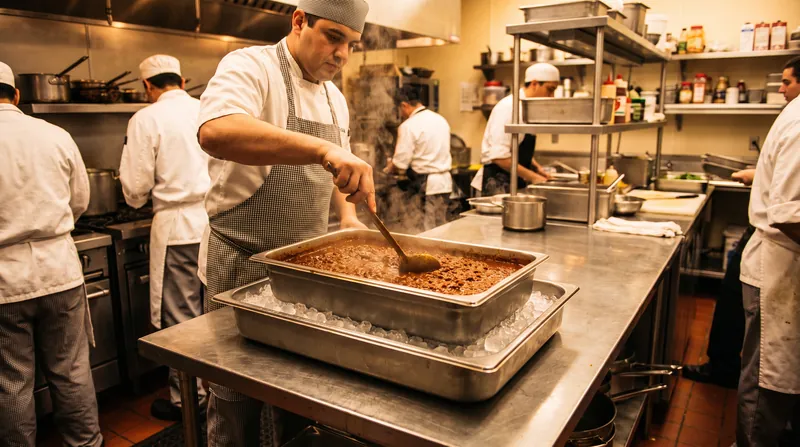
The 135°F to 41°F Plunge: How the FDA's Two-Stage Cooling Rule Stops Pathogen Growth in Cooked Food
6 sources
Corporate Accountability
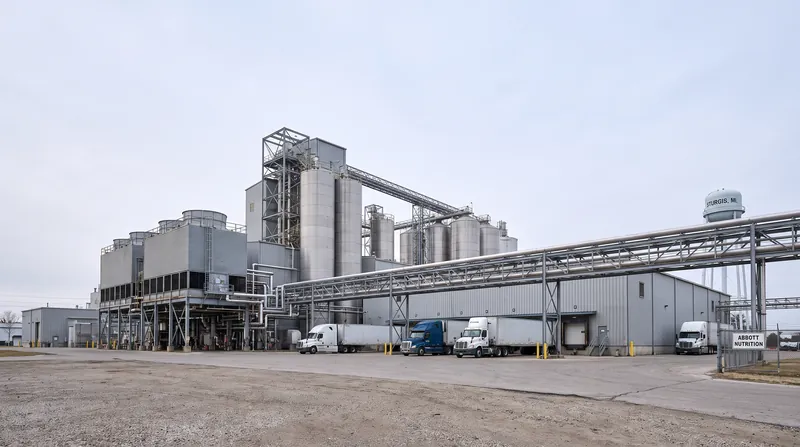
Abbott Agrees to $385 Million Settlement Over Baby Formula Plant Contamination Claims
4 sources
Emulsion Science
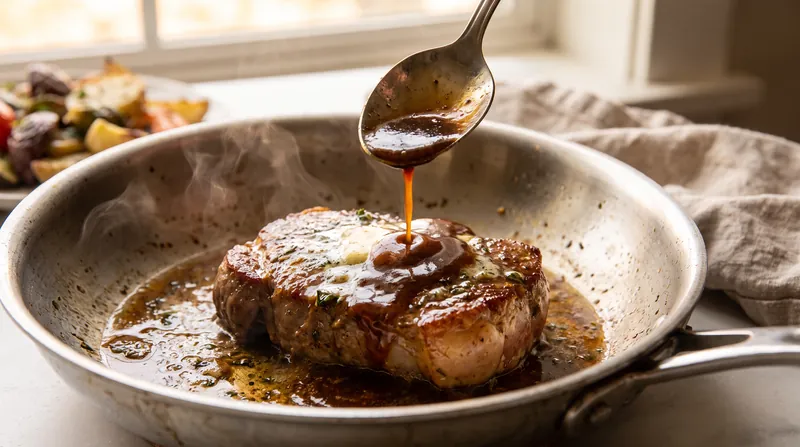
The 140°F Butter Mount: How Restaurants Emulsify Pan Sauces Without Breaking
6 sources
Restaurant Closures
O'Charley's Closes All Remaining Corporate-Owned Restaurants Nationwide
4 sources

Comments
Every angle. Every day.
Get Food & Drink stories with full source coverage and perspective breakdowns, free every day.