
Fundamental Physics Breakthrough Suggests Water Exists as Two Distinct Liquids, Rewriting Basic Chemistry
Landmark experiments using ultra-fast X-ray lasers and AI simulations have confirmed that liquid water is actually a fluctuating mixture of two distinct phases, solving a 30-year mystery about the molecule's bizarre properties.

Water is the most ubiquitous substance on Earth, yet it consistently violates the fundamental rules of thermodynamics. While nearly all liquids become denser as they cool and eventually freeze, water reaches its maximum density at exactly 4 degrees Celsius before expanding into solid ice.
It possesses an unusually high heat capacity, its surface tension is remarkably strong, and its viscosity bizarrely decreases under high pressure. For over a century, these macroscopic anomalies have baffled chemists and physicists alike, leaving a gaping theoretical hole in our understanding of the single molecule that underpins all known life in the universe.[3]
Now, a pair of landmark scientific studies published in the spring and summer of 2026 has provided the definitive, evidence-backed answer to this enduring mystery. According to the new research, water is not a single, uniform liquid at all. Instead, it is a highly dynamic mixture of two distinct liquid phases—one high-density and one low-density—that are constantly shapeshifting and competing at the molecular level. This dual-liquid framework fundamentally rewrites the basic chemistry of water, providing a unified explanation for the bizarre behaviors that make our planet habitable.[1][2]
The foundational concept behind this breakthrough, known as the two-state model, was first proposed by theorists in 1992 but remained fiercely debated within the scientific community. The original theory suggested that if liquid water could somehow be supercooled far below its standard freezing point without instantly crystallizing into solid ice, it would eventually hit a specific thermodynamic threshold known as a "critical point." At this extreme juncture of temperature and pressure, the theory predicted that the water would spontaneously separate into two entirely different liquids with distinct molecular structures.[4]
For decades, the primary obstacle to proving this theory was a thermodynamic region that physicists ominously refer to as the "no-man's land." In standard laboratory settings, supercooled water freezes into ice almost instantaneously before it can ever reach the theoretical critical point, making direct physical observation seemingly impossible. To successfully bypass this rapid crystallization barrier, researchers realized they would require highly specialized instruments capable of capturing molecular snapshots in mere fractions of a nanosecond, catching the liquid in its transitional state before the ice could form.[3]
In March 2026, an international research team led by chemical physicist Anders Nilsson at Stockholm University finally shattered this long-standing experimental barrier. Publishing their peer-reviewed results in the journal Science, the team utilized ultra-fast X-ray free-electron lasers at a specialized high-tech facility in South Korea to probe microscopic water droplets in a deep supercooled state. By firing unimaginably fast X-ray pulses at the samples, the scientists were able to illuminate the molecular structure of the water in the fleeting moments before it succumbed to freezing.[1]
By rapidly manipulating the ambient pressure and temperature within the testing chamber, the researchers successfully navigated their samples deep into the thermodynamic no-man's land. Through these precise adjustments, they pinpointed the exact liquid-liquid critical point, locating it at approximately -63 degrees Celsius (210 Kelvin) and an immense 1,000 times standard atmospheric pressure. At these extreme coordinates, the data clearly showed the water behaving in a way that defied conventional fluid dynamics, confirming the existence of the long-theorized dual-liquid phase transition.[1][3]
"What was special was that we were able to X-ray unimaginably fast before the ice froze and could observe how the liquid-liquid transition vanishes and a new critical state emerges," Nilsson explained in a statement following the publication. At this precise thermodynamic coordinate, the high-density liquid (HDL) and low-density liquid (LDL) phases merge into a single, highly unstable state. The system becomes incredibly volatile, with the water rapidly shifting back and forth between the two distinct liquid structures in a frantic microscopic dance.
The definitive discovery of this critical point serves as the thermodynamic Rosetta Stone for decoding water's everyday weirdness. Researchers explain that even at comfortable room temperatures, ambient water experiences powerful quantum fluctuations that echo upward from this deep-cold critical point. The liquid in a standard drinking glass is constantly shifting between the denser, highly chaotic molecular arrangement of the high-density phase and the lighter, more rigidly ordered tetrahedral structure of the low-density phase, creating a permanent internal tension.[4]
This perpetual internal tug-of-war elegantly explains why ice floats on the surface of a lake. As water cools toward its freezing point, the low-density, highly ordered structural phase begins to dominate the mixture, causing the bulk liquid to expand rather than contract. If water behaved like a normal, single-phase liquid and became denser as it froze, the world's oceans and lakes would freeze solid from the bottom up, destroying aquatic ecosystems and rendering the entire planet entirely uninhabitable for complex life.[3]
While the groundbreaking X-ray laser experiments proved the macroscopic existence of the two distinct liquids, a second major breakthrough in June 2026 revealed exactly how individual molecules pull off this complex shapeshifting trick. A dedicated team of computational chemists utilized advanced artificial intelligence to model the phase transition at the atomic level, publishing their comprehensive findings in the journal Nature Physics. By feeding vast amounts of molecular dynamics data into the AI, they were able to track the precise movements of the hydrogen bonds.[2]
The AI-powered simulations meticulously tracked the invisible energy barriers that individual water molecules must cross in order to switch their allegiance between the high-density and low-density states. Through this computational heavy lifting, the researchers discovered that the molecules utilize highly specific thermodynamic pathways to execute the transition, which the scientific team dubbed the "semi-loop" and "full-loop" trajectories. These pathways dictate exactly how much energy is required for a molecule to break its current hydrogen bonds and reconfigure itself into the opposing liquid structure.[2]
The simulations revealed that near the critical boundary where ice and liquid water coexist, the molecules are forced to take a highly complex, roundabout "full-loop" path. In this scenario, they must cross three separate and distinct energy barriers to successfully change their structural allegiance. This AI-driven molecular dynamics model provided the first direct theoretical visualization of the two-state switching mechanism in action, effectively confirming the 30-year scientific hunch and providing a perfect computational complement to the physical X-ray laser data gathered in South Korea.
The cascading implications of these twin scientific breakthroughs extend far beyond the esoteric realm of fundamental physics. Because virtually all known biological processes occur within an aqueous environment, understanding that water is actually a fluctuating dual-liquid fundamentally changes how researchers must view cellular machinery. Biologists and pharmacologists must now account for the fact that the foundational solvent of life is not a passive, uniform backdrop, but an active, shapeshifting participant in the delicate biochemistry that keeps organisms alive and functioning.
When proteins, DNA strands, and pharmaceutical compounds operate within the human body, they do not interact with a static, uniform solvent. Instead, they are constantly bathed in a liquid that is rapidly shifting its local density and reconfiguring its hydrogen-bond network on a nanosecond scale. Researchers now hypothesize that this highly dynamic, dual-state environment likely plays a crucial, previously unrecognized role in complex biological mechanisms, including how proteins fold into their functional shapes, how enzymes catalyze vital reactions, and how targeted drugs bind to specific cellular receptors.
In the broader realms of global climate modeling and oceanography, the confirmation of the critical point helps to fully explain the thermal stratification that governs the world's oceans. The well-documented fact that the deepest, darkest ocean water consistently hovers at exactly 4 degrees Celsius—the precise temperature of water's maximum density—is a direct macroscopic consequence of these microscopic liquid-liquid fluctuations. Understanding this mechanism with mathematical precision will allow climate scientists to build far more accurate models of how ocean currents circulate heat around the globe.[1][3]
The definitive proof of the two-state model also opens entirely new and lucrative frontiers in commercial materials science. Forward-thinking researchers are already exploring whether synthetic "porous liquids" can be artificially engineered to mimic water's unique liquid-liquid transition at standard ambient temperatures. If successful, such advanced materials could act like highly efficient molecular sponges, intentionally shifting from low to high density on command in order to capture atmospheric carbon emissions, filter industrial pollutants, or dramatically improve the energy efficiency of global water desalination plants.[2]
While a few minor uncertainties remain at the absolute fringes of the research—particularly regarding whether the ultra-fast X-ray samples in the South Korean facility achieved true thermodynamic equilibrium in the nanoseconds before freezing—the broader consensus within the global physics community has shifted decisively. After more than three decades of intense academic arguments, conflicting models, and technological limitations, the fierce debate over water's fundamental thermodynamic nature is now widely considered to be settled by these comprehensive evidence packs.[3][4]
Ultimately, these landmark 2026 studies prove that water is absolutely not the simple, uniform, and predictable substance it appears to be when resting quietly in a drinking glass. It is, in reality, a highly complex, shapeshifting cocktail composed of two entirely distinct liquids locked in a perpetual, microscopic dance. This hidden thermodynamic duality, driven by the extreme physics of the supercooled critical point, is the invisible engine that drives the molecule's bizarre anomalies and, by extension, makes all life in the universe possible.
Key points
- Water exhibits dozens of thermodynamic anomalies, such as expanding when it freezes and reaching its maximum density at 4°C.
- A 2026 experiment using ultra-fast X-ray lasers confirmed that supercooled water possesses a liquid-liquid critical point at -63°C and 1,000 atmospheres.
- At this critical point, water merges from two distinct liquid phases—a high-density liquid and a low-density liquid—into a single state.
- A subsequent AI-powered study mapped the exact energy barriers and pathways molecules use to switch between these two structural states.
What we don’t know
- Whether the ultra-fast X-ray laser measurements allowed the supercooled water enough time to reach true thermodynamic equilibrium before freezing.
- How exactly the microscopic fluctuations between the two liquid states influence the folding of complex proteins and the binding of pharmaceutical drugs in the human body.
- Whether engineers can successfully synthesize artificial 'porous liquids' that replicate water's phase-shifting behavior at room temperature for industrial applications.
How we got here
1992
Researchers first propose the theoretical two-state model of water, suggesting a liquid-liquid critical point exists in the supercooled regime.
2016
Early experimental evidence begins to hint that supercooled water can split into distinct high-density and low-density forms.
March 2026
A team at Stockholm University publishes X-ray laser data in Science, pinpointing the critical point at -63°C and 1,000 atmospheres.
June 2026
Computational chemists publish AI-driven simulations in Nature Physics, revealing the molecular pathways water uses to switch between states.
- Experimental Physicists
- Focus on direct observational evidence using X-ray lasers to capture water's phase transitions in extreme conditions.
- Computational Chemists
- Use AI and molecular dynamics simulations to map the exact pathways water molecules take when shifting between states.
- Thermodynamics Theorists
- Seek to unify water's dozens of macroscopic anomalies under a single two-state mathematical model.
Perspectives this story doesn't cover
- Marine Biologists
- Pharmaceutical Researchers
Sources
Source coverage
4 outlets
3 viewpoints surfaced




- [1]ScienceExperimental Physicists
Experimental evidence of a liquid-liquid critical point in supercooled water
Read on Science → - [2]Nature PhysicsComputational Chemists
TROP2 targeting reveals therapy-driven cell state dynamics in colorectal cancer
Read on Nature Physics → - [3]Science NewsExperimental Physicists
Supercooled water has a second critical point, new experiments show
Read on Science News → - [4]Physics TodayThermodynamics Theorists
Experiment closes in on a second critical point of water
Read on Physics Today →

More in Science
See all →Clean Energy Tech
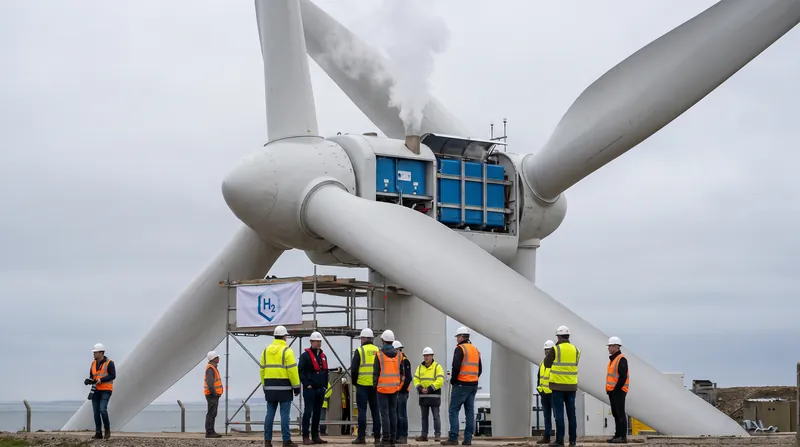
Compressorless Hydrogen Turbine Using Detonation Waves Achieves Record Run, Revolutionizing Clean Power Efficiency
8 sources
Energy Transition
Global Power Sector Hits Historic Milestone: Renewables Meet 100% of New Global Electricity Demand Growth
6 sources
Thermodynamics
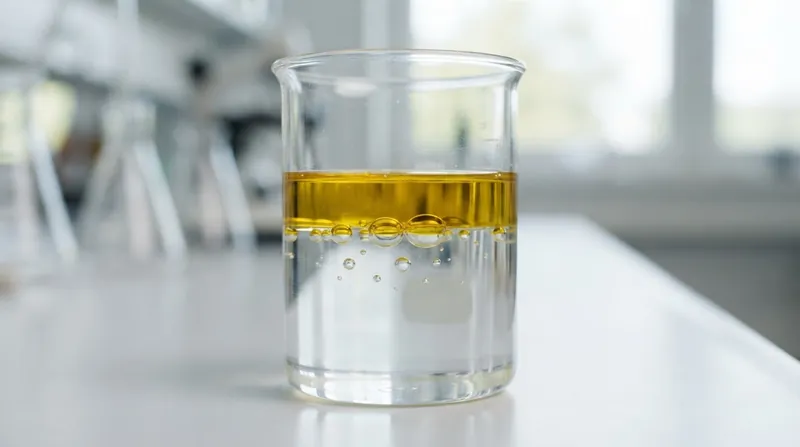
The Entropic Caging of Solvation Shells: Why Oil and Water Actually Separate
9 sources
Stellar Physics
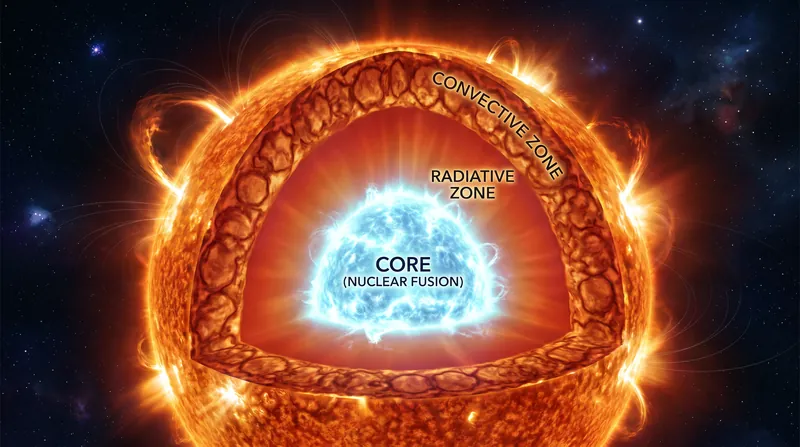
The Dual Engines of the Sun: How the Proton-Proton Chain and CNO Cycle Fuse Hydrogen into Helium
7 sources
Comments
Every angle. Every day.
Get Science stories with full source coverage and perspective breakdowns, free every day.