
FTC and 22 States Sue Amazon Over Alleged $20 Billion Advertising Auction Manipulation
The Federal Trade Commission and 22 state attorneys general have filed a lawsuit accusing Amazon of secretly inflating digital ad prices, while the company maintains its auction mechanics saved advertisers billions.

Share this story
The federal court in the Western District of Washington will now determine whether Amazon's internal advertising auction mechanics constitute deceptive pricing, holding the power to order billions in restitution and force structural changes to the platform's ad business. The Federal Trade Commission, joined by 22 state attorneys general, filed a 181-page complaint on Monday seeking to halt what it characterizes as a covert scheme to inflate the cost of sponsored product listings.[1][2]
The core of the government's argument rests on transparency and the specific mechanics of second-price auctions. For years, Amazon told the 1.2 million brands and sellers on its marketplace that its advertising slots were sold through a generalized second-price model, where the winning bidder pays just one cent more than the runner-up.[1][3]
According to the FTC, Amazon quietly abandoned that competitive model in late 2018. The complaint alleges the company introduced an undisclosed "soft reserve price" or "proxy second price," effectively inserting a synthetic bid into the auction to raise the final cost for the winning advertiser without their knowledge.[2][4]
Regulators contend this internal pricing mechanism caused advertisers to pay their maximum bid amount roughly 80% of the time by 2024, a sharp increase from between 30% and 40% in 2021. The FTC estimates this system extracted an additional $20 billion from advertisers, costs that FTC Chairman Andrew N. Ferguson stated were "largely passed on to American consumers."[2][3]
Amazon's defense counters that the FTC fundamentally misunderstands how modern digital advertising operates. The company argues that advertisers adjust their bids based on real-world conversion performance and return on investment, not the technical descriptions of backend auction mechanics.[1][2]
The retailer maintains that its auction algorithm prioritizes ad relevancy over raw bid amounts, a shift that actually benefits sellers by connecting them with interested buyers. According to Amazon, average winning bids for Sponsored Products search ads fell 50% between 2019 and 2025, and roughly 92% of placed ads are not awarded to the highest absolute bidder.[1]
Amazon further estimates that even if advertisers kept their bids static, the platform's focus on relevancy saved them over $8 billion from 2021 to 2025. The company asserts that the average cost-per-click remained flat when adjusted for inflation, while conversion rates grew 24% over a four-year period.[1]
The tension between these two narratives—the FTC's focus on the promised auction mechanics versus Amazon's focus on the ultimate return on ad spend—defines the legal battle ahead. Internal Amazon documents cited by the FTC allegedly show executives acknowledging that the non-transparent pricing was an effective revenue driver, and expressing concern that revealing the surcharges would cause a downward spiral in advertiser bids.[2][4]
The lawsuit targets a critical growth engine for the e-commerce giant. Amazon's advertising business has grown rapidly, becoming a central pillar of its profitability alongside its cloud computing division, and establishing the company as the third-largest digital ad platform globally.[3]
For the more than 500,000 small and midsize businesses that rely on Amazon's marketplace, the outcome of this litigation will dictate the future cost of reaching customers. The court must now weigh whether a platform's internal optimization of ad relevancy crosses the line into deceptive price manipulation when the underlying auction mechanics are not fully disclosed to the participants.[1][4]
Viewpoints in depth
Federal Regulators
Argues that Amazon deceived advertisers by promising a competitive second-price auction while secretly inserting synthetic bids.
The FTC and state attorneys general maintain that transparency is foundational to fair market competition. By allegedly promising a generalized second-price auction—where the winner pays only enough to beat the runner-up—but secretly substituting internally generated proxy bids, regulators argue Amazon engaged in deceptive practices. The government contends this opacity prevented advertisers from making informed decisions about their marketing budgets, ultimately allowing the platform to extract $20 billion in inflated fees that trickled down to consumer prices.
Amazon Management
Contends that the auction algorithm prioritizes ad relevancy over raw bids, ultimately saving advertisers billions.
Amazon strongly disputes the premise of the lawsuit, arguing that the FTC is fixated on outdated auction mechanics rather than the actual value delivered to sellers. The company asserts that by factoring ad relevancy into its placement decisions, it prevents irrelevant products from winning top slots simply by bidding the most money. This optimization, Amazon claims, increased conversion rates by 24% and saved advertisers an estimated $8 billion between 2021 and 2025, proving that the system functions efficiently for both buyers and sellers.
Key points
- The FTC and 22 states sued Amazon for allegedly manipulating its digital advertising auctions to inflate prices.
- Regulators claim Amazon secretly inserted synthetic bids into what it advertised as a competitive second-price auction.
- The FTC estimates the undisclosed pricing mechanics extracted an additional $20 billion from advertisers since 2018.
- Amazon denies the allegations, stating its relevancy-focused algorithm actually saved advertisers $8 billion between 2021 and 2025.
- Federal Regulators
- Focuses on the transparency of auction mechanics and the alleged deception of marketplace sellers.
- Amazon Management
- Focuses on the real-world performance of ads and the return on investment for sellers.
Perspectives this story doesn't cover
- Small business owners directly affected by the ad pricing
- Independent digital advertising analysts
Sources
Source coverage
4 outlets
2 viewpoints surfaced




- [1]GeekWireAmazon Management
Amazon accused of rigging ad auctions to inflate prices in new suit filed by FTC and 22 states
Read on GeekWire → - [2]CBS NewsFederal Regulators
FTC and 22 states sue Amazon over alleged secret ad surcharge scheme
Read on CBS News → - [3]TNWFederal Regulators
The FTC says Amazon charged advertisers the wrong price 80% of the time
Read on TNW → - [4]Marketing4eCommerceFederal Regulators
FTC and 22 states sue Amazon over alleged $20 billion ad auction manipulation
Read on Marketing4eCommerce →

More in Perspectives
See all →Sovereign Risk
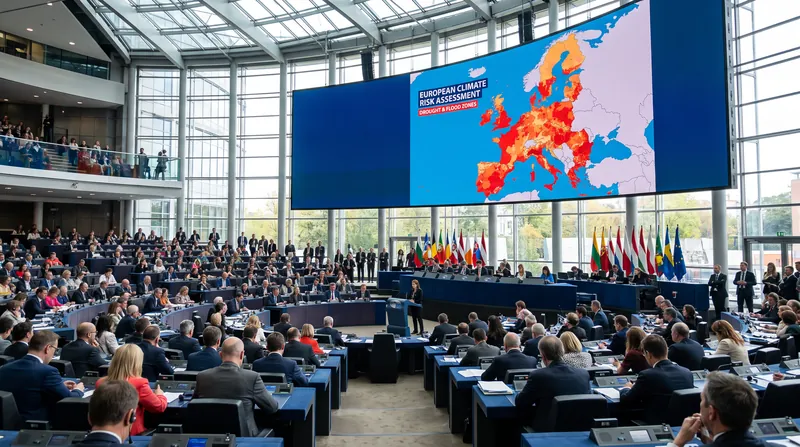
Why the EU's 'Climate Insurance Alliance' Is the Mathematical End of Sovereign Climate Risk
3 sources
Census Apportionment
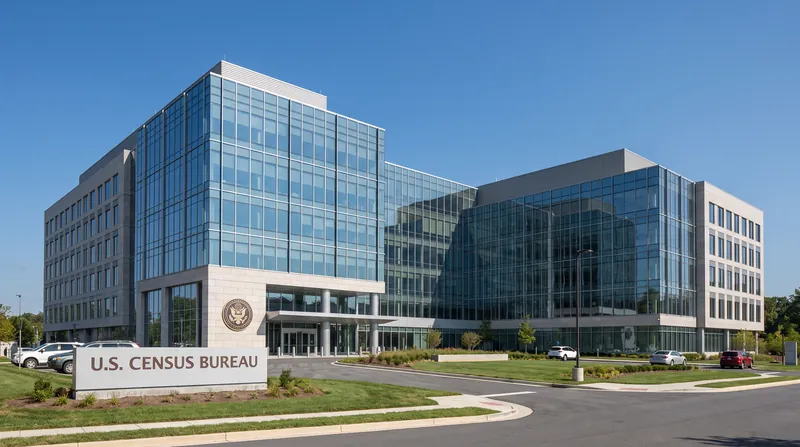
Trump Administration Proposes 2030 Census Overhaul Tied to Apportionment
6 sources
Catalysis Physics
The Sabatier Principle: Why the Optimal Catalyst Must Bind Reactants Neither Too Strongly Nor Too Weakly
8 sources

Energy Subsidies
Iran Implements 110-Liter Monthly Gasoline Cap to Curb Heavy Consumption
6 sources

Comments
Every angle. Every day.
Get Perspectives stories with full source coverage and perspective breakdowns, free every day.